
The Defence Secretary’s First Dilemma

It is almost 30 years since I introduced mixed gender training into the Royal Armoured Corps’ recruit training programme at Winchester. During that time, I had to deal with several instances of female complaints about harassment, when I needed to take decisive action against the perpetrators. Our best practice was eventually spread across the individual training system; I am therefore appalled to hear that the measures we established about core values have not been maintained at the Army Foundation College (AFC) and yet again the Army’s reputation is being tarnished by a philistine few.

The AFC was supposed to be the jewel in the crown of recruit training. It takes young teenagers with the potential to succeed in technical corps and provides education as well as military training before they join their chosen regiments. By definition, the recruits are more intelligent than those destined for the Poor Bloody Infantry (PBI). They should therefore be more receptive to instruction about the values, attitudes and behaviour expected in today’s army.

This is the first important challenge for the new Defence Secretary. He has inherited a responsibility to rebuild the Army to cope with the sort of war that we see on the front line in Ukraine; dirty, exhausting, frightening and grim. The sort of fighting that drains the colour and courage from a human body.

To succeed on the modern battlefield, you need incredible self-discipline and stamina. You only have to look at the Commonwealth Games, or elite level sports teams, to know that there are plenty of young British men and women with those attributes. So what has gone wrong at Harrogate? In a word, supervision. Thirty years ago, the Army ensured its commanding officers strictly followed the Investors in People (IiP) conventions. However, our leadership gave this up as too time-consuming and allowed subordinates more leeway in managing their soldiers.

This has now become a fundamental dilemma for the new Defence Secretary. On the one side, he has to increase numbers and instil a tough warrior ethos in the Army. On the the other hand, he has the challenge of young soldiers complaining about their hardships, encouraged by dedicated campaigners against teenage recruiting, amplified by social media outlets and roused by legal opportunists.

My advice to the new Defence Secretary is to take decisive action. Check the complaints are not by people working the system and if they are genuine, immediately replace the supervisors at Harrogate. More importantly, re-introduce the IiP principles and processes to the individual training organisation, so that instructors are themselves well-led by people who follow the rules.

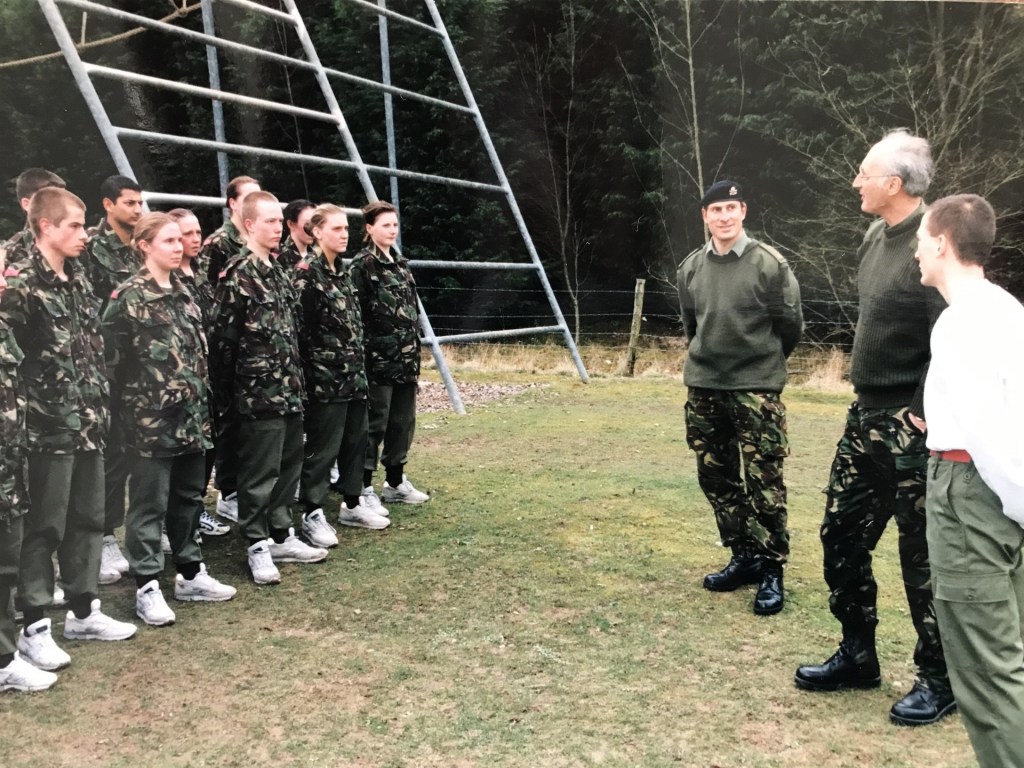
A Member of the House of Commons Defence Committee Meeting Recruits

Will Dan Jarvis Stay As Defence Secretary?

I was asked yesterday whether I thought the new Prime Minister would change the Secretary of State for Defence when he appoints his first Cabinet later this month.

It is certainly true that top Whitehall Mandarins do not like it when a Secretary of State knows more than they do about their business. So it is very unusual for a regular army officer, who has commanded soldiers on operations and held Grade 2 staff appointments, to become Secretary of State for Defence. Not only will the Civil Servants, Cabinet Office and Treasury be cautious, but the Navy, Air Force and Intelligence Services, who compete for Security funding, will be suspicious that Dan will favour his alma mater.

Given this situation and the fact the new PM will wish to reward those who paved the way for his arrival (including the previous Defence Secretary), it would seem that Dan’s days are numbered. And yet…

Defence is not a vote-winner and no longer as important as it was fifteen years ago. It is in a mess both in terms of funding and capability to meet its remit. It needs a root and branch overhaul, so it is unlikely there will be many ambitious politicians eager to take on the role. More importantly, my sources tell me that Dan passed his first important test at the NATO Summit in Ankara and achieved a strengthening of support to Ukraine and an improvement in Defence Industry deals.

The other important factor is that the arrival of the new resident of 10 Downing Street will coincide with the Summer Recess until September. In some ways that is a good time to take of a new job because parliamentary scrutiny is less. However, it could equally be argued that over the summer, we need someone running Defence who knows what they are talking about, so for me, Dan’s the Man.

Is This A Victory Parade In All But Name?

The seven day funeral of Ayatollah Ali Khamenei that began on Friday in Tehran and continues with a public holiday and processions in Iran and neighbouring Iraq is perhaps the greatest sign yet that America has backed down from its strategic objectives declared in February.

Not only has the Iranian regime survived but it has strengthened its support while the USA has been weakened politically and diplomatically. Don’t get me wrong, the US still has the most powerful military forces in the World. However, Washington has had to relearn three lessons that were ignored by deluded leaders.

The first is one of my regular refrains: Air Power alone does not work. Bombing a civilian population will not help your cause as Hitler found when he Blitzed London for 56 days in 1940 and Putin has found in his war with Ukraine. All it does is inspire hatred and collective resilience.

The second was also plain to see from the beginning. Before starting a war against a regional power, build a coalition first. This was the key to success in the 1990 war to liberate Kuwait and it was the most important piece of advice that the UK Prime Minister gave to President Bush after 9/11.

The third has many aspects to it, but it comes down to this: play by the rules! When I received a briefing from the Foreign Office about the difference between the West and the Authoritarian Regimes that threaten the World, the answer was that we obey international conventions and the rule of law. That means respecting the United Nations and other international institutions as well as complying with the law of armed conflict. I know it is difficult when the enemy is asymmetric, but ethics in war matter because those on the touch line, such as The International Committee of the Red Cross will be keeping a tally.

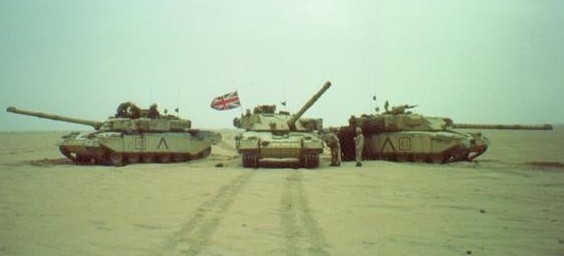
The First Troop Onto The Basra Road In 1991

If Politicians Make Mistakes…

In 1916, Britain (and France) went through the toughest time of World War I. It was a year of ever-increasing strain, catastrophe and disappointment. While the French were bled white at Verdun, the Easter Rising in Dublin changed the assumption that the Irish would wholeheartedly support the Allies. The disaster at Kut in April, where 13,000 troops were marched into captivity, altered the perceptions about the “side-shows”, just as Gallipoli had in 1915. On 1 June, the Royal Navy’s losses at Jutland shocked the Government and four days later the country went into mourning when the Secretary of State for War, Lord Kitchener, was drowned en route to Russia.

The second half of the year was even worse for Prime Minister Herbert Asquith. The Battle of the Somme, which began on 1 July, became synonymous with the waste of life that embodied the war in France. The Arab Revolt launched in June fell flat and the rate of British merchant vessels sunk by submarines increased dramatically (41 ships and 176,248 tonnes in October).

Against this background, Lord Lansdowne wrote a memorandum about peace terms with Germany. Asquith hesitated for too long and was evicted from Downing Street, to be replaced by the dynamic David Lloyd George. In response, John Buchan (one of my favourite authors at school) wrote: “If politicians make mistakes, it isn’t from lack of good instruction to guide their steps.” He might have added that the failure to articulate clear objectives and clear policy is a political death trap.

On both sides of the Atlantic, we are currently seeing political leaders who are hesitating in their decision-making just when they need to offer clarity to their followers and the wider public. My advice to both of them is don’t make the same mistake as Herbert Asquith and listen to your best advisors, not the loudest voices.