A Little Off The Front Line

When I wrote the chapter on the UK’s response to 9/11 in my first book, the UK government asked me to remove six passages that, in their opinion, compromised British security. Their argument was that I had used privileged information that was classified as confidential or above. However, when I demonstrated that all these stories had already been published in the media and were available in open source material, the MoD relented and changed their tone.

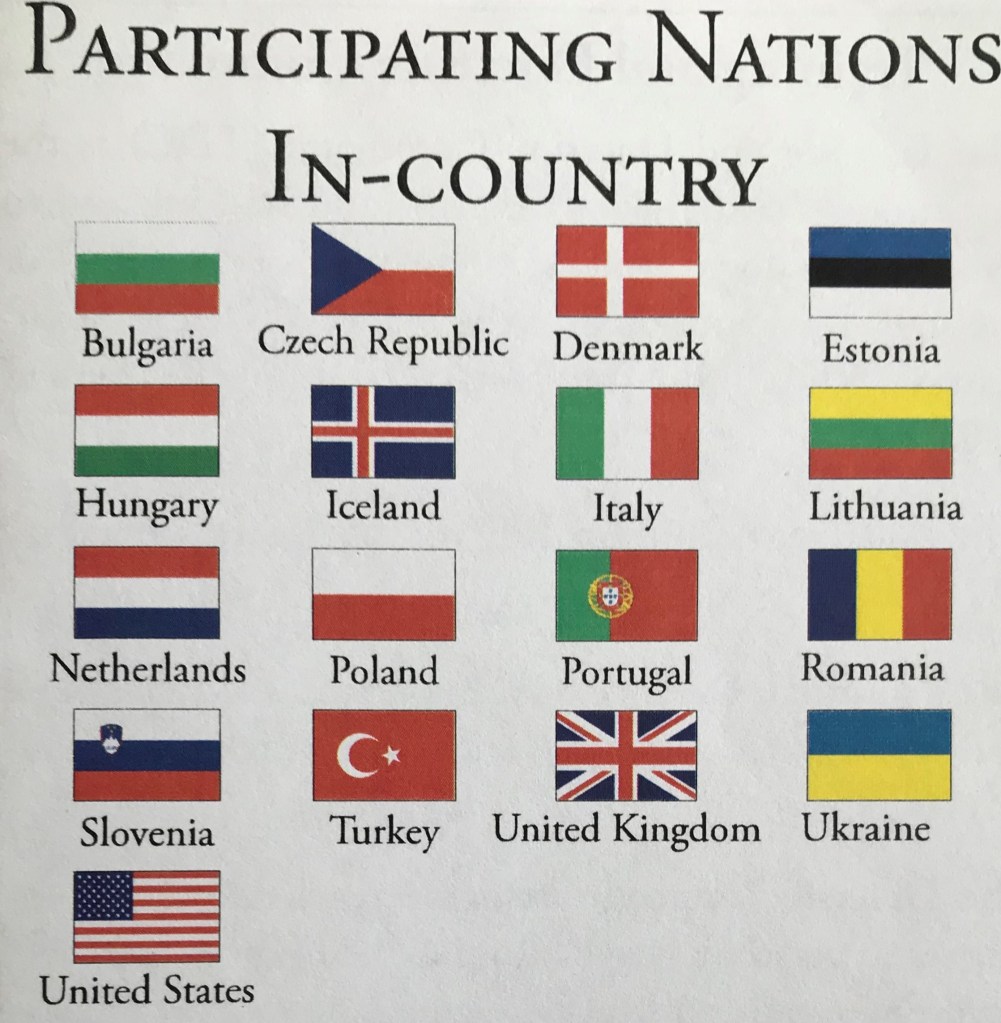
The one story that they asked me to remove even though they accepted it was not secret, was about British casualties in Afghanistan before we deployed Helmand Task Force (Operation Herrick) in 2006. This is important now because the US President has claimed American Allies were “A little off the front line” and has disparaged our contribution by saying “We have never really asked anything of them”.

The code name of the operation before Herrick was Veritas and this covered other deployments such as Oracle, Fingal and Jacana. In the first months of Veritas, Washington requested our help in many ways and the Pentagon sent two officers to London to work with us to identify the best mix of assets. The British contribution included: Special Forces; Cruise Missiles and Air-to-Air Refuelling; 3 Commando Brigade, which helped clear the Tora Bora Caves and Headquarters 3rd Division, which established the International Security Assistance Force (ISAF) in Kabul. The idea that soldiers who worked on projects such as the Provincial Reconstruction Teams were “a little off the front line” is meaningless because nowhere was safe in Afghanistan after the initial deployment. Improvised explosive devices, ambushes and missile attacks against vehicles and bases occurred throughout the country from 2002 onwards.

It is time that our contribution was properly acknowledged by our most important ally.
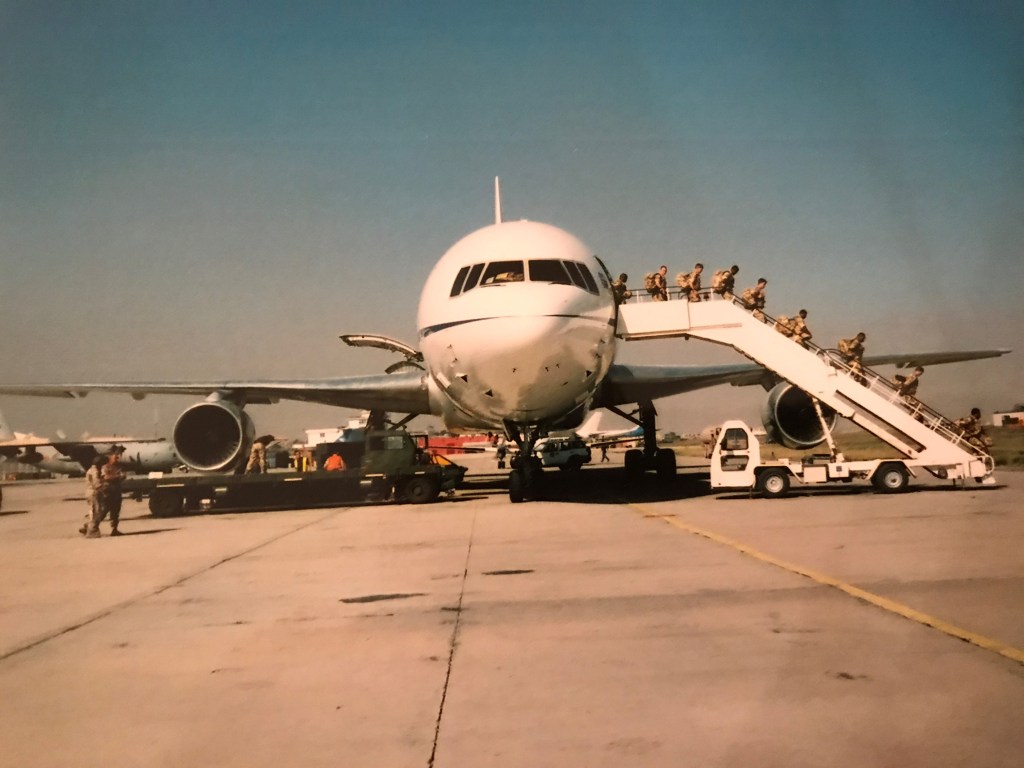
British Troops Deploying At Kabul Airport On Operation Veritas
Heavy Lifting and NATO Caveats

The US President has made an important point about NATO, but sadly he has articulated it badly, so it will lose its effect.

The important point is that unlike authoritarian regimes, political democracies cannot allow their troops to be sacrificed on military operations, so they attach national caveats, which constrain commanders in certain circumstances. This inevitably results in perceived unequal burden sharing.

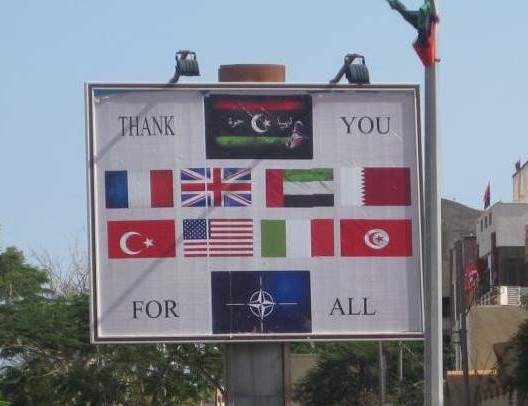
I personally witnessed this when planning NATO operations in the Balkans, Afghanistan, Iraq and Libya. For example, in Baghdad, when I was Chief of Staff of the NATO Mission, there were only four countries that I could rely upon to deploy outside the green zone. However, this was not an insurmountable problem because there was a regular gathering of NATO ambassadors, or their representatives, who would diplomatically help with any issue before it became a crisis.

History tells us that political caveats have always affected Allied military operations and capital cities have always interfered with a “long screwdriver”. There is no better example than the one I write about in Churchill’s Abandoned Prisoners, when there were more than 120,000 Allied troops in Siberia in 1919. Of all the contingents, the one that came with the strictest constraints was the US Army detachment of 9,000 soldiers. Despite President Wilson forbidding them from fighting at the front, they did display courage and bravery in abundance when protecting their section of the Trans-Siberian Railway, but they did not do as the Royal Marines and join the battle at the front.

Apart from this issue of hypocrisy, the President is wrong to tar all of NATO with the same brush for three further reasons. The first has been picked up by the Media immediately; it is highly disrespectful to the families of soldiers, sailors and air personnel from NATO Allies who were killed on US led operations since 9/11. Secondly, there are still several ongoing NATO missions that might be compromised by his words; for example the Allied Maritime Command in London looks after North Atlantic operations and the NATO Mission in Iraq is there to fight terrorism and prevent the return of Islamic State. Thirdly, it makes it much harder for his representatives in Brussels when they come cap-in-hand to fill posts in the well-established bartering process for Troop Contributing Nations serving with American formations.

We all know that America has done most of the heavy lifting for NATO since it was created, but they could not have tackled International Terrorism without their Allies, so it is not sensible to alienate them now.

NATO Mission in Iraq 2008

Arctic Security

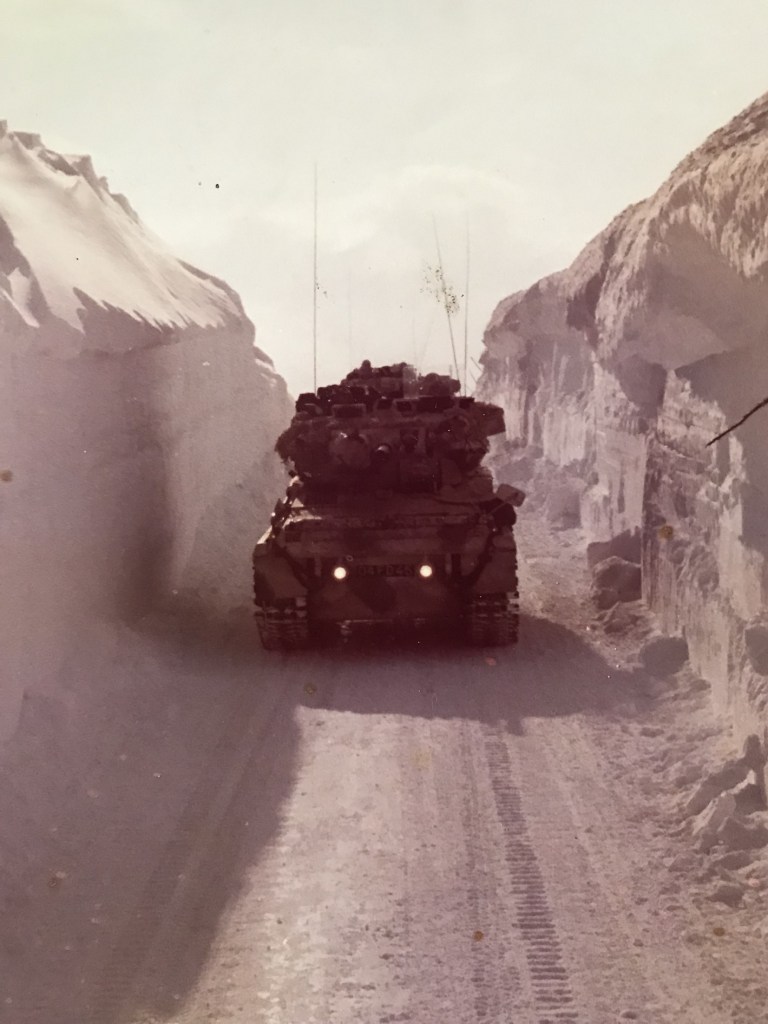
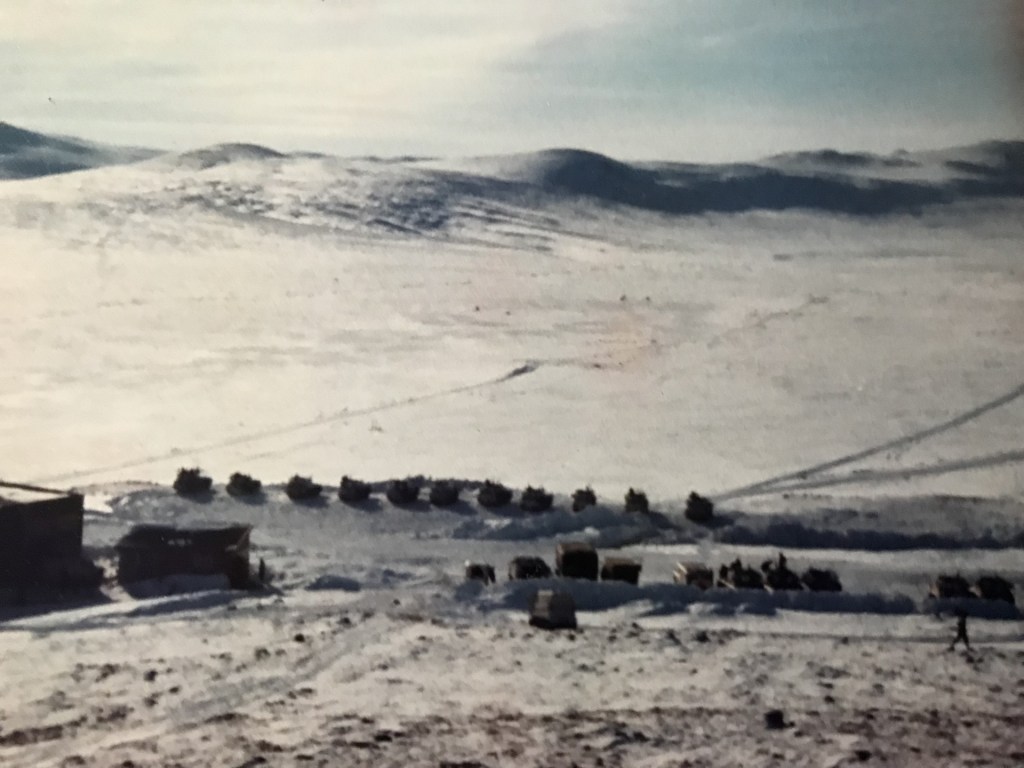
I have written before about my early experience with the ACE Military Force, when I patrolled inside the Arctic Circle as part of NATO’s northern flank protection mission, watched by Soviet Bear aircraft. Apart from three months winter warfare training in Northern Norway, we also took our tanks to Esbjerg, where I learned about Danish history at first hand. What impressed me particularly was the way Denmark rebuffed a megalomaniac bully in World War I and saved most of their Jewish community after Hitler invaded in World War II.

Danish DNA is one of the main constituents of British people, especially in the North East of England. We only have to look to the last century, when a Danish princess became Queen Consort of the United Kingdom, to see how close we are. And a wise Danish king, who ruled England one thousand years ago, gave us one of the most important freedoms ingrained in British law: a freeholder’s right to protect their crops and domestic animals from harm.

I have given talks about civil-military co-operation in Oslo and Stockholm and had the honour to command a courageous Danish detachment in Baghdad. So, it pains me to see the current dispute that is threatening to break the North Atlantic Alliance. The reasons why the international order that has lasted 80 years is failing to keep the peace are complex, but the proposed US land-grab of Denmark’s autonomous territory is a symptom, not a cause.

Trump’s justification for taking Greenland by force is similar to Argentina’s occupation of The Falklands, or Mussolini’s intimidation and invasion of Albania. It doesn’t help that Europe has neglected Arctic security since the Cold War and did nothing about the US intervention in Venezuela. But, history tells us that bullies cannot be appeased, so any unwelcome US seizure of territory belonging to a European sovereign state must be resisted.

British Tanks In Northern Norway

Why Change The Age Limit Of The Strategic Reserve?

The government’s announcement this week that the age limit for the Strategic Reserve (former armed forces personnel) will increase by a ten years to 65 is unsurprising. This means not only that those born between 1961 and 1971 will now be liable to mobilisation in the event of a war with Russia, but also that 60 year-old specialists might be sent to Ukraine and other hot-spots if their rare skills are required by the military. This might for example affect doctors, civil engineers, or even cyber-warriors. But why make this announcement now?

One of the key reasons is that those younger than 55 will have no personal experience of preparing for war against Russia. Whereas those born in the 1960s not only will have experience of the relevant Pillars of British Defence Policy from 1989 (Defence of the Home Base, Continental Commitment on the Central Front and Flanks of Europe, Maritime Commitment), but they may also have experience of our two most important wars of that era, the liberations of the Falklands and Kuwait.

In theory, the change does make sense, but in practice there will be huge problems. Similar to all contact sports, fighting is a young person’s game. How many 60 year-olds are still playing rugby, or can pass a battle fitness test by running one and a half miles in 12 minutes and then do an 12 hour shift on the front line, or in an ops room?

This policy may paper over some cracks, but it does not address the real problem the government faces of recruiting and sustaining a meaningful armoured formation that can deploy and fight a long war. It’s time for National Conscription!

Changing Allies

In General Shane Hackett’s outstanding book about World War III, which was based on the United Kingdom’s Defence Planning Assumptions in the 1970s, Britain’s principal ally in the Middle East was not Israel or Saudi Arabia, but Persia. Our 20th century history is littered with instances when we waged war against former allies. For example, in World War I we fought alongside Italy and Japan, both of which became enemies in World War II. Will 2026, be remembered as another of these occasions when an aggressive former ally becomes our enemy?

To my mind, the global upheaval we are experiencing is similar to those in 1935 and 1979 when Italy broke the League of Nations and the Shah of Iran was overthrown. Responding to the latest conflicts and threats of military interventions, the United Nations has proven to be as inept as its predecessor at keeping the Peace, so we are now into an era of Partisan War.

No doubt our government will attempt to survive the new Threat by adapting like a chameleon. However, some hard choices lie ahead if we are to prepare Gen Z for the worst case scenario – the military break up of NATO.

Ukraine For Venezuela – Part Two

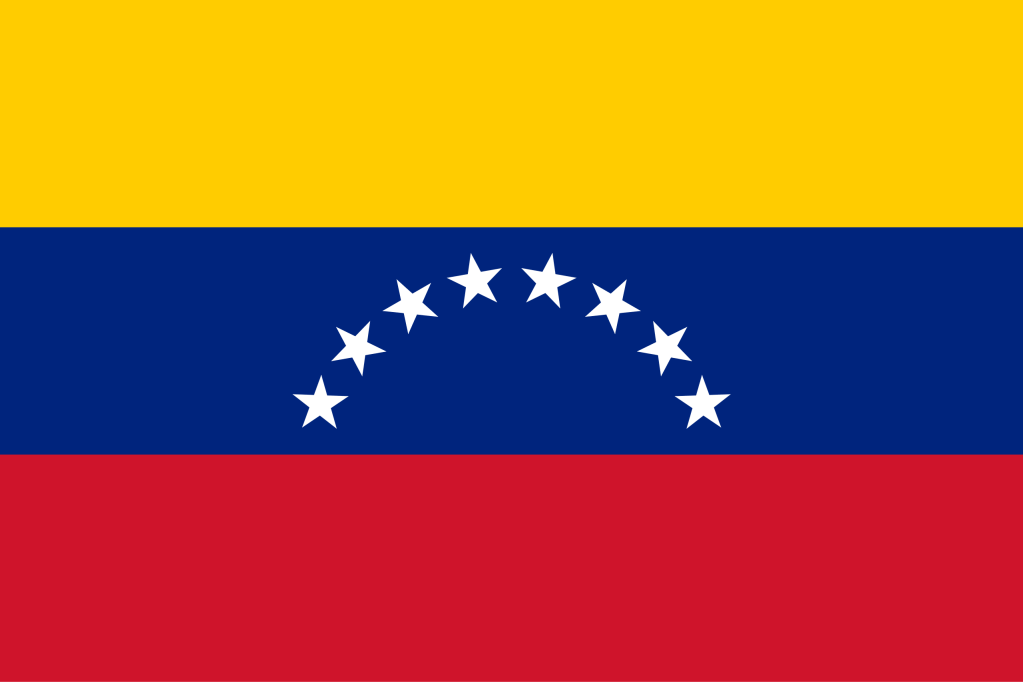
Two weeks ago, I suggested that President Trump had done a deal with President Putin that effectively traded Ukraine for Venezuela and allowed each other to militarily subsume two of the largest sovereign states on the planet. Yesterday, this idea was realised as the World witnessed a generation defining event when America struck at strategic targets inside Venezuela and captured President Maduro (for the record the size of Venezuela is 912,050 square kilometres – it is more than twice the size of Iraq).

Newscasters and commentators have struggled to put this into context. Channel 4 tried to liken it to the Millennium interventions into Afghanistan, Iraq (and Libya), with their associated troubles. This was rightly swatted away because a) those expeditions were in response to the most heinous crime in human history (9/11) and b) they occurred in countries with deep sectarian and/or historical schisms.

Others have suggested that Putin and Trump are attempting to take us back to the Cold War era, when the World was effectively managed by the two Superpowers. However, this model does not work for me partly because the World is more disordered now than after WWII and partly because the World’s demographics and wealth have shifted over the past 50 years with China, India and Arabia tilting the balance.

It is well-known that Putin thought little of the Soviet system and harks back further to Tsarist era, when Russia built its Empire by leaning on its neighbours walls until they crumbled. We also know that President Trump admires Putin’s methodology. So the question is: will this be another Iraq or Vietnam with puppet-regimes dogged by military insurgency, or will it be more like the Philippines, when President Aguinaldo was captured by American forces on 23 March 1901 and the country was later governed as a US Territory? Only time will tell.

Military Gap Year Not What It Seems

My idea of a gap year is when school leavers fill the time between school and university (usually 14 months) with “no-commitment” growing-up activities, such as travel, adventure, art, sport and short-term, money-earning jobs. Of course, it can also mean post university and career gaps, but by then people are more fixed in their minds in terms of values and attitude.

The British Military Gap Year Scheme which was announced yesterday is not quite like this. For a start, it requires a two-year commitment and entails a three month basic military training course. All it seems to be doing, is reducing the normal three-year commitment to two. The under-25s who enrol in this scheme will not deploy on active operations, which seems strange to me because these are the best bits – barrack life can be pretty dull and monotonous.

I completely support the sentiments of encouraging families to consider the military as worthwhile careers and the so-called “whole-of-society” approach to defence and deterrence, but this announcement provides no detail about what skills will be offered and unfortunately will not fill the real Armed Forces Gap.

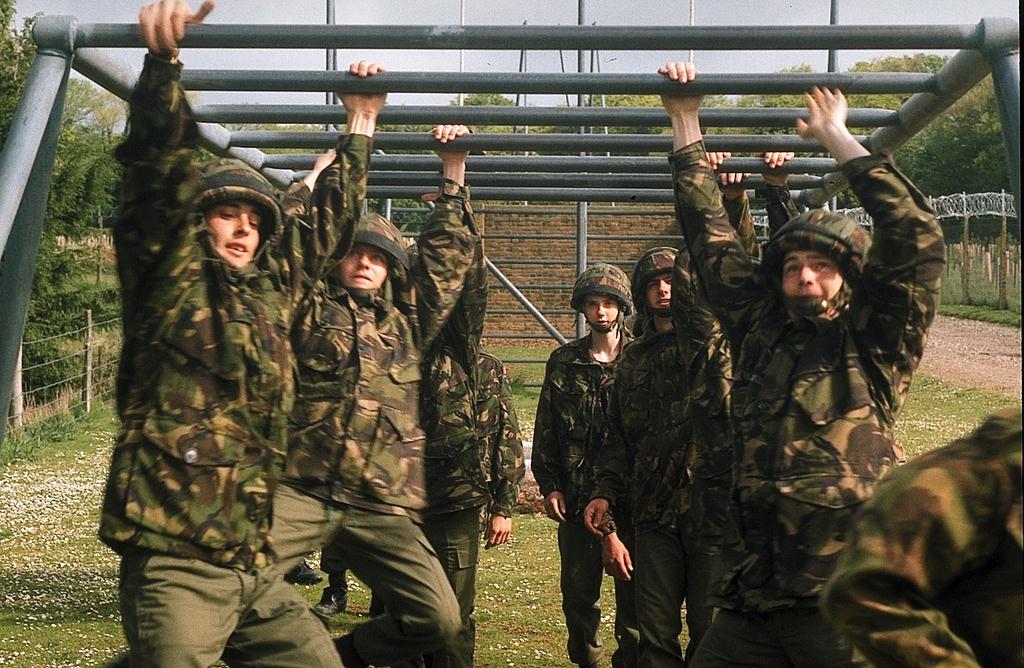
Recruit Training 25 Years Ago

Gaddafi’s Jet Crash

I cannot believe the Libya is still using Colonel Gaddafi’s private jet aircraft for their military chiefs’ flights. In 2012, I was flown from Mitiga Air Base to El Adem in one of Gaddafi’s Falcon 50 jets. Even to my layman’s eyes it was clear that maintenance schedules were not being completed because the tradesmen had sold their tools during the civil war to buy food for their families. The fleet of MiGs, Sukhois and Falcons needed to be replaced and the infrastructure renovated. The Chief of the Libyan Air Force invited me to bring out British contractors to bid for the work, which I managed to do before the end of my tour.

The tragic crash of the Libyan Falcon 50 that caused the death of their Army Chief, General Haddad and other military officials in Turkey has put this aircraft in the spotlight again. Between the three possible causes of a terrorist attack, pilot error or bad-maintenance, my guess is the third. Given the amount of oil and gas money in Libya it seems extraordinary that the government has not upgraded their VIP aircraft since the overthrow of Gadhaffi.

Maintenance Hangar At The Libyan Airbase in El Adem

Ukraine for Venezuela?

Following the tragic death of Corporal George Hooley last week, the Media has highlighted the case of an ex-British soldier captured on the front line soon after joining the Ukrainian Foreign Legion last year. The UK’s Foreign Office statement demanding that Russia “stop using prisoners of war for political and propaganda purposes” reminds me that not much has changed since 1920, when the British soldiers in my book, Churchill’s Abandoned Prisoners, were deceived by Bolshevik Commissars and incarcerated in political prisons in Moscow.

However, this was not the main event this week. The news that the EU is providing more financial support for Ukraine is very welcome, but the Russian President’s end-of-year address catches the eye as the centrepiece. The fact that Putin no longer portrays the USA as his biggest threat even though the US Commander-in-Chief is now attacking Russia’s most important trading and military ally in Latin America makes me think something dramatic has changed this year. Have Putin and Trump agreed an undeclared deal behind the scenes – Ukraine for Venezuela?

Tribute To Corporal George Hooley

My first thoughts this week are for the family of the brave paratrooper, who became the first confirmed death of a serving member of the British armed forces in Ukraine.

Corporal Hooley’s sad demise raises many questions about the undeclared use of troops on military operations. In 2011, I was one of many such soldiers who were deployed in a war zone with limited political authority. We were given a military mission, but knew that our activities would be denied officially, if we were caught.

I can understand why the British government does not wish to reveal the full extent of the British military mission in Ukraine. Ever since Parliament voted not to intervene in Syria when Assad used chemical weapons against his own people, there has been a reluctance to engage in high-end fighting. However, if the head of NATO is correct about Russia’s capability and plans to launch further attacks against European countries, then we really must shake people out of their complacency and educate them about casualties in war.

What also needs to change is PJHQ’s medallic recognition for our soldiers in Ukraine. These courageous men and women should be awarded the General Service Medal 2008, rather than the less prestigious Tier 4, Wider Service Medal, which is what they receive now.