In my experience, intelligence staff officers often provide poor advice about tactical situations, battlefield decision-making and strategy. However, they are often outstanding when it comes to providing dossiers about enemy commanders and the hierarchy of an adversary.
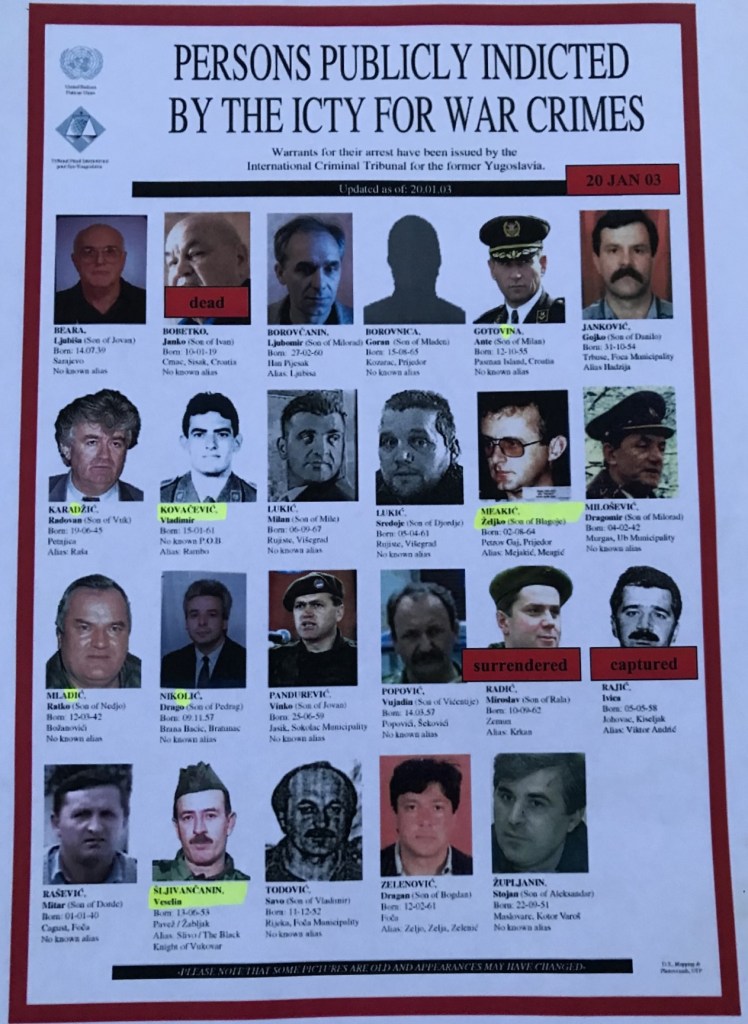
A good example of this is the way they compiled evidence for the International Criminal Tribunal for the former Yugoslavia. During my second operational tour in the Balkans, I was involved in operations to capture those responsible for war crimes, otherwise known as PIFWCs (see sheet below). And the evidence from those operations is that once your name is on the list, you will be hounded forever.
The Media is very quiet about this aspect of the current wars in Ukraine and the Middle East, but I have no doubt that there are dedicated teams that are working relentlessly to interview survivors, compile evidence and track those responsible for war crimes. In the case of the former Yugoslavia, the mandate for the court lasted 24 years from 1993 to 2017. I can see the current work on Ukraine and the Middle East lasting twice as long – a job for life.
I have a huge amount of respect for the earnest and hard working staff officers who work in military headquarters and secret intelligence services, but they have an Achilles heel which has been exposed in the current Iran War with fatal consequences.
In my experience, officers fall into two main categories; operators and observers. The operators play the game, get mud under their finger nails and make decisions based on experience and reality. Observers sit on the touchline and provide commentary and advice based on theoretical knowledge. Of course, like all generalisations, there are many cross-overs and exceptions that prove the rule, but so many times I have heard flawed interpretations by J2 (an acronym for the Joint Intelligence Staff Branch) of what is happening on the ground.
So what has happened since the cease-fire was announced in early April? Of course, there has been some diplomatic progress with the USA and Iran exchanging demands through intermediaries. There have also been limited cease-fire contraventions by both sides. In the meanwhile, both sides have been building capacity for further strikes, with the US focusing on options to raid and seize part of Iranian territory through daring special forces operations, as well as their targeting of Tehran’s elite leaders.
And this where the J2 flaw is at its worst (and has been for more than one hundred years). The assumption is that a Capital City runs the country and controls its security services in the provinces. However, as we have seen in the Balkans in the 1990s and Iraq, Afghanistan, Libya and Syria in the 2000s, it is the hard-nosed warlords and well-sponsored militias who control freedom of movement and what people do in the outland. The failure to engage with regional power has scuppered so many Western military interventions and made mugs of politicians who predict early victory.
Having criticised the J2 boys and girls in this post, I will balance the books tomorrow and highlight one of their great successes (albeit controversial) of the past 25 years.
Twenty-four years ago, during a Chatham House seminar that I attended, the panel predicted that China would overtake the USA’s economy in the late 2020s.At that time China was assessed by the Government as posing “no conventional military threat to the UK”. Furthermore, Washington was sharing technology and military information with Beijing, as the Pentagon had placed all US Army doctrine on the internet, which was freely accessible by anyone.
This came to a head on 1 June 2011 during the British Chief of the General Staff’s main conference before the Coalition Government’s Strategic Defence Review. In the Keynote session, the Deputy Chief of The People’s Liberation Army (General Zhang Qinsheng) gave awell-received address about the Strategic Context and Nature of Conflict (lots of Sun-Tzu). The following day, when the Commanding General of US Cyber Command was asked probing questions by the Chinese delegates, it became clear that the relationship was changing.
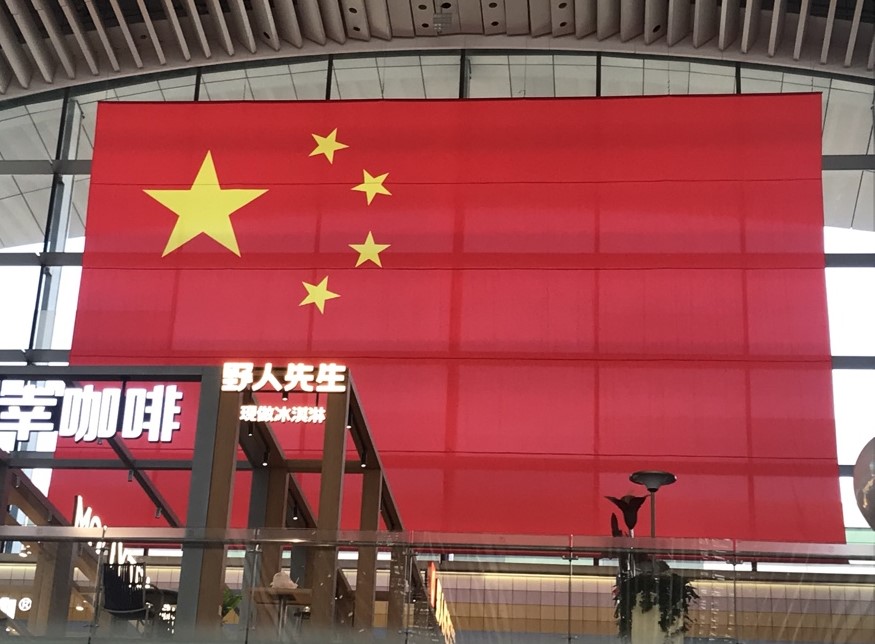
Since then, China has extended its influence throughout the World through democracy and economics. There is a certain irony that while Putin and Trump have failed in their recent military operations against Ukraine and Iran, their attempts to return to the bipolar Cold War have merely opened the door to President Xi. The photographs of him with the US and Russian Presidents this month remind me of images of Medieval Kings visiting the Pope. Not only has Washington lost half its Allies in Europe, but its Intelligence fraternity has lost huge influence in London with respect to the Government’s relations with China (e.g. permission for the new Chinese Embassy to proceed). The big question is: will the City follow?
The news that the USA is deploying 5,000 troops to Poland is most welcome at this time of heightened security in the European countries bordering Russia.
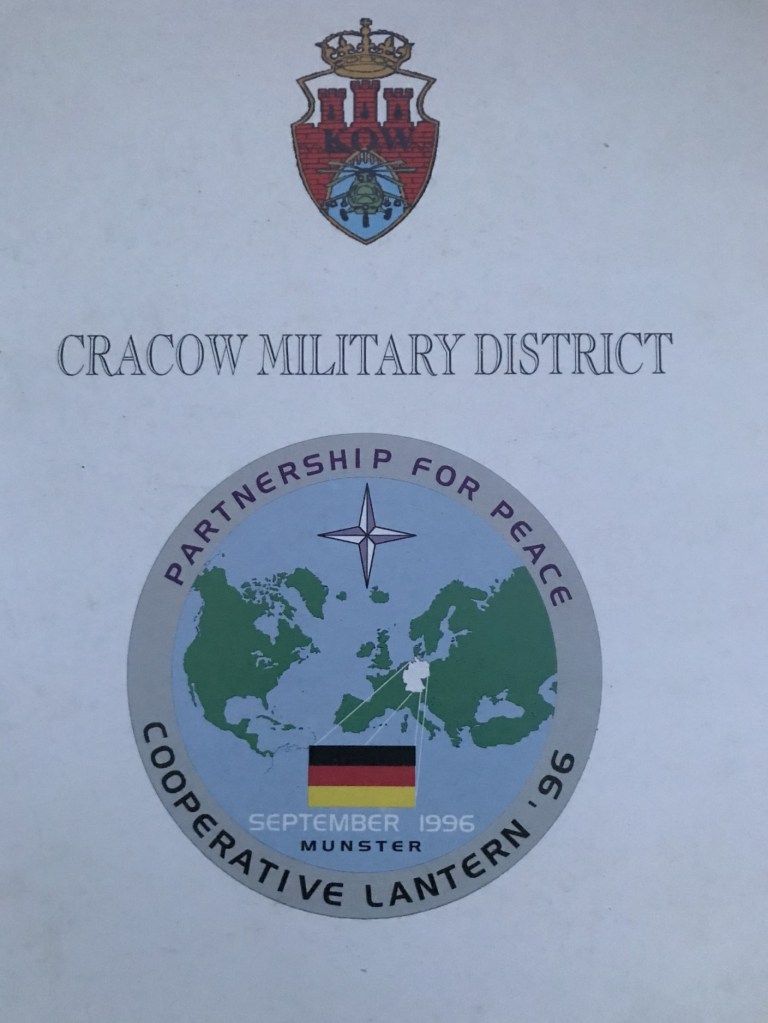
After returning from an operational tour in Bosnia in 1995, I was drawn into the largest Partnership for Peace (PfP) exercise in Poland and Germany. Our deployment to Krakow pre-dated the British armoured battlegroup exercises that resulted from its success and led to the first three Warsaw Pact nations joining NATO in March 1999 (Poland, Hungary and the Czech Republic). PfP was an initiative of the Clinton Administration to work together for the best future of Europe.Not only was it highly successful in helping Eastern European countries become democracies, but it also continues to this day with 18 “Partner Members”, including Ukraine.
Subsequently, Poland was a great support to the USA in Iraq. I had a very strong team led by a Polish colonel with a company of mechanised soldiers under command in Baghdad, so I am not surprised that the Washington is honouring their debt to Warsaw with the latest news of this deployment. It will certainly help in deterring Russia from invading the Baltic countries in the immediate future.
In 1916, Britain (and France) went through the toughest time of World War I. It was a year of ever-increasing strain, catastrophe and disappointment. While the French were bled white at Verdun, the Easter Rising in Dublin changed the assumption that the Irish would wholeheartedly support the Allies. The disaster at Kut in April, where 13,000 troops were marched into captivity, altered the perceptions about the “side-shows”, just as Gallipoli had in 1915. On 1 June, the Royal Navy’s losses at Jutland shocked the Government and four days later the country went into mourning when the Secretary of State for War, Lord Kitchener, was drowned en route to Russia.
The second half of the year was even worse for Prime Minister Herbert Asquith. The Battle of the Somme, which began on 1 July, became synonymous with the waste of life that embodied the war in France. The Arab Revolt launched in June fell flat and the rate of British merchant vessels sunk by submarines increased dramatically (41 ships and 176,248 tonnes in October).
Against this background, Lord Lansdowne wrote a memorandum about peace terms with Germany. Asquith hesitated for too long and was evicted from Downing Street, to be replaced by the dynamic David Lloyd George.In response, John Buchan (one of my favourite authors at school) wrote: “If politicians make mistakes, it isn’t from lack of good instruction to guide their steps.” He might have added that the failure to articulate clear objectives and clear policy is a political death trap.
On both sides of the Atlantic, we are currently seeing political leaders who are hesitating in their decision-making just when they need to offer clarity to their followers and the wider public. My advice to both of them is don’t make the same mistake as Herbert Asquith and listen to your best advisors, not the loudest voices.
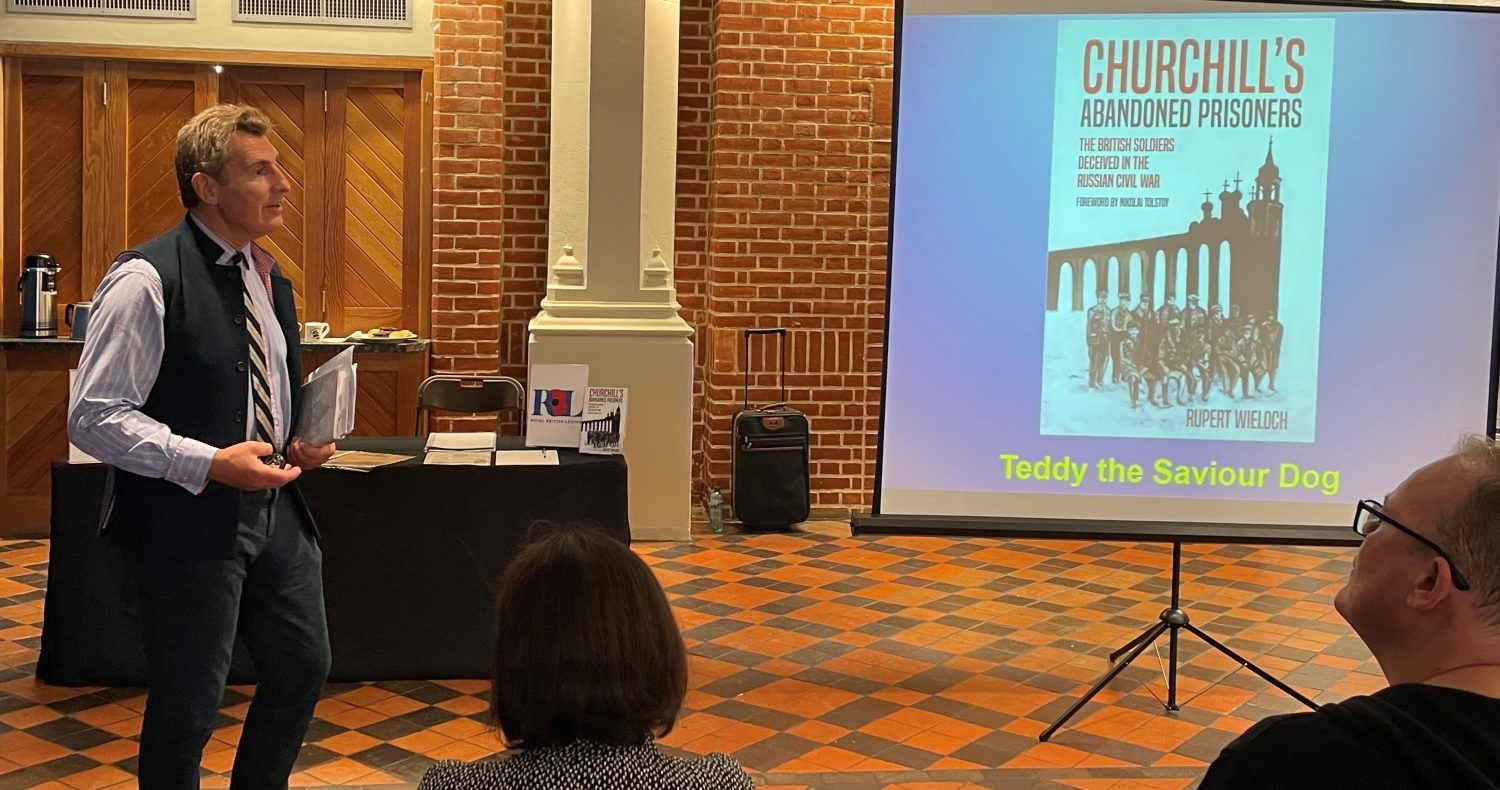
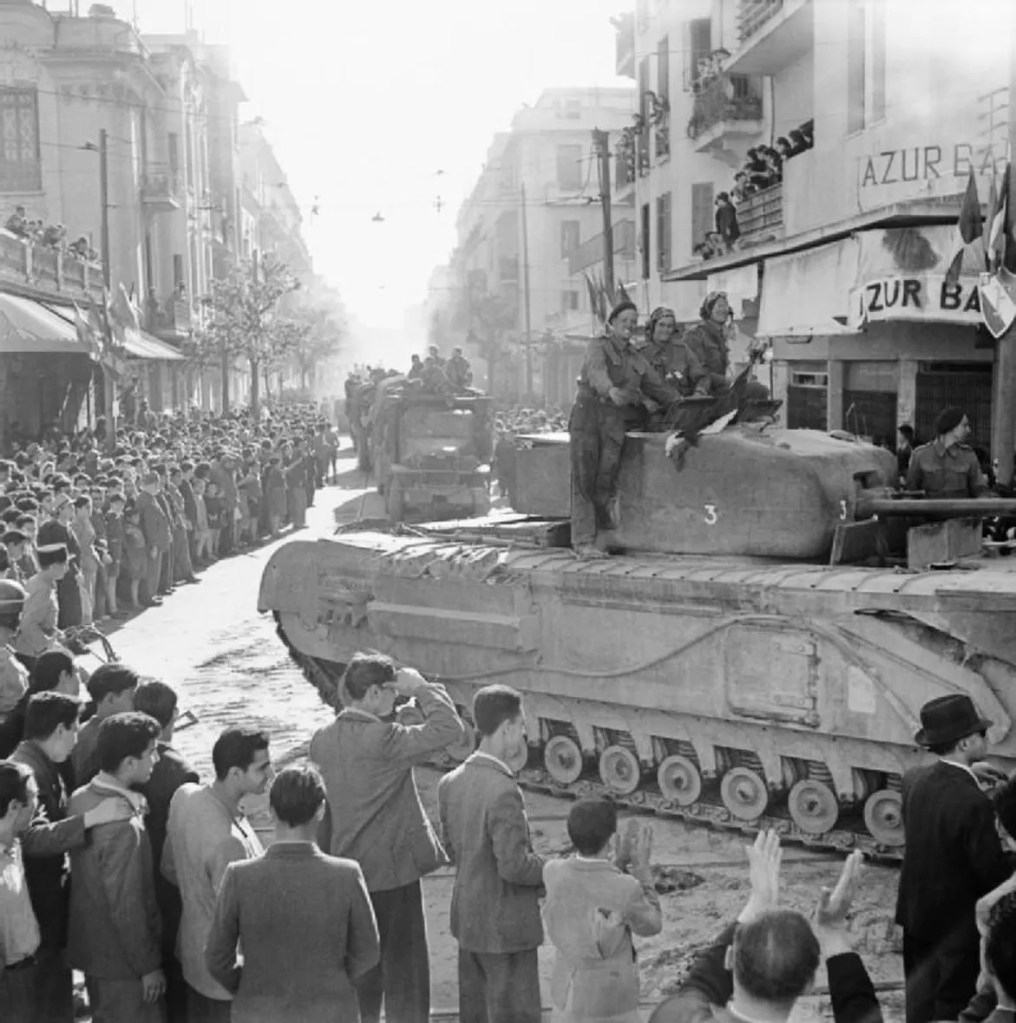
I am looking forward to giving my talk on the Allied battles in French North Africa tomorrow in Winchester, especially as it was the 83rd anniversary of the capture of Tunis by Lieutenant General Horrock’s IX Corps on Thursday.
This is another forgotten campaignthat was pivotal in the defeat of Nazi Germany. Although it lasted only six months (8 November 1942 to 13 May 1943), it is important historically because it was the first occasion in WWII when British and American formations fought together side by side. It also introduced key American military leaders such as Eisenhower, Clark, Patton and Bradley to armoured warfare. It turned France from foe to friend. And its result was as devastating to Hitler as Stalingrad, with 350,000 of his best soldiers killed, or taken prisoner and 3,000 aircraft lost.
After the successful landings on Operation Torch, the USA made many mistakes, such as their flirtation with Nazi sympathiser, Admiral Darlan (who fortunately was assassinated on Christmas Eve). When II (US) Corps failed in battle, tensions between the Allies were tested. Monty put it pithily in his memoir “It was the old story: lack of proper training allied to no experience of war, and linked with too high a standard of living. They were going through their early days, just as we had to go through ours…When the Americans had learnt their lesson, and had gained experience, they proved themselves to be first-class troops. It took time; but they did it more quickly than we did.”
In preparation for my talk, I have been reading Eisenhower’s memoir and two stories strike me as important in the development of US forces from a peacetime army to a mission-focused, well-oiled machine. The first was in Algiers when he found that his orders to support British First Army in the Race for Tunis “were not clearly understood nor vigorously executed” An American Brigade commander had asked for M3 Half Tracks to take his troops the 700 miles to the front line, but the American staff officer to whom he was appealing had refused permission “on the ground that the march would consume half the useful life of the vehicle!” This staff officer had not accepted that war is synonymous with waste and that “every positive action requires expenditure”. Within five minutes of this issue reaching Ike, the brigadier was on his way with the orders he sought.
The second story is how Eisenhower dealt with II Corps after it failed in the battles of Kasserine Pass and Fondouk. He had a long discussion with General Alexander and asked that II Corps should not be removed from the line of battle. but instead should be employed as a whole in the final assault (Op Strike). Partly, this was because he realised that the bulk of the ground forces required by the Allies to defeat Germany would have to come from America and the need for more battle training was self-evident. There was also an urgent need to provide a sense of accomplishment to the people back home and to generate an effective sense of partnership. II Corp’s subsequent successful capture of Bizerte on 7 May fully justified Ike’s decision.
Since the British Army is currently suffering from peacetime-itis, they would do well to study this campaign for its important lessons about success in war.
There used to be only three legal reasons for a country to go to war.
The oldest and most incontrovertible is self-defence. If one country invades another’s territory, the victim has a fundamental right, enshrined in international law, that allows it to protect and defend itself. Associated with this core entitlement is the right to come to the aid of an ally, as in the NATO Article 5 clause.
The second reason is if the United Nations agrees to a Security Council Resolution, as in the case of the Korean War in 1950 and the Gulf War in 1991.
The third reason, which stems from the tragedies in Bosnia and Rwanda, was agreed at the UN’s 2005 World Summit; to prevent genocide, ethnic cleansing and crimes against humanity.
Since then, another reason has emerged – Denial. We have seen it with Putin’s so called special military operation to deny Ukraine joining NATO and we have now seen it with Trump’s war in the Gulf to deny Iran from developing its nuclear ambitions. In response, Iran has been denying access through the Strait of Hormuz and this in turn has led to a US blockade to deny Iran’s oil trade with Asia.
Denial has always been a part of the operational framework of war and “fixing the enemy”. By denying them the opportunity to achieve their goals, the aim is to throw adversaries off balance before defeating them on the battlefield. On land, this phase is usually masterminded by the senior sapper with minefields, bridge demolitions and an intricate obstacle plan. But in the modern sense, it is more in the hands of the airmen to attack infrastructure with bombs, missiles and drones.
The problem with this half-way house is that Denial in itself is like Deterrence, it doesn’t defeat the enemy. However, the advantage is that it provides political leaders with an opportunity to deny the country is At War and that the rest of the World is suffering the consequences.