
There is a very important, long-standing convention agreed between the Treasury and Government Departments that is currently under question. In the past, whenever an unexpected crisis hits the country, the extra costs to the Departments on top of programmed activity is paid out of the Government Reserve. Examples since 2000 include the Foot and Mouth epidemic (which did for the Ministry of Agriculture, Fisheries and Food), Avian Flu and of course, Covid (Department of Health and Social Care).
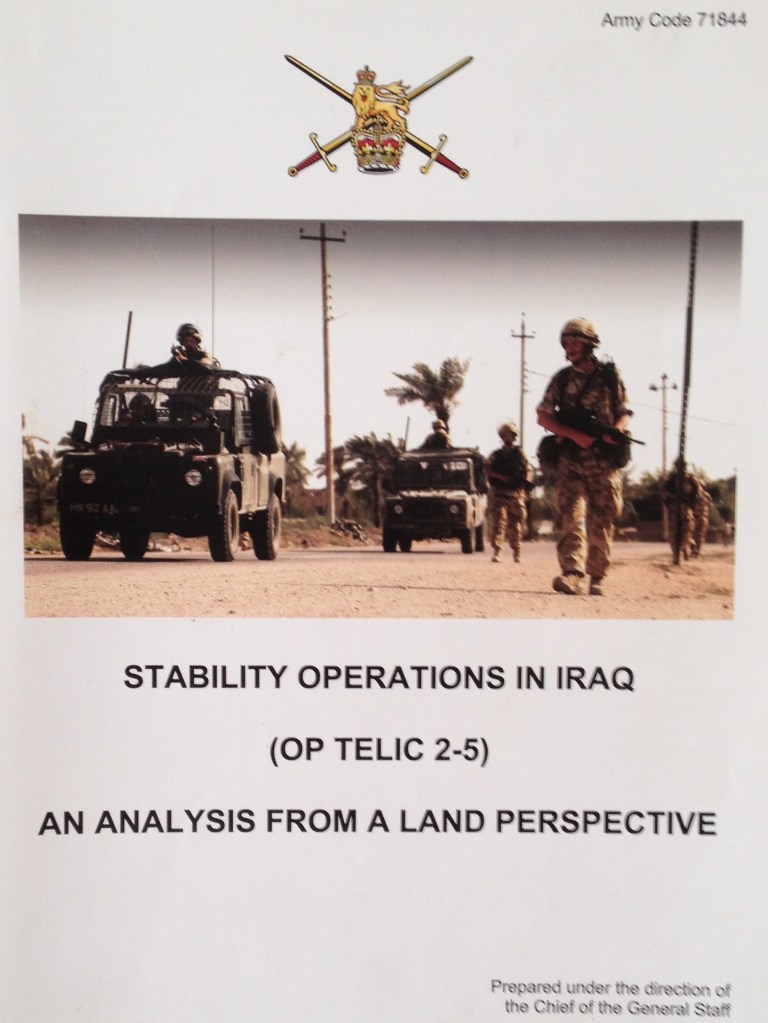
In the case of the Ministry of Defence, the costs of the deployed operations to Iraq and Afghanistan were both picked up by the Treasury. This money alleviated the MoD at a very tricky time because we had effectively ran out of money for programmed activity in 2004. The Army benefitted in many ways, for example the specialist armoured vehicle fleet was completely upgraded between 2005 and 2010, thanks to this reserve fund.
The current costs of Britain’s military contribution to the war in the Middle East are the latest example of the use of the Treasury’s reserve…but they don’t like it. The official government line that we are only involved in defensive operations is a half-truth as it is designed to placate the many “Stop The War” groups that have emerged in the past few years. The truth is that the Permanent Joint Headqaurters is a hive of activity organising the maritime, air, land and special forces capabilities that are deployed in the Theatre of Operations. Some of these capabilities that have been neglected since they were pulled out of Afghanistan are now being upgraded with new technology through Urgent Operational Requirements that are incredibly expensive.
These extra costs have distorted the picture for the SDR and as a result the Treasury is trying to claw back money from the MoD, rather than dig into the reserve. Hence the unusual intervention from Lord Robertson this week. The real question is: why isn’t the Media reporting this?
 Rupert Wieloch