Denial – The New Reason For Going To War

There used to be only three legal reasons for a country to go to war.

The oldest and most incontrovertible is self-defence. If one country invades another’s territory, the victim has a fundamental right, enshrined in international law, that allows it to protect and defend itself. Associated with this core entitlement is the right to come to the aid of an ally, as in the NATO Article 5 clause.

The second reason is if the United Nations agrees to a Security Council Resolution, as in the case of the Korean War in 1950 and the Gulf War in 1991.

The third reason, which stems from the tragedies in Bosnia and Rwanda, was agreed at the UN’s 2005 World Summit; to prevent genocide, ethnic cleansing and crimes against humanity.

Since then, another reason has emerged – Denial. We have seen it with Putin’s so called special military operation to deny Ukraine joining NATO and we have now seen it with Trump’s war in the Gulf to deny Iran from developing its nuclear ambitions. In response, Iran has been denying access through the Strait of Hormuz and this in turn has led to a US blockade to deny Iran’s oil trade with Asia.

Denial has always been a part of the operational framework of war and “fixing the enemy”. By denying them the opportunity to achieve their goals, the aim is to throw adversaries off balance before defeating them on the battlefield. On land, this phase is usually masterminded by the senior sapper with minefields, bridge demolitions and an intricate obstacle plan. But in the modern sense, it is more in the hands of the airmen to attack infrastructure with bombs, missiles and drones.

The problem with this half-way house is that Denial in itself is like Deterrence, it doesn’t defeat the enemy. However, the advantage is that it provides political leaders with an opportunity to deny the country is At War and that the rest of the World is suffering the consequences.

ANZAC Day – My Tribute

There is still much to be said about the wars in Ukraine and Middle East as well as Britain’s Strategic Defence Review, but today is ANZAC Day and so, I wish to honour the brave soldiers, sailors and air personnel who lost their lives fighting for a free world. My father was extremely proud to serve in the Australian Army for two years during the Korean War and he would be delighted that the Royal Family participated in the commemorations in London today.

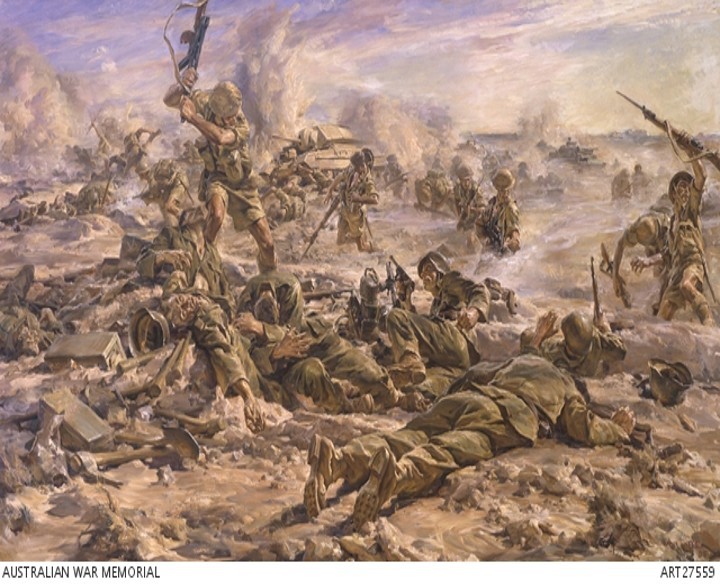
Although the Aussies claim ownership of the Gallipoli Campaign, I believe their most important contribution in the two world wars was in North Africa in April 1941. This was the defence of Tobruk by Major General Leslie Morshead’s 6th Australian Division after the British 2nd Armoured Division capitulated in the desert battle with Erwin Rommel. The first hand-to-hand combat between Australia and Germany in World War II was a victory for the Southern Hemisphere and more importantly it showed the world that Hitler’s up-to-then invincible Blitzkrieg was beatable. But it came at a cost.

Rommel had ordered his armoured troops to attack the outer perimeter at 1700 hours on Easter Sunday. After a fierce artillery exchange, a breach in the line was exploited by the Afrika Korps. Sensing this critical moment, 22 year-old Lieutenant Austin Mackell of 2/17th Australian Infantry Battalion took out a fighting patrol and stumbled on a major enemy position with six machine guns, mortars and field guns. Mackell was involved with three enemy soldiers and called for help. A giant of a man from Wagga Wagga, Corporal John Hurst Edmondson, who was wounded in the neck and stomach, came across and rescued his platoon commander. Sadly he died of his wounds, but for his conspicuous bravery and sacrifice he was awarded the first Victoria Cross to be awarded to an Australian in World War II (14 April 1941).

The siege of Tobruk continued until November, when Colonel Sydney Hartnell of 19th New Zealand Battalion, part of General Auchinleck’s relief force, symbolically shook hands with Brigadier Arthur Willison, commanding 32 Brigade. The ANZAC bravery continued in North Africa in 1942, with five of the six VCs awarded in Egypt being presented to New Zealand and Australian soldiers. The full story is in my book, Liberating Libya.

I was never fortunate enough to be sent to the Antipodes during my time in the Army, but I did have an outstanding young New Zealand artillery detachment under command in Bosnia in 1995. When we were attacked by the Bosnian Serb army, they all performed in combat in the finest traditions of their distinguished predecessors, who earned fame at Tobruk and El Alamein 50 years before.

Alamein 1942

Lord Robertson Is Right, but…

The eminent former NATO Secretary General bravely tackled the Welfare Budget issue yesterday, but he failed to talk about the two enormous elephants in the room. The first is how Britain’s education system has deliberately sabotaged the Armed Forces by denigrating military life and putting off young men and women from joining-up. The second is how money for the uniformed services has been syphoned-off by Security Mandarins in Vauxhall.

Twenty five years ago the Army’s Student Presentation Teams reported growing difficulty in accessing some urban schools even though they offered to deliver some of the National Curriculum’s mandated lessons. At that time, I spoke to over ten thousand head teachers and community leaders in towns and rural areass throughout England, Scotland, Wales and Northern Ireland. They were overwhelmingly supportive of the Armed Forces and the need to instil in young people a sense of duty to the country and high achievement, which in turn provided positive encouragement for a military career. However, since then, under the misguided banner of anti-elitism and the naive assumption that Britain is not under threat, military careers have been put in the dustbin and Lord Robertson’s “corrosive complacency” has taken hold in Whitehall.

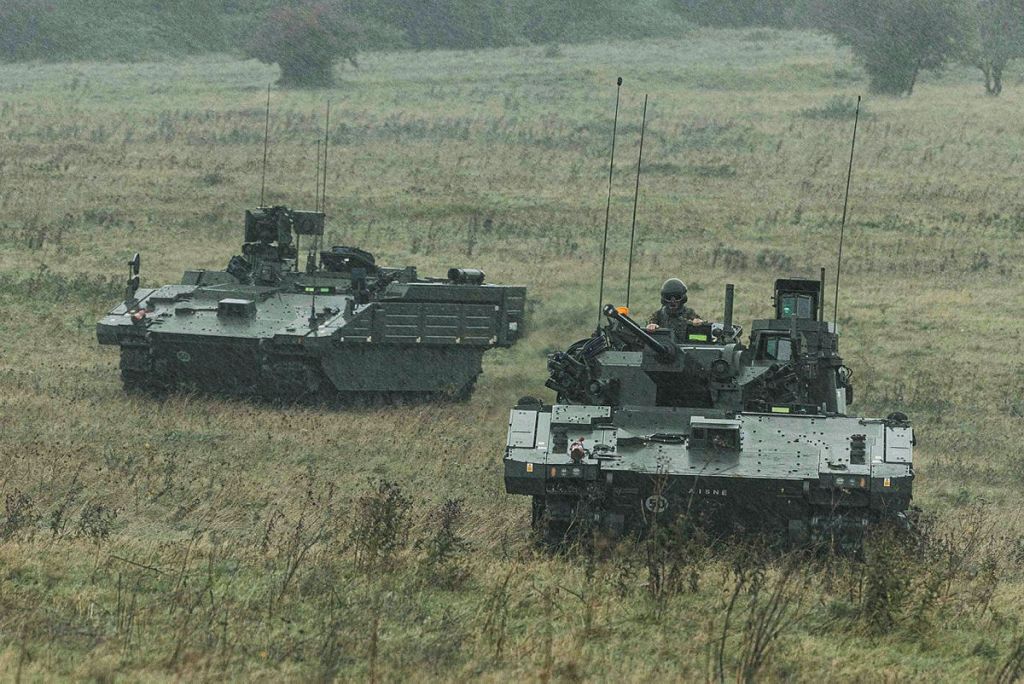
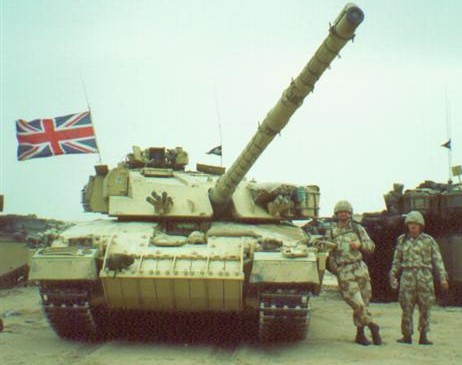
The second “elephant” can be traced to the publication of the 2010 Strategic Defence and Security Review. That was the moment when the security services, which had been underfunded for decades by the Home Office and Foreign and Commonwealth Office, licked their lips because they suddenly had access to the Armed Forces’ money. Adding a second whammy of making the MoD pay for the nuclear capability meant that the Army in particular was hollowed-out so much that it could no longer deploy and sustain a full armoured brigade on operations abroad. The mantra under successive governments was that the old way of fighting with main battle tanks was over. However, what has been made absolutely plain in Ukraine and Iran is that Air Power alone will not prevail and you still need large mechanised armies to defend your country.

The third issue was touched on briefly by some Media commentators yesterday. Why did it need an 80 year-old former MP to raise this issue? Winston Churchill was under 60 years old when he took up the re-armament issue in the early 1930s when appeasement was holding sway. He and others such as Hugh Dalton, a Welsh Labour MP who was three years younger than Churchill, were accused of warmongering, but they were proved to be right. So the real question is: where are the current MPs who will take up this cudgel, before it is too late?

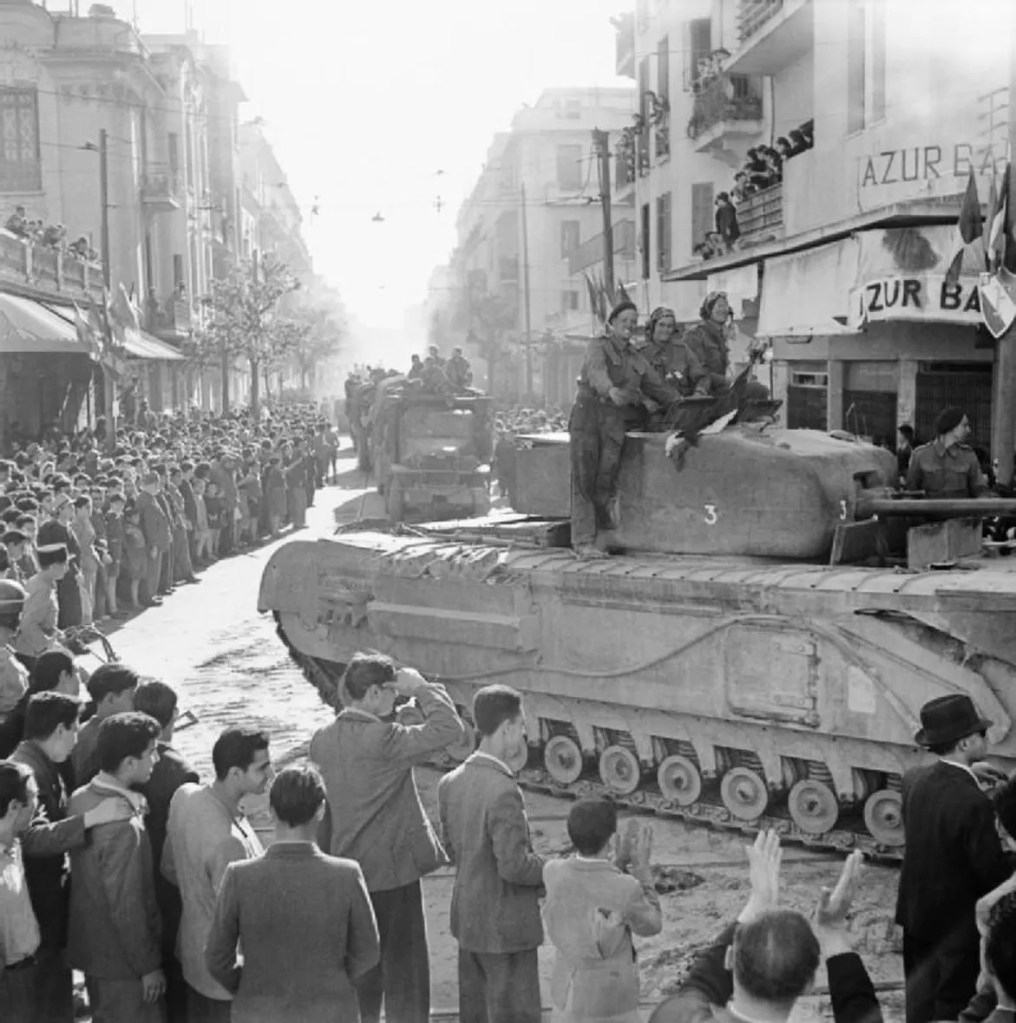
A Time When Tanks Were Valued

North Atlantic Treaty Conference

The Conference in Munich this weekend that has attracted World Leaders to speak about their security concerns and in particular the North Atlantic partnership, is not in fact a NATO conference. That happened the day before in a low-key affair in Brussels between most of the NATO Ministers of Defence (notably Pete Hesgeth, the US secretary of War, did not attend).

The most interesting aspect of these past five days is the press conference given by the NATO Secretary General Mark Rutte on Wednesday evening. After his introduction, he was quizzed by 14 different news and media outlets, including some big hitters such as the Wall Street Journal and AFP. Two Russian News in Exile reporters asked questions as did two that broadcast in Ukraine and journalists from Denmark, Finland, Iceland, Germany, Turkey and Japan. The only interest from London was Reuters’ Brussels based European Affairs Editor, who asked about the rebranding of NATO’s northern flank activities into “Arctic Sentry”.

Understandably, the main undercurrent of the conference was Rutte’s perspective of President Trump’s recent announcements, including when and by how much the USA will reduce its footprint in Europe. However, the greatest challenge to the Secretary General was the Japanese reporter, who asked specifically about the Chinese threat to the Arctic (which it does not border).

It may appear that a lot has changed since the US Secretary of Defence, Jim Mattis gave a joint press conference in Brussels with the then Secretary General, Jens Stoltenberg, exactly nine years ago today and said thank you for “the warm welcome back to my second home”. However, in March 2003, the UK MoD published a document that suggested a number of possible shocks, including a “Future US administration withdraws co-operation from international bodies such as the UN and NATO”.

We were warned!