The Unknown Warrior and Polish Independence

Although the focus of the British Media this weekend is on the Royal Albert Hall and the Cenotaph there is also an important service of commemoration and thanksgiving around the Tomb of the Unknown Warrior in Westminster Abbey. When the Unknown Warrior was granted a full state funeral by King George V on 11 November 1920, the end of World War I had not been declared and the fledgling Polish army was still fighting for its life against the Soviet Red Army.

So much that was happening then chimes with what is happening now. In Britain, there was a desperate desire for Peace, but conflict was still tearing Eastern Europe apart. The British government under David Lloyd George had no appetite to put boots on the ground and deployed only military advisors to help the Poles. The Russian government saw this weakness and plotted to expand its control. An uneasy peace existed until September 1939 when Russia and Germany split Poland under the terms of the German-Soviet Frontier Treaty – the beginning of World War II.

There is a particular poignancy about the attack in Krakow this weekend. The escalation of Russian hybrid war in Europe cannot be disguised. The Allied creation of Multi-National Force Ukraine (MNF-I) will particularly annoy the Moscow Hawks. The MNF-I two-week peacekeeping exercise, which begins in Poland tomorrow and involves hundreds of British troops, is no doubt the reason for the attack in Krakow.

I worked with the Polish Armed Forces in Krakow in 1996, when Britain forged a strong military partnership to train our armoured brigades. The exercise tomorrow does not involve heavy armour, but it is a step in the right direction to prove MNF-I is not just a Paper Tiger. What we need to do is to publicise these military manoeuvres on our mainstream media, every day this week to demonstrate our solidarity with Poland and Ukraine and to shift the emphasis from the past to the future.
Badge of the Armed Forces Command in Krakow Military District 1996
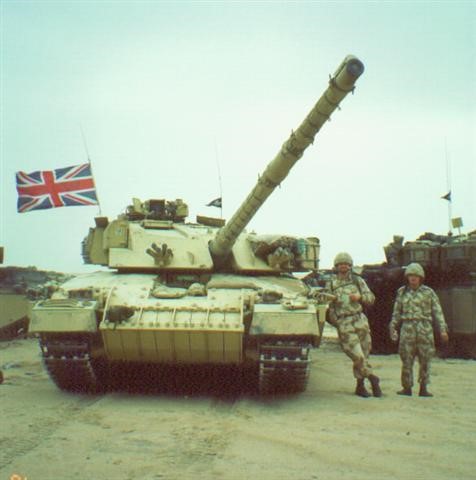
Hybrid War Is Real War

Twenty-five years ago, I presented the British Army’s view on Hybrid War to a distinguished audience in London. At the time, we were more concerned with the threat, which we defined as: “states, or non-state actors [which] choose to exploit all modes of war simultaneously using advanced conventional weapons, irregular tactics, terrorism and disruptive criminality to destabilise an existing order.”

Looking at Europe and the Middle East this week, it clear that Hybrid War is with us now; with people fighting for land, resources and power through all possible means. The problem that we did not foresee in 2011 was how divided British society would be in 2026. Perhaps, we were seduced by the benefits of a multicultural society, but now we are reaping the harvest where the country cannot pull together for a common purpose. This has resulted in a climate of suspicion and a system of mass-surveillance, whereby armed forces personnel, medics and police officers are being jailed for illegally accessing secrets that might be used to aid enemies, terrorists and criminals.

Lord Ricketts, who was National Security Advisor during my time in Libya and helped me with my book, highlighted the hybrid threat yesterday. I agree with him that more needs to be allocated to cyber warfare and infrastructure resilience, but what he did not say, which needs as much emphasis is that this money should not come from conventional capabilities. One of the key lessons from our experimentation about hybrid warfare, which has been reinforced by the war in Ukraine, is that intelligence assets and precision firepower do not guarantee success on their own, so we must maintain the ability to carry out combined arms manoeuvre at the point of contact.

ne of the key lessons from our studies and experimentation was that stand-off, precision firepower will not guarantee success on its own, so we must maintain the ability to carry out combined arms manoeuvre at the point of contact.

Still Needed

Will Dan Jarvis Stay As Defence Secretary?

I was asked yesterday whether I thought the new Prime Minister would change the Secretary of State for Defence when he appoints his first Cabinet later this month.

It is certainly true that top Whitehall Mandarins do not like it when a Secretary of State knows more than they do about their business. So it is very unusual for a regular army officer, who has commanded soldiers on operations and held Grade 2 staff appointments, to become Secretary of State for Defence. Not only will the Civil Servants, Cabinet Office and Treasury be cautious, but the Navy, Air Force and Intelligence Services, who compete for Security funding, will be suspicious that Dan will favour his alma mater.

Given this situation and the fact the new PM will wish to reward those who paved the way for his arrival (including the previous Defence Secretary), it would seem that Dan’s days are numbered. And yet…

Defence is not a vote-winner and no longer as important as it was fifteen years ago. It is in a mess both in terms of funding and capability to meet its remit. It needs a root and branch overhaul, so it is unlikely there will be many ambitious politicians eager to take on the role. More importantly, my sources tell me that Dan passed his first important test at the NATO Summit in Ankara and achieved a strengthening of support to Ukraine and an improvement in Defence Industry deals.

The other important factor is that the arrival of the new resident of 10 Downing Street will coincide with the Summer Recess until September. In some ways that is a good time to take of a new job because parliamentary scrutiny is less. However, it could equally be argued that over the summer, we need someone running Defence who knows what they are talking about, so for me, Dan’s the Man.

How The Intelligence Community Has Regressed

There is a lot of news this week about International Security, but none of it is good. What links the wars in Ukraine (and Russia), the Middle East and British Defence Strategy? In a word – Regression. Putin’s refusal to meet Zelenskyy as the war stagnates; Trump’s continued miscalculation about Iran; and the Treasury’s refusal to fully fund the re-equipment of British military forces are three related themes that have been running through most of 2026, but the Media have been very poor at bringing fresh stories to the public about important issues for the country, such as the failure of Ajax to meet its in service date. However, rather than dwell on these tired stories, I thought I would complete my triptych of intelligence blogs because I was struck by what C had to say yesterday.

Listening to the Chief of Britain’s Secret Intelligence Service between 2020 and 2025 on Test Match Special, there were five observations that caught my attention. The first heartening statement was that the intelligence relationship between the USA and UK is in good shape despite political differences. The second, which I thoroughly agree with, was his suggestion that now is probably not the most dangerous period since World War II, quoting the Cuban Missile Crisis and the early 1980s as being closer to Armageddon. He qualified this by doubting whether President Putin was thinking of nuclear options for Ukraine (he would know better than I).

However, it was his other assertions that really opened my eyes. The admission about the ineffectiveness of the UN Security Council was not surprising in itself, but the fact that there seems to be no British intelligence efforts to strengthen the international order does surprise me. The final comment that pricked my ear was his confession that the CIA and our Secret Intelligence Services were embedded deeply in each others work at all levels. Effectively, he was admitting that Britain’s intelligence community has regressed so much that it is no longer independent.

Now we know from Ralph Peters that the USA loves instability in other countries and that it regularly works to undermine governments that it disagrees with; we also know that politically the USA opposes constitutional monarchies. If that does not sway the argument for an independent British intelligence community then the economic case should. At the moment there is absolutely no military threat to Britain from China; however Beijing and Washington are military adversaries in the Pacific and intense rivals to be the top economic power in the World. In this current volatile climate, we need to be very careful about allowing MI6 to undermine our government’s trade options by allowing the CIA access to our political thinking.

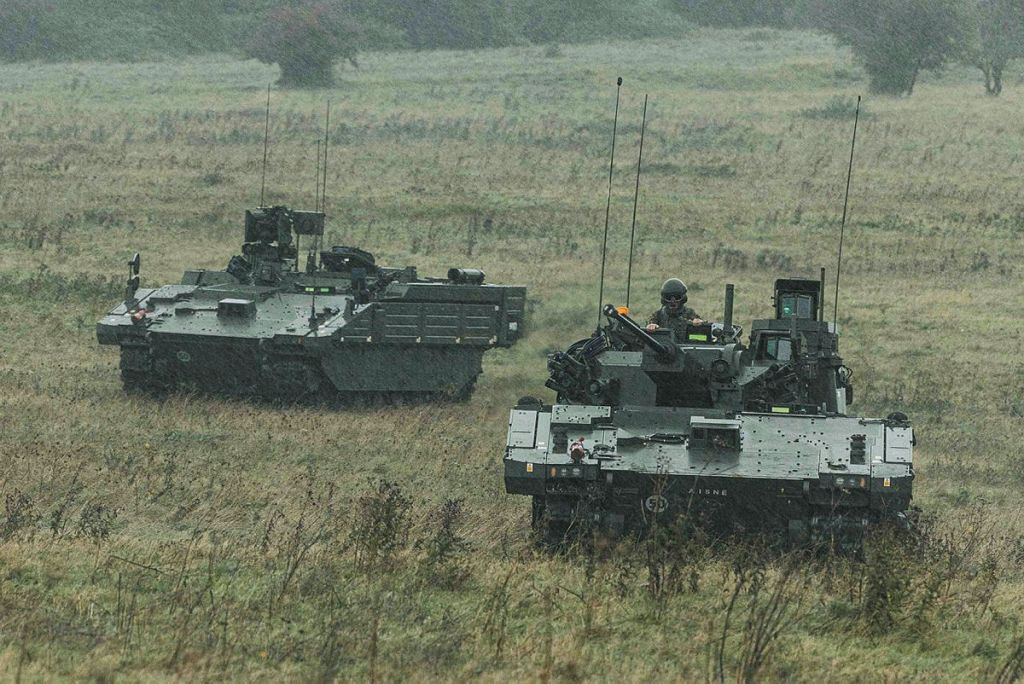
Ajax In The News Again

North Atlantic Treaty Conference

The Conference in Munich this weekend that has attracted World Leaders to speak about their security concerns and in particular the North Atlantic partnership, is not in fact a NATO conference. That happened the day before in a low-key affair in Brussels between most of the NATO Ministers of Defence (notably Pete Hesgeth, the US secretary of War, did not attend).

The most interesting aspect of these past five days is the press conference given by the NATO Secretary General Mark Rutte on Wednesday evening. After his introduction, he was quizzed by 14 different news and media outlets, including some big hitters such as the Wall Street Journal and AFP. Two Russian News in Exile reporters asked questions as did two that broadcast in Ukraine and journalists from Denmark, Finland, Iceland, Germany, Turkey and Japan. The only interest from London was Reuters’ Brussels based European Affairs Editor, who asked about the rebranding of NATO’s northern flank activities into “Arctic Sentry”.

Understandably, the main undercurrent of the conference was Rutte’s perspective of President Trump’s recent announcements, including when and by how much the USA will reduce its footprint in Europe. However, the greatest challenge to the Secretary General was the Japanese reporter, who asked specifically about the Chinese threat to the Arctic (which it does not border).

It may appear that a lot has changed since the US Secretary of Defence, Jim Mattis gave a joint press conference in Brussels with the then Secretary General, Jens Stoltenberg, exactly nine years ago today and said thank you for “the warm welcome back to my second home”. However, in March 2003, the UK MoD published a document that suggested a number of possible shocks, including a “Future US administration withdraws co-operation from international bodies such as the UN and NATO”.

We were warned!