Are We At War or In War?

When is a war not a war? Both Russia and America have begun wars against large independent countries this decade but denied they are in a war to their domestic audiences. In Putin’s words, the invasion of Ukraine on 24 February 2022 was a “special military operation” to protect Russian national security. In Trump’s words, the “major combat operations in Iran” that he launched on 28 February 2026 were to ensure America “will never be threatened by a nuclear-armed Iran” and to facilitate regime-change.

Both these expensive operations have failed to achieve their stated aims and have stagnated with highly contested front lines in Eastern Ukraine and the Strait of Hormuz. However, there is a significant difference between the two wars. In the case of the Russia-Ukraine conflict, Air, Maritime and Cyber forces are all engaged, but the vicious hand-to-hand fighting involving ground troops means that the neighbours are still At War and In War. In the Gulf War, the memorandum-of-understanding signed last week pretends that Iran and the USA are not At War, but we all know that the tit-for-tat strikes yesterday will continue and in reality, they remain stuck in a never-ending ideological war.

Why is this important? First, the legal consequences of starting a war of aggression. Second, the Global economic consequences of closing the flow of energy from the Gulf. Third, the diplomatic consequences of breaking the international rule-book. Can this situation be retrieved? Yes, but it will take a Mahatma Gandhi, or Nelson Mandela to overlook the grievances and heal the wounds. Who is waiting in the wings with the political and diplomatic credibility?

Assisi Commemorations

Taking a break from the current conflicts that seem to be stuck in perpetual stagnation, I paid a visit to Perugia and Assisi for two commemorations. In October, it is the 800th anniversary of the death of St Francis and the build up has included a magnificent exhibition of the work of Giotto, who brought life to art in the 14th century. I managed to catch the last day of this show in Perugia before visiting the Basilica of St Francis, where Giotto painted a number of frescos.

Below the Basilica, as you can see in the photograph, lies the Commonwealth War Cemetery of Assisi where 946 casualties rest. Fourteen of these were from my regiment, including the tank crew of Leach, Lunnon and Sharp, who could not be separated when they died together on 19th June 1944.

On that day, the 17th/21st Lancers were part of 26th Armoured Brigade, tasked with capturing Perugia. Advancing along the line of the railway, they came under heavy artillery fire. The bridge into town had been prepared for demolition but was unblown. As they were about to cross, an enemy shell hit the charges, which exploded, utterly destroying the bridge. The way was shut and the day turned into a bitter fight through thick and tangled country, where the enemy was hard to locate.

That night the German Army moved west out of the town towards Lake Trasimene. The 17th/21st Lancers continued to support 2nd Rifle Brigade, before they were withdrawn into Perugia for five days to refit the Sherman tanks and recover their casualties. The fighting in Italy is now thought of as a side-show compared with the Normandy Landings, but the reality is that it was a really tough campaign in much harder country than North-West Europe.

Will It Be Signed Today?

The American announcement that the US-Iran deal will be signed on Sunday is a bold assertion given the hurdles to that happening. To my mind, it is symbolic of the difference between the two countries and Washington’s lack of understanding about the devolved nature of the Iranian chain of command.

I have written about this before because it happened in Bosnia in 1995. The West would negotiate a deal with the Bosnian leaders in Sarajevo and then be surprised when the agreement was ignored by the so-called warlords in the provinces. This is not necessarily a characteristic of a failed state, but rather a clever mechanism to ensure its strength is spread to ensure its survival as an independent country. One of the finest examples was in France during World War II when the Resistance did not allow Germany a peaceful occupation.

I spent two years interpreting probabilities when I was Head of Reliability in the Ministry of Defence. In my view, the likelihood of a deal is high, but the chances of it happening today are less than 50%. Will this mean peace in the Middle East? One can only look at historical examples to answer that question and if you look at that data, one might say with some confidence that the percentage is low and conclude this deal is unlikely to last.

The UN Is Watching For A Peace Deal

Why Dan Jarvis Is Wrong To Accept The Appointment Of Defence Secretary

I know Dan well. He was the best Army applicant for the University of Cambridge MPhil in International Relations in 2009 when I helped him to gain a place at Jesus College. He gave this up to be a politician and has brought a much needed infantry officer’s perspective to the House of Commons. His previous army service commanding soldiers in the parachute regiment and working on operational deployments are clear signs that he has the capacity to cope with the demanding workload as Secretary of State for Defence. However…

Dan is wrong to accept this role because if he does, the military services will be forced to make do with insufficient funds to be credible in the volatile world that we live in today. With two prominent politicians making a stand, now is the time to overturn the Treasury’s disastrous policy of denuding Defence as it has done for the past 16 years.

All soldiers are imbued with the spirit of managing with fewer resources than ideal. In many ways, this has been the characterisation of all my years service. The only Prime Ministers who actually gave us more were Maggie Thatcher and Tony Blair in their first terms. So if Kier Starmer wishes to survive, he should follow their example and side with the Armed Forces over the Treasury. And Dan Jarvis should only accept the appointment if the Defence Industrial Strategy is fully funded.

Churchill Didn’t Let Down The Armed Forces

How The Intelligence Community Has Regressed

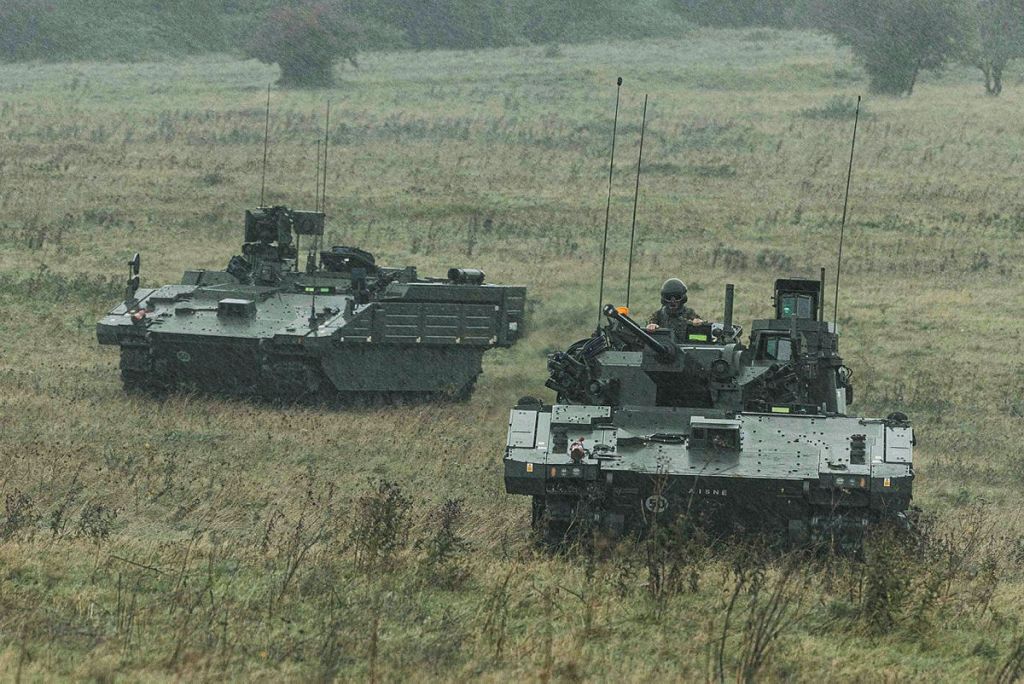
There is a lot of news this week about International Security, but none of it is good. What links the wars in Ukraine (and Russia), the Middle East and British Defence Strategy? In a word – Regression. Putin’s refusal to meet Zelenskyy as the war stagnates; Trump’s continued miscalculation about Iran; and the Treasury’s refusal to fully fund the re-equipment of British military forces are three related themes that have been running through most of 2026, but the Media have been very poor at bringing fresh stories to the public about important issues for the country, such as the failure of Ajax to meet its in service date. However, rather than dwell on these tired stories, I thought I would complete my triptych of intelligence blogs because I was struck by what C had to say yesterday.

Listening to the Chief of Britain’s Secret Intelligence Service between 2020 and 2025 on Test Match Special, there were five observations that caught my attention. The first heartening statement was that the intelligence relationship between the USA and UK is in good shape despite political differences. The second, which I thoroughly agree with, was his suggestion that now is probably not the most dangerous period since World War II, quoting the Cuban Missile Crisis and the early 1980s as being closer to Armageddon. He qualified this by doubting whether President Putin was thinking of nuclear options for Ukraine (he would know better than I).

However, it was his other assertions that really opened my eyes. The admission about the ineffectiveness of the UN Security Council was not surprising in itself, but the fact that there seems to be no British intelligence efforts to strengthen the international order does surprise me. The final comment that pricked my ear was his confession that the CIA and our Secret Intelligence Services were embedded deeply in each others work at all levels. Effectively, he was admitting that Britain’s intelligence community has regressed so much that it is no longer independent.

Now we know from Ralph Peters that the USA loves instability in other countries and that it regularly works to undermine governments that it disagrees with; we also know that politically the USA opposes constitutional monarchies. If that does not sway the argument for an independent British intelligence community then the economic case should. At the moment there is absolutely no military threat to Britain from China; however Beijing and Washington are military adversaries in the Pacific and intense rivals to be the top economic power in the World. In this current volatile climate, we need to be very careful about allowing MI6 to undermine our government’s trade options by allowing the CIA access to our political thinking.
Ajax In The News Again