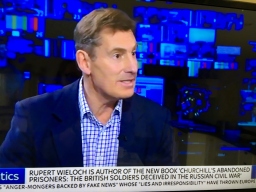
80 Years Ago The Bikini Was Invented

July 1946 was a momentous month in history. The American development of nuclear weapons took several strides with Operation Crossroads. This was the fourth and fifth detonations of atomic bombs in the Pacific Ocean, 520 feet above Bikini Atoll. The bomb was named Gilda after Rita Heyworth’s character in a Hollywood Film. Four days later, a French model posed in the first two-piece swimsuit in Paris, where the designer named the garment a Bikini in a tribute to the nuclear test site. The second atomic bomb, named Helen, was detonated below the surface of the sea at the same test site. This was the first underwater test and the contamination was so bad that a third test planned for the following month was postponed until the 1950s.

There was so much else that was going on that month, which was overshadowed by these tests, but they are worth remembering now because of how they impacted on the Cold War and how they are the stem cells for today’s wars in Ukraine and the Middle East. The first was the refusal of the Soviet Union to accept the UN plan to regulate the use of atomic energy. Believing this would preserve an American monopoly, Andrei Gromyko effectively began the nuclear arms race on 22 July 1946.

The second was Operation Keelhaul, the forced repatriation of Russians, Ukrainians and Cossacks who had helped Germany during World War II and were hiding in Northern Italy. People believe that after the end of hostilities peace broke out everywhere, but in reality there was still much violence and blood letting in Europe, such as the Kielce massacre on 4 July 1946 in Poland.

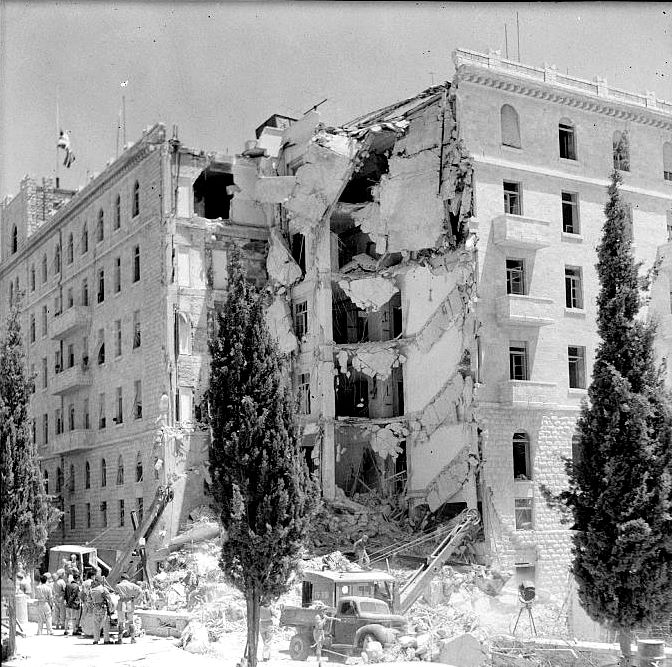
The third other event, which took the headlines that month, was the bombing of the King David Hotel in Jerusalem. Ninety-one people of various nationalities were killed in a terrorist attack that led to: the end of the British mandate in Palestine; the creation of the state of Israel; and the start of the Middle East wars that continue to this day.

There are lessons for potential peacemakers in all of these historical events, not least the modelling of the first Bikini in Paris!
Back To Square One?

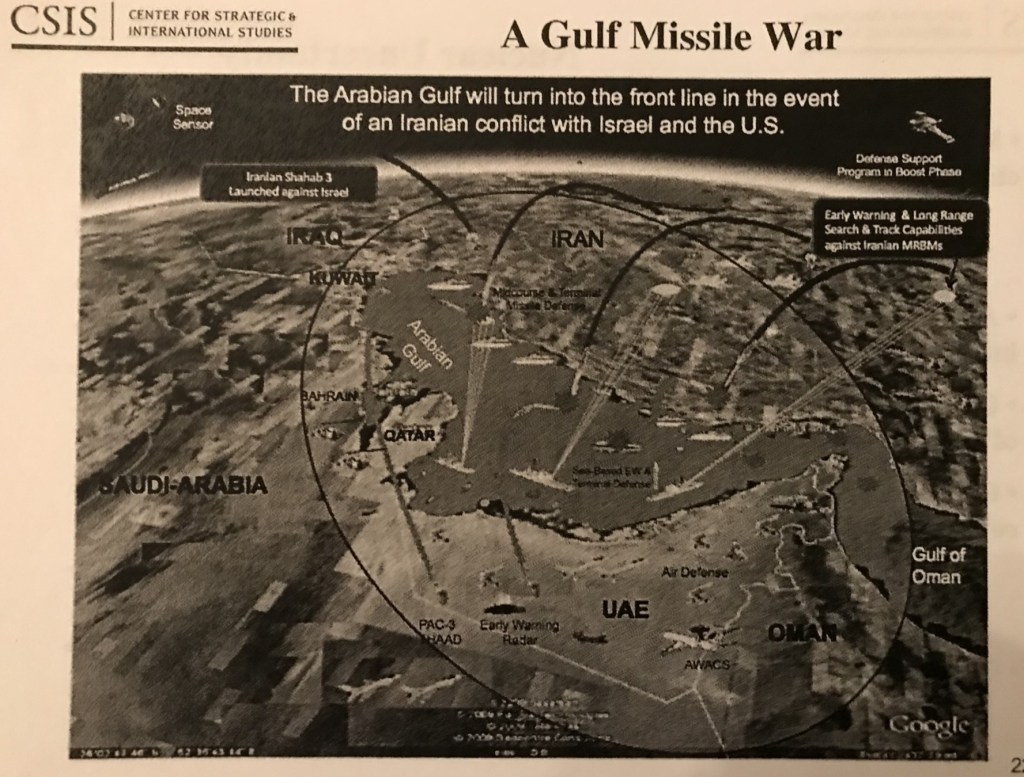
Or worse? The latest strikes this week are unlikely to bring long-term peace in the Middle East and more likely to lead to revenge attacks for the next decade. One could argue that there never was peace in the Middle East. However, before the beginning of Operation Epic Fury on 28 February 2026, there was diplomatic dialogue, free passage for everyone through the Gulf and economic success. Now, there is the chaos that was predicted by American think tanks, which you can see in the slide below.

Having failed to achieve its strategic objectives, the war has descended into tit-for-tat strikes over the control of the Strait of Hormuz, with the Gulf still closed for business (British Airways has not restarted its operations since they were stopped at the beginning of March). From afar it appears that a Superpower is illegally attempting to take what is not theirs through military blockades and coercion; some might call this colonisation except that it is all about Sea Power and Air Power. Gun boat diplomacy sometimes works, but the Iranian regime is unlikely to bow its head to Washington anytime soon.

Twenty-five years ago, we wrote a paper about America’s role as the World’s policeman after the end of the Cold War. At that time, the USA provided the largest financial support to UN peacekeeping and the World supported them by deploying their blue-helmet forces on the front line. How things have changed. Now, the USA has lost friends and allies, while Iran has gained support from rival powers. Washington’s clumsy demand for a 20% tariff this week is seen for what it is: a desperate attempt at extortion to pay for their folly. Surely, it must be time for a change of approach.

Will Dan Jarvis Stay As Defence Secretary?

I was asked yesterday whether I thought the new Prime Minister would change the Secretary of State for Defence when he appoints his first Cabinet later this month.

It is certainly true that top Whitehall Mandarins do not like it when a Secretary of State knows more than they do about their business. So it is very unusual for a regular army officer, who has commanded soldiers on operations and held Grade 2 staff appointments, to become Secretary of State for Defence. Not only will the Civil Servants, Cabinet Office and Treasury be cautious, but the Navy, Air Force and Intelligence Services, who compete for Security funding, will be suspicious that Dan will favour his alma mater.

Given this situation and the fact the new PM will wish to reward those who paved the way for his arrival (including the previous Defence Secretary), it would seem that Dan’s days are numbered. And yet…

Defence is not a vote-winner and no longer as important as it was fifteen years ago. It is in a mess both in terms of funding and capability to meet its remit. It needs a root and branch overhaul, so it is unlikely there will be many ambitious politicians eager to take on the role. More importantly, my sources tell me that Dan passed his first important test at the NATO Summit in Ankara and achieved a strengthening of support to Ukraine and an improvement in Defence Industry deals.

The other important factor is that the arrival of the new resident of 10 Downing Street will coincide with the Summer Recess until September. In some ways that is a good time to take of a new job because parliamentary scrutiny is less. However, it could equally be argued that over the summer, we need someone running Defence who knows what they are talking about, so for me, Dan’s the Man.

Is This A Victory Parade In All But Name?

The seven day funeral of Ayatollah Ali Khamenei that began on Friday in Tehran and continues with a public holiday and processions in Iran and neighbouring Iraq is perhaps the greatest sign yet that America has backed down from its strategic objectives declared in February.

Not only has the Iranian regime survived but it has strengthened its support while the USA has been weakened politically and diplomatically. Don’t get me wrong, the US still has the most powerful military forces in the World. However, Washington has had to relearn three lessons that were ignored by deluded leaders.

The first is one of my regular refrains: Air Power alone does not work. Bombing a civilian population will not help your cause as Hitler found when he Blitzed London for 56 days in 1940 and Putin has found in his war with Ukraine. All it does is inspire hatred and collective resilience.

The second was also plain to see from the beginning. Before starting a war against a regional power, build a coalition first. This was the key to success in the 1990 war to liberate Kuwait and it was the most important piece of advice that the UK Prime Minister gave to President Bush after 9/11.

The third has many aspects to it, but it comes down to this: play by the rules! When I received a briefing from the Foreign Office about the difference between the West and the Authoritarian Regimes that threaten the World, the answer was that we obey international conventions and the rule of law. That means respecting the United Nations and other international institutions as well as complying with the law of armed conflict. I know it is difficult when the enemy is asymmetric, but ethics in war matter because those on the touch line, such as The International Committee of the Red Cross will be keeping a tally.

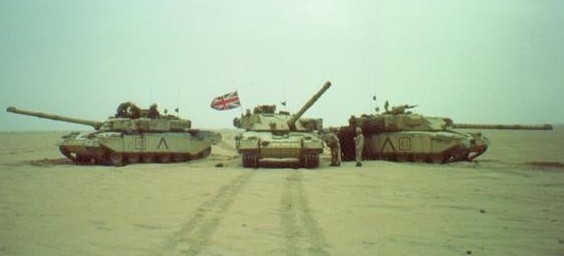
The First Troop Onto The Basra Road In 1991

What We Really Need Now…

Is a combined arms fighting troops exercise in the United Kingdom that shows the British Public what it means to be At War. In the 1980s, the British Army of the Rhine practised their operating procedures with a deployment of 1st British Corps every autumn, after the farmers had collected their harvest. If it was particularly wet, our 60 ton battle tanks were restricted to roads and tracks. This continued in the UK until the Millennium. For example, in 1994, I organised a brigade FTX that took in the East Midlands, Cumbria, Northumberland and Scotland with live firing at Otterburn and Warcop and gruelling combat training in Kielder Forest.

The organisation of a Corps FTX is probably beyond our current crop of staff officers; for example it takes deep knowledge to co-ordinate a move of 3,000 vehicles without coming to a complete standstill and providing the enemy air force with a sitting-duck target. However, it would not be beyond their capability to link the major training areas of Salisbury Plain, Brecon, Dartmoor, and Otterburn with tanks. artillery and infantry moving between each of them.

The benefits would be two-fold. Firstly, we would relearn many military lessons that have been forgotten in the past 25 years. Second, the public would actually see the armed forces do something real at home not just in some far-away place. For too long, the military has been sidelined in the shadows compared with the American armed forces and those on the front line with Russia.

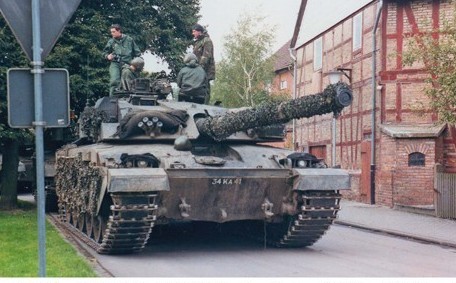
Exercise Lionheart in Germany