Is This A Victory Parade In All But Name?

The seven day funeral of Ayatollah Ali Khamenei that began on Friday in Tehran and continues with a public holiday and processions in Iran and neighbouring Iraq is perhaps the greatest sign yet that America has backed down from its strategic objectives declared in February.

Not only has the Iranian regime survived but it has strengthened its support while the USA has been weakened politically and diplomatically. Don’t get me wrong, the US still has the most powerful military forces in the World. However, Washington has had to relearn three lessons that were ignored by deluded leaders.

The first is one of my regular refrains: Air Power alone does not work. Bombing a civilian population will not help your cause as Hitler found when he Blitzed London for 56 days in 1940 and Putin has found in his war with Ukraine. All it does is inspire hatred and collective resilience.

The second was also plain to see from the beginning. Before starting a war against a regional power, build a coalition first. This was the key to success in the 1990 war to liberate Kuwait and it was the most important piece of advice that the UK Prime Minister gave to President Bush after 9/11.

The third has many aspects to it, but it comes down to this: play by the rules! When I received a briefing from the Foreign Office about the difference between the West and the Authoritarian Regimes that threaten the World, the answer was that we obey international conventions and the rule of law. That means respecting the United Nations and other international institutions as well as complying with the law of armed conflict. I know it is difficult when the enemy is asymmetric, but ethics in war matter because those on the touch line, such as The International Committee of the Red Cross will be keeping a tally.
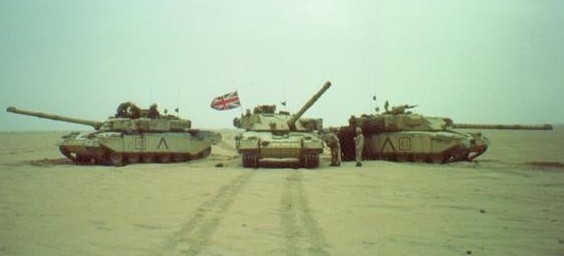
The First Troop Onto The Basra Road In 1991
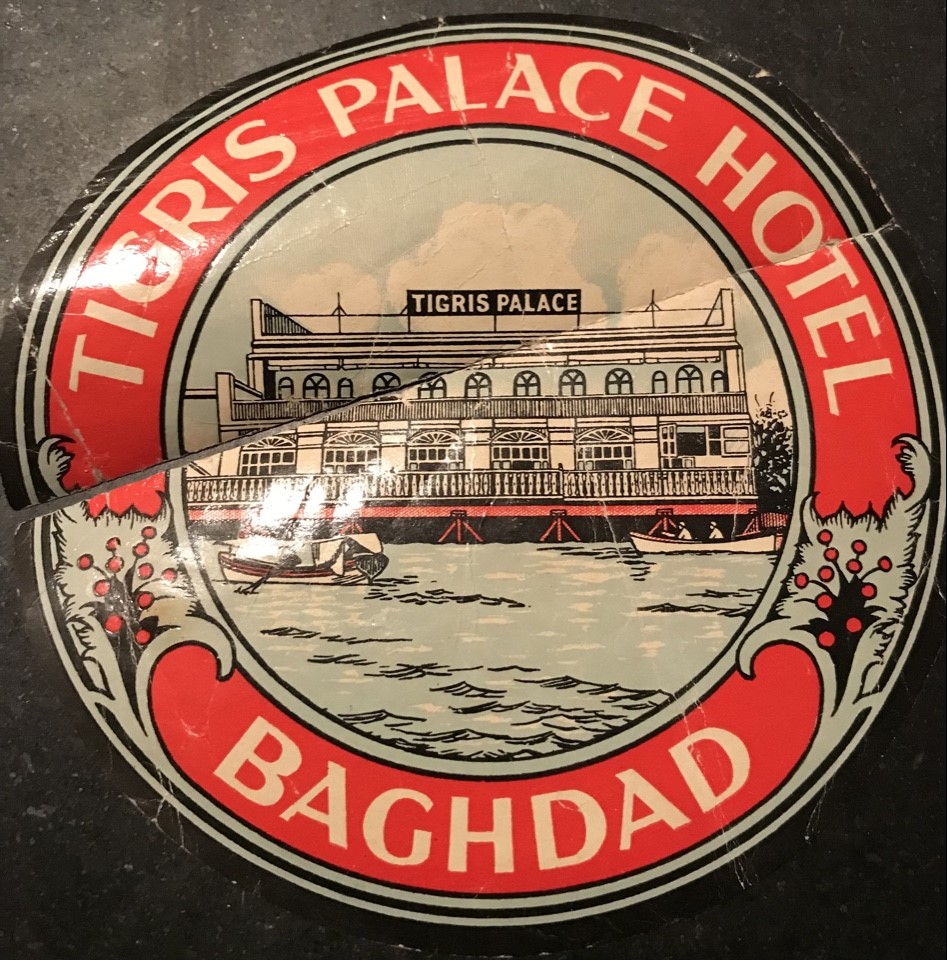
Not The Third Gulf War

This week, I have seen several media outlets and analysts tracing the current conflict in the Gulf to the war to liberate Kuwait. Their logic is that the 21st century Middle East wars stem from the decision by the international community (President George Bush) not to overthrow Saddam Hussein after defeating his army in 1991.

I have a different perspective based on the premise that 1979 was the beginning of the modern era. That year began with the Iranian Revolution and continued with horrific massacres by the PLO in Israel and the Muslim Brotherhood in Syria (as well as terrorist attacks in Rhodesia, Britain, Norway, Columbia, USA, Spain, Ireland (Mountbatten) and Netherlands). At the end of the year the siege of the Grand Mosque of Mecca resulted in 244 deaths and spawned Al Qu’aida. To cap it all, the Soviet Union invaded Afghanistan on 24 December.

For me, the First Gulf War began the following year when Saddam Hussein invaded Iran. In the same way that the US Administration supported the Taliban when it attacked Soviet troops, Washington also backed Saddam with satellite and radar intelligence, economic loans, artillery and vehicles. However, this did not result in victory and over a million people died in this conventional war, which lasted nearly eight years. Strangely, both Israel and the USA supported Iran, with the secret Iran-Contra arms sales becoming a national scandal in 1987.

The British Army studied this First Gulf War as it happened and I remember every year, there was a question in the Staff College Exam about its implications. A friend who was translating for the United Nations stayed in Baghdad and his notes remind me of one of the most relevant lessons for 2026: Iraq attempted to expand the scope of the war to reduce its duration, but Iran was happy to plan for the long haul…

RAF Akrotiri Too Important To Lose

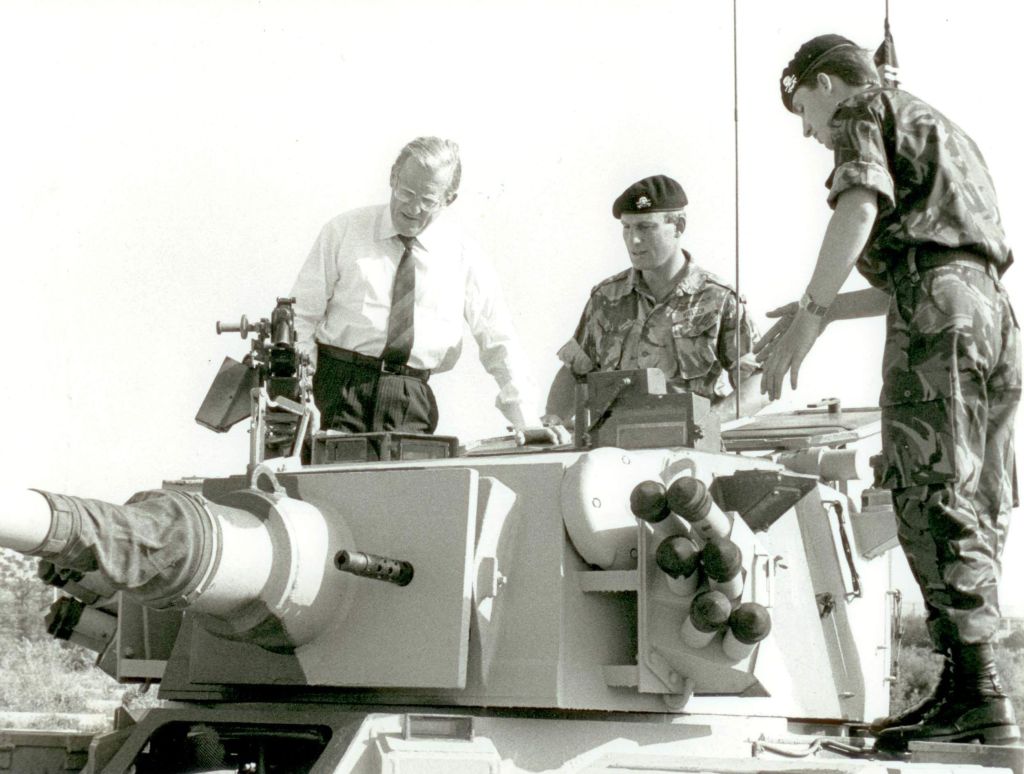
I spent two years patrolling the British Sovereign Base Areas in Cyprus at a pivotal time in world history. It began with attacks by Colonel Gadhaffi and the fall of the Berlin Wall, but was followed by the Gulf War. Shortly before Saddam Hussein invaded Kuwait, I was honoured to host the Secretary of State for Defence, Tom King, at my base (see below).

At the time, Cyprus was considered to be an unimportant side-show compared with the British Army of the Rhine and Northern Ireland. However, each Monday I was briefed on the changing security situation in the Balkans, Trans-Caucasus and Middle East. The briefers were listening in to communications acroos the region and predicted all the wars that took place in the 1990s, sharing that information with the Pentagon. When the Gulf War began, RAF Akrotiri was used as a forward mounting base for British Forces and apart from providing security with my armoured cars, i also had to deploy a tank troop forward with 7 Armoured Brigade.

Thirty five years after the Gulf War, when all our bases in Germany have closed and Northern Ireland is relatively quiet, we are seeing again the vital national importance of the British bases in Cyprus. Saddam Hussein was a conventional opponent and did not manage to attack our bases in 1990. However, Iran is an asymmetric adversary with highly sophisticated weaponry and as we have already seen, they have the means and capability to prolong this war if it comes to national survival.

Just to put this into context, Iran is three times the size of Ukraine and its population is close to 90 million – it is not Gaza. I have seen the modelling results of a US-Iran conflict and it did not look good for the world. As we discovered in Libya when the French Prime Minister declared that Gadhaffi would be toppled by April, air power alone does not achieve regime change and will only lead to chaos unles you back it up with boots on the ground. That means blood, treasure and time. Sadly, the two British hospitals in Cyprus have both been demolished. Lets hope that we don’t need to build another one.