NATO Leadership Missing

It has been particularly disappointing that in the past week, NATO leadership has remained silent about the war in Europe.

After the Secretary General’s visit to England last month, there were plenty of briefings about the support to Ukraine. Five weeks later, that support looks fragmented despite the visit of the two new Assistant Secretary Generals(ASGs) to Kyiv (there are 6 ASGs serving on NATO’s International Staff).

What was especially poignant was that the Ukrainian President praised the EU Council and Commission last weekend, but did not do the same for NATO this week (Ukraine became a member of NATO’s Partnership for Peace in 1994).

It is not as if there is nothing for NATO to say. At the same time as Zelensky met the EU leaders, there was an important NATO symposium which exposed the extent of Russia’s widening war in Europe; including drone, cyber, sabotage and subversion operations. There was also NATO’s Nuclear Planning Group meeting in Helsinki following its Deterrence exercise in Italy earlier this month. So why has Mark Rutte remained silent since he spoke about Baltic security and the requirements list during his visit to Estonia?

Yes, I know he has to tread carefully because NATO is primarily a political organisation, but really is is time for the Secretary General to get off the fence, roll up his sleeves and show some leadership.
Hybrid War Is Real War

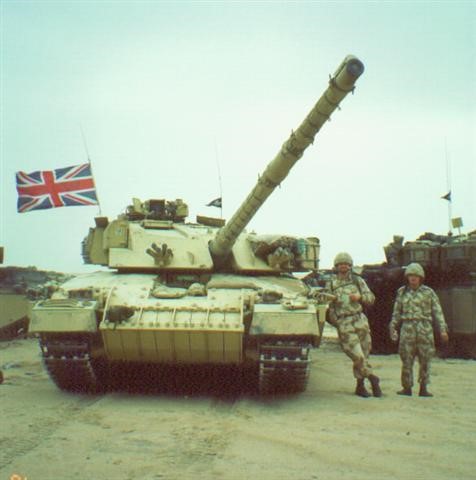
Twenty-five years ago, I presented the British Army’s view on Hybrid War to a distinguished audience in London. At the time, we were more concerned with the threat, which we defined as: “states, or non-state actors [which] choose to exploit all modes of war simultaneously using advanced conventional weapons, irregular tactics, terrorism and disruptive criminality to destabilise an existing order.”

Looking at Europe and the Middle East this week, it clear that Hybrid War is with us now; with people fighting for land, resources and power through all possible means. The problem that we did not foresee in 2011 was how divided British society would be in 2026. Perhaps, we were seduced by the benefits of a multicultural society, but now we are reaping the harvest where the country cannot pull together for a common purpose. This has resulted in a climate of suspicion and a system of mass-surveillance, whereby armed forces personnel, medics and police officers are being jailed for illegally accessing secrets that might be used to aid enemies, terrorists and criminals.

Lord Ricketts, who was National Security Advisor during my time in Libya and helped me with my book, highlighted the hybrid threat yesterday. I agree with him that more needs to be allocated to cyber warfare and infrastructure resilience, but what he did not say, which needs as much emphasis is that this money should not come from conventional capabilities. One of the key lessons from our experimentation about hybrid warfare, which has been reinforced by the war in Ukraine, is that intelligence assets and precision firepower do not guarantee success on their own, so we must maintain the ability to carry out combined arms manoeuvre at the point of contact.

ne of the key lessons from our studies and experimentation was that stand-off, precision firepower will not guarantee success on its own, so we must maintain the ability to carry out combined arms manoeuvre at the point of contact.

Still Needed

Neutering The Army

The soul of the British Army is under threat. Throughout its history, the regimental system has been tied to local populations because it is well-known that soldiers fight for their mates above all else. Yes, there are flaws in its culture, but when the going gets tough on the battlefield, resilience comes from knowing that the soldier, section, platoon, or troop on your flank will not let you down. It’s all about trust.

This week, the King has praised the effective work of the National Cyber Security Centre. The words used make it sound as if it is on the front line: “defending against attacks”; “protecting critical infrastructure”. However, this is a (very important) rear area capability NOT a combat capability.

We have also read about the potential for a new British Air Defence Capability. My post of 16 August explains the need for this and I fully support the proposal, but NOT at the expense of increasing the numbers of our combat soldiers.

So where are we in terms of building our combat capability and instilling a war ethos in the country? As usual, the Media is silent on this issue and is more interested in the bad behaviour stories, focusing on the Defence Secretary’s announcement about cultural change in the UK Military. I have never met the new Armed Forces Commissioner, but I suspect she will have difficulty in intuitively understanding what is needed to defeat a tenacious enemy on the battlefield and how to turn today’s youth into tomorrow’s combat soldiers. It’s all about trust!

US Risk Analysis Abroad

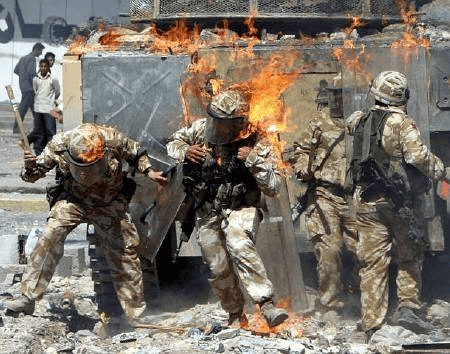
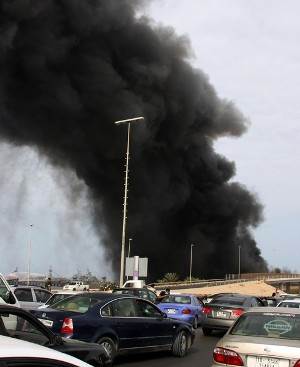
It all comes down to 11 September 2012 when the US Ambassador to Libya was killed in Benghazi. Christopher Stevens suffered from a failure not in intelligence, but in political decision-making. The knee-jerk reaction to pull out all western missions from Libya led to a catastrophic second civil war, from which the country has not yet recovered. The legacy can still be felt all over the world and is the principal reason why Washington has pulled its B-1 bombers out of Gloucestershire.

My family knows RAF Fairford well. We have lots of thank you letters from their children’s school for helping with their education programmes. I have flown from there in C-17s to the Gulf and Afghanistan. Last year I attended a memorial service at Fairford and drove past the arrest-point that has recently been in the news. There is still a lot to come out of the combined intelligence work that led to the arrest, especially the roles played by GCHQ, MI5 and the CIA. However, what is clear today is that Washington decision-makers have not taken the arrests as proof of security, but as proof of a threat.

Ever since Christopher Stevens death. American risk-analysis abroad has been cautionary. What adds to this prudence is if the USA cannot control the outside environment i.e. their security teams are legally prevented from opening fire and their rules of engagement are constrained. US policy abroad is normally to extract any member of their forces or government official if they kill a local. In Libya, there were helicopters ready to pick up their people in the event of a serious incident and fly them out of the country. They simply will not allow local jurisdiction over their spies, or soldiers, as was seen in the tragic case of Harry Dunn in 2019. The calculation is fairly simple: enemy capability + permissive host environment + legal minefield = B-1 pull-out. This is not the end of the story…

Benghazi Attack 2012