It all comes down to 11 September 2012 when the US Ambassador to Libya was killed in Benghazi. Christopher Stevens suffered from a failure not in intelligence, but in political decision-making. The knee-jerk reaction to pull out all western missions from Libya led to a catastrophic second civil war, from which the country has not yet recovered. The legacy can still be felt all over the world and is the principal reason why Washington has pulled its B-1 bombers out of Gloucestershire.
My family knows RAF Fairford well. We have lots of thank you letters from their children’s school for helping with their education programmes. I have flown from there in C-17s to the Gulf and Afghanistan. Last year I attended a memorial service at Fairford and drove past the arrest-point that has recently been in the news. There is still a lot to come out of the combined intelligence work that led to the arrest, especially the roles played by GCHQ, MI5 and the CIA. However, what is clear today is that Washington decision-makers have not taken the arrests as proof of security, but as proof of a threat.
Ever since Christopher Stevens death. American risk-analysis abroad has been cautionary. What adds to this prudence is if the USA cannot control the outside environment i.e. their security teams are legally prevented from opening fire and their rules of engagement are constrained. US policy abroad is normally to extract any member of their forces or government official if they kill a local. In Libya, there were helicopters ready to pick up their people in the event of a serious incident and fly them out of the country. They simply will not allow local jurisdiction over their spies, or soldiers, as was seen in the tragic case of Harry Dunn in 2019. The calculation is fairly simple: enemy capability + permissive host environment + legal minefield = B-1 pull-out. This is not the end of the story…
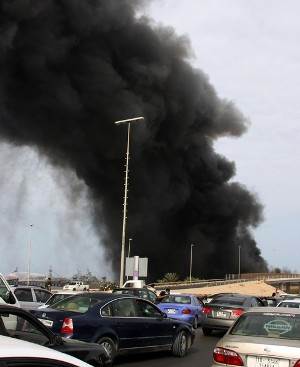
Benghazi Attack 2012

