The 25th anniversary of the largest loss of British lives to terrorism is particularly poignant for me. I had recently returned from New York working in the United Nations building close to the World Trade Centre. Back in London, I booked a meeting room for 11 September 2001 in the Metropole Building, which was the temporary home of the UK Ministry of Defence, while the main building was being refurbished.
The room was next to a media operations office, which I knew well from my public information writing. Just before the meeting with the Foreign Office and International Development the television switched to a view of the World Trade Centre and we watched in horror as the Boeing 767 flew into the second tower and subsequent collapse of the buildings. The room was full of questions, but the MoD reacted quickly and within 24 hours had set up a team to develop the UK response.
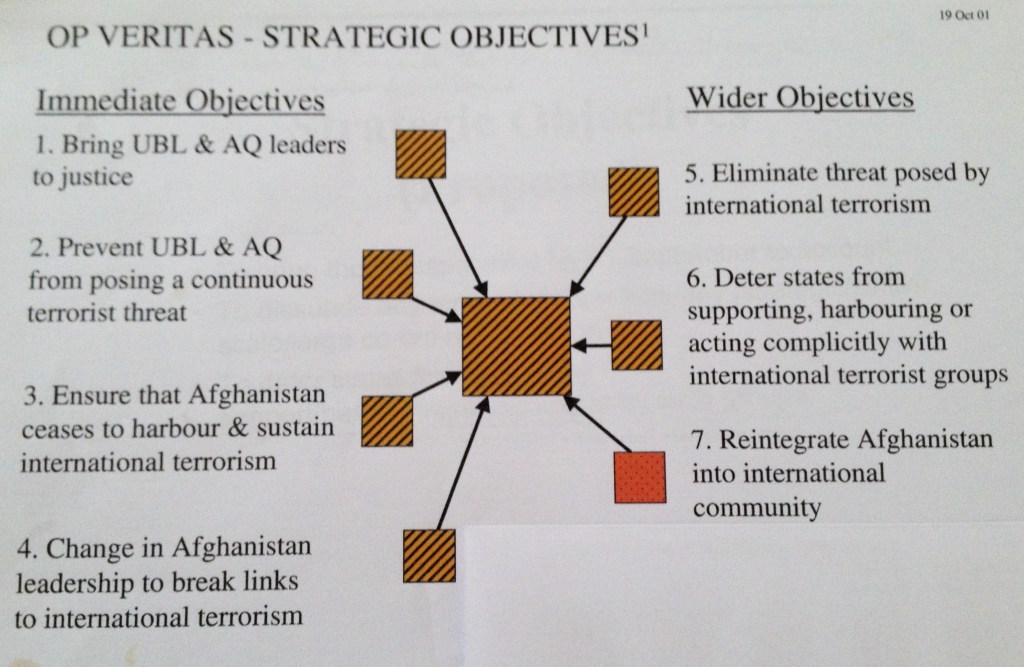
For the next six weeks, I worked in the underground bunker system that links 10 Downing Street with the main departments of state. The plans we developed, summarised in the image below, were taken to Camp David by the Prime Minister and outlined in Parliament by the Foreign Secretary.
It always amazes me how so much that is written about 9/11 fails to take account of what actually happened. The most common mistake in academia is to analyse the political aspects without taking account of the military and diplomatic milestones. The second major error is to suggest that what happened in 2001 was completely new, when in fact there was a long track record of international terrorism conventions and a clear time-line of Al Qaida’s attacks on US targets. A third misconception is to merge the operations in Afghanistan in 2001-02 with the invasion of Iraq in 2003, when there is a very clear distinction between the two in terms of legality and global consensus.
As we approach the 25th anniversary, the focus should rightly be on the victims of 9/11 and the courage of individual responders. But we should also remember how we have managed to prevent an atrocity of this scale from reoccurring, despite many copycat attempts (notwithstanding some pretty ghastly domestic attacks in the past two decades). Unfortunately, the threat has not disappeared, so we need to remind the youth of today what really happened and encourage them to continue the important government counter-terrorism work.