
With news that collective Army training is being curtailed, including tank firing at Castlemartin Ranges and Apache Helicopter manoeuvres, I am reminded of the track mileage moratoriums imposed on the Army in the past. But to my mind, these are vital parts of building military capability, not “nice-to-have” exercises as some ignorant observers suggest. So what will be lost if these events are cancelled?
One of the hardest jobs I had as Head of Defence Training Capability in the MoD was to explain to civil servants, politicians and other services why Army collective training was so important. It is much simpler to describe the consequences of not buying equipment by highlighting the financial penalty clauses written into contracts by Defence Industry and quoting the stark English proverb For Want Of A Horse Shoe Nail.
I used two methods in the argument about collective training. The first was to ask what force was needed by a certain date and then build a picture of the steps from individual competence to battle group efficiency. The force elements at readiness (FE@R) model was hard enough to describe to staff college students, but in London the eyes glazed over very quickly. The second way was to liken the task to cinema production, or the Premier League. This was more successful because there are plenty of examples of Films and Soccer Clubs which fail miserably because they focus on individual stars, rather than the collective. The Premier League analogy is also useful because the consequences of team failure; 20 years ago, the British Army was still one of the top six, now we are in danger of relegation, if we give up collective training.
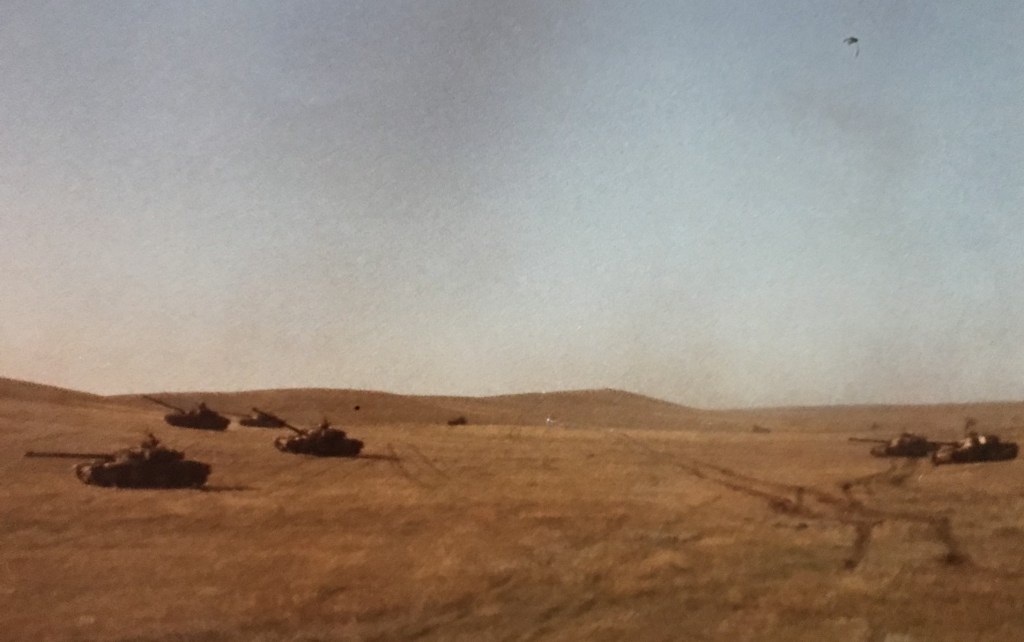
Collective Training At Its Peak

