
Fighting Spirit In The British Army

Fighting Spirit is an ethereal quality, which is an essential element of a combat unit. In many ways, it is the defining feature of a regiment’s fitness because it is the vital attribute that makes soldiers sacrifice themselves for their mates in the heat of battle.

After the Cold War, there was a lamentable loss of this characteristic. In the 1990s, there was an insidious mantra purported by influential officers who had not seen battle, claiming that UN Peacekeeping was not worth dying for. This idea became so widespread that the Chief of Defence Staff, Charles Guthrie, published an article stating that the British Army was losing its way due to its UN commitments (it also led to the US Government refusing to take on peacekeeping missions).

Twelve years of tough wars in Iraq and Afghanistan ensured that Fighting Spirit was back in vogue. Although the Army had lost its ability to manoeuvre at scale, it nevertheless comprised many courageous young men and women, who individually were battle-hardened and knew all about Fighting Spirit.

Now in 2025, there are increasing signs that we have lost this trait. It is rare for teachers in British schools, or celebrity media influencers in society to promote its value. A predominant policy of Do Nothing in the face of hard challenges, of individualism over team and rewriting history are insidiously weakening the Armed Forces. Our Special Forces are one of the very few places where Fighting Spirit is maintained. That is why I am not supporting the BBC’s witch-hunt into the SAS, which is based on a Royal Navy malcontent’s evidence.

Fighting Spirit at El Alamein (Kidney Ridge) depicted by Terence Cuneo

Special Forces Abuse

The use of Special Forces changed dramatically after 9/11. During the Cold War the roles of these regular and territorial elite forces included stay-behind-information-gathering and countering Soviet Spetsnaz. Special Forces were also used for Out-Of-Area operations, such as the Dhofar Campaign in the Gulf and in Northern Ireland to support the Civil Authorities. During the Civil-War in Bosnia, they played an important communications role in places such as Maglaj, where I was based in 1995.

After 9/11, there was a high-level discussion about the use of Special Forces for targeted assassination against the planners of the worst terrorist atrocity against American and British people (similar ethical debates were held about the use of torture and nuclear weapons). Apart from the moral aspects, the nub of the debate was the consequences and effects on other troops and the question: “would it make people feel safer?”

The British Government took a different stance to the US Government, with much tighter rules placed on British Special Forces. There were a few contraventions, which were reported by the International Committee of the Red Cross, such as members of the SAS pretending to be NGOs in Afghanistan, but overall, British Special Forces were held in check by London… until Helmand became very messy.

Everything changed in Britain after Parliament voted against taking action when Assad used chemical weapons on his people in 2013. Since then, the Government has been reluctant to hold any vote about the use of Armed Forces and instead, they deployed Special Forces and precision weaponry with US Forces, which work to a different ethical regime. It is therefore no surprise to me that this week it was announced that nine members of UK Special Forces could face prosecution over alleged war crimes in Syria. It is the inevitable consequence of politicians bypassing the chain of command and confusing the ethical rules of engagement.

Working with Special Forces in Libya

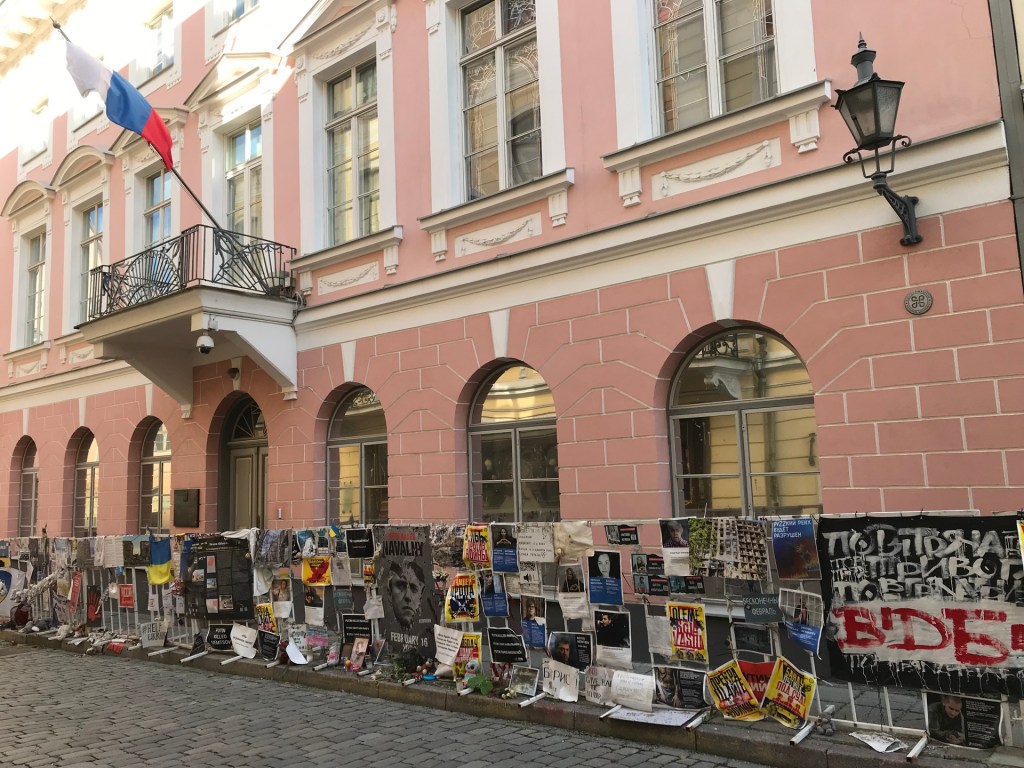
Putin’s 25th Anniversary

The President of Russia was supposed to only hold the post for a decade, but constitutions can be changed (for better or worse) and we are now marking 25 years since Boris Yeltsin handed power to the then 47-year-old Secretary of the Security Council.

Initially, NATO leaders welcomed his arrival and helped him deal with many of the post-Cold War legacies, such as a broken economy and international terrorism. However, as NATO enlargement hemmed-him-in, his foreign policy changed tack and Russia became more assertive against the West.

From a practical perspective, I remember hosting friendly Russian generals on Arms Control visits and late-night-discussions after 9/11 with cordial Spetsnaz colonels. However, everything changed in 2008, when Russia invaded Georgia (Putin was actually the Prime Minister with his younger acolyte, Dmitry Medvedev, serving as President). At the time, I was with three Ukrainian special forces colonels at the time and they confided in me that their country was also under threat. Their prediction was sadly prescient.

No one knows Russia completely, but those of us who studied its history and followed the path to Putin’s invasion of Ukraine, know that the current story is all too familiar to ordinary Russian people. As we approach the New Year, my thoughts continue to be with everyone affected by Putin’s war. Here’s hoping for an end in 2025.

Lockerbie – Cause and Responsibility

The tragic 36th anniversary of the Lockerbie bombing has been marked by yet more controversy over one of Colonel Gadhafi’s most despicable acts of terrorism.

The Leader of the Scottish Alba party, who infamously released the convicted Lockerbie bomber, Abdelbaset al-Megrahi, from jail in 2009, claimed on radio yesterday that he believed Abu Agila Masud is the real bomber. Whether this is to deflect from his role in granting freedom to Megrahi, or merely to raise the stakes in the forthcoming trial of Abu Agila Masud in Washingron, is not known. However, it does re-open the wounds of the families at a moment when we should be respecting their dignified commemoration.

The BBC is rekindling the controversial theories about those responsible because a new drama “Lockerbie: A Search For Truth”, is due to air on 2 January 2025, starring Colin Firth. This will focus on the role of a Palestinian terrorist organisation, which allegedly acted in response to the shooting down of an Iranian aircraft by the USA. However, it is more likely that Gadhafi was acting in revenge for his defeat by the French and US backed Chadian army in the Aouzou Strip. The Libyan Army lost 7,000 men killed in what was known at the time as the Toyota War, but more importantly for Gadhafi, he lost access to Uranium deposits for his Nuclear Programme.

Pan Am Flight 103 was not his only revengeful target because he also sponsored the destruction of a French DC-10 flying from Brasseville to Paris. The 170 passengers and crew from 18 countries in Union de Transports Flight 772 were all killed in a very similar suitcase bomb attack, which is hardly ever mentioned in the context of Lockerbie, but is key to understanding the true cause of the bombing. Further details are in Chapter 15, Line of Death, of my book, Liberating Libya.

Gadhafi’s Nuclear Programme

Tepid Army

Tensions in the Ministry of Defence were exposed this week at my old work place in London, the Royal United Services Institute. On the one side the Minister for Veterans and People warned that the British Army would be wiped out in a few months if forced to fight a war on the scale of the Ukraine conflict. On the other, the Chief of the Defence Staff, Admiral Sir Tony Radakin, suggested that the chance of Russia invading a NATO member was “remote”.

Royal Navy Admirals, who have promoted the flawed concept of the Carrier Fleet for the past twenty years, have peddled this line since the 2010 Strategic Defence Review. During this time, the British Army has been whittled away and now cannot even deploy a full armoured division into the Field. The dependency on reserves and foreign armies for essential front line capability demeans our military reputation in NATO.

This week, the Minister spoke about the problem of numbers of soldiers, but in reality the situation is much worse because we are lacking across all the lines of development, including: Training, Equipment, Personnel, Information, Doctrine, Organisation, Infrastructure and Logistics. These are easily remembered by the mnemonic TEPID OIL. The government’s focus on personnel is all very well, but the real problem is with the Army’s equipment sustainability (including ammunition); in particular the main battle tanks and infantry fighting vehicles, which have been seriously neglected for fifteen years.

These are big stakes in the battle for government money. The Army is not only fighting for funds against Health, Education and Social Care, but also within the Defence and Security community against the Royal Navy, Royal Air Force and Intelligence Services. Recruiting a few Reserves is not the answer.

Challenger Tank Ammunition Replenishment in the Gulf

How The Ukraine War Might End

In a television interview, President Zelensky has suggested that a peace deal might be based on Ukraine (or parts of it) becoming a Member of NATO. This is not a particularly novel idea, but it does offer a glimpse of where he might be willing to compromise, if put under pressure by the Trump administration in 2025.

There are several hurdles to overcome before this becomes a reality. First, Putin’s main reason for invading Ukraine was to prevent it from joining NATO, which normally only accepts applications from countries that are not at war. Second, Putin’s current tactics are working well; he has the tacit support of a large part of Asia and Africa, so the West’s economic sanctions are not effective; and his superiority in weapons and troops is slowly wearing down his enemies.

There are other problems that the Western Media does not discuss, but those of us who lived through the last Cold War understand only too well. During that time, there were dozens of proxy-wars around the World and vast areas where travel was restricted by authoritarian regimes. As we approach 2025, it seems that we are moving closer to that global model with national independence a thing of the past and nuclear politics back in vogue.

Twenty-First Century Gunboat Diplomacy

The use of British Storm Shadow missile against targets in Russia may or may not be an escalation in the Ukraine War, but it is certainly a reminder that Gunboat Diplomacy is still alive in the 21st Century.

The Royal Navy and later the USA perfected this method of persuading less-technical states to follow a course of action that was beneficial to the larger nation. The original theory of lobbing a few cannon balls from a flotilla off the coast against a ruler’s palace, morphed into cruise missile strikes against military facilities, such as ammunition bunkers or training facilities. An important part of the theory was to avoid civilian casualties, which might lead to an escalation of the conflict – hence the need for precision and satellite imagery.

President Clinton tried to use it against Al Qa’ida in the 1990s with little effect. NATO used it against Colonel Gadhafi in 2011 with limited success. Afterwards, the UK MoD claimed that none of their Storm Shadows failed to detonate, but we found one in the Sahara, which was still intact. We removed the outer parts and flew them back to England while blowing up the explosive well-away from any population centre (see photo below).

This form of Air, or Maritime Power is attractive to politicians, who wish to avoid “boots on the ground”, but there are not many examples of Gun Boat diplomacy success in this day and age, because the important decisions are made by and among the people living on the ground.

Storm Shadow in Libya

Special Forces’ Victoria Cross Awards

This week sees the anniversary of one of the most contentious Victoria Cross awards in World War II. Geoffrey Keyes was a dashing young cavalry officer, turned Commando, whose father had been Admiral of the Fleet. During a poorly planned raid on a location known to have been used by General Rommel, Keyes was shot dead by his own soldiers. However, the publicity-seeking head of the Commando operation Robert Laycock wrote him up for his “magnificent leadership and outstanding gallantry” as well as setting “an example of supreme self-sacrifice and devotion to duty” and he was subsequently awarded Britain’s highest gallantry medal.

There is no doubt that Laycock’s citation was a fabrication because he did not see the attack for himself. In addition, the detail about the location on Keyes’s gravestone in Benghazi does not correspond with the memoirs of contemporaries, such as Vladimir Peniakoff; so why was this allowed to happen when so many other citations were turned down in the war?

Laycock provided a clue to the answer a few years later, when he wrote: “More than
once [David Stirling] would have won the highest military honour the sovereign
can bestow, were it not for the rule that a senior officer must be present to vouch
for the circumstances of the citation—and senior officers were never well placed to
witness Stirling’s raids behind the lines.”

There is a huge irony that while Laycock was with Keyes on the night of 16 November, Stirling was parachuting into Gazala on an early mission with his Special Air Service. Unfortunately, this operation to attack the new Messerschmitt 109F aircraft fared no better than Keyes’ effort. A low cloud base and high winds conspired to spoil the plan as many soldiers were dragged along the boulder-strewn ground and broke their backs. The dispersal of equipment and explosives over a wide area prevented the group from continuing and the surviving soldiers only just managed to reach their rendezvous with the Long Range Desert Group.

These operations foundered on the jagged rocks of poor preparation, inadequate training and inauspicious weather. However, their failure did not stop Laycock and Stirling, who learned hard lessons and continued to develop ideas for surprise attacks. Although there were more calamities, the strategic shock of these raids forced Rommel to increase the guards on his supply dumps and communication sites, which ultimately benefited Eighth Army.

I visited Keyes’ grave in the Benghazi Commonwealth War Cemetery in 2012 after a number of head-stones had been smashed by local militia in retaliation for events in Afghanistan. However, I was pleased to see that his memorial was untouched.

Regal Respect for Remembrance

Recent years have seen the Media become increasingly over-sentimental when they cover traumatic events, but I felt the King’s respectful participation in the historic Remembrance Ceremony today minimised any mawkishness. The magnificent march-past, wonderfully orchestrated by the Royal British Legion, was inclusive, respectful and cathartic. The large number of groups involved and the long length of time for them to pass the Cenotaph demonstrated clearly how important the Armed Forces are to the British public.

Sadly, this deep public support has not been translated into a robust Defence capability in 2024. This morning, the forlorn Chief of Defence pleaded for more money, but the ensuing arguments about 2.5% of GDP missed the point completely. Our Combat Arms need a complete reboot to replace the tanks and infantry fighting vehicles that came into service in the previous Millennium and what good is 2.5% when we cannot put an armoured division into the field and our adversary is spending 40%?

This week’s US Election result has put UK Defence Spending back on the Agenda. Hopefully, the Government will heed the warnings and fulfil their primary responsibility to the country by ensuring the Royal Navy, Army and Royal Air Force have sufficient personnel and that the Defence Review they are currently producing is focused on the Front Line, not the Bottom Line.

Lutyens Cenotaph Since 1920

Wearing A Poppy

Remembrance Week has been widened to include a commemoration of many other groups than was originally conceived when the Unknown Soldier was buried in Westminster Abbey on 11 November 1920. It is vital to make the event relevant for those who are grieving for family members, who have been killed whilst serving in the Armed Forces during recent military operations. I also understand why the organisers now embrace those who have been affected by conflict because it is important that no sections of society feel disenfranchised.

However, it is equally the case that we should highlight why we wear the red poppy. To my mind, the best articulation of this is the poem written by a Canadian (a country which has been sadly underappreciated for their contributions to the Free World), John McCrae of Montreal.