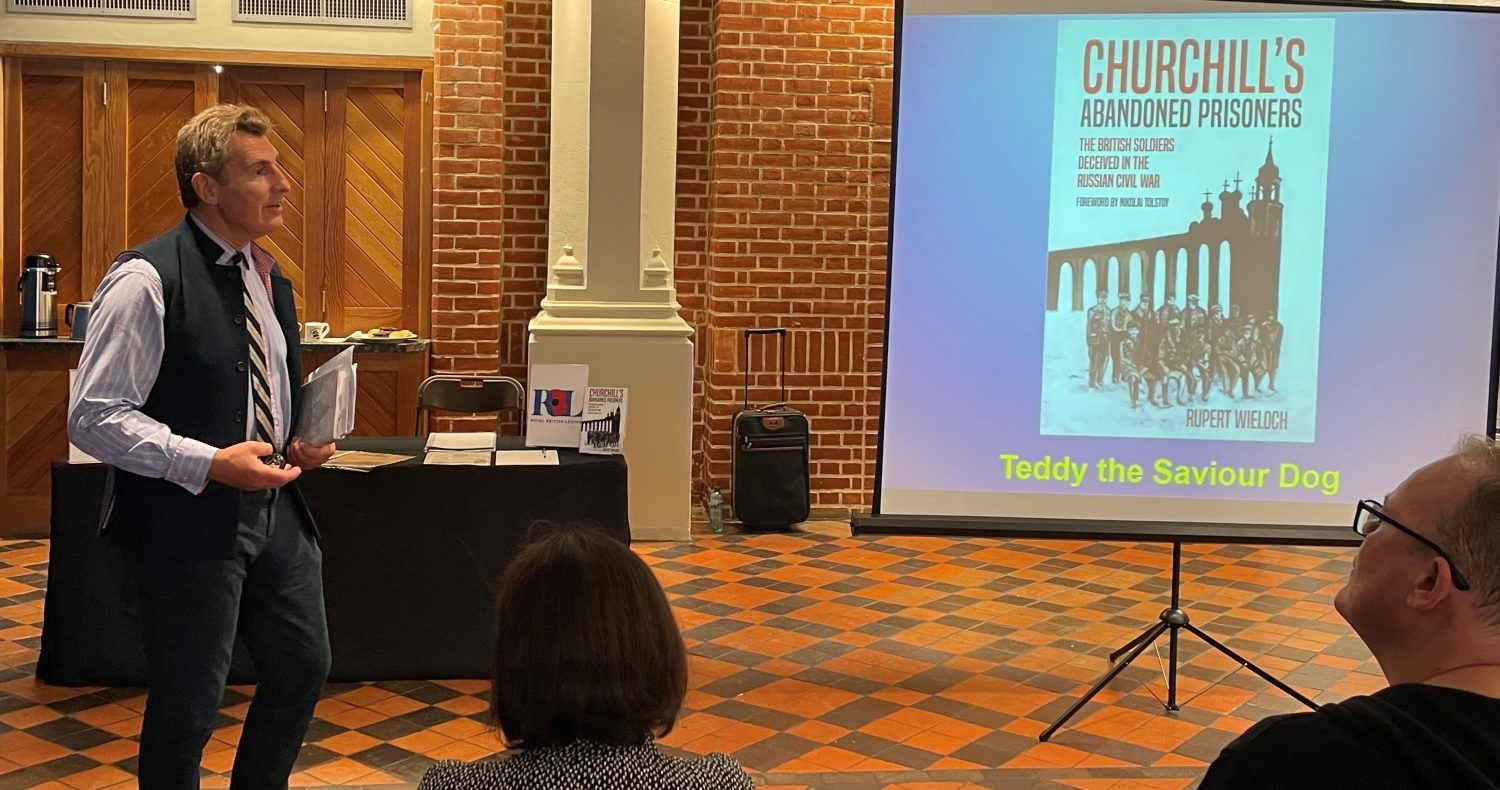

International Women’s Day
Hot on the heels of World Book Day, we are “Realizing Women’s Rights” on Sunday.
One of the themes in Churchill’s Abandoned Prisoners is women in the Russian Civil War. In May 1918, women’s food protests sparked the first wave of worker’s unrest against the new Bolshevik authority in Petrograd. Later in the war, tireless women of all classes put their menfolk to shame as they stood up to the Red Army and sustained the orthodox faith.
The resistant spirit of Russian women was observed by many of the British soldiers in Siberia, who held them in awe and wrote about the strength of their character. Apart from the bravery and magnificent work of the Red Cross nurses, my book includes inspiring examples of superior female mental fortitude, witnessed by the British PoWs in Siberia, Moscow and Petrograd during their ordeal in 1920.

March Events
I’ll be in conversation with the renowned Sophie Neville (who played Titty in the original film of Swallows and Amazons) and reading from my book, Churchill’s Abandoned Prisoners, on Wednesday 11th March at the Old Library, Pilgrims School in the close of Winchester Cathedral, starting at 8pm. Please contact Laura Brill for more details or to reserve a place, on 01962 854189 or email thelibrary@pilgrims-school.co.uk
Alternatively, I am giving a talk about the British prisoners’ ordeal in Russia one hundred years ago, with a very special guest, at the English Speaking Union, Dartmouth House, 37 Charles Street in London on Tuesday 31st March at 7pm. Tickets are available at: https://www.eventbrite.co.uk/e/london-branch-talk-by-author-rupert-wieloch-on-his-book-churchills-abandoned-prisoners-tickets-89775168947
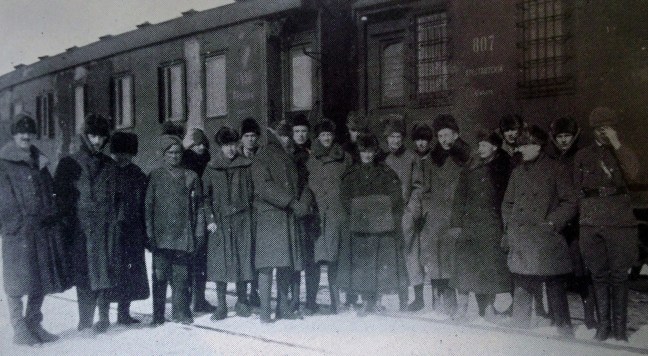 British Prisoners of War in Krasnoyarsk March 1920
Britain At War February Article
The story of last British PoWs of World War is now available to read in the January and February editions of Britain At War magazine.
In the January issue I explain what the soldiers were doing in Siberia and how they were captured by the Bolsheviks one hundred years ago. In the February follow-up, I tell the story about the prisoners’ ordeal and how they managed to return to England just after the Unknown Soldier was buried in Westminster Abbey.
The February magazine can be purchased online at the following link:
https://britainatwar.keypublishing.com/the-magazine/view-issue/?issueID=7875

The Betrayal of Admiral Kolchak on 15 January 1920
In January 1919, the Supreme Leader of the White Government, Admiral Alexander Kolchak was forced to hand over power to General Anton Deniken when he was held up in his train by the Czech Legion 280 miles from Irkutsk. The Allied commander, General Maurice Janin guaranteed the safe conduct of the Admiral and his carriages were coupled to the train of the 6th Czech Regiment. If he could just reach Lake Baikal, he believed he would be safe because the railway line from there was still controlled by the US and Japanese forces.
However, the train took seven days to reach Irkutsk, by which time the Bolsheviks had taken the city and the British and French diplomatic delegations had escaped to the east. On 15th January, his carriages were surrounded by a hundred revolutionary soldiers with machine guns and the Czechs handed the Admiral over to the Red Commissars. That night, Kolchak spent his first night in captivity, although he must have felt he had been a prisoner for much of the previous month.
 Admiral Kolchak (fur hat) with Captain Francis McCullough (right) who ran the White Government’s Propaganda in Omsk
Captured in Siberia
On 6th January 1920, two months after escaping from Omsk, a group of fifteen British soldiers were held up in a queue of trains approaching Krasnoyarsk. They put the long halt down to the fact that the locals were celebrating Russian Christmas Eve.
Suddenly, the locomotive in front blew its whistle and their train replied, but it did not move forward. Sergeant Joe Rooney struck up on the banjo and sang “Take me back to dear old Blighty”. Then someone remarked “A Russian officer has just thrown his sword over the bank”.
Several more officers followed his example and all around, they saw White Army soldiers throwing down their rifles and pistols. They had traveled 900 miles by train, sleigh and on foot through the bitter Siberian winter, but now they realized this was the end of their forlorn flight to freedom and the beginning of their captivity at the hands of the Russian Soviet Federative Socialist Republic.
 Sledges Used By British Soldiers on the Retreat From Omsk
Rewriting History?
In the list of the worst rail accidents in the world, there is no mention of the disaster at Achinsk which held up the British refugees fleeing from the Red Army.
On 31st December 1919, Leonard Vining, Brian Horrocks and Emerson MacMillan walked past dozens of trains into the town to find a scene of utter desolation. They discovered that the station was completely destroyed because three days earlier, a freight train carrying dynamite had exploded in the centre of a dozen refugee trains standing on parallel tracks. More than five hundred people were killed instantly and thousands injured; many of them women, children and babies. Emerson wrote “the dead were piled up like cordwood. There were hundreds of them but they were luckier than the injured, who lived and who could not possibly receive medical attention.”
In ordinary times, this would rank as a global disaster, but here it was just another episode in the unfolding tragedy of the retreat from Omsk.
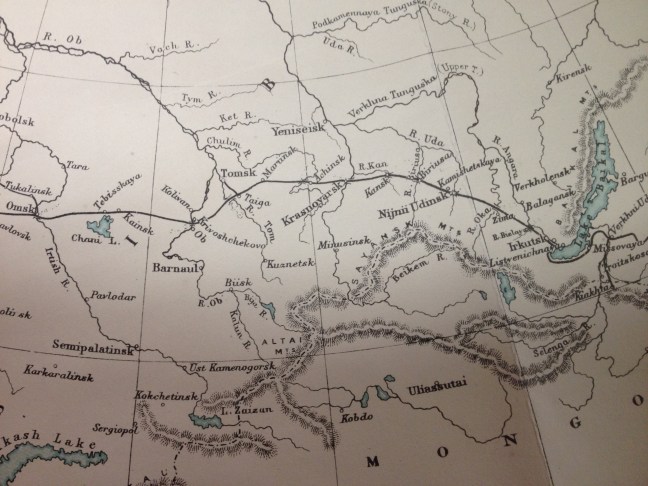 Trans Siberian Railway Line From Omsk To Irkutsk – 1,500 Miles
Last Stand in Siberia
On 23rd December 1919, the Siberian Army fought its final battle, whilst the despondent “Supreme Leader”, Alexander Kolchak was held up in his train carrying the Imperial Treasury, by the Czech Legion at Krasnoyarsk.
Reporting on the comprehensive defeat, the Manchester Guardian commented: “the shattered remains of Kolchak’s army scattered and all stores, munitions and practically all artillery were lost”. General Kappel issued orders to establish a defensive line near Krasnoyarsk, but this proved impossible as 45 echelons of the White Army were stuck on the railway line with frozen engines stalled between Bogotol and Kozulka.
The following evening, the last British contingent out of Omsk made the best of their situation. Forty people, squeezed into a carriage designed for 16, ate their Christmas Eve supper of soup, rice and vodka. A whisky bottle was shared and they held an impromptu sing-song until 11.30 pm with a magnificent rendition of Helen of Troy and Give Me The Moonlight.
The last British group that escaped from Omsk in the winter of 1919
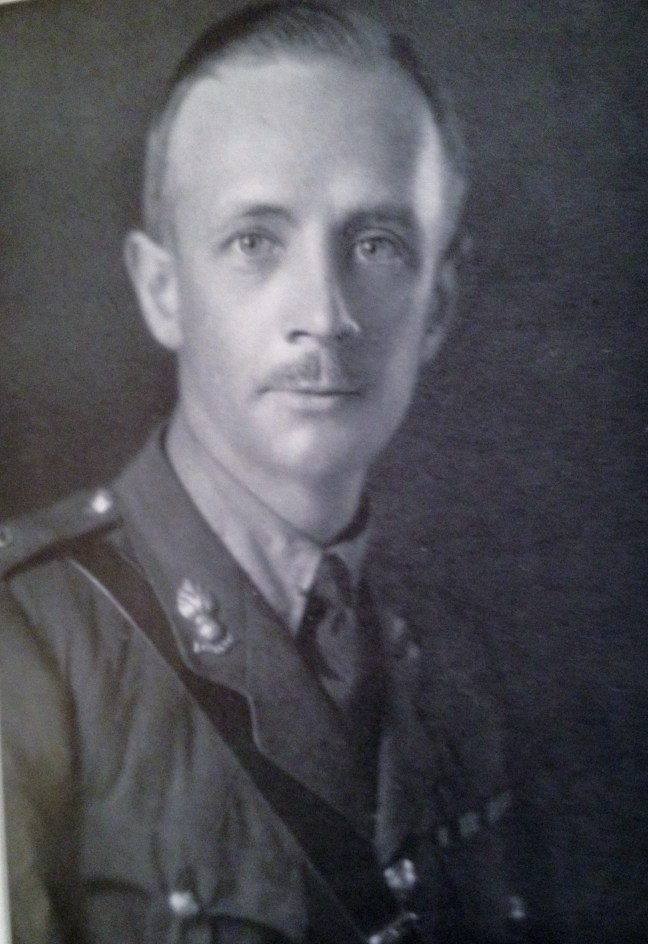 Major Leonard Vining of the Royal Engineers
 The rebuilt station at Novo-Nikolaevsk, now named Novosibirsk.
