Siberian Wedding and Visit to Ukraine

Bob Lillington learned Russian in Omsk and married a local girl named Ludmilla Martinova on 31 August 1919. Bob’s young bride travelled back to Scotland while he was a prisoner of the Bolsheviks and so he did not attend the dinner at the Café Royal because he took a train directly to join his wife in Edinburgh. Eventually, they moved south to Portsmouth where Bob’s father and uncle ran a plumbing business and Bob started work as an accountant at the Royal Dockyard.

I was delighted when his grandson contacted me and described what happened to the family after they settled in Portsmouth. Bob continued to serve in the Hampshire Regiment and was awarded the Territorial Efficiency Medal before the Second World War. Ludmilla was allowed to travel to Lviv in Ukraine to see her mother in 1955. By then, the Lillingtons were living with their sons in Southwood Road, Hayling Island.

Bob was not the only soldier to gain a wife from his time in Siberia as my next post will explain.

The Lillington Plumbing Business in Portsmouth

The Nevilles In China

After the Café Royal dinner, the prisoners-of-war who returned to London with Brian Horrocks dispersed around the world. Captain “Bim” Neville travelled home to Australia before moving to China with his family. This well-travelled officer had married “Alia” in Petrograd in 1914 and they had a daughter, Alice (6 years old) and son, Ronald (3 years old), when they settled in Shanghai.

During the Second World War, the Neville family was interned in Yangchow (or Yangtzepoo) Civil Assembly Centre Number 3 where Alice had to wear the armband in the photograph below. They left China in 1945, just as Eric Hayes was appointed Head of the British Military Mission, but it is not known whether the two former inmates of the Andronovsky prison had a reunion in Shanghai.

My next post will be about the Hampshire sergeant who married a Russian girl in Omsk before Trotsky captured the White capital.

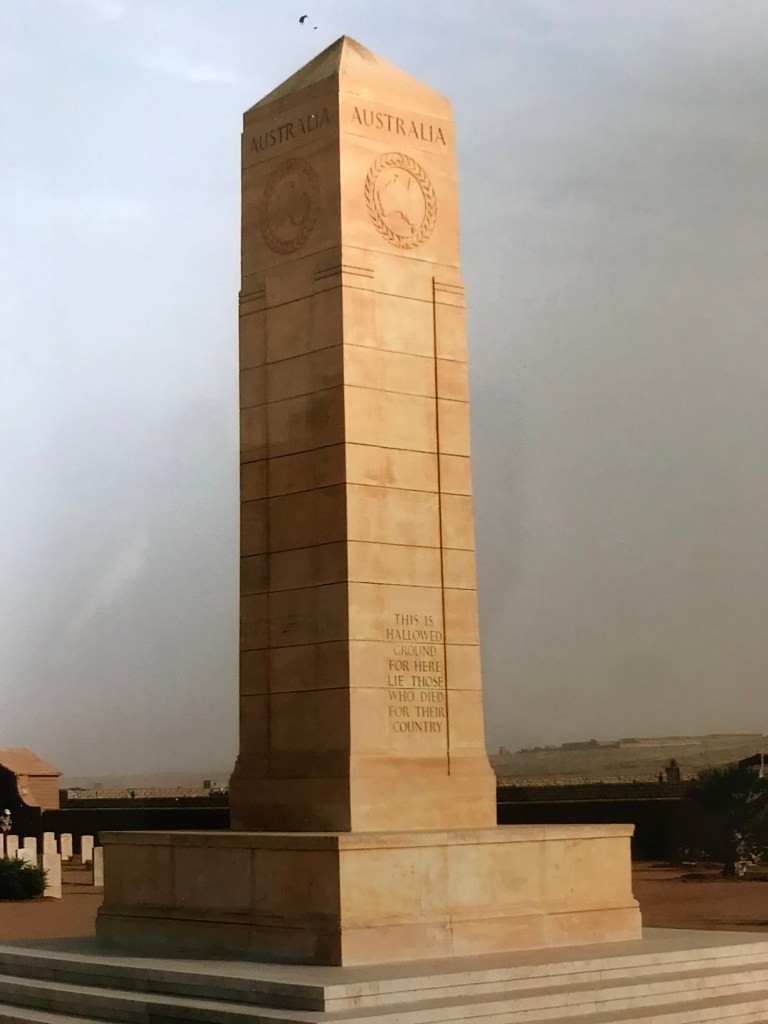
With Grateful Thanks To The Australian War Memorial

Percy James’ Frostbite and Later Life

When the locomotive engine pulling the British carriages broke down, the British soldiers arranged for the 24 ladies and unfit men to be transferred to a Polish train, while they set off in sleighs along the track beside the Trans Siberian Railway Line. The Siberian winter of 1919-1920 was particularly cold and the temperature that evening dropped rapidly to below minus 20 degrees Celsius.

Some of the soldiers had purchased felt boots, but unfortunately, Percy James still wore the British issue boots which were about as useful “as a sick headache”, according to the group’s leader, Leonard Vining. When they stopped for the night, Percy had lost the feeling in a foot that had enormous blisters on the toes and heel. Vining, who knew enough about medicine not to be dangerous, applied goose fat to the frost-bitten areas and bought a pair of pymwy (felt boots) for Percy and these probably saved him from succumbing to gangrene.

Percy had transferred from the Somerset and Cornwall Light Infantry to the 1st/9th Cyclist Battalion of the Hampshire Regiment and in Omsk, he volunteered to help save the British civilians fleeing from the Red Terror. After the war, he was demobilised and returned to his family in Bath, but then married and settled in Bournemouth. I was delighted to be contacted by his family in Canada, who informed me that he helped put out fires during the Blitz in the Second World War and lived to a grand old age surrounded by his grandchildren.

Percy in India in 1918, before deploying to Siberia

Typhus Torment

Captain Dwyer Augustus Neville was not originally in Brian Horrocks’ group of prisoners. He contracted epidemic typhus during the great retreat from Omsk and was abandoned in a hospital by the accompanying British soldiers. Eventually, he recovered and was sent to join the last British prisoners-of-war in the Andronovsky prison in Moscow. We know that he returned with Horrocks because he is listed in the commander’s diary and the newspaper articles published after they all returned safely to London, even though he was not in the photograph taken at Liverpool Street Station.

Neville was born in Australia on 18th April 1892 and joined the Royal Flying Corps in February 1917. In September 1918, he was on patrol in an SE5A with Number 41 Squadron RAF when he was forced down over the Comines Canal and captured by the German Army. After he was repatriated on 13th December 1918, he volunteered for Siberia and a year later was stuck in the long line of trains trying to reach the safe haven of Vladivostok. 

Dwyer attended the Café Royal dinner and then returned to Australia. Contracting typhus does not appear to have shortened his life as he lived until October 1979 and is buried with his wife at Buderim Cemetery, Queensland.

The other prisoner to succumb to typhus was Sergeant Frank Illingworth, who can be seen in the photograph below. He had transferred from the infantry to the Royal Engineers and joined the British Railway Mission in Omsk. His signature can be clearly seen next to Horrocks’ on the Café Royal card, but I haven’t been able to discover for certain what happened to him in later life.

Typhus wasn’t the only medical problem facing the prisoners and the next post will cover the equally fearsome threat of frostbite.

Hayes Archive in Leeds

When Captain Brian Horrocks was laid low with epidemic Typhus in Krasnoyarsk, the prospects looked bleak because the mortality rate was so high and the hospitals were so inadequate. However, Captain Eric “Georgik” Hayes, who had been with Horrocks in Siberia for almost a year was determined to help him survive. He escorted the semi-unconscious invalid to a private infirmary and visited him daily with extra food, often staying the night by his bed, wrapped in a raincoat. Without this aid, Horrocks would not have survived and the history of World War II would have been very different, but what about the man who played such an important part in Horrocks’ survival?

Trying to find out more about his character, a big breakthrough came when I discovered an archive donated by Jeremy Fairbank to the University of Leeds, which contained important material from his time before joining the Army. After attending grammar school in Lincolnshire, he was articled to solicitors before enlisting in the Sherwood Rangers Yeomanry at the beginning of the war and eventually commissioning from Sandhurst into the Norfolk Regiment. He was an ideal foil for Horrocks’ exuberance, being more cerebral and measured, but this did not stop him from making the most of his Russian experiences and reaching the rank of Major General. He commanded 3rd Infantry Division in World War II before a stint as the senior British military commander in Nigeria and his final appointment as Head of the British Military Mission to China, where he was involved in the surrender of Japan. Sadly he died following a short illness not long after the end of the war.

Horrocks wasn’t the only prisoner to suffer from epidemic typhus and tomorrow, I will reveal what happened to the other two soldiers who contracted this pernicious disease.

Epidemic Typhus Killed More People in Siberia in 1920 Than Any Other Cause

Horrocks Legacy Undiminished

Attending the commemoration service for Lieutenant General Sir Brian Horrocks KCB KBE DSO MC, and speaking to his three grandchildren and friends who knew him, it is abundantly clear that he remains an iconic military figure and exemplar for aspiring leaders today.

There is much available to read about his stirring later life from his autobiography, public sources and the excellent life story by Philip Warner. Few can match his deeds as Olympic sportsman, war-time general, ceremonial diplomat, author and business director, but perhaps the achievement that makes him unique is his role as a successful television presenter.

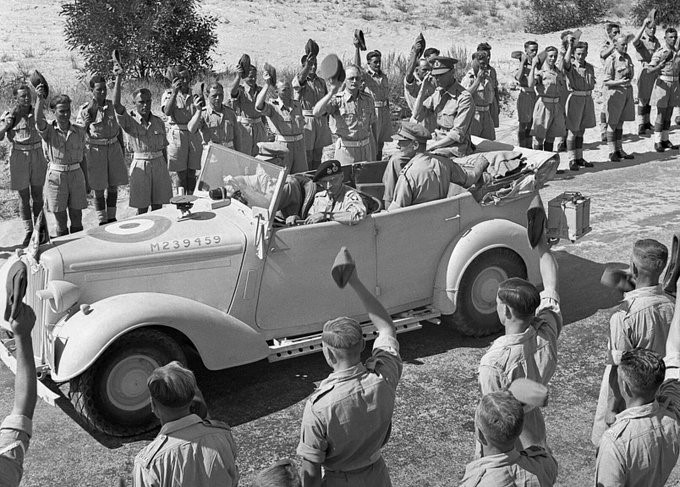
He never kept a diary and was known to have thrown away most of his official papers, but during my research, I discovered fascinating correspondence between him and the Royal Marine captain who commanded the Royal Navy’s boats on the River Kama at the time that Horrocks was training White Russians in Ekaterinburg. I also discovered that he would have perished in Russia if it wasn’t for his good friend, Eric Hayes, who nursed him through a life-threatening bout of Typhus in February 1920. Hayes, whose signature is above Horrocks’ in the Café Royal photograph, also became a General in World War II and is my subject tomorrow.

With Edward Fox at Sir Brian Horrocks’ Commemoration

Dinner At The Café Royal

After their ordeal in Russia, the last British Army prisoners-of-war to return from World War I held a reunion dinner at the Café Royal in Piccadilly. Unfortunately, not every member of the group had remained in London, but those that did attend, signed the back of a photograph that had been taken on board HMS Delhi.

The signatures that are in the image below were my starting point for the research that went into Churchill’s Abandoned Prisoners. I found it extraordinary what these men achieved in later life, but did not have space in the book to cover this aspect of the story.In January 2024, I will describe what I have discovered from various sources including university archives and verbal testimony, beginning on New Year’s Day with Lieutenant General Sir Brian Horrocks, whose signature in in the bottom left of the photograph.

24th December in Siberia

On Christmas Eve 1919, a dozen British families, who were fleeing from the Red Terror were stuck at Mariansk on the Trans-Siberian Railway Line with Captain Brian Horrocks and a troop of British Army soldiers, who had been ordered to remain behind to organise the evacuation of the White Russian capital, Omsk. The railway was in utter chaos because Admiral Kolchak’s army had been defeated and his government had collapsed, while he was stuck at Krasnoyarsk with the remains of the Imperial Treasury.

That evening, the British soldiers made the most of their situation. There was a babble of noise as 40 people squeezed into one carriage and ate their supper of soup, rice and vodka. A whisky bottle was shared around and they had an impromptu sing-song until 11.30 p.m. with a magnificent rendition of Helen of Troy and Give Me The Moonlight.

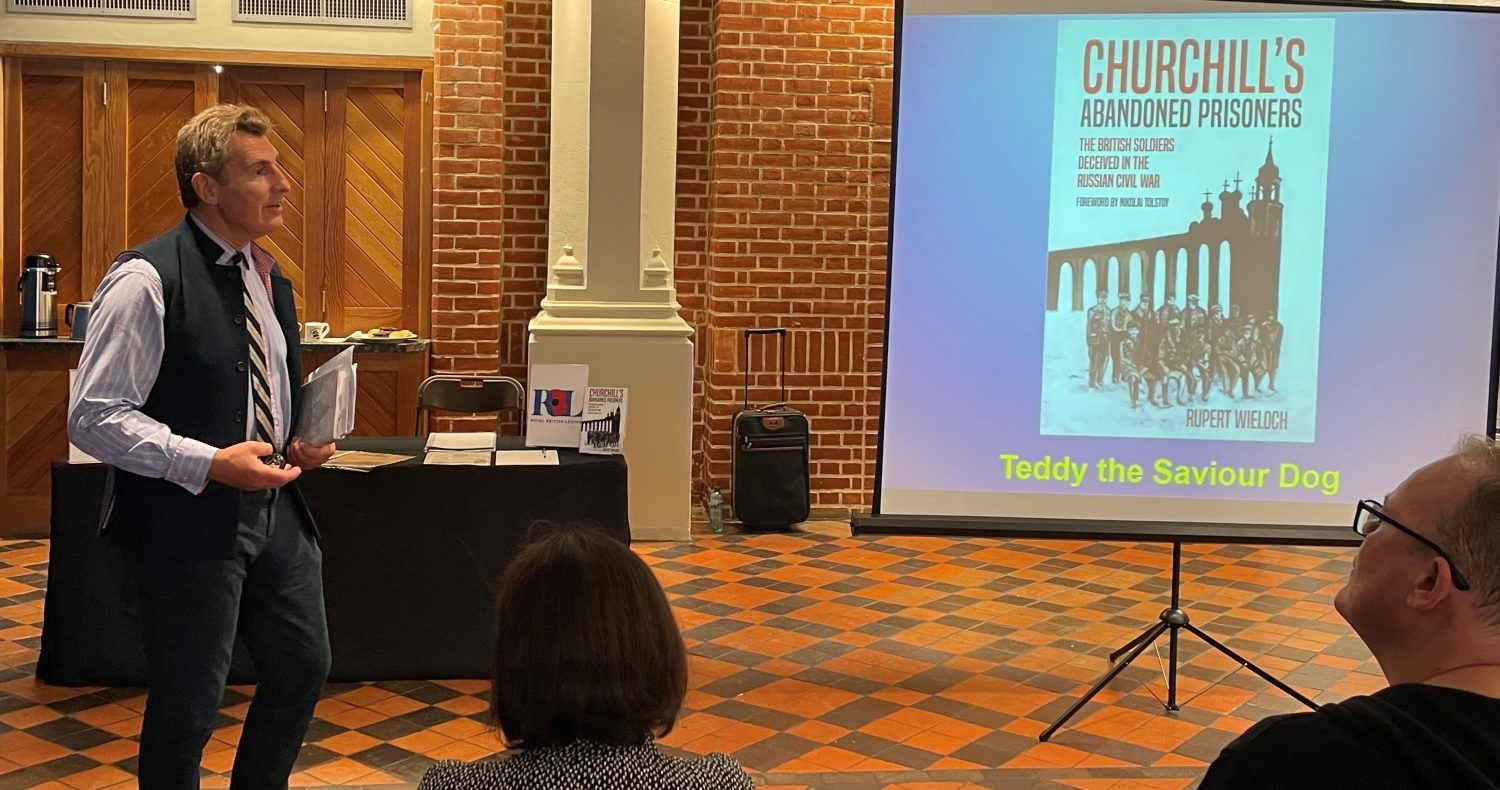
The soldiers’ incredible tale of survival through the Siberian winter, capture in Krasnoyarsk, deception in Irkutsk and imprisonment in Moscow is the subject of Churchill’s Abandoned Prisoners, with an introduction by Count Nikolai Tolstoy, whose father escaped from Russia in the same ship as one of the British soldiers on this train.

Brian Horrocks and the last British Army Prisoners-of-War in Russia

Lockerbie Conspiracy Theories

As we approach the 35th anniversary of the “deadliest terror attack in British history” that took place over Lockerbie on 21st December 1988, the BBC has published an article that raises more questions than it answers. The commemoration accurately describes the atrocious crime and the brilliant forensic work that brought two of the Libyan bombers to court in 1999 and the extradition of a third, Abu Agila Masud, who is awaiting trial in the USA. However, the article does not adequately explain why Colonel Gadhafi sponsored this despicable act of terrorism and instead, suggests that Iran and the Palestinians, rather than Libya, were behind the bombing.

I am surprised this conspiracy theory is still peddled by our public service broadcaster and they only link Libya to the attack through the bombing of La Belle disco in Berlin, which led to the 1986 US air raid on Tripoli (Operation Eldorado Canyon). This may have played a small part in his thinking, but this was water under the bridge by December 1988 because Gadhafi had shot down an F-111F bomber with the loss of two US pilots and the court of international opinion had sided with him (the UN adopted a resolution which condemned “the military attack perpetrated against the Socialist People’s Libyan Arab Jamahiriya on 15 April 1986, which constitutes a violation of the Charter of the United Nations and of international law”).

The real motivation for Lockerbie centred on Gadhafi’s nuclear programme, which proved to be much more advanced than anyone outside Libya knew. Ever since 1973, the Brotherly Leader had occupied a large area south of the border with Chad, known as the Aouzou Strip, where he mined Uranium for use in his nuclear programme. However in 1987, France and the USA provided the military expertise in an offensive launched to recapture this land. By the end of September, Gadhafi’s troops were routed with more than 7,000 Libyans killed in what is now known as the (first) Toyota War.

This blow to Gadhafi’s prestige was the real reason why he sponsored his most despicable acts, the downing by suitcase bombs of Pan Am Flight 103 on 21 December 1988 and Union de Transports Aériens Flight 772 on 19 September 1989. The former killed all 259 passengers and crew (from 21 countries) along with 11 residents of Sherwood Crescent. The later attack killed all 170 passengers and crew (from 18 countries) in a French DC-10 that was flying from the Congo to Paris over the Niger desert. It is about time that the BBC and other Media outlets told the truth about this.

Gadhafi’s Nuclear Capability

Defence Secretary’s Visit to the Middle East

Following David Cameron’s visit last month, the Defence Secretary made a timely trip to the Middle East this week. The Right Hon Grant Shapps was an inspired choice to visit Israel and the Occupied Palestinian Territories just before the UN Security Council Ceasefire Vote in New York. He is one of the few MPs who is respected by the Israeli government, so he can finesse the tricky balancing act created by British interests in the region. His stated aim of the visit, “to accelerate the delivery of lifesaving humanitarian assistance into Gaza and efforts to secure the release of all remaining hostages” sums up the current dilemma of advocating a Rules Based Approach to international relations while trying to deal effectively with hate-filled terrorist organisations.

Unlike France, Britain does not often deviate from American foreign policy when it comes to a UN Security Council debate. The mantra: “you are either with us or against us” has been heard repeatedly from the other side of the Atlantic for twenty two years and led successive governments to positioning Britain as America’s leading ally, so it is not surprising that Britain did not vote for the UN Secretary’s ceasefire.

There are two important consequences of this development. The first is the increasing difficulty Britain and America will have in persuading international partners that they should support them against China and Russia. The second is the growing importance of Britain’s military bases in Cyprus. When I hosted a previous Defence Secretary there before the Gulf War, the island was considered to be a side-show compared with the bases in Germany and Northern Ireland. Now, the strategic sites at Ay Nik and RAF Akrotiri are arguably the jewels in the “overseas” crown.

British Defence Secretary Visiting Cyprus In 1990