
Ukraine for Venezuela?

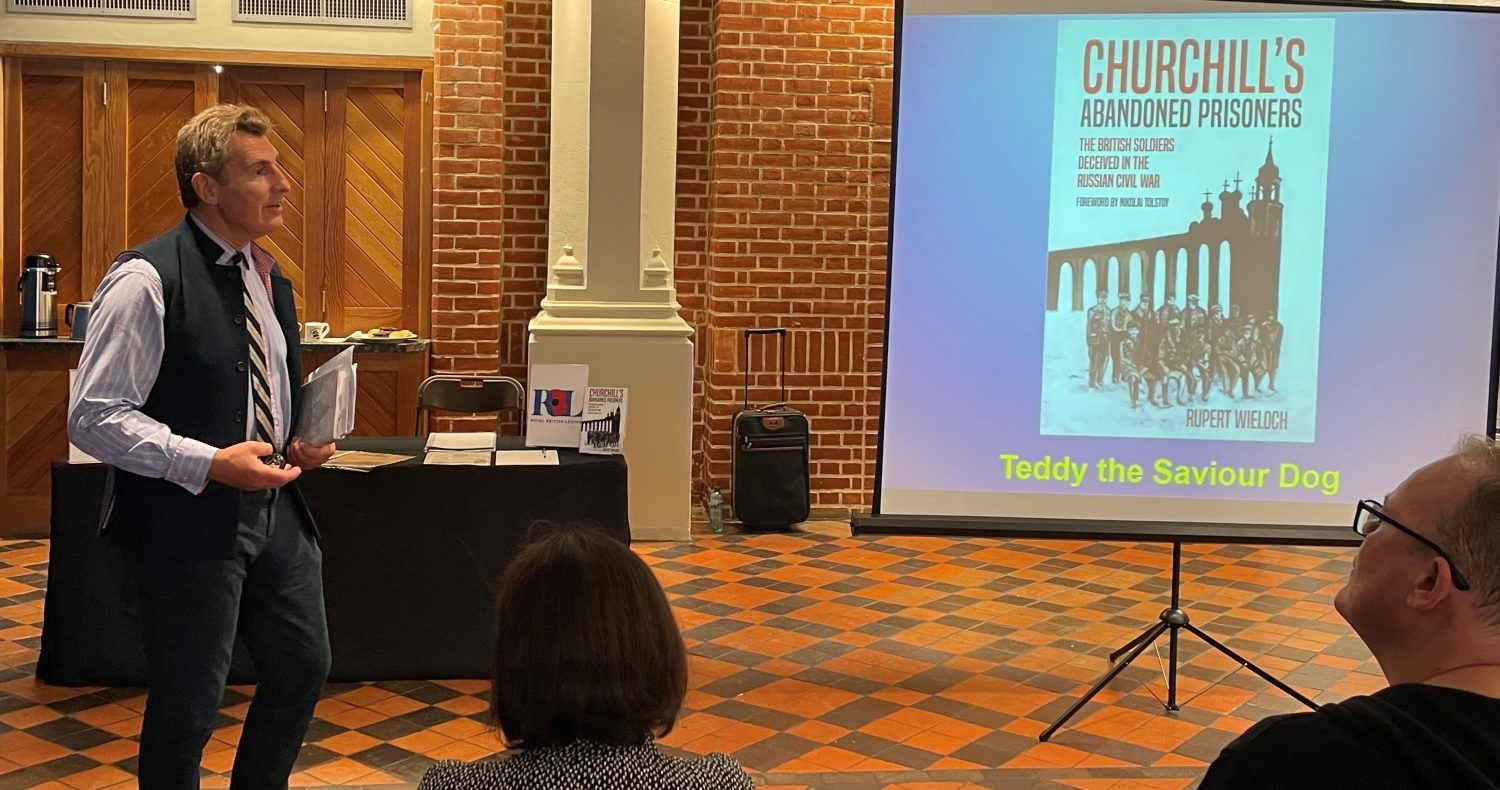
Following the tragic death of Corporal George Hooley last week, the Media has highlighted the case of an ex-British soldier captured on the front line soon after joining the Ukrainian Foreign Legion last year. The UK’s Foreign Office statement demanding that Russia “stop using prisoners of war for political and propaganda purposes” reminds me that not much has changed since 1920, when the British soldiers in my book, Churchill’s Abandoned Prisoners, were deceived by Bolshevik Commissars and incarcerated in political prisons in Moscow.

However, this was not the main event this week. The news that the EU is providing more financial support for Ukraine is very welcome, but the Russian President’s end-of-year address catches the eye as the centrepiece. The fact that Putin no longer portrays the USA as his biggest threat even though the US Commander-in-Chief is now attacking Russia’s most important trading and military ally in Latin America makes me think something dramatic has changed this year. Have Putin and Trump agreed an undeclared deal behind the scenes – Ukraine for Venezuela?

Tribute To Corporal George Hooley

My first thoughts this week are for the family of the brave paratrooper, who became the first confirmed death of a serving member of the British armed forces in Ukraine.

Corporal Hooley’s sad demise raises many questions about the undeclared use of troops on military operations. In 2011, I was one of many such soldiers who were deployed in a war zone with limited political authority. We were given a military mission, but knew that our activities would be denied officially, if we were caught.

I can understand why the British government does not wish to reveal the full extent of the British military mission in Ukraine. Ever since Parliament voted not to intervene in Syria when Assad used chemical weapons against his own people, there has been a reluctance to engage in high-end fighting. However, if the head of NATO is correct about Russia’s capability and plans to launch further attacks against European countries, then we really must shake people out of their complacency and educate them about casualties in war.

What also needs to change is PJHQ’s medallic recognition for our soldiers in Ukraine. These courageous men and women should be awarded the General Service Medal 2008, rather than the less prestigious Tier 4, Wider Service Medal, which is what they receive now.

Are We Ready?

Readiness has been in the news again this week, with Putin stating on Tuesday that “Russia did not want to fight Europe, but was “ready” for war if necessary”. This news played a part in the German government’s vote on Friday to reintroduce military conscription, albeit on a voluntary basis.

Together with France, which announced similar plans last month, Germany will join the NATO Flank countries (Scandinavia, Greece and Turkey) and Baltic Three (Latvia, Lithuania and Estonia) to visibly increase their readiness for war with Russia. But what about Britain?

When I toured the United Kingdom, speaking to large audiences in towns and cities 25 years ago, I was often asked about the reintroduction of national service. At that time, the British Army did not wish to waste precious resources on solving society’s perceived problem of a lack of self discipline among young people. We had more than enough volunteers to sustain the “Best Small Army in the World” at over 100,000 professional soldiers.

Today we face a different challenge. Young people are accused of self-entitlement and the British Army is no longer capable of deploying an armoured division at short notice to fight high-intensity armoured warfare, as we did in 2003. Realising this situation, I have changed my tune and I am now fully behind the movement to reintroduce National Service for all school leavers. It doesn’t have to be military, but it does have to be a contribution to society and a commitment to the community – perhaps medical or mucking-out. As in World War II, certain employments should be classed as reserved occupations e.g. mining, manufacturing and munitions. The aim should be clear: to be ready to fulfil Article 5 commitments to our Allies, if Russia invades a NATO nation.

Para Musicians – Courtesy of MoD

Ajax Troubles Have Returned

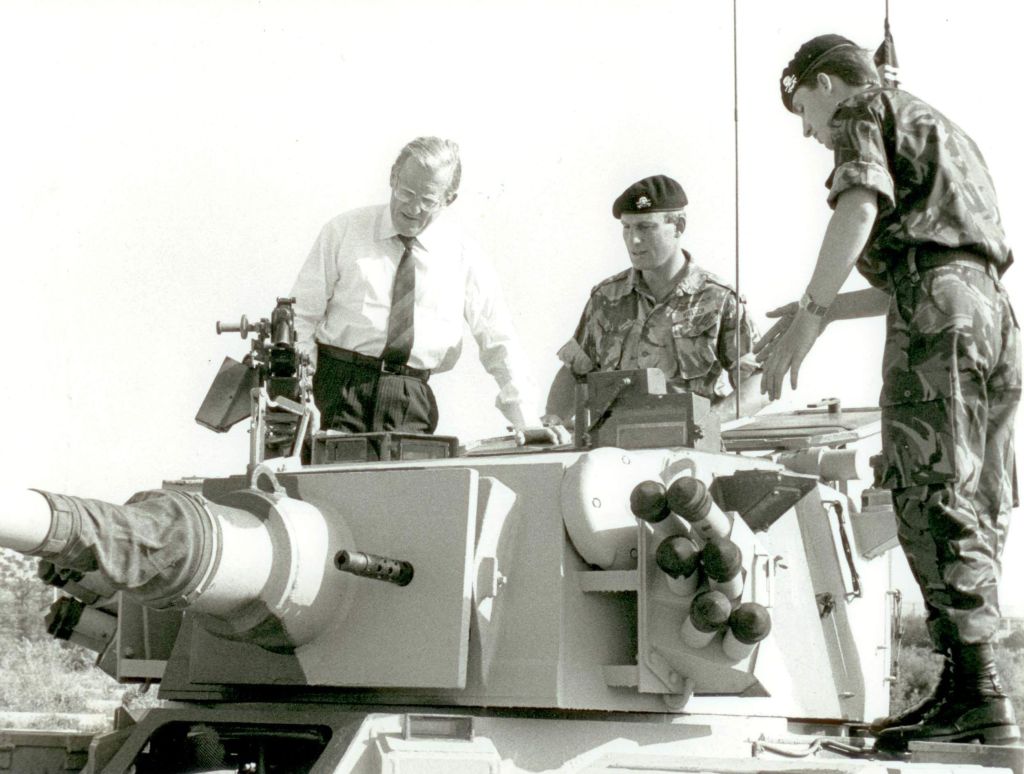
The Ajax programme dates to when I was Head of Reliability in the Ministry of Defence in 2008, after FRES was cancelled by the Chief of the General Staff. Unfortunately, the MoD in its wisdom closed the Reliability Group after I deployed to Baghdad and as a result there was insufficient technical oversight of the programme in the competition phase, before contracts were signed in 2014.

To my mind, the reliability problems and technical issues that have delayed the introduction of this vital equipment can be put down to the indiscriminate culling of system design engineers at Abbey Wood in the shadow of the merger of the old Defence Procurement Agency and the Defence Logistics Organisation. Under a culture of “Change” and “Efficiencies”, the delivery of aircraft, ships and tanks suffered subsequently you cannot ask Defence Contractors to mark their own homework!

If the MoD had spent more on technical oversight in the early stage of the programme and less on McKinsey change management fees, we would not have wasted so much money further down the line. More importantly, Ajax would now be integrated into British Armoured Brigade Combat Teams and we would be closer to being able to fulfil our commitments to NATO Allies.

When Will We Have Full Operating Capability?

Ukraine On The Threshold

When I heard last week that the distinguished American Envoy in Kyiv, Lieutenant General Keith Kellogg, intends to leave his post, I was very worried about what was about to follow. It is now clear that he was being side-lined by Trump’s advisors in Washington, who remain intent on pulling the rug from the US commitment to Ukraine (as happened to Afghanistan in February 2020, during his first term in office).

It is also pretty obvious that the good General does not agree with the 28-point plan that has been foisted on President Zelensky, but is helping him to manage the difficult situation that has arisen through Trump’s appeasement of Putin. The demands on Zelensky to concede a large chunk of Ukraine and reduce the armed forces by one third look like ham-fisted bullying, but the big question is whether the European Union negotiators in Geneva will be able to rebalance the equation and allow Ukraine to achieve a dignified peace.

In the meantime, fighting on the front line and drone-bombing will continue unabated.

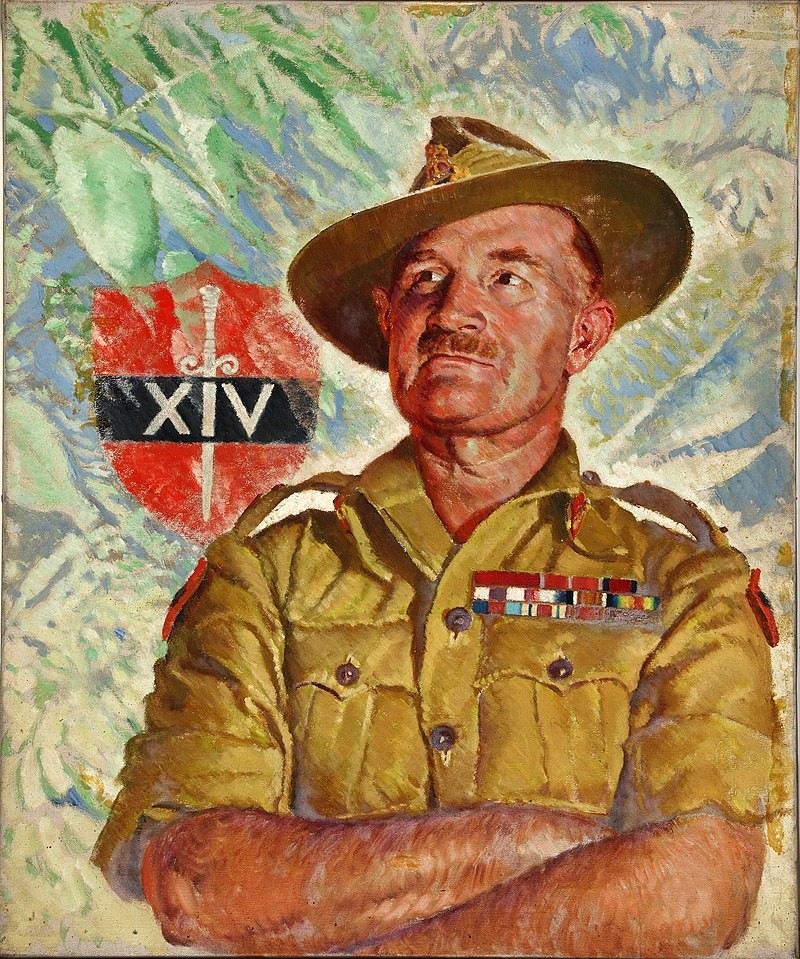
The situation reminds me of a similar moment in history when the British government debated whether to make peace with Bolshevik Russia in November 1920. Winston Churchill, who was the War Secretary at the time, voted to continue military assistance to the Free Russians, but the Prime Minister, David Lloyd George, voted to re-open trade with Moscow and to end British support to the beleaguered White Russians in Ukraine. The peace deal sealed the fate of millions of Ukrainians, who were later killed by Stalin in his Holodomor.

The Fog Of War (In Ukraine)

Much of the training for our soldiers is about helping them to see through the “Fog of War”. This term was developed in the 19th century to describe the uncertainty on the battlefield i.e. having to make decisions with sub-optimal information. For example, late on the 18th June 1815 at Waterloo, the clouds of smoke from artillery and the folds in the ground prevented the generals on both sides from seeing who was winning the hand-to-hand combat.

In the 21st century, media and politicians cannot deal with uncertainty because it makes them look unprofessional. In the case of military operations, they pretend that surveillance systems, Air Power and precision weapons are the answer and gloss over the real issue, which is high-intensity training. It is possible to see through the fog of war, if you spend hours and hours on exercise (my rule of thumb was to spend one third of a year manouvering in the field in order to reach a standard where you can intuitively make the right decisions).

In Ukraine, last week, thick fog enabled Russian troops to move further into the key strategic city of Pokrovsk. For several days, the West’s surveillance drones were ineffective because visibility was so poor. This allowed Russian infiltration operations to succeed because we have become too dependent on technology and avoided putting boots on the ground. If we wish to prevent Putin from winning this war, we will need to change our strategy soon.

19th Century Fog of War

Remembrance Part Three

The structure of Remembrance this year has had three distinct parts to it. The Westminster Field of Remembrance, which was opened by Her Majesty the Queen. The second weekend in November events, which include the Royal Albert Hall Festival, the Cenotaph Parade in Whitehall and Church Services throughout the country. And finally, today’s Armistice Memorial Service at the National Arboretum, which was attended by the Princess of Wales.

This three-legged-stool, which has developed over time in response to the needs of those who defended the Free World and their descendants, is part of Deep British Culture. Unfortunately, this is under threat from those who wish to “reinvent” the commemoration because they do not agree with concepts of loyalty and duty to one’s country. Their arguments stem from a naïve ideology that oversimplifies the complexities and realities of war. I am all for inclusion, especially to those who feel disenfranchised, but we should not dilute the military involvement and nor should we allow the ignorant to denigrate our way of life.

Remembrance Part 2

It seems to me that the words “We Will Remember Them” are more poignant this year than ever before. This is not just because so few are left who fought in World War II, but also because the World has become increasingly dangerous since the end of the Covid Pandemic.

However, Remembrance Sunday was not always so obvious. Forty years ago, one of my soldiers asked why he had to march to church to commemorate something which was signed so long ago that it was irrelevant, especially as no member of his family had been affected by the two World Wars.

In reply, I attempted to put some perspective on the only day of the year when the Padre has a captive audience. I talked about the millions of men and women who gave their lives in the cause of freedom and explained how in every ship, regiment and air-base there is a book of remembrance for those who have died In Service since the Second World War. I added that it was appropriate that collectively, we should take the opportunity of considering whether we are really leading our lives as we should.

I am not sure that I convinced him at that time, but very sadly, he later became a grieving father when his son, who followed him into our regiment, was killed in an explosion while on patrol in Lashkar Gah. The strength of a family regiment is seen in the pain and grief we all share when a soldier dies.

Remembrance – Part One

As we approach Armistice Day, it’s worth reminding Wikipedia AI producers that it is not a “celebration” and that Armistice Day and Remembrance Day are not the same thing, unless 11th November lands on a Sunday.

This year, my first thoughts are with those who suffered from abuse during their time in the Armed Forces. Many of us who spent a large part of our lives in the military inevitably will have witnessed cases of mental, emotional and physical coercion under the pretext of team-building. Those who suffered include naïve young male and female soldiers, as well as mid-career aspirants. It is sad that incidents of racism and sexual assault still sully the military and that the same mistakes are being repeated again and again as highlighted in court this week by the appalling case of Gunner Jaysley Beck.

One of the tasks I was given when I was responsible for Royal Armoured Corps initial training at Winchester was the integration of female recruits. This was at the same time that the Deepcut Recruit Training Scandal was occurring. Part of the reason we succeeded where others failed was a strict adherence to the principles of Investors in People. The Army stopped using this standard about five years later and to my mind, that explains why it still has a big problem with its management of personnel in 2025. If the Assistant Chief of the General Staff is genuinely interested in eradicating this problem, he would do well to reintroduce IiP accreditation across the Army today.

Army Recruit Training In 1997

Soldier F Fallout

There is a saying in the Army that runs along the lines: “there are no bad soldiers, only bad officers”. Like all generalisations there are many exceptions to this maxim, but from my experience of commanding soldiers on 7 different operations (including as a platoon commander in West Belfast), it is founded on truth. In the case of the soldiers who shot dead 13 protesters on 30 January 1972, I would personally direct my focus on the military leadership, rather than the “out-of-control”, poorly-trained troops.

Another focus would be on the Media and especially the BBC, whose reporting continues to be biased against the Army. Their historical context always begins with the introduction of Internment, but makes no mention of the murder of over 50 British soldiers and policemen that led directly to Bloody Sunday. This is similar to reporting on the war in Gaza without explaining that Israel was responding to the heinous crimes committed by Hamas. It is about time the BBC leadership corrected its prejudicial reporting on the Troubles.

Neither of these observations will comfort the families of those who were killed in Londonderry at the end of January 1972. They have my full sympathy, but at the same time persecuting veterans for politicians’ mistakes is the wrong way to deal with legacy issues in Northern Ireland.

A Decent Leader In Northern Ireland 1981