Saif Gadhafi Disqualified, Jan Kubis Resigns

The Libyan elections are heating up. Following the deadline for the Presidential nominations closing on 24 November, the electoral commission has been busy removing many of the 98 candidates from the list. Saif al-Islam Gadhafi has been disqualified for his previous conviction, whereas the former Prime Minister and Human Rights Lawyer, Ali Zidan, lost his place for continuing to hold more than one nationality.

There is an appeal process and the UN is worried that the court deciding Saif’s case, in the south-west city of Sebha, was raided by an armed group soon after he submitted his appeal.

Meanwhile, the Head of the UN Support Mission In Libya, Jan Kubis has resigned his post claiming that the headquarters must return from Tunisia and re-establish itself in Tripoli. With less than a month to go to the elections, this is a brave move and is very significant because it could help reintegrate Libya into the international community. However, there are plenty of risks attached to this relocation since there are still many internal and external actors who do not want to see the UN succeed and so the Mission will have to drastically improve its security to remain for the long term.
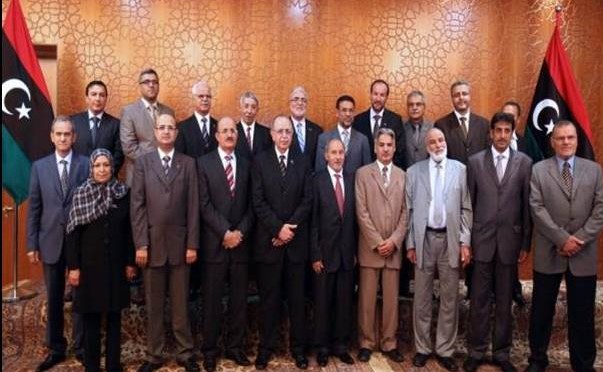
The First Libyan Government After The 2011 Revolution

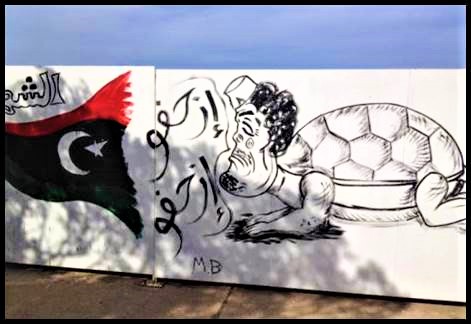
Gadhafi’s Son Joins Race For President

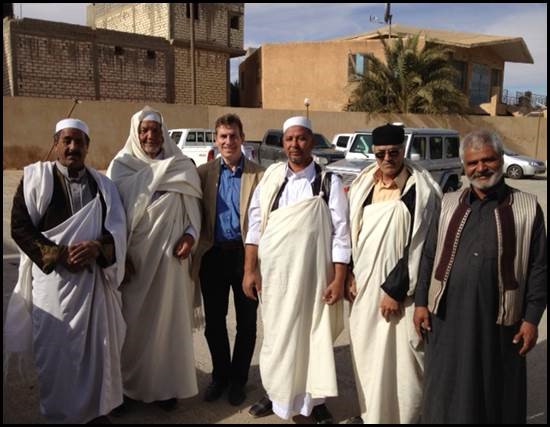
There is an irony in Saif al-Islam Gadhafi registering as a presidential candidate in Libya ten years to the week that he was captured near the Nafusa mountains. Meeting the the lawyers and elders outside the Zintan prison, I was informed that Saif would not be released to the International Criminal Court, but little did I suspect that he would survive a decade, let alone gather enough support to return to the political arena.

Although he has drawn the headlines, there are in fact six other registered candidates, all of whom were born in Cyrenaica (Eastern Libya), or Misratah. They include the military leader, Khalifa Hafter, a senior officer in the revolution who was snubbed by the transitional government in 2012, as well as a respected scholar and distinguished political leaders.

Inevitably, we will see a great deal of misinformation and interference in the next month as external actors promote their preferred candidates and denigrate their rivals. Given that Libya remains in the top ten countries for proven oil reserves, there is much to play for as we approach the elections on the 70th anniversary of independence. For more comment on the future of the country, see Chapter 16 and Jason Pack’s Afterword in Liberating Libya.

Outside The Zintan Prison In 2011

The Other International Conference This Week

If you were wondering why the Heads of State of France, Germany and Italy (and the Vice President of the USA) were not at COP26 in Glasgow on Friday, it is because they were attending the International Conference For Libya in Paris. The declaration that was published at the end of the conference has received scant attention in the media, but it is probably the best work on Libya since the Pandemic began because it deals equally with the political, security and economic lines of activity, as well as highlighting the humanitarian needs. However, just like the COP26 statement, it is not the talking, but the doing that will make the difference; and the first doing is the free and fair elections that will take place on the 70th anniversary of Libyan independence next month.

Meanwhile, I was delighted to be able to pay tribute to those who gave their lives in World War II in Libya during a wide ranging discussion with Dan Snow for his History Hit website. The interview is available for free as a podcast here https://play.acast.com/s/dansnowshistoryhit/colonelgaddafiandlibya

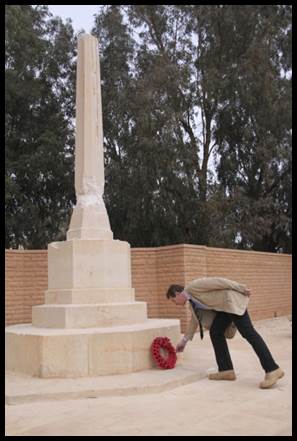
Benghazi Commonwealth War Memorial

Lockerbie and Tobruk Remembered

Thinking about Armistice Day and Remembrance Sunday this week, my focus has been on commemorating the 10,000 Allied casualties from World War II who were killed in Libya.

Hundreds of thousands of British citizens have a grandparent or a family relation who are buried in the four Commonwealth War Cemeteries at Tobruk, Knightsbridge, Benghazi and Tripoli. Perhaps the most iconic of these is the burial ground for those who died during the nine month siege of Tobruk, which was as much a symbol of defiance as Dunkirk and the Battle of Britain because it was the first occasion that the German Blitzkrieg war machine was defeated in battle. The fortress, as it was known, was relieved in November 1941, when six Victoria Crosses were awarded to British and Irish soldiers (four of them posthumous). The many acts of incredible bravery are covered in Part 3 of Liberating Libya, including the near-suicidal advance on foot of the Black Watch, who were “played-in” by Pipe Major Rab Roy against Rommel’s well-sited artillery and machine guns.

For people who are reluctant to pay tribute to soldiers who gave their lives for today’s freedoms, it is worth remembering the 270 innocent people killed when Pan Am Flight 103 exploded over Lockerbie, which is also in the news again. With a major international conference on Libya beginning this week in Paris, I am sure the continued pursuit of those responsible for the murder of PC Yvonne Fletcher and the bombing 33 years ago will be highlighted more by the Media than the 80th anniversary of the Relief of Tobruk, but they are all part of the same Anglo-Libyan tapestry that deserves our attention.

The Desert Rats Return To Libya

The Bad, The Ugly and The Good

This has been a difficult week when we have seen a lot of talk about Climate Change by activists, who have lectured us about our bad behaviour, but have failed to come up with workable alternatives, or invented a small battery that can help to wean us off Fossil Fuels.

Meanwhile, the media has covered ugly stories that put the armed forces in an poor light, such as the Kenya murder allegations and the ban on serving soldiers carrying Dennis Hutchings’ coffin.

Few media outlets bothered to cover the operational honours list that was published on Friday, so I wish to pay tribute to Lieutenant Colonel Martin Windsor. He was responsible for the logistic support to 14 operations across 11 different African nations from Somalia to Mali and was awarded a Queen’s Commendation for his outstanding leadership and foresight.

Africa is suffering some of the most catastrophic consequences of rising global temperatures and the illegal migration that continues to flow through countries such as Libya are having a destabilizing effect in Europe. Isn’t it about time that the media informed us about the government’s strategy for Africa, including the different UK operations across this fragile continent and the good work of British soldiers on our behalf?

Sahara

PC Yvonne Fletcher High Court Case

The civil case being brought by a retired police officer and funded by the Police Federation against the Libyan man allegedly thought to have murdered Yvonne Fletcher in St James’s Square, London in April 1984 will open a can of worms for the government next month.

The determined anti-terrorist police who have pursued the perpetrators of this crime for 37 years, gathering evidence in the UK and in Libya are livid that their criminal investigation was dropped by the government in 2017 and are now seeking retribution. On the one side, former government sources have described Saleh Ibrahim Mabrouk as an important “agent of influence” who was protected by the British Government when he moved back to Britain in 2009. On the other side, a former British ambassador and the head of MI6 between 1999 and 2004 have claimed that Mabrouk was not a “big fish”.

This was not the only questionable trade in the murky world of the Anglo-Libyan intelligence alliance after 9/11, which involved illegal renditions and billion dollar oil deals. For those who wish to learn more about this, I have, with the help of three British ambassadors, covered the rapprochement after the Lockerbie trial and the atmosphere of distrust within the joint investigative team that worked for a time in Tripoli in my new book, Liberating Libya.

Death on Military Exercise Should Not Curtail Armoured Training

The devastating death of Jethro Watson-Pickering in a Warrior fighting vehicle on Salisbury Plain on Friday has saddened everyone in the military community, but the tragic accident should not be used by those seeking to dilute the army’s capability as an excuse to make further cuts.

Throughout my time in the army, people on the touchline tried to lower the standards of training. Sometimes this was for politically correct reasons, so that lower grade applicants could reach the graduation threshold, but often it was because behind-the-scenes accountants wished to impose a moratorium on activity to save money.

There are some very hard choices being discussed in the Ministry of Defence at this moment. Unfortunately, with a Royal Navy Chief of Defence Staff (and Chief of Joint Operations), land capabilities are behind maritime and air power. The questions doing the rounds are: should we reduce the numbers of soldiers (and commandos), walk away from the army’s premier equipment project (Ajax), or dilute the highest level of training for war (tank to tank fighting)?

When this sort of discussion was held in the past, I reminded the audience of Kofi Anan’s thoughts as the United Nations Secretary General: “In Eastern Slavonia, we deployed a force of heavily mechanised infantry and helicopter gunships. We went in with such strength that we didn’t have to use force and we successfully fulfilled the mandate.” Or, as a senior officer exclaimed in the 1980s, “Clout, Don’t Dribble!”

Effective deterrence and conflict prevention require credible land forces, not shop-window dressing, so we must resist the Machiavellian plotting against the army and save our soldiers.

Ten Years Ago – Operation Ellamy

Eleven days before the Foreign Secretary officially reopened Britain’s embassy in Tripoli, I was invited to apply for the post of the Senior British Officer in Libya having worked on the United Nations authorised operation since March 2011.

The tasks in the Chief of Defence Staff’s directive included hunting the three men indicted by the International Criminal Court and the resources to do this included British Special Forces and the UK’s spy plane flying from RAF Akrotiri in Cyprus. Initially, the Ministry of Defence wished to send an officer from the Royal Air Force, but eventually they saw sense and I was put on 48 hours notice to move.

By this time, Colonel Muammar Gadhafi was holed up in his home town of Sirte, where he moved from hideout to hideout in an ever-shrinking pocket held by a dwindling group of loyalist fighters. He swung from rage to despair over his loss of power and finally he made his fatal dash for freedom on 20th October. It was an ignominious ending, which he could have avoided by handing over power six months earlier. After his body was left on public display in Misuratah for four days, he was buried secretly with his son Mutassim and Abu-Bakr Younis Jabr, an original member of the RCC and former head of the army, who was with Gadhafi when he was killed. Meanwhile, the British focus switched to his brother-in-law, the intelligence chief Abdullah Senussi and his son, Saif al-Islam…

Libya 2011

Armed Forces To The Rescue – Again!

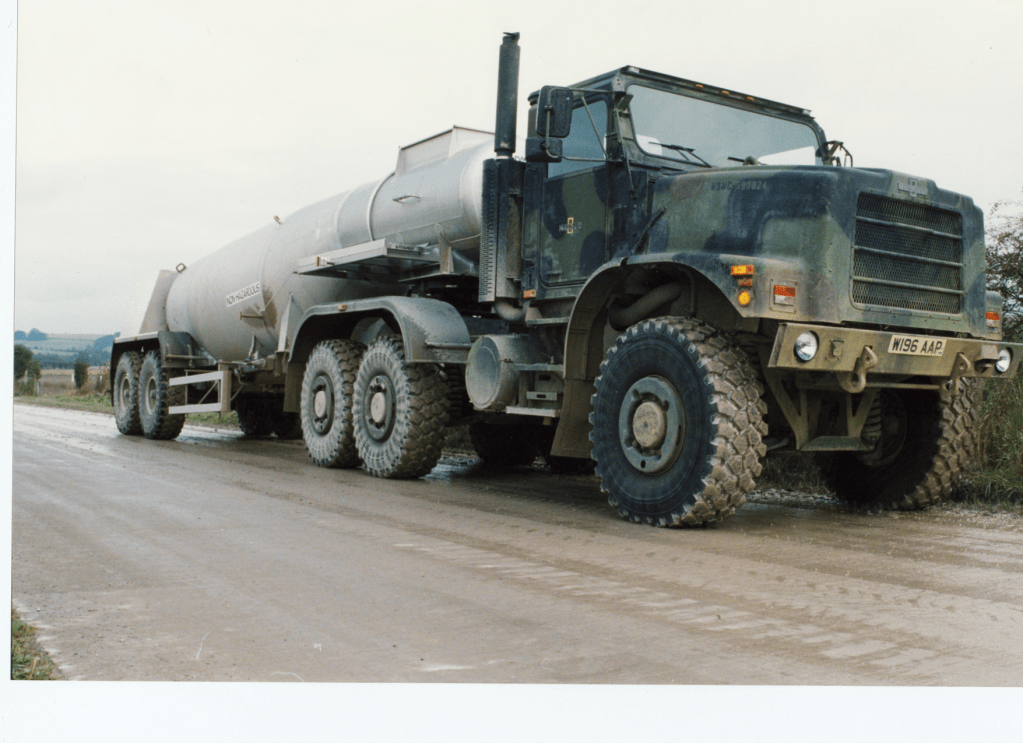
I intended to write about an emotive Libyan anniversary this week, but the news that the government has ordered the Armed Forces to deploy their drivers to deliver fuel to petrol stations cannot be ignored. This is not the first time this operation has been dusted down because in 2005, I was involved in preparing 1,000 drivers to operate tankers if the fuel blockade that was crippling the country continued.

The provision of military aid to the civil authorities is an act of desperation and only considered as the last resort. Of course the drivers from the Royal Navy, Army and Royal Air Force will be delighted to help and do their duty, but the use of Service personnel for domestic crises is becoming something of a habit for this government. The news that a royal marine general has been asked to sort out the National Health Service adds to the impression that there is a real problem in our national institutions.

The Army in Britain is not funded for domestic tasks other than a few specialist roles such as bomb disposal and ceremonial duties. They are supposed to be training for overseas operations such as the peacekeeping mission to Mali, or the conflict-prevention deployment to the Baltic states. The serious underfunding of the military in the past decade has compounded the issue of poor retention.

Society owes a huge debt to those serving in the British military who have helped the country in the past 18 months. It would be really good if our schools, colleges and universities were to recognise this debt by signing the Armed Forces Covenant (https://www.armedforcescovenant.gov.uk/get-involved/show-your-support/) and encouraging their students to join up.

Army Tanker

UN Mission to Libya – Ten Years On

The UN Mission to Libya has just had its tenth birthday, but there is not much to celebrate in 2021.

For a start, its headquarters isn’t even positioned in Libya. Yes, the valiant humanitarian co-ordinator has just spent four days in Benghazi, but most of the officials meet their counterparts in Europe, or Tunisia, rather than Tripoli, or Tobruk, where the main seats of government are located.

After the UN Special Representative resigned last year because his mediation efforts were not supported by the countries arming the warring factions, we now have a graduate of the Moscow State Institute in charge. Meanwhile, Russia (through its security contractor group Wagner) and Turkey lead the way in the ongoing civil-war.

Turkey’s interest dates back to the time before 1912, when Libya was part of the Ottoman Empire. Russia’s interest only began when Colonel Gadhafi bought Soviet equipment in the 1970s. France and Italy will never be trusted in Libya due to their colonial past. America’s links with Israel make it virtually impossible for them to play a leadership role in Libya.

The country that most Libyans wish to partner with is the UK, but we are strangely reticent about accepting the invitation. See Liberating Libya for the rationale for British involvement in helping Libya solve its problems in the 2020s.

Libya’s Partner Of Choice For 200 Years