I am looking forward to discussing Britain’s role in liberating Libya and the challenges facing the country after the 2011 revolution with Tim Eaton from Chatham House and members of the audience on Wednesday 26 January.
This is the first event the Front Line Club is holding in London since the pandemic and they have an excellent restaurant for those who wish to stay on after the talk. Anyone who is not able to attend in person can join the debate online and ask questions through the internet.
On Wednesday 26 January, I will be speaking about the Media’s role in Libyan wars at the bastion of press freedoms, The Frontline Club, next to Paddington Station.
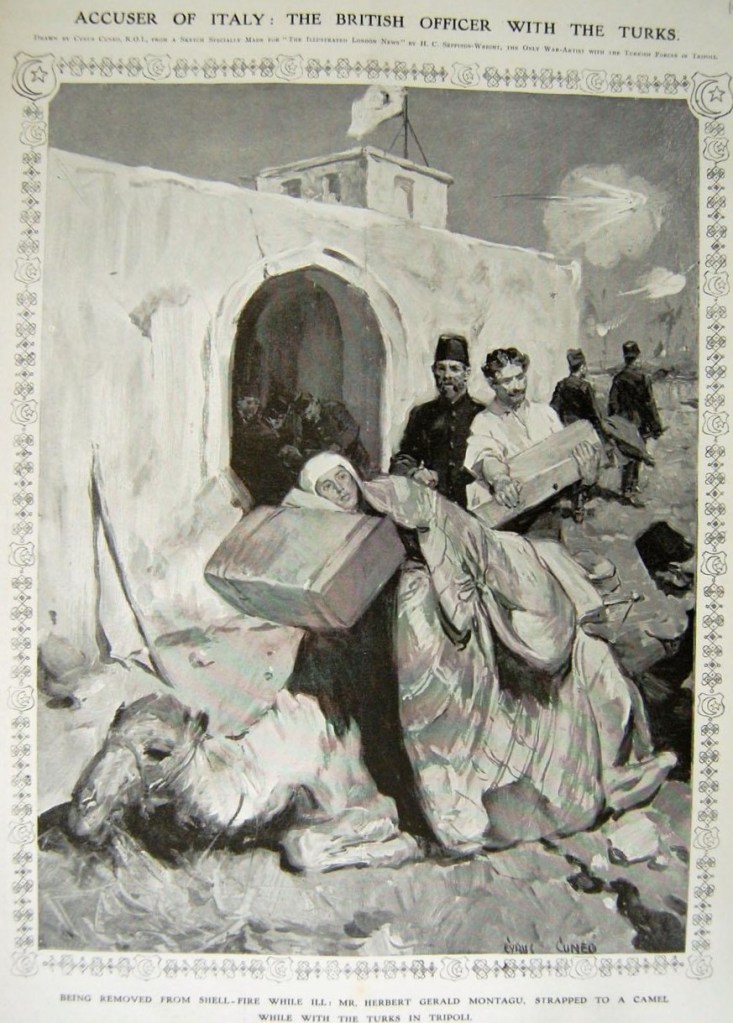
Many people will have read some of the captivating books by independent journalists, who covered the Arab Spring and embedded correspondents in the World War Desert Campaigns. Fewer will be aware of the influence of British and Irish journalists in the Libyan war of 1911-12 and know that the great newspaper editor and champion of the oppressed, WT Stead, wrote before he died on the Titanic: “Francis McCullagh, whose ready pen, whose fearless spirit and whose presence in the firing line has made it possible to make the great public realize the criminality of the plunder-raid on Tripoli”.
McCullagh’s voice was not solitary as he was joined in Libya by other distinguished British correspondents, including: George Abbott (Daily Chronicle and The Holy War In Tripoli), Ernest Bennett (Manchester Guardian and With the Turks in Tripoli), Alan Ostler (Daily Express and The Arabs In Tripoli), Henry Wright (Illustrated London News and Two Years Under The Crescent), Ellis Ashmead-Bartlett (Reuters and Daily Telegraph) and Tom Grant (Daily Mirror).
These journalists set a high bar for subsequent war correspondents embedded in the Allied armies that fought in the Libyan desert, such as William Massey, Alexander Clifford and Alan Moorehead, and those who covered the Gadhafi era and its aftermath. Discussing the difference between independent and embedded journalists, I will illustrate how press interpretations have influenced the way we think about Libya since the murder of PC Yvonne Fletcher and the Lockerbie bombing with unfortunate ramifications for the future of this fascinating country.
After Her Majesty The Queen took the courageous decision to revoke the Duke of York’s honourary military titles, such as Colonel of the Grenadier Guards, the Media invited me to provide expert comment on television and radio.
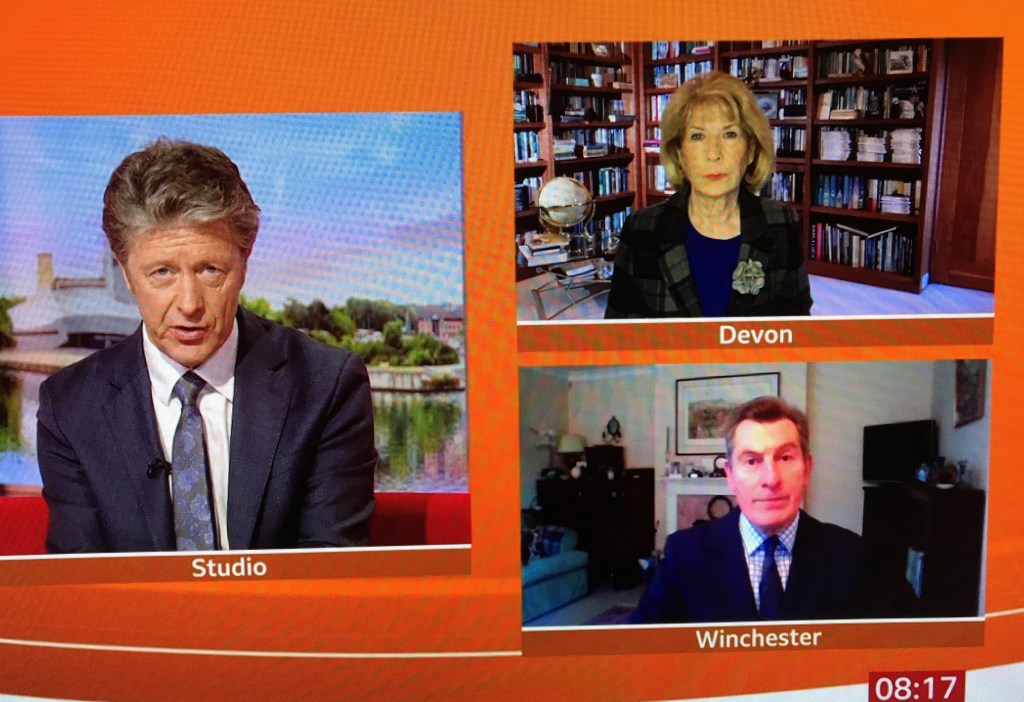
Sky News cameras arrived after dark for their early evening news, BBC Radio 4 and LBC Radio recorded me during the night and BBC Breakfast TV sent a Zoom link so that I could join the immaculate Jenny Bond at 8 o’clock for a studio discussion about what this means for Prince Andrew. By the time the Jeremy Vine show called me on Face Time, this story was being overtaken by Downing Street party apologies and Djokovic detention, but it was still important to explain what the role of Colonel-in-Chief entails and the importance of the Royal Family as the enduring embodiment of the civil-military relationship in Britain today.
Early in January 2012, we hosted the three Permanent Under Secretaries of the UK’s Ministry of Defence, Foreign and Commonwealth Office and Department for International Development in Tripoli. This was a wide ranging visit to scope the future relationship between Britain and Libya and should have paved the way for close diplomatic, economic and security ties and facilitated the reconstruction of airports, harbours, schools and hospitals.
Their report, which was passed to all the members of the National Security Council, identified a number of dilemmas such as the demand for British advice, but “coolness towards any suggestion of the visible presence of Western government personnel on the ground”. The two key priorities were Security Sector Reform (reintegration of the militias) and Border Security (managing migration). They concluded: “There is an urgent need for HMG to get its planning in place.”
A week after they departed, I travelled to Bani Walid to assess the security situation in this gateway to the Sahara. There had been an uneasy peace following the death of Qadhafi and the local council imposed by the NTC had not been able to pacify the tribal elders. Soon after I arrived with a group of British special forces, the fighting began in earnest as a hundred fighters attacked the NTC’s military compound. A short time-out was called to allow US agency staff to leave the town, before the battle continued with dozens of casualties caused by the mortar bombs and machine gun fire.
This was the day, I knew that the honeymoon for the new government was over and that Libya was heading for a second civil-war, but the uprising was barely mentioned by the world’s press at the time and soon forgotten by the international community.
1922 was a dramatic and pivotal year for Libya. After Mussolini grasped power in Rome at the head of 30,000 Blackshirts, Emir Idris al-Sanussi withdrew to Egypt in self-imposed exile and the Tripolitanian Republic disintegrated as the brutal Italian conquest of the country began in earnest.
Meanwhile, the exploration of the Sahara continued apace. Following Rosita Forbes’ intrepid expedition to Kufra in 1921, Francis Rodd travelled into the heart of the Sahara and wrote about his time with the Tuareg in his book People of the Veil. At the end of the year, Ahmed Hassanein set out from Sollum and discovered two lost oases that opened new Saharan routes that were later used by British special forces.
Rodd and Hassanein were connected in two other ways. They both matriculated at Baliol College, Oxford and both were companions to the British diplomat, Milo Talbot, when he patiently negotiated the crucial peace treaty that ended the Sanussi Jihad in 1917 and allowed Edmund Allenby to focus solely on the Ottoman threat in the east.
Read more about Talbot’s forgotten mission and this period of the long Anglo-Libyan friendship in Part 2 of Liberating Libya.
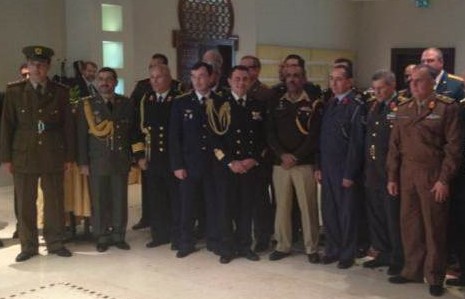
With hope and belief, the Libyan government organised a disarmament conference on Christmas Day 2011 at the Radisson hotel in Tripoli. The British Ambassador was in England, so I represented the UK Government and was greatly honoured to meet the last living member of the original 1951 Senate, who was one of 24 Libyans from the three provinces chosen to sit in the upper house of government.
I spoke to the receptive audience about our long friendship and recent partnership to liberate Libya from the brutal shackles of the previous regime and was followed on the stand by the renowned revolutionary leader, Abdelhakim Bel Haj. He was very grateful for Britain’s support and looked forward to working with the United Nations on the disarmament project, but unfortunately, this cordial relationship was paused when London issued instructions to forbid any further dialogue with him.
See chapter 16 of Liberating Libya for the story of Bel Haj’s subsequent legal challenge and the embarrassing admission of the UK government.
Disarmament Conference on 25 December 2011 in Tripoli
News is coming through that the Libyan parliament has postponed Friday’s presidential election in Libya as the ballot papers for nearly 90 candidates have not been circulated in time for voting.
This has been the most likely outcome for the past three weeks ever since Libya’s Higher National Elections Commission realised it could not deliver the complete technical and logistic support needed for a transparent, free and fair election.
It does not help that the judiciary has allowed high-profile candidates, who have broken eligibility rules to stand for president, or that the government cannot guarantee the safety of international monitors as local militia deny the voters full access to the candidates.
This was the main topic of discussion at The Oriental Club where I recently joined a panel of speakers about the future prospects for Libya. We concluded that the government is in between the rocks of “Scylla” and whirlpool of “Charybdis” over the issue of holding the elections on the 70th anniversary of independence. If they hold them on Christmas Eve, the losers will refuse to recognise the results because the legal framework is flawed. However, postponing them risks deepening the divide between the three main regions Cyrenaica (East), Tripolitania (West) and Fezzan (South); and strengthening the position of those who wish to maintain the status quo.
At least the UN Secretary General has now appointed a competent Special Adviser in Stephanie Williams to mediate between the opposing parties. Having been Head of the UN Support Mission in Libya, she knows the challenges and understands how important the economic and military tracks are to political progress in 2022.
The news that some European leaders have vetoed a US proposal for NATO to provide direct military support to Ukraine in their border dispute with Russia reminds me of another important connection with Libya.
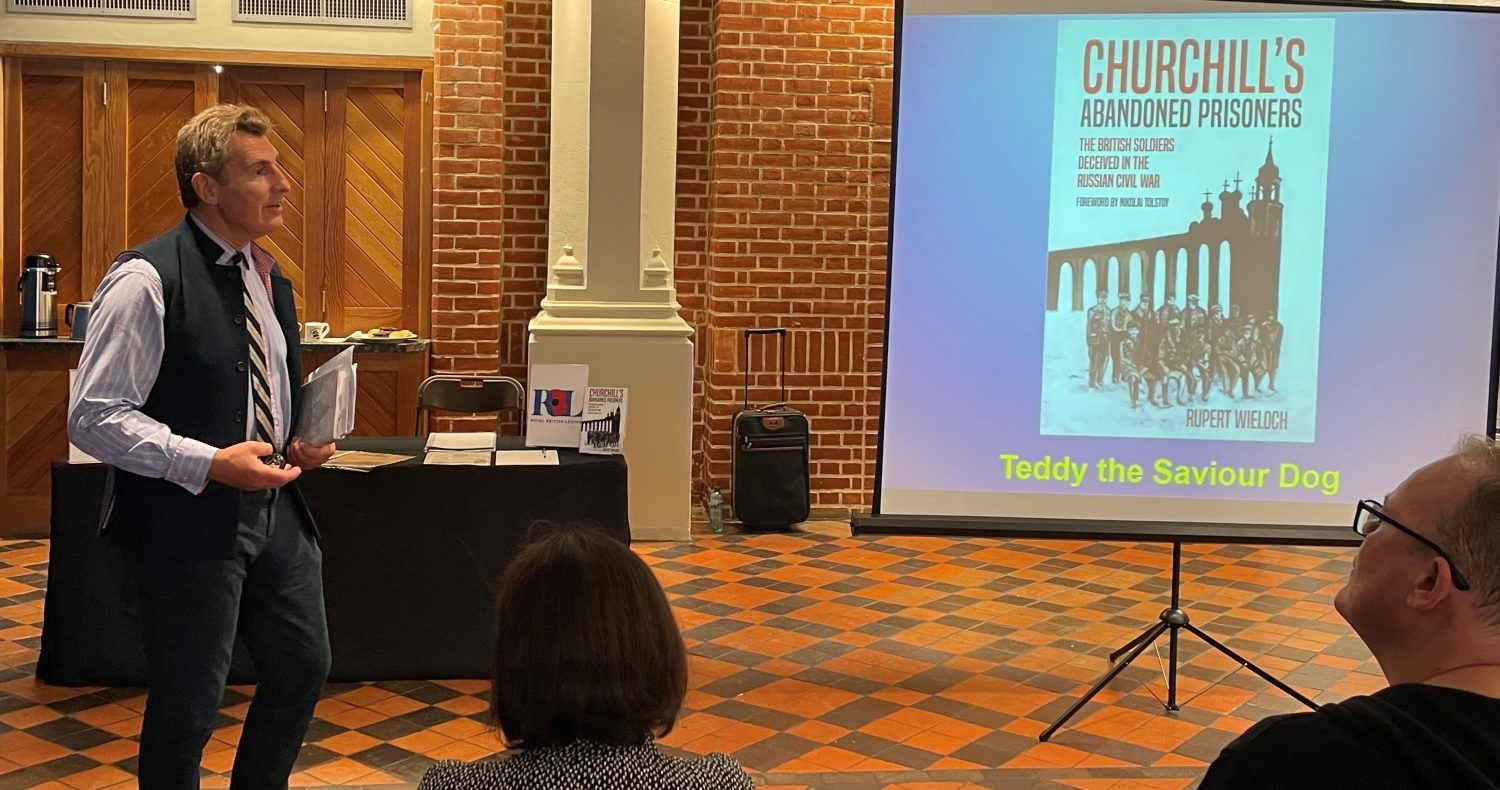
In Churchill’s Abandoned Prisoners, I wrote that Ukraine’s geography made “the establishment of defence in depth almost impossible”. With its open countryside lending itself to “outflanking and turning movements”, I went on to explain how the new Polish army discovered this after it captured Kiev in May 1920. The Red Army was already very adept at the tactics which would defeat Hitler’s army and nearly surrounded the Poles by counter-attacking on the northern route from the Dvina to the Dnieper. The effect was recorded by the British Prime Minister’s envoy, Sir Maurice Hankey, who commented that: “The ill-advised advance to Kiev and the inevitable retreat have reacted disastrously on this young and inexperienced [Polish] army”.
The connection with Libya is that the desert area that witnessed the toing and froing of the Allied and Axis tank formations in World War II proved to be a similar battle ground to the vast steppe-like open plains in Ukraine. Some towns and cities in Cyrenaica exchanged hands five times between January 1941 and December 1942 because Eastern Libya needed either to be fully occupied or totally abandoned since it offered few natural defensive barriers.
NATO had to relearn this military realityduring the Libyan revolution in 2011 and one hopes that it will not make the same mistake in Ukraine in 2022.
For the past five years there has been talk about a United Nations Peacekeeping operation in the Donbass region of Eastern Ukraine. Unfortunately, the Kremlin’s vision of this mission is very different to the view from Kiev. Their historical animosity was explained to me by the Ukrainian attaché in Tripoli, who remained in Libya throughout the 2011 revolution, together with their doctors and medics working for the Libyan people.
Libya has some of the largest reserves of natural gas in the world. If European countries had not pulled out in 2012, they could have established a gas pipeline that would have been much cheaper than the one laid from Russia that is increasing European dependency on Russia. The Kremlin knows this and it is one of the reasons why they are helping Khalifa Haftar to disrupt the West’s efforts at establishing a democratic country and reintegrating Libya into the international community.
The G7’s threats of economic sanctions on Moscow over their build-up of their armed forces on the Ukrainian border sounds pretty hollow because there is little evidence that they are willing to deploy capable military boots on the ground (not a shop window force) to back up their rhetoric. Unfortunately, their record in Afghanistan, Syria and Libya provides little confidence that the West’s strategy and commitment is capable of outmatching Putin. A change in foreign affairs is needed now.
With the Ukrainian DA in Tripoli after the Revolution
This week has seen progress with the US$1.5 Billion project to develop a deep water container port at Marsa Susah. Known in ancient times as Apollonia, this was one of five cities in Cyrenaica established in the seventh century BC by King Battus that made up Pentapolis. It was the port used by the British archaeologists, Smith and Porcher, during their excavations at Cyrene one hundred and sixty years ago and it was where Geoffrey Keyes was landed by submarine on his way to being awarded a posthumous Victoria Cross, leading the failed Special Forces attempt to capture Erwin Rommel in November 1941.
This project has been on the table for a long time and is critical to re-booting the Libyan economy. It is envisaged that Susah will serve as the main port of entry for goods into Libya by sea. The natural self-dredging harbour with a sea depth of 18 meters will be constructed in four-phases and will primarily focus on container processing, grain handling and other bulk cargoes. With the signing of the master agreement this week, the beginning of construction is in sight, although probably not until 2023.
See Liberating Libya for Smith and Porcher’s life among the Bedouin and the controversy surrounding the death of Geoffrey Keyes.
Ruins at Apollonia next to the modern port of Susah





 Rupert Wieloch