Humanitarian Medal Long Overdue

The announcement that His Majesty has approved the launch of a medal to recognise the efforts of people involved in humanitarian relief is long overdue. However, as with all awards the devil is in the detail of the qualification criteria. I do hope there is some transparency in the decision making, so that the decoration is valued not only by those who receive it.

There are other questions that need answering. A fundamental principle of the UK honours system is that that an individual cannot receive two medals for the same operational tour i.e. “No Double Medalling”. This rule was instigated after some troops qualified for both a UN and NATO medal for a single tour in Bosnia in 1995.

Will the new Humanitarian Medal count as a campaign medal for Service personnel? The response to the 2001 earthquake in the Himalayas was from troops deployed on Operation Veritas, who qualified for an operational service medal for being in Afghanistan. Should they have received a humanitarian medal in addition to the OSM? Likewise, for civilians should those working for independent Non-Government Organisations be treated the same as those who work for big international organisations like Médecins Sans Frontières, or the United Nations, which have their own “recognition”?

The question about whether the humanitarian response is in a war zone adds a degree of complication. The risks of being caught in the crossfire between warring factions makes some humanitarian work more dangerous than others. For example, civilians working for the International Commission for the Red Cross have been deliberately targeted and killed in Asia and Africa while providing support to displaced people. Does the criteria for the new medal take risks into account and if so, how does the deciding committee differentiate between the risks of viral disease and of collateral damage?

Another big issue, which has not been mentioned, is whether this medal can be awarded to people who respond to a humanitarian crisis at home. For example are not the troops who help when there are life threatening floods and storms, or in a pandemic, just as deserving as people who help in refugee centres, or those who offered Aid in the West African Ebola crisis?

In 2001, I wrote an article that was published in Forced Migration Review which explained the different types of humanitarian assistance provided by the Ministry of Defence. The issues that I highlighted then are still relevant today. I do hope the Government ensures the detail is covered in a fair and equitable way.

One Resignation Follows Another

After nearly four years in the post, the Defence Secretary, Ben Wallace has announced his resignation. The media is not linking his departures to that of the Chief of the General Staff, but there is no doubt in my mind that they are connected.

Both men were soldiers when the British Army was at its peak, in terms of capability and effectiveness. During the past decade, they have witnessed a steep decline so that now we are not capable of deploying a medium scale armoured formation into the field, let alone sustain it for the sort of war we are seeing in Europe today.

Who knows what is going on between the Treasury and the Ministry of Defence, but a bit like HRH Prince William saying that his son might not serve in the military, this announcement will have a detrimental effect on morale (and recruitment). Having served in the Armed Forces when they were at the heart of British social life, it is sad to see how they are being neglected and pushed to the extremity as their influence is eroded.

When The British Army Was Valued By The Nation

Army Chief’s Spin

General Patrick Sanders gave an accomplished address at the Land Warfare Conference in London last week, but reading between the lines, he could not disguise the current poor state of the British Army.

To their credit, our instructors have trained 17,000 Ukrainian soldiers in Britain and I have no doubt the effect of this is improving battlefield discipline on the front line. We have some outstanding individuals, but our ability to deploy a medium scale armoured formation, which still remains the currency of serious combat, has withered in the past decade. There are not enough tanks and we don’t do enough high-intensity training at battlegroup, or brigade level. It is also abundantly clear that the Reserve Forces concept has been a complete failure, as we do not have a second echelon to sustain the front line force.

Given what we are seeing in Ukraine, it is simply appalling that our main fighting equipment for the infantry and armoured corps is as General Patrick said: “not fit for purpose”. We have spent so much money on peripheral capabilities and yet neglected the fighting core, with neither of the incoming platforms (Ajax and Boxer) filling me with confidence. It is no wonder the Chief of the General Staff has resigned early.

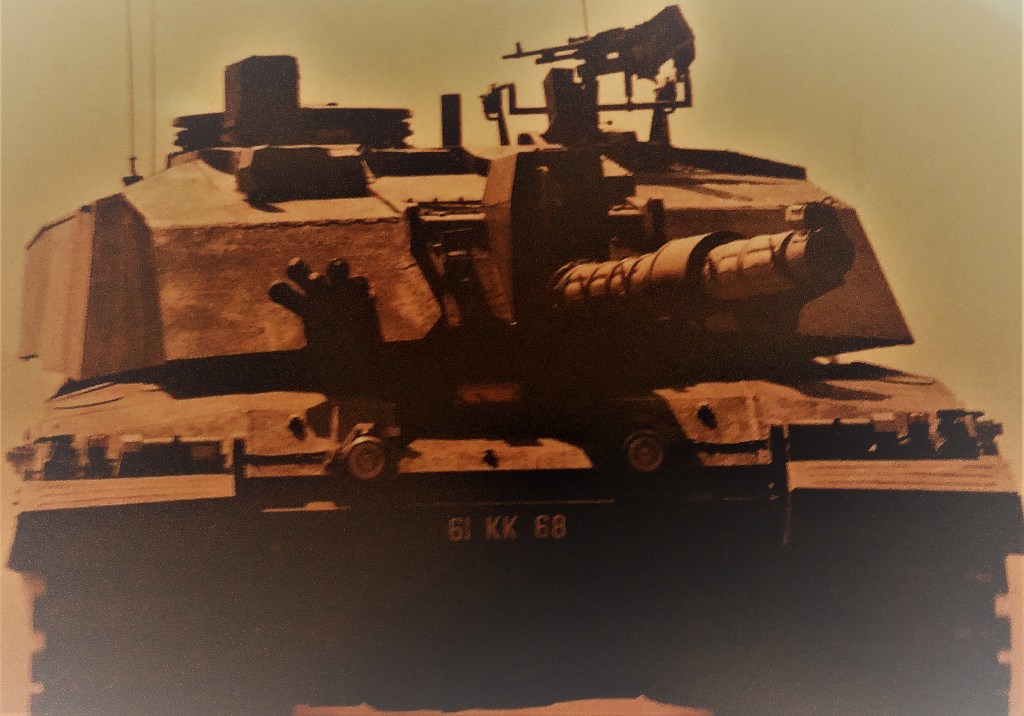
Challenger 2 Tank – 25 Years Old and Described by CGS as “Rotary Dial in an iPhone Age”

Army Chief’s Resignation Was Inevitable

The announcement about Patrick Sanders early retirement as Chief of the General Staff this week is not a surprise given the current state of play in the Ministry of Defence. With so much of the Defence budget squandered on questionable capabilities that have been procured piecemeal (e.g. Aircraft Carriers) and cyber capabilities used by other government departments (e.g. Home Office), British land forces have suffered a “death by a thousand cuts”. Given the government’s reluctance to re-constitute the Army after hollowing it out of tanks and ammunition to support Ukraine, it was inevitable that the head of the Army, who is one of the very few Chiefs since Dwin Bramall to have commanded his regiment in battle, would fall on his sword.

I worked alongside Patrick in 2008 after we both returned from Iraq and know that he is willing to compromise up to a certain point, but he also understands that no longer are we able to deploy and sustain a combat armoured brigade, let alone a division as we twice did during my time in the Army. I suspect the next chief of the general staff will be chosen for their human resources skills, rather than their battlefield decision-making, but this would be a huge mistake as it will only play into the hands of President Putin and make him smile even more.

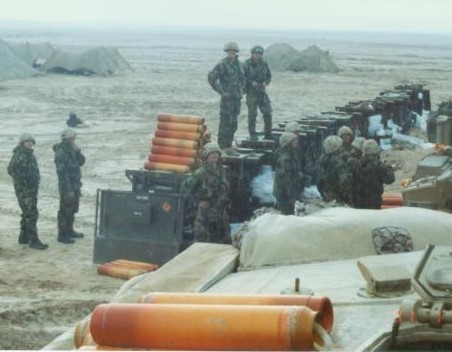
Bombing Up Before Battle

Why Britain Won’t Support Wagner

The mayhem caused by Wagner’s so-called mutiny has raised hopes that there might soon be an end to the Russian war with Ukraine. To my mind, this is highly unlikely because Wagner offers no viable political alternative and could not possibly run a country like Russia. The simple facts are that there are 11 time zones (the world has 24), more than 100 languages and over 150 ethnic groups from Russians to Kamchadals.

If President Putin were to step down now, he probably would be replaced by a like-minded, hard-liner, who believes NATO should not get its hands on Ukraine and if the current central government collapses, Armageddon would soon follow. It is remarkably similar to the war fought in Ukraine in 1920, when General Wrangel won military victories, but failed to solve the political needs of the people. What is really needed in 2023 is a negotiated treaty with an impartial peacekeeping force deployed to monitor the confrontation zones.

Twenty years ago, the British government was so worried about the consequences of a collapse in the Moscow government and what would happen to the nuclear arsenal if the country imploded, that it actively supported President Putin in his efforts to strengthen the central government. This policy still has some bearing today and I used it as evidence in a public debate with Peter Hitchens, before the pandemic, that you can watch below.

The King’s Visit To Libya

On 19 June 1943, King George VI visited Libya and met the Tripoli Base Commander Brian Robertson who later became famous for his role in the Berlin Airlift. The King was given a rapturous welcome by the soldiers of Eighth Army in Tripoli as he was escorted by Lieutenant General Sir Bernard Montgomery in his Humber saloon.

Later that day, he boarded HMS Aurora for passage to Malta, where he presented Viscount Gort with his Field Marshal’s baton and toured the harbour, which had withstood heavy Luftwaffe attacks during the two year siege that was so pivotal to the victory in the Mediterranean and North African campaigns.

The Royal visit was repeated eleven years later when HRH Queen Elizabeth II met the King of Libya at Tobruk and the families of British troops at El Adem Air Base. The Queen’s visit cemented the close friendship between Libya and Britain that endured until the coup that brought Colonel Gadhafi to power in 1969. Further details are in part four of Liberating Libya.

Eighth Army Cheering HRH King George VI During His Visit To Libya In June 1943

The Victoria Cross Awards In Libya

Liberating Libya is dedicated to the nine courageous soldiers who were awarded the Victoria Cross fighting Rommel’s Panzer Army Africa around Tobruk between April 1941 and June 1942. Five of these were posthumous awards and one of the recipients was killed one month after his citation was published in the London Gazette. The three survivors (Henry Bowerman Foote, Philip John Gardner and Quentin Smythe) all reached four-score years, with “Pip” Gardner the last to leave us in 2003.

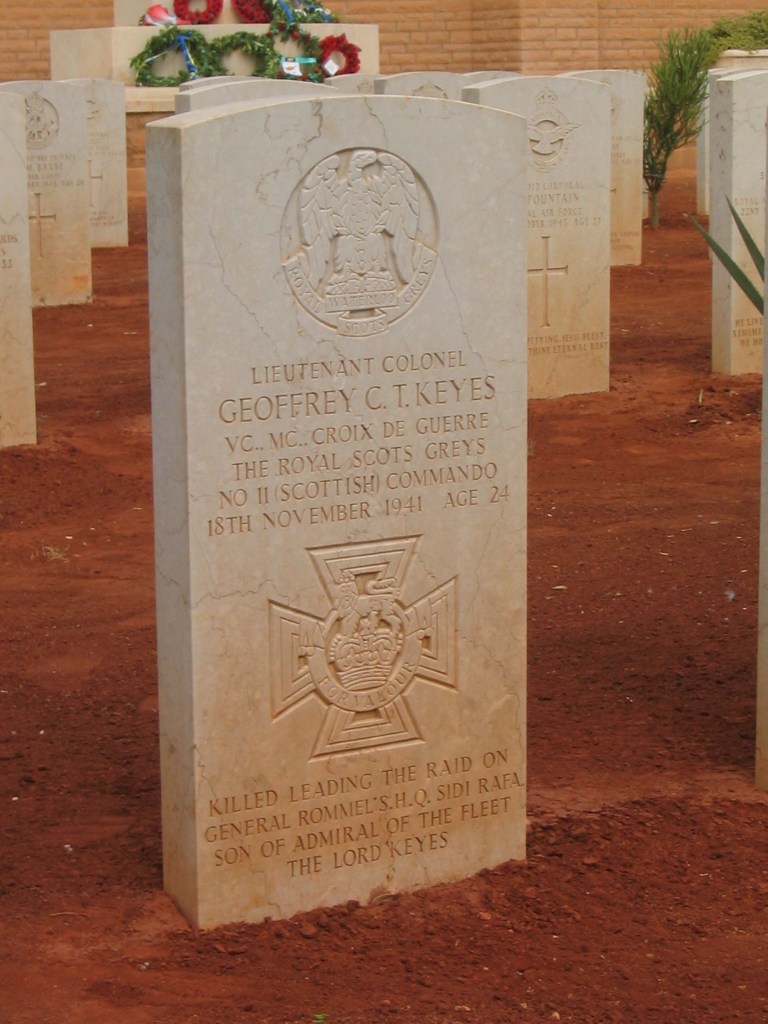
There is no doubting the incredible bravery of these men, but there is also clear evidence that some of these awards had a political dimension to them. The case of Geoffrey Keyes has been analysed forensically by Michael Asher, who questions the veracity of the citation, but there is no doubt that this award during the siege of Tobruk raised the profile of Britain’s Special Forces at a key moment in the campaign. The first and final awards were to Commonwealth countries that were questioning their commitment to the Western Desert campaign and these helped to reassure the doubters back home. Of the British Army soldiers, two were Scots and there was one each from Dublin, Manchester, Bedford, London and the Welsh border area of the Wirral.

If you look at the context of the awards in terms of location and stage of the battles as well as the regiments, schools, homes and ranks, a picture emerges of preferential decisions and box-ticking. During my research for the book, I discovered several deserving cases that were downgraded by the honours committees for non-military reasons. This does not in any way diminish the awards that were made, it merely indicates the complex nature and height of the threshold needed to join this distinguished band of men.

Geoffrey Keyes VC is buried in Benghazi

Australian War Crimes

During the Korean War, my father enlisted in the Australian Army and served on Centurion tanks in 1st Armoured Regiment at Puckapunyal until April 1955. As a result, he had a deep affection for the Australian Military Forces and spoke admiringly of the fighting qualities of “Diggers” such as Corporal John Hurst Edmondson, who earned the first Australian Victoria Cross in World War II, when he saved the life of his officer during the Siege of Tobruk (described on pages 108-9 of Liberating Libya).

If he was alive today, my father would be devastated by the outcome of the defamation case involving Ben Roberts-Smith. He would also be deeply troubled at the prospect of a series of Australian SAS war crimes trials, such as the case against Oliver Schulz.

Having planned NATO special operations against war criminals in the Former Republic of Yugoslavia and witnessed wrongdoing on military operations, I understand there is a fine line between “fighting spirit” and an “unchecked warrior culture”. However, what concerns me most with these cases is how the chain of command closed ranks and covered up the crimes, rather than rooting out the “bad-eggs” when they had the opportunity.

Centurion Tank In Australia During The Korean War

Army Welfare In The Spotlight

The tragic case of Officer Cadet Olivia Perks’ suicide on her training course at Sandhurst four years ago has highlighted the challenges facing the Army in the modern world.

The was not a case of bullying, or harassment, like it was at Deepcut 25 years ago. Nevertheless, it was a clear failure of safeguarding in the area of social relationships between soldiers and officers.

It has always been tricky for young officers and soldiers to find the right balance between respect and popularity. All the good work in the class-room, drill-square, playing-field, or training-area can be undone on a drunken night, which shatters a reputation and will be remembered forever. My deep sympathy lies with Olivia’s family, but it is staggering how many suicides in the Army stem from the consequences of a breakdown in relationships. I remember one particular Guards company in Cyprus in 1989 suffered more than any other and it became obvious when one looked into the care and welfare support why this was happening.

It is time the Army re-introduced the Investors in People principles and processes to avoid similar cases re-occurring in the future.

Eighty Years Ago In North Africa…

The Ambassador to Egypt and High Commissioner for Sudan, Miles Lampson, was raised to the Peerage as Baron Killearn. He was the longest serving British Representative in Egypt since Sir Evelyn Baring (Lord Cromer).

Lampson is the diplomatic link between my books, Churchill’s Abandoned Prisoners and Liberating Libya. He was the final British Consul in Siberia, who was in Irkutsk in January 1920, just before Admiral Kolchak was executed by the Bolshevik government. One of his last telegrams to London suggested that there was no point continuing to support the White Government as they had lost their authority with the population. He was then posted to Shanghai, before moving to Cairo in 1933.

In Cairo during World War II, his wife, Jacqui, was renowned for going out on the town with young army officers, such as General Alexander’s ADC and was suspected of spying for the Italian government because her father was a former Italian diplomat. However, the Lampsons were extremely kind to Hermione Ranfurley (To War With Whitaker) and the other military wives whose husbands had been captured in the Western Desert and they looked after Winston Churchill magnificently when he had the difficult task of replacing General Auchinleck in summer 1942. The fact that he did not panic when Rommel reached El Alamein and that he built a strong diplomatic relationship with the Egyptian Government meant that he was rewarded when the Allies were victorious in North Africa.

The Lampson’s Famous Guardians of Bayt Al Lurd