Signed copies of Churchill’s Abandoned Prisoners are available in the following London bookshops: Foyles in Charing Cross Road; Waterstones in Trafalgar Square; Blackwells in Holborn; London Review Bookshop by the British Museum; and Barnes Bookshop. I will be adding to this list on Thursday 11 April.
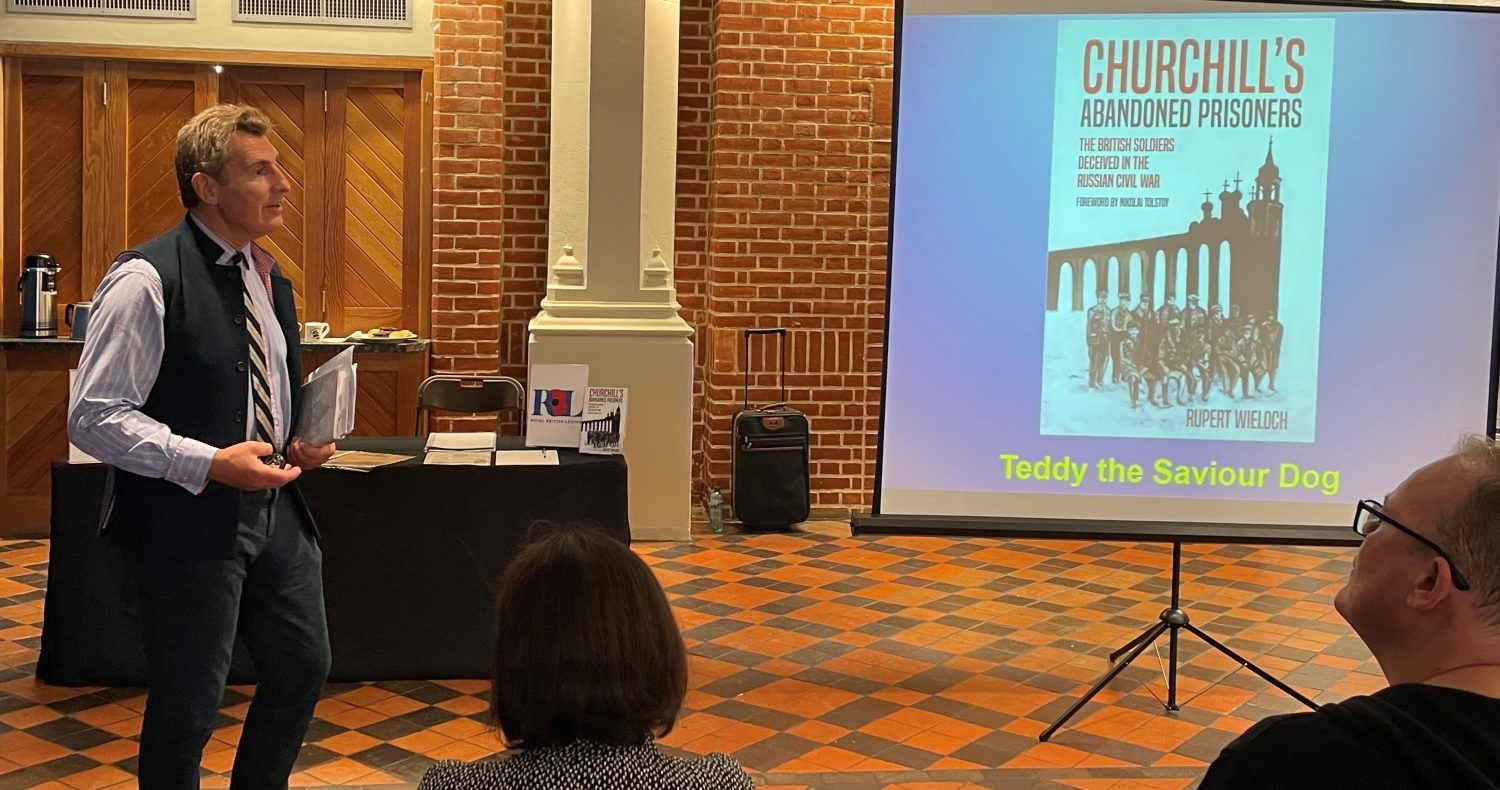
On Saturday 20 April, I will be signing at One Tree Bookshop in Petersfield at 10.30 and on Wednesday 24 April, I will be talking about the colourful characters and their extraordinary ordeal in Hungerford with tickets available at:
I was invited to discuss the situation in Libya with Samantha Washington on the afternoon news programme, but we were diverted by the breaking story about Army Culture.
There appears to be huge political pressure on the Chief of the General Staff to sort out the discipline problem in the Field Army, which is the biggest reputational threat since the Iraq War abuse. As he is relatively new in the job and his background is Special Forces and the Household Division, this will be challenging for him as you can see from the hasty Army posting on Youtube.
The art of a great interviewer is to ask questions which the interviewee would like to talk about and extract information the listeners would like to hear.
It was a pleasure to be interviewed by the skillful Julian Clegg, who covered so many bases in our seven minute discussion before the launch at Waterstones on Feel Good Friday.
On Friday morning, 5th April, I will be joining Julian Clegg on his BBC Radio Solent Breakfast Show from 9 a.m. available on 96.1FM & 103.8FM, DAB in Hampshire and Dorset.
Later that day, Waterstones is giving the book its official launch in their Winchester High Street shop, beginning at 6 p.m.
Prior to the publication of Churchill’s Abandoned Prisoners, I have written an article on Churchill’s Siberian Strategy in March 1919, for Dan Snow’s History Hit website, which can be read here:
With a month to go before the Waterstones’ launch of Churchill’s Abandoned Prisoners, I was delighted to be interviewed by Faisal Islam on Sky News morning programme, All Out Politics.
We discussed Winston Churchill’s role in the story on the anniversary of his “Sinews of Peace” speech in Missouri, which for many people marked the beginning of the Cold War.
…to the Prime Minister, David Lloyd George about the Government’s policy on Russia.
The War Secretary confirmed that the Prime Minister had: “decided that Colonel John Ward and the two British battalions at Omsk are to be withdrawn”. One week later, he sent Major Leonard Vining and Warrant Officer Emerson MacMillan to Siberia on the SS Stentor.
Little did he know that they would be captured by the Red Army and not released from their Moscow prisons until November 1920.
Read about their amazing story in Churchill’s Abandoned Prisoners: The British Soldiers Deceived in the Russian Civil War, available from Waterstones and independent bookshops later this month.




 Rupert Wieloch