
Liberating Libya

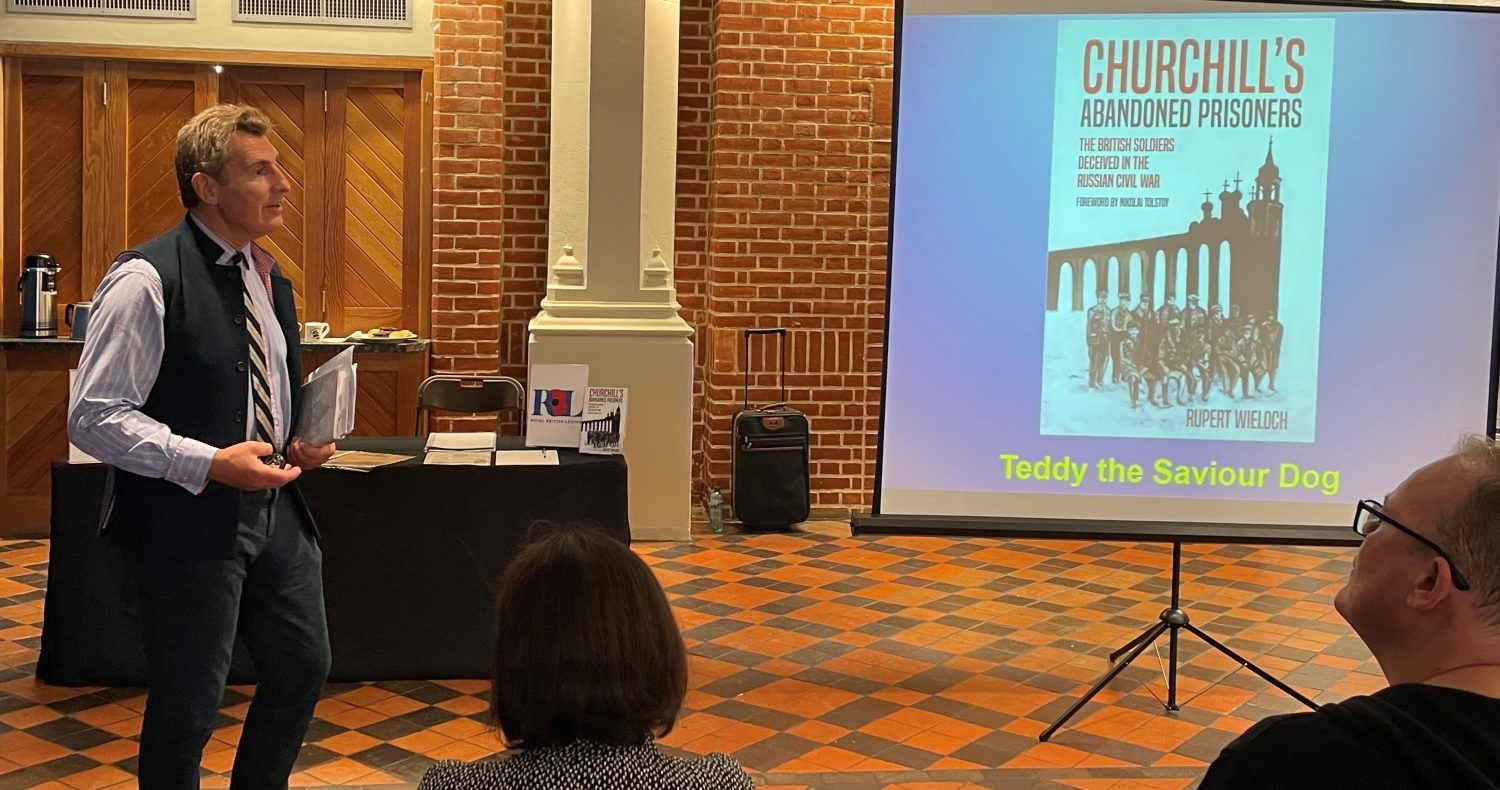
Since the copy editor has completed her work on my next book, it is probably time that I mentioned it on this blog.

The story traces the British diplomatic and military work in this poorly-understood Mediterranean country that is geographically nearer to Britain than many European member states (London is closer to Tripoli than it is to Athens). It pays tribute to the 10,000 service personnel, who are buried in Commonwealth cemeteries and the dozens of regiments that laboured up Hellfire Pass and fought valiantly at Tobruk, Gazala, El Alamein and during the advance to Tripoli. It brings the reader right up to date with the situation today and with a significant contribution from David Cameron reveals the truth about what happened in 2011.

My publishers have set 15 October as the release date (just before the two important anniversaries of the Relief of Tobruk and the death of Gadhafi), but I am hoping to take a few advance copies to the Early Early Christmas Fair at Tedworth Polo Park on 28-29 September. This brilliantly organised event, which supports the Soldiers’ Charity (ABF) hosts more than a hundred stalls full of fabulous ideas for presents. Hopefully, there will not be another lockdown to spoil the fun.

The Sad Case of Lance Corporal Bernard Mongan

I intended to write about the British retreat from Kabul this week, but the shocking news about Bernie Mongan has to take precedent.

This heart-rending case is difficult to accept on so many levels. Bullying in the Army is a really complicated issue, which stems from the fundamental aspect of training men and women to cope with enemy bombs and bullets when the natural human instinct is to run away from danger.

However, the bullying in this case was nothing to do with “training hard to fight easy”. This was more to do with victimization and the challenge of dealing with someone who was suffering from PTSD. It is an appalling indictment of the leadership in 1st Military Intelligence Battalion that no one was punished for breaking Bernie’s eye socket before he died and that his body was not discovered in his room at Gaza barracks for three weeks.

There is a further disgrace that makes my blood boil and that is the neglect of his family. Every officer is taught the basic tenets of welfare, which includes ensuring soldiers’ families are looked after by the system. Bernie’s headquarters in Catterick did not even have his Next of Kin details, let alone provide his wife and three children with appropriate support. This is one of the most distressing cases I have heard about and brings to mind the failings that dragged the Army’s reputation through the dirt in 2005.

Twenty five years ago, the Army instructed all its units to improve their people management through the Investors in People accreditation process. The standards rose dramatically, but it was seen by some as too burdensome on operations. Now that the Army is no longer deployed so frequently, it should bring back IiP to ensure the sad case of Lance Corporal Bernard Mongan is not repeated.

Northern Ireland Prosecutions End

The collapse of the final cases against veterans who served in Northern Ireland during the early part of The Troubles is to be welcomed by impartial observers.

Whether or not the individuals who were killed were innocent of supporting terrorists at the time, it was an extraordinary piece of political duplicity for the Government to allow its soldiers, who were attempting to maintain law and order to the best of their ability, to be charged when known murderers are protected from prosecutions by the Good Friday Agreement.

There will always be non-negotiable, hard-liners, who think otherwise, but reconciliation has to be fair to all sides to work properly. It is a pity that it took the resignation of a Government minister to drive the message home.

Afghan Dilemma

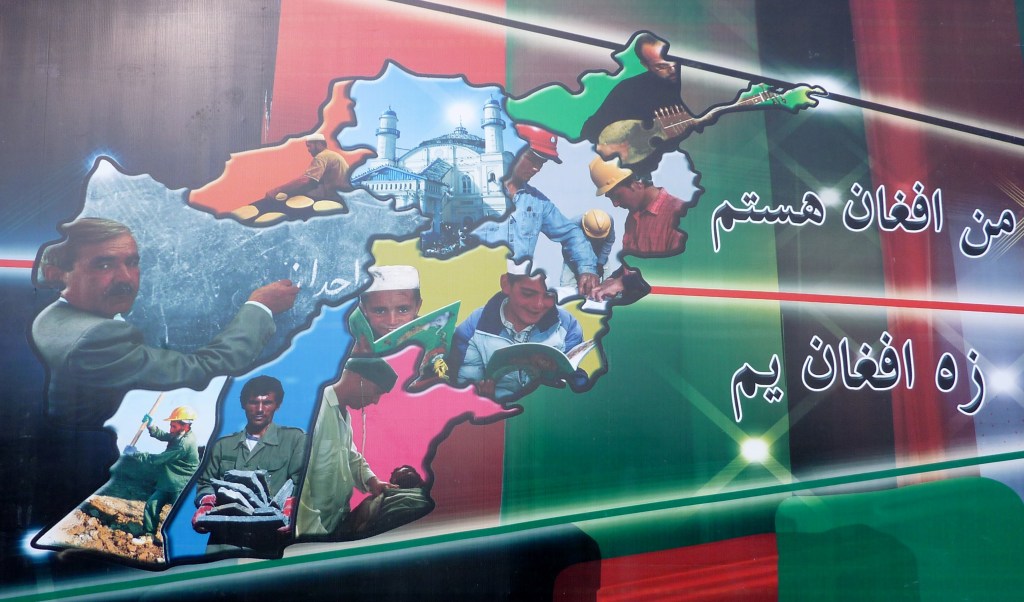
The 20th anniversary of 9/11 will see the final farewell of US troops from Afghanistan and with their departure, the NATO mission will collapse. This replicates the situation in Iraq at the end of 2011, when NATO members pulled their troops out after President Obama announced the withdrawal of US troops.

Twenty years ago, I was part of the strategic planning team that wrote the UK response to the suicide attacks that killed nearly 3,000 people in America, including 75 British citizens. This work, announced by the Foreign Secretary in the House of Commons on 16th October 2001, set out how to reintegrate Afghanistan as a responsible member of the international community and highlighted four options to end its self-imposed isolation.

We always envisaged that it would take decades of assistance and billions of dollars of aid to repair the damage caused by 23 years of civil war. The NATO mission that was established by the United Nations (International Security Assistance Force) was seen as a useful vehicle for non-member states like Australia and South Korea to help meet prevent Afghanistan being a haven for international terrorism, by building the Afghan security forces from scratch. It is worth noting that no British troops deployed as part of this force were killed in Afghanistan before the US invasion of Iraq.

The Afghan mission has succeeded in improving mortality rates, children’s education and gender equality, but it has also created an unsustainable dependency culture. The dilemma for the US leadership today is how to wean Kabul off international aid, while avoiding malevolent regimes from filling the vacuum. The effect of the US withdrawal could go two ways; one can easily envisage the Taliban taking retribution on those who benefited from American money and cancelling all the policies that have promoted women in society. My prognosis is that if we don’t want Russia and Iran to increase their influence as they have in Syria, we will have to redeploy British and American troops within three years, just like we did in Iraq when ISIS took hold of the northern part of the country.

Kabul December 2012

Dominc Cummings Got It Half Right

The testimony of the Prime Minister’s former Chief Adviser to the Health and Science and Technology Committees painted a dire picture of the Department of Health and Social Care, which he described as a “smoking ruin”.

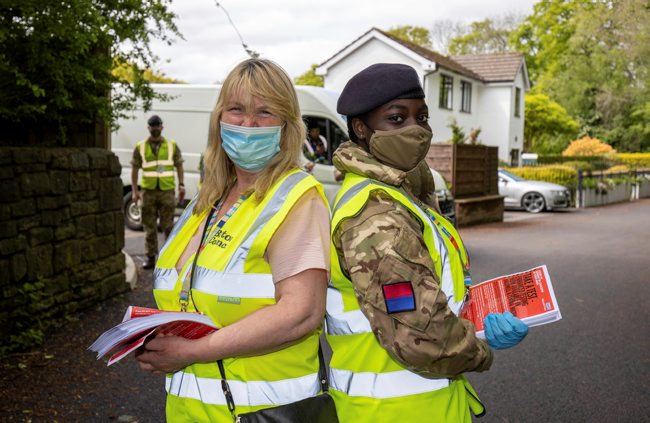
What he didn’t do is admit that it was Britain’s military that yet again stepped into the breach to bale out a failing government department. Just as they rescued DEFRA during the Foot and Mouth Crisis and the Home Office when it failed to prepare properly for the London Olympic Games, British soldiers, sailors and air personnel have responded magnificently to the Covid Pandemic.

However, what is particularly infuriating for those of us who seek proper recognition for the work of the armed forces is how little coverage they have received from the national media. At this time when government budgets are being contested , the fantastic work at test and vaccination centres, 24 hour assistance to keep freight moving into Europe, help at schools and universities and stand-in ambulance drivers should be highlighted every week, otherwise we might skew our support towards less deserving cases and reward failure rather than success.

Armed Forces Covid Assistance in Bolton – Crown Copyright image

Ajax Tanks – Not fit For Purpose

One of the gloomiest updates at the RUSI conference last week was about the replacement for the Scimitar light tanks that have been in service for 50 years. I operated a fleet of them (known as Combat Vehicle Reconnaissance) in Norway, Denmark, Germany and Bosnia when they had a Jaguar 4.2 litre petrol engine, but this was replaced with a Cummins diesel after my return from Bosnia. They have been extended beyond their out of service date several times, but are now effectively obsolescent vehicles.

The long wait for the Ajax tanks, which seems to have gone on forever and will stretch way beyond the date that we were promised by the contractor when it was awarded the project. The first tanks should have arrived in 2017, but reliability and safety issues continue to delay this £3.5 Billion project and the failings this year have led the House of Commons Defence Select Committee to comment that it was “yet another example of chronic mismanagement by the Ministry of Defence”.

The history of this flawed project from the cancellation of the over-elaborate FRES programme, to the removal of reliability engineers from Abbey Wood, would make a fascinating, but depressing read. The delay of this project is seriously undermining the British Army’s transformation, but more importantly, we must think of the soldiers who are operating obsolescent equipment in the Baltic and West Africa and make them the top priority for the delivery of the first tanks, not the troops in administrative garrisons.

Combat Vehicle Reconnaissance (Tracked) of B Squadron 17th/21st Lancers in the Arctic Circle, 1980

D Day Commemoration

On the 77th anniversary of the D Day landings, the British Normandy Memorial has been unveiled in the town of Ver-sur-Mer. Liam O’Connor’s elegant design is a fitting tribute, but why has it taken so long for the country to recognize the sacrifice of these 22,442 men and women with a permanent monument?

For my latest book, I have been allowed to quote from the private papers of Colonel Patrick McCraith, whose regiment, the Sherwood Rangers Yeomanry landed with all its battle tanks on D Day. In the previous year, they had fought all the way from El Alamein through Libya to Tunisia where their commanding officer, Colonel Flash Kellett (the MP for Birmingham Aston), had sadly been killed in action.

Pat McCraith, who had also commanded the Yeomanry Patrol in the Long Range Desert Group, was wounded for the third time on 10th June 1944. He was in regimental headquarters in a farmhouse, near to Tilly-sur-Seulles, when a German shell exploded among the officers, killing Major Michael Laycock (acting commanding officer), Captain George Jones (adjutant) and Lieutenant Lawrence Head (intelligence officer). It’s no wonder, Lieutenant General Sir Brian Horrocks wrote about the Sherwood Rangers Yeomanry in World War II “no armoured regiment can show a finer record of hard fighting.”

British Army Transformation

For three years, I organised the annual RUSI land warfare conference at the beginning of June, when the latest British Army concepts were presented to a discerning audience of international military officers as well as government officials, journalists and representatives of Defence industry. The main focus during my time was the digitization of the Army, the introduction of unmanned aircraft and the protection of individual soldiers on the front line.

The weekend before the event, the Chief of the General Staff always warms up with an interview that outlines the topics for discussion. In preparation for this year’s conference, which begins on Wednesday, the current Chief has focused thinking on the technological changes that are happening in the aftermath of the recent Defence and Security Review. However, the big strategic issue is the diminishing public support for war and the low tolerance for British casualties. These and other moral dilemmas facing the British Army in the 2020s are much greater challenges than teaching soldiers how to use modern equipment. I hope they are not brushed under the carpet this week.

Defending The World

The Royal Navy is about to embark on a global cruise, exercising its right to navigate around the world and visit British allies along the way.

The aircraft carrier HMS Queen Elizabeth will act as the command ship for a task force that includes American and Dutch ships and provide organic air power against ISIS (the Islamic State in Iraq and Syria).

The mission has been criticized by two former Chiefs of Defence, Lord Houghton and Lord Richards. Their angst goes back to the Strategic Defence and Security Review, when the Government backed the Royal Navy’s view of the future, rather than the Army’s proposals. At the time, there was a behind-the-scenes internecine war between the Services as the Treasury reduced the amount of money available to the Armed Forces by boosting the domestic security capability and playing a game of “divide and rule” with the Service Chiefs (a theme covered in my forthcoming book).

The grand tour of the world has not yet become a focus for the environmentalists. However, I am sure some activists will pick up on the fact that the carrier alone carries over 8,000 tonnes of fuel to support the ship and her aircraft. This is enough to power the average family car to travel to the moon and back twelve times.

Whatever the criticisms, it is wonderful to see the Union Jack at sea, leading the way out of the Lockdown with the accompanying diplomatic and trade opportunities that HMS Queen Elizabeth will provide.

Defending Europe

It was very good to see, after my post last week, that a few newspapers ran feature articles on British military operations in Mali, highlighting the tremendous work of the Light Dragoons on their lengthy desert patrols. However, this is not the only major military deployment that is happening in May this year. The British army is also participating in one of the largest NATO exercises in Europe since the Cold War. Stretching from the Baltic to the Balkans, the coordinated deployment of nearly 30,000 multinational troops is a meaningful statement to President Putin that he cannot intimidate his neighbours.

The British capability, which includes parachute and infantry companies, complements the Enhanced Forward Presence stationed in Poland and the Baltic States. The UK Battle Group in Estonia that includes challenger tanks and AS90 self propelled guns, is incredibly popular and yet the British newspapers provide little coverage of what our troops are doing to reassure our friends and prevent conflict.

Perhaps the most meaningful contribution is in Albania, a NATO Member since 2009. The strategic port of Durres is host to important sustainment operations with 104 British logistics support brigade heavily involved in developing the systems and processes. It is not quite on the same scale as the Reinforcement in Germany exercises which involved up to 50,000 British troops in the 1980s, but it is still a significant measure of military capability. Hopefully, we will see a bit more about this in the national media before the exercise ends on 2nd June.