
The King’s Visit To Libya

On 19 June 1943, King George VI visited Libya and met the Tripoli Base Commander Brian Robertson who later became famous for his role in the Berlin Airlift. The King was given a rapturous welcome by the soldiers of Eighth Army in Tripoli as he was escorted by Lieutenant General Sir Bernard Montgomery in his Humber saloon.

Later that day, he boarded HMS Aurora for passage to Malta, where he presented Viscount Gort with his Field Marshal’s baton and toured the harbour, which had withstood heavy Luftwaffe attacks during the two year siege that was so pivotal to the victory in the Mediterranean and North African campaigns.

The Royal visit was repeated eleven years later when HRH Queen Elizabeth II met the King of Libya at Tobruk and the families of British troops at El Adem Air Base. The Queen’s visit cemented the close friendship between Libya and Britain that endured until the coup that brought Colonel Gadhafi to power in 1969. Further details are in part four of Liberating Libya.

Eighth Army Cheering HRH King George VI During His Visit To Libya In June 1943
The Victoria Cross Awards In Libya

Liberating Libya is dedicated to the nine courageous soldiers who were awarded the Victoria Cross fighting Rommel’s Panzer Army Africa around Tobruk between April 1941 and June 1942. Five of these were posthumous awards and one of the recipients was killed one month after his citation was published in the London Gazette. The three survivors (Henry Bowerman Foote, Philip John Gardner and Quentin Smythe) all reached four-score years, with “Pip” Gardner the last to leave us in 2003.

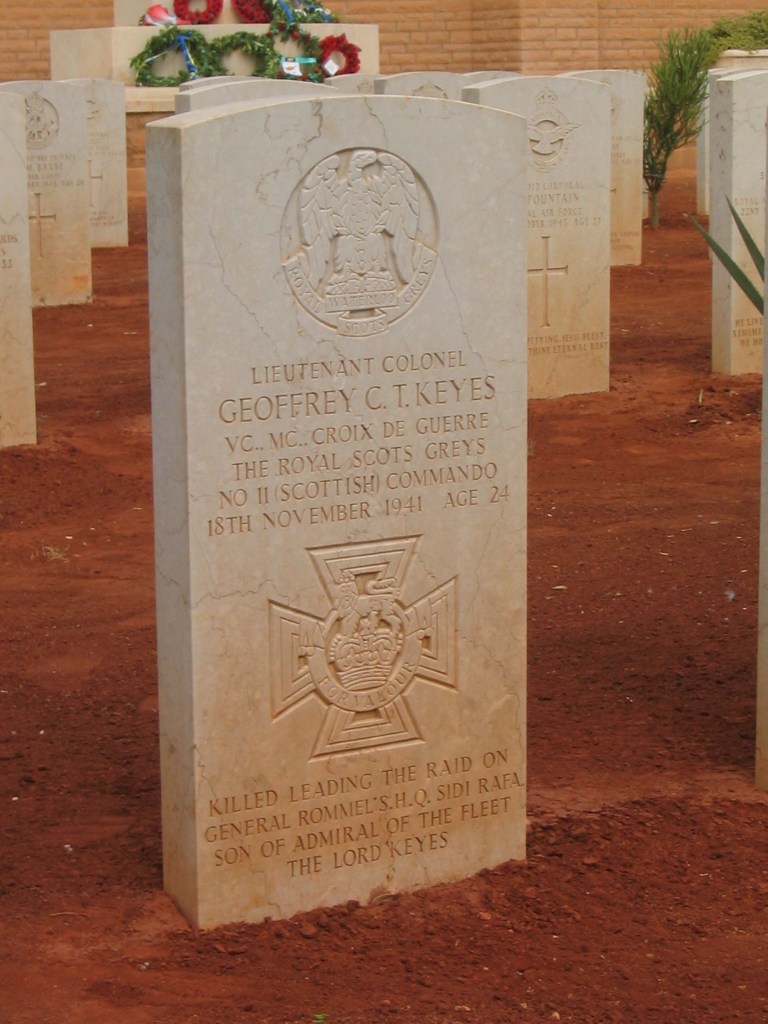
There is no doubting the incredible bravery of these men, but there is also clear evidence that some of these awards had a political dimension to them. The case of Geoffrey Keyes has been analysed forensically by Michael Asher, who questions the veracity of the citation, but there is no doubt that this award during the siege of Tobruk raised the profile of Britain’s Special Forces at a key moment in the campaign. The first and final awards were to Commonwealth countries that were questioning their commitment to the Western Desert campaign and these helped to reassure the doubters back home. Of the British Army soldiers, two were Scots and there was one each from Dublin, Manchester, Bedford, London and the Welsh border area of the Wirral.

If you look at the context of the awards in terms of location and stage of the battles as well as the regiments, schools, homes and ranks, a picture emerges of preferential decisions and box-ticking. During my research for the book, I discovered several deserving cases that were downgraded by the honours committees for non-military reasons. This does not in any way diminish the awards that were made, it merely indicates the complex nature and height of the threshold needed to join this distinguished band of men.

Geoffrey Keyes VC is buried in Benghazi

Australian War Crimes

During the Korean War, my father enlisted in the Australian Army and served on Centurion tanks in 1st Armoured Regiment at Puckapunyal until April 1955. As a result, he had a deep affection for the Australian Military Forces and spoke admiringly of the fighting qualities of “Diggers” such as Corporal John Hurst Edmondson, who earned the first Australian Victoria Cross in World War II, when he saved the life of his officer during the Siege of Tobruk (described on pages 108-9 of Liberating Libya).

If he was alive today, my father would be devastated by the outcome of the defamation case involving Ben Roberts-Smith. He would also be deeply troubled at the prospect of a series of Australian SAS war crimes trials, such as the case against Oliver Schulz.

Having planned NATO special operations against war criminals in the Former Republic of Yugoslavia and witnessed wrongdoing on military operations, I understand there is a fine line between “fighting spirit” and an “unchecked warrior culture”. However, what concerns me most with these cases is how the chain of command closed ranks and covered up the crimes, rather than rooting out the “bad-eggs” when they had the opportunity.

Centurion Tank In Australia During The Korean War

Army Welfare In The Spotlight

The tragic case of Officer Cadet Olivia Perks’ suicide on her training course at Sandhurst four years ago has highlighted the challenges facing the Army in the modern world.

The was not a case of bullying, or harassment, like it was at Deepcut 25 years ago. Nevertheless, it was a clear failure of safeguarding in the area of social relationships between soldiers and officers.

It has always been tricky for young officers and soldiers to find the right balance between respect and popularity. All the good work in the class-room, drill-square, playing-field, or training-area can be undone on a drunken night, which shatters a reputation and will be remembered forever. My deep sympathy lies with Olivia’s family, but it is staggering how many suicides in the Army stem from the consequences of a breakdown in relationships. I remember one particular Guards company in Cyprus in 1989 suffered more than any other and it became obvious when one looked into the care and welfare support why this was happening.

It is time the Army re-introduced the Investors in People principles and processes to avoid similar cases re-occurring in the future.

Eighty Years Ago In North Africa…

The Ambassador to Egypt and High Commissioner for Sudan, Miles Lampson, was raised to the Peerage as Baron Killearn. He was the longest serving British Representative in Egypt since Sir Evelyn Baring (Lord Cromer).

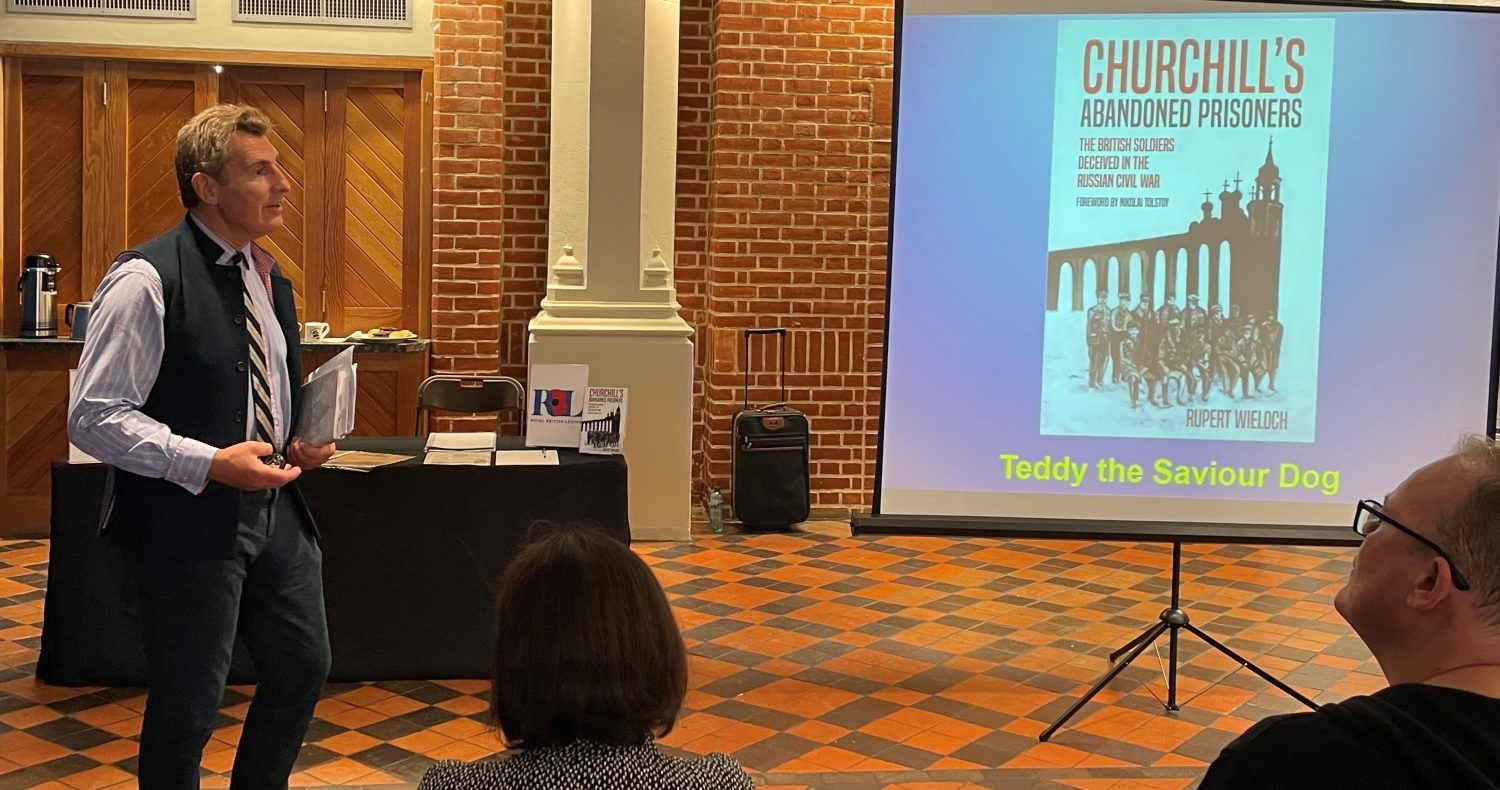
Lampson is the diplomatic link between my books, Churchill’s Abandoned Prisoners and Liberating Libya. He was the final British Consul in Siberia, who was in Irkutsk in January 1920, just before Admiral Kolchak was executed by the Bolshevik government. One of his last telegrams to London suggested that there was no point continuing to support the White Government as they had lost their authority with the population. He was then posted to Shanghai, before moving to Cairo in 1933.

In Cairo during World War II, his wife, Jacqui, was renowned for going out on the town with young army officers, such as General Alexander’s ADC and was suspected of spying for the Italian government because her father was a former Italian diplomat. However, the Lampsons were extremely kind to Hermione Ranfurley (To War With Whitaker) and the other military wives whose husbands had been captured in the Western Desert and they looked after Winston Churchill magnificently when he had the difficult task of replacing General Auchinleck in summer 1942. The fact that he did not panic when Rommel reached El Alamein and that he built a strong diplomatic relationship with the Egyptian Government meant that he was rewarded when the Allies were victorious in North Africa.

The Lampson’s Famous Guardians of Bayt Al Lurd

Storm Shadow Reliability

The news that Britain is donating Storm Shadow cruise missiles to Ukraine is a significant escalation in arms supplies. In the past twelve years, these weapons have been used by the Royal Air Force against targets in Iraq, Libya and Syria. The pre-programmed “fire and forget” missiles are highly effective at destroying ammunition bunkers and concrete infrastructure at long range as can be seen by the photographs in Chapter 6 of Belfast to Benghazi, which were taken in Libya in 2012.

I do hope they have improved the reliability since then. One of my teams in Libya found a blind missile in the desert south of Jebel Nafusa and reported it to the project team in Bristol. They told us that there had been no misses and were embarrassed when we read out the serial number to prove they were mistaken. In the end, we had to blow up the 450 kilogram warhead, while recovering the electronics to England, so the technical experts could investigate what had gone wrong.

Emblem of Honour

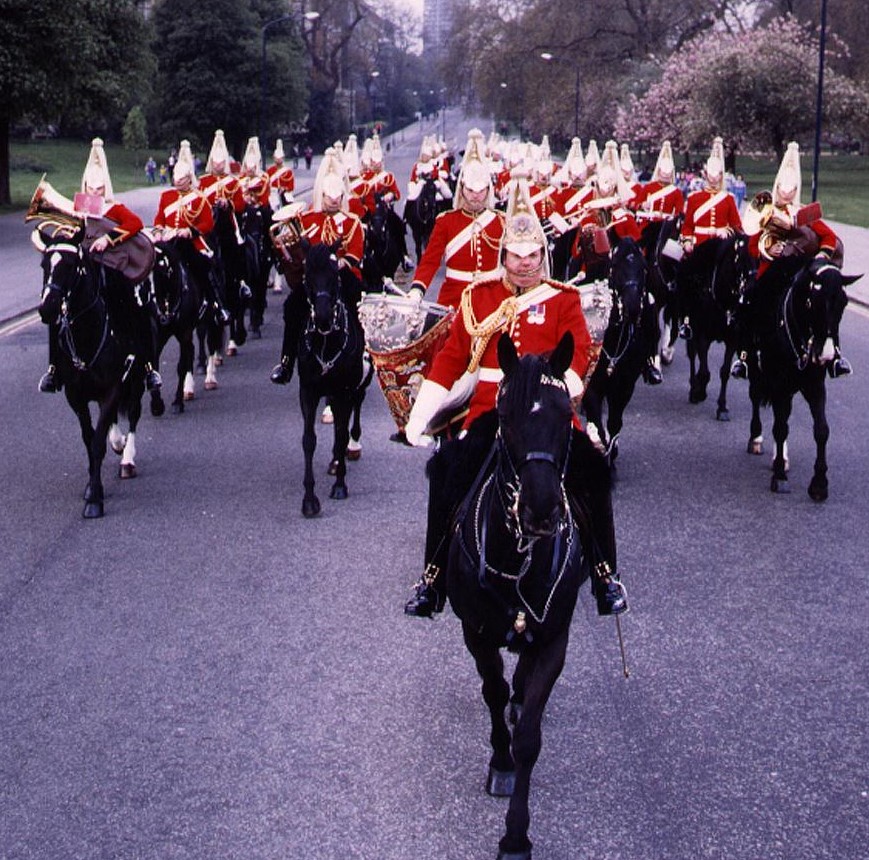
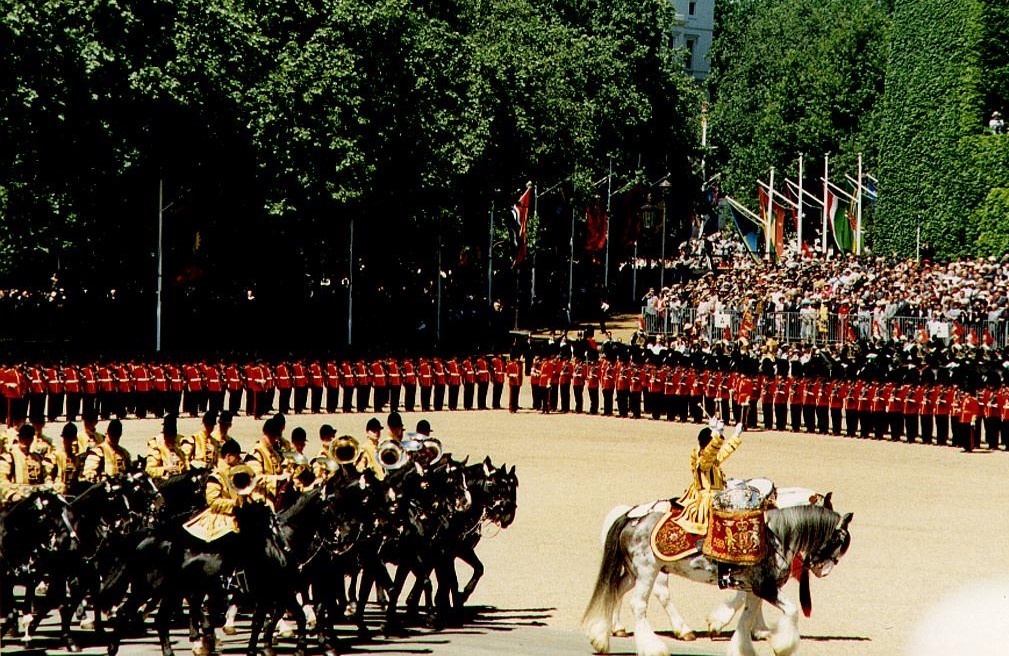
The “Three Cheers” for Their Majesties by 4,000 troops on parade was a highly significant intervention in the Coronation yesterday. Up to that moment, the armed forces had played their part as escorts, guards and stewards, supporting their monarch in a subdued way (if marching soldiers and horses can be described as muted). Having completed their task of accompanying the King and Queen to Buckingham Palace, the troops assembled in their regimental groups and delivered a resounding statement of their allegiance to the Head of the Armed Forces.

The relationship between Britain’s military and the House of Windsor, which dates to the First World War, should not be underestimated. The Royal Family has always played an important role not only in their personal involvement in regiments, but also in their embodiment of civil-military co-operation and I am sure this will continue after yesterday’s magnificent procession. There are questions for the future in terms of how this military role will sit alongside a pacifist sentiment in the country, but for now the crescendo of loud voices has drowned out any illogical republican protest. And we can add three cheers for that as well.

Sudan NEO Disguises The Truth

The latest clashes in Sudan have been predicted by the dedicated journalists and humanitarian workers who have been covering this troubled region for the past two decades. The causes (power, religion and resources) are well-known and date to the first civil-war after independence. The embers of previous conflicts have been stoked by external actors and led to an eruption of violence and the murder of three World Food Programme workers.

The reaction of the United Nations has been lamentable. Instead of deploying a protection force for its staff and telling the protagonists that it will not be intimidated by warlords and violent extremist organisations, it has fled from the scene when it is most needed. The US and UK reaction reminds me of the retreat from Afghanistan two years ago. This spineless capitulation has been disguised by the energetic work of British service personnel who have conducted the Non-Combatant Evacuation Operation (NEO) with great aplomb. In the meantime, the vacuum left by the West is being filled by Russia and other countries, which are less sensitive to casualties suffered abroad.

When will learn that words are not enough when it comes to physical security in conflict zones?

Don’t Dumb Down Our Medals

The British system of awarding medals to members of the Armed Forces has always been shrouded in secrecy, but is broadly divided into two categories. The first includes those which are earned for overseas duty in danger zones and the second includes the so-called tokens that “come up with the rations” for non-operational work. Our system is very different from the American arrangement where the low qualification threshold devalues the many ribbons worn by US personnel.

The four Queen’s Jubilee medals fall into this latter category. They are obviously worn with great pride by anyone lucky enough to have received them, but they are in no way comparable to the hard-earned awards for front-line service in Northern Ireland, the Falklands, the Gulf, the Balkans, Sierra Leone, or Afghanistan.

Unfortunately, the current discussion about Coronation medals has become mired in the cost of the metal, but this misses the most important point, which is that a British medal should be something that is rare and treasured, not handed out like a Boy Scout badge. The armed forces were not recognised formally for their much-needed help during the 2012 Olympics, nor their outstanding assistance during the pandemic, so on that basis they should not receive gongs for security duties during the Coronation. Please do not dumb down our historic British awards by handing coronation medals to all and sundry.

General Service Medal 2008 with North Africa clasp

The Fighting Ability of Britain’s Armed Forces

It is wonderful to hear that 6,000 members of the armed forces will play a huge part in the Coronation on Saturday 6 May. I am certain that the soldiers, sailors and air personnel will be magnificent on parade and in the lead up and to the big day. However, it is worth reminding ourselves that these ceremonial duties, which replicate outdated Victorian tactics, will have a negative effect on Britain’s fighting capability similar to the security duties for the 2012 Olympics and the assistance to the Department of Health during the pandemic.

In August 2000, the Chief of the Defence Staff, General Sir Charles Guthrie, delivered a stark warning about Britain’s fighting capability because the armed forces were involved in too many non-core tasks. According the government figures, the army is now 25% smaller and the full time trained strength of the armed forces has dropped by 2,540 in the past year.

The current head of the army, General Patrick Sanders, recently complained about how the war in Ukraine has left the British army weaker, so I wonder what he now thinks about another non-core task diminishing his fighting capability.