
Defence Secretary’s Visit to the Middle East

Following David Cameron’s visit last month, the Defence Secretary made a timely trip to the Middle East this week. The Right Hon Grant Shapps was an inspired choice to visit Israel and the Occupied Palestinian Territories just before the UN Security Council Ceasefire Vote in New York. He is one of the few MPs who is respected by the Israeli government, so he can finesse the tricky balancing act created by British interests in the region. His stated aim of the visit, “to accelerate the delivery of lifesaving humanitarian assistance into Gaza and efforts to secure the release of all remaining hostages” sums up the current dilemma of advocating a Rules Based Approach to international relations while trying to deal effectively with hate-filled terrorist organisations.

Unlike France, Britain does not often deviate from American foreign policy when it comes to a UN Security Council debate. The mantra: “you are either with us or against us” has been heard repeatedly from the other side of the Atlantic for twenty two years and led successive governments to positioning Britain as America’s leading ally, so it is not surprising that Britain did not vote for the UN Secretary’s ceasefire.

There are two important consequences of this development. The first is the increasing difficulty Britain and America will have in persuading international partners that they should support them against China and Russia. The second is the growing importance of Britain’s military bases in Cyprus. When I hosted a previous Defence Secretary there before the Gulf War, the island was considered to be a side-show compared with the bases in Germany and Northern Ireland. Now, the strategic sites at Ay Nik and RAF Akrotiri are arguably the jewels in the “overseas” crown.

British Defence Secretary Visiting Cyprus In 1990

Sad Coincidence In The Kenyan Mountains

The murder of Major Kevin McCool near to Mount Kenya is a terrible reminder about the very real risks run by British soldiers in Africa. It is also a distressing coincidence that it took place close to where another intrepid Parachute Regiment officer, David Parkinson, was murdered by a machete gang ten years ago.

Kenya is the most wonderful country, with stunning wildlife, scenery and adventure training opportunities. Its coast has provided some of the best underwater diving experiences of my life and my uncle, who farmed close to where the British Army training unit is now located, enjoyed racing cars at Gilgil, before his untimely death.

Whenever, I travel in Africa, I am always reminded of the power of Nature, whether that be crossing a harsh desert, ascending a mountain, or floating down a giant river. However, the ever-present dangers that range from poisonous insects to cunning crocs are small-fry compared with the threat from criminal gangs, which are often connected to the $20 Billion illegal wildlife trade. In 2015, I became involved in RUSI’s countering poaching project, so I know how widely the tentacles of this trade are felt across the Continent and I am hoping that the British Army’s much-needed operations in this field will not be reduced as a result of the tragic death of Major McCool.

The Return of the last British PoWs in WWI

On 22 November 1920, the ship bringing the last British PoWs back from Russia docked in Harwich at 6 am. Two officers remained in the port to organise quarantine for their pet mascot, Teddy, while the other thirteen took the train to Liverpool Street Station. Arriving in London, they were met by a gaggle of reporters who took a photograph of them which was published in several newspapers the next day.

The soldiers were very cautious about what they revealed because they knew a Victoria Cross winner had been court martialled recently for communicating with the media without permission after returning from North Russia. However, they did say a few words that contradicted the narrative of recent official visitors who had been Lenin’s guests and added “the people in England have no idea of the dreadful state of things that exist in Russia”.

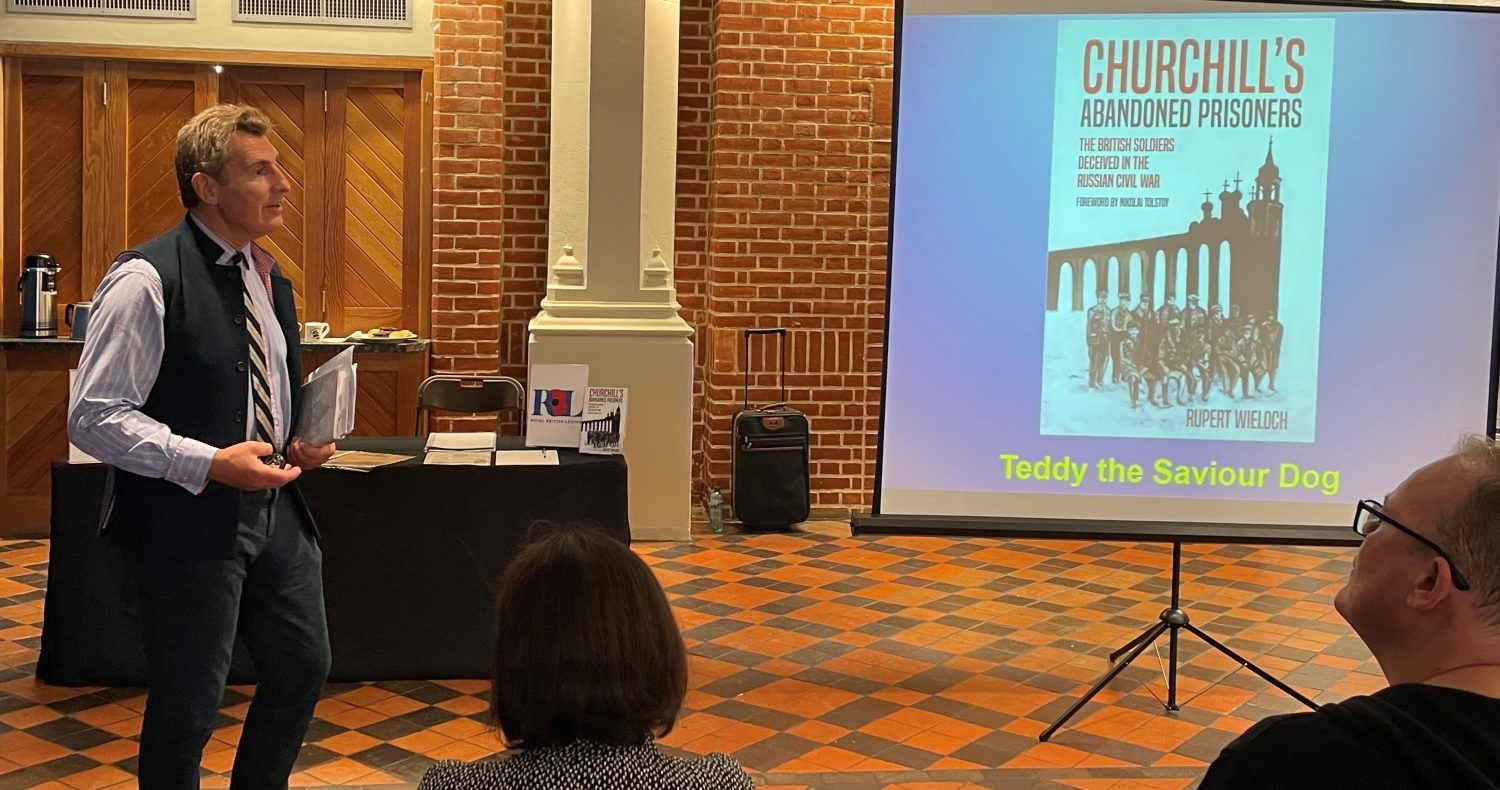
Reporting to the War Office, the soldiers were put on three months long leave and ordered not to speak about their experiences in the Moscow prisons. As they scattered around the globe, to Australia, Brazil, Canada, India and Ireland, the Prime minister, David Lloyd George, signed a trade deal with the Bolshevik government and covered up the soldiers’ story without awarding any military honours to their leader despite his outstanding work in helping British citizens to escape from the Red Terror. Their incredible adventure is now available to be read in Churchill’s Abandoned Prisoners: The British Soldiers Deceived in the Russian Civil War.

A Film About Napoleon At Last

For my 12th birthday, I was allowed to invite a group of school friends to the award winning film, Waterloo. I had already climbed the Lion Mound and visited La Haye Sainte on a battlefield tour and was captivated by the leading characters played brilliantly by Rod Steiger and Christopher Plummer. I still have the 28-page booklet, which candidly reveals the secrets of the filming in the Ukraine and inspired me to study the different approaches to soldiering used by the two protagonists, Napoleon and Wellington.

Both these famous generals bridged the military-political divide. Whereas, Wellington was content to serve his King and Country as Prime Minister, which he was invited to do on two occasions, Napoleon’s megalomania drove his attempt to rule the world. It is for this reason that the Corsican holds a greater fascination to the media, but it is intriguing that despite 10,000 books being written about him, no one before Sir Ridley Scott has produced an epic film biography of the Corsican and that Stanley Kubrick cancelled his attempt after the commercial failure of Waterloo in the 1970s.

In the past decade, there has been a continuous stream of major films about 20th century warfare, including: War Horse, Dunkirk, Hacksaw Ridge, 1917, They Shall Not Grow Old and All Quiet on the Western Front. I wonder whether Ridley Scott’s film will start a new trend for 19th century war films and the Crimean War will come back into focus, given the situation in Ukraine today?

It Is For The Young As Well

In its coverage of Remembrance Sunday, the BBC has emphasised the parade of veterans marching past the Cenotaph. This is all very well, but it does slightly play to the perceived stereotype that this day is irrelevant for young people. My experience around the country is very different as I have seen hundreds of teenagers selling poppies and marching past war memorials in towns and cities. Most of these are Sea, Army and Air Cadets, but there are also Scouts and Guides and other youth organisations who come to line the route today.

I believe it is really important to emphasise that this is not just about the past, but also the future. John McCrae’s iconic poem hits the nail on the head in the final verse: “Take up our quarrel with the foe, To you from falling hands we throw the torch. Be yours to hold it high. If ye break faith with us who die, We shall not sleep, though poppies grow In Flanders fields.”

During the past 30 years, organisers have widened the commemoration to include those who are affected directly or indirectly by armed conflict, or have lost loved ones in acts of terror. This is entirely appropriate, but we also need our young people to understand Remembrance and encourage them to take up “the torch”.

November Commemoration

There is a commemoration on 11th November that is almost as significant as the Armistice that ended hostilities on the Western Front in 1918. It is the moment that for many historians marks the turning point of World War II, when Rommel was driven out of Egypt by the “Desert Rats” who he had fought for 18 months.

This Allied victory by 8th Army (which was made up of infantry divisions from Australia, Britain, India, New Zealand and South Africa as well as French and Greek brigades) inspired Winston Churchill to deliver one of his much-repeated wartime quotes during the annual Lord Mayor’s reception in London: “Now this is not the end. It is not even the beginning of the end. But it is, perhaps, the end of the beginning.”

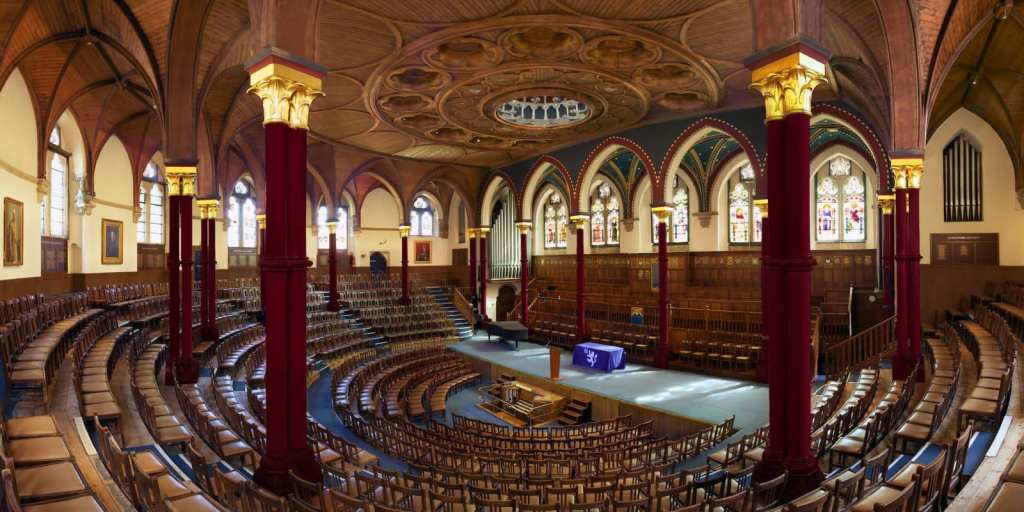
The Prime Minister must have felt a tremendous sense of relief not only because the year had been full of disasters such as the loss of Hong Kong, Singapore and Tobruk, but also because the US landings in French North Africa were about to begin. Recognising this was the turning point of the war, Churchill authorised the ringing of Church bells throughout the United Kingdom; a sound that had not been heard for over two years. Soon afterwards, he visited his alma mater, where he was given a rapturous reception by the schoolboy audience when he said: “Far be it for me to say how long the road will be, or how great the effort will be…I do feel that I can assure you that we are moving forward, stronger every month and that the day will shortly come…when we shall reach a broader and brighter light…”

18 November 1942

Remembering El Alamein’s Pivotal Day

One of Montgomery’s myths was that everything at Alamein went according to his plan and that General Sir Harold Alexander played little or no part in the battle. However, the reality was that the Commander-in-Chief had a huge part to play not just in the political-strategic domain, but also at the tactical level.

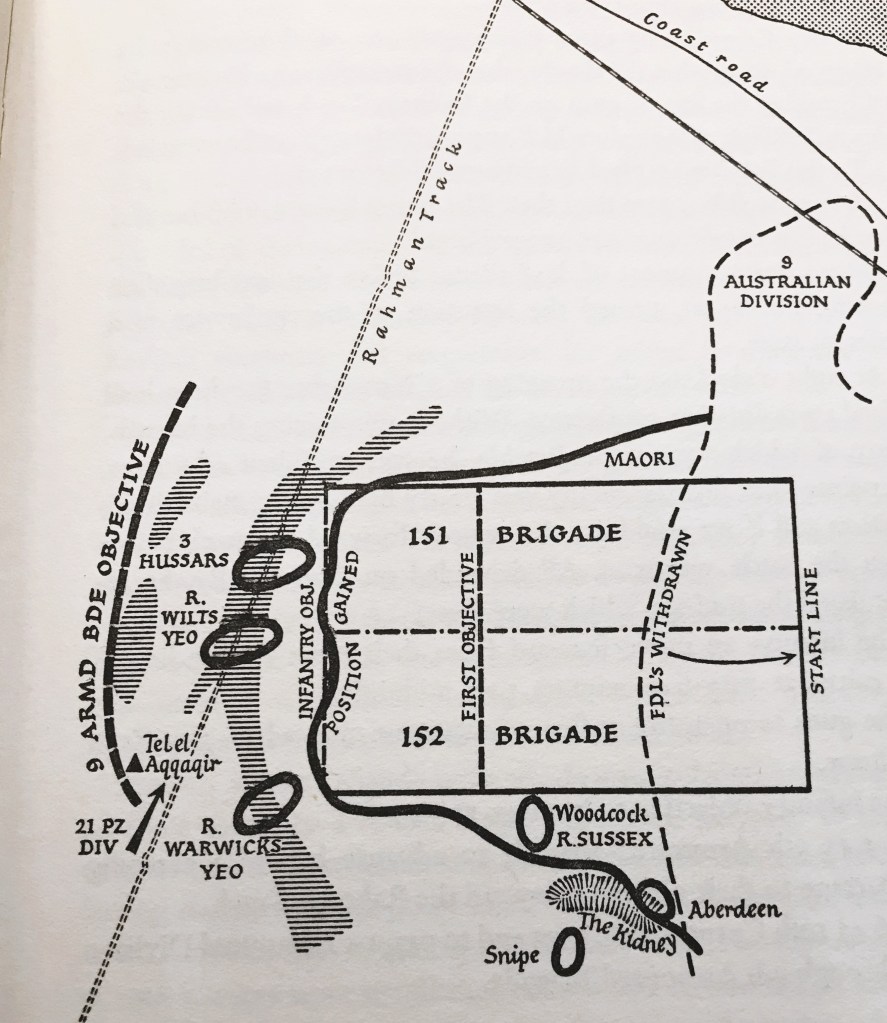
After a week of fighting, Monty intended to push his second phase (Operation Supercharge) through the Australian Division on the north coast. However, Alexander intervened and persuaded him to change his point of attack by focusing on the feature known as Kidney Ridge, where the commanding officer of the Rifle Brigade, Vic Turner had just earned his Victoria Cross. Early in the morning of the 2nd November, a mixed infantry force from the Durham, Highland and Maori Brigades punched a hole through the enemy line and made space for 9th Armoured Brigade to advance at first light.

Unfortunately, this spearhead brigade, made up of The King’s Own Hussars, the Royal Wiltshire Yeomanry and the Warwickshire Yeomanry, became was not supported by the follow-up division. The daylight battle resembled Balaklava, but the isolated Brigade Commander, John Currie did not give up and despite losing 102 of 128 tanks and 229 soldiers, he drew in Rommel’s reserves and won a famous victory at Tel el Aqqaqir.

Montgomery later wrote: “If the British armour owed any debt to the infantry of the Eighth Army, the debt was paid on November 2 by 9th Armoured Brigade in heroism and blood.” There was still much hard fighting to do for 1st Armoured Division as they battered away at 15th and 21st Panzer Divisions, but gaps now appeared in the Axis lines and Montgomery showed great skill in directing his troops through these breaches.

9 Armoured Brigade’s Moment In History

October Commemorations

As we approach Armistice Day, it is worth remembering four of the most iconic British battles of the past that were fought on 23 and 25 October.

On St Crispin’s Day, 25 October 1415, an exhausted band of English and Welsh archers defeated a French army twice their size at Agincourt (north of the Somme). This battle was immortalised by Shakespeare and came to represent part of British identity (I remember having to learn the lines of Henry V’s speech at school), but sadly its importance seems to be fading in the modern education curriculum.

On 23 October 1805, Admiral Nelson led the British fleet to a devastating victory at Trafalgar and thus established the United Kingdom as the pre-eminent world naval power for more than 100 years. The man and the myths around him were part of my upbringing, but it was not until I attended a Royal Navy Trafalgar Night that I realised how this battle is stitched into the uniform of every British matelot serving today.

On 25 October 1854, the Charge of the Light Brigade at the Battle of Balaklava provided a shock that reverberated around the world. Immortalised through the pens of the great war journalist, William Howard Russell and the poet laureate Alfred Lord Tennyson and the brushes of Richard Caton-Woodville and Elizabeth Butler, this action, as much as any other, established the unwavering sense of duty that epitomised the British approach to the futile trench offensives of World War I.

On 23 October 1942, a thousand gun barrage began the fourth battle at El Alamein. Lieutenant General Bernard Montgomery was quick to proclaim conceptual ownership of the success, but in reality his plan went awry on two occasions. The first big hiccup resulted in a heated row on 25 October between him and X Corps Commander, Lieutenant General Herbert Lumsden. The dispute about cavalry advancing against well sited artillery guns ironically took place on the 88th anniversary of the Charge of the Light Brigade. After Monty adjusted his plans, he eventually wore down Rommel’s forces and won a superb victory for the Allies. Winston Churchill described this battle as the turning point of the war and its influence was enshrined by the stories of the Desert Rats and through images created by artists such as Terence Cuneo.

I learned about all these iconic conflicts when I was at school, but I wonder how many British children are now being taught about how these historical battles established the freedoms that they enjoy on a day-to-day basis? We will remember them!

New Head of the British Army

I was delighted to be invited by the current Chief of the General Staff to an event last week, where I heard all about his successor. The Government have thankfully steered away from a politically correct appointment and selected someone with a similar background to Patrick Sanders’ predecessor.

Currently, the two most important criteria for the Crown and the Country are ceremonial duties and what I nickname stiletto operations, when Special Forces are deployed without attribution (or difficult Parliamentary debates). It is understandable, therefore, that the new head of the British Army is a Guardsman who held the appointment of Director Special Forces.

General Sanders’ successor (who will not take up the appointment until next year) was born two months before I was commissioned and attended Winston Churchill’s alma mater. He was awarded a DSO for commanding the Grenadier Guards in Afghanistan, so he has the full respect of our closest ally. I have no doubt that he will be included in the most secret briefings about how the US military is supporting both Ukraine and Israel and will be able to advise the Government on these and other UK operations of vital national interest.

Winston Churchill’s Alma Mater

The Wailing Wall Will Be Weeping

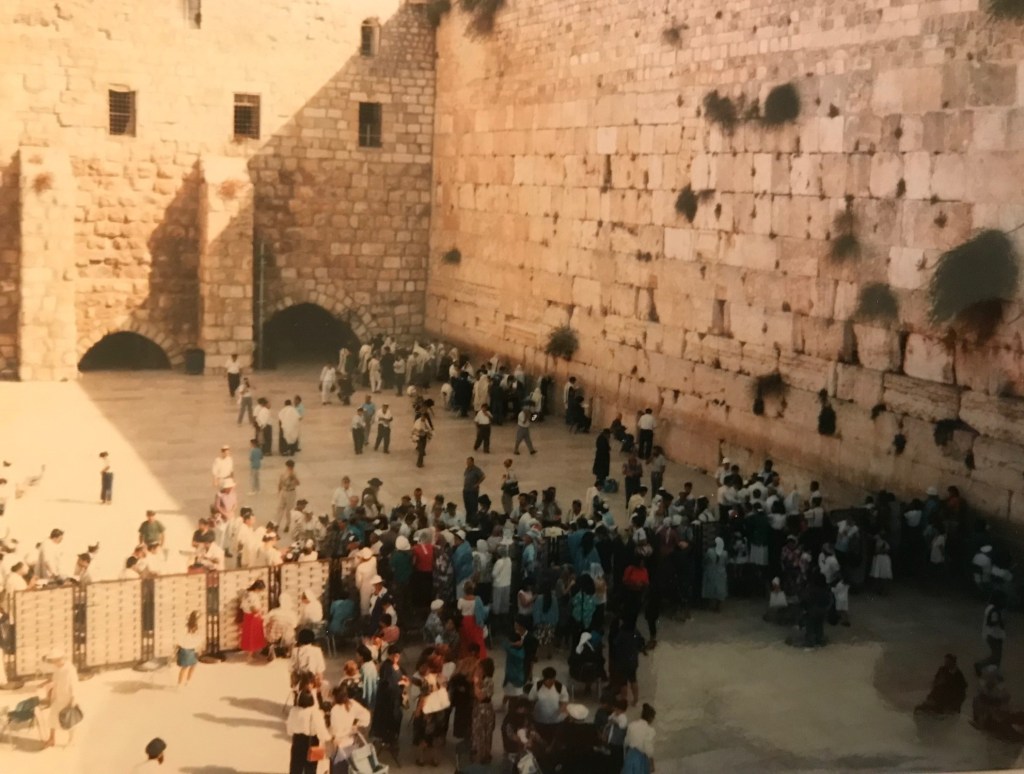
The assault on Gaza in retaliation for the terrorist attacks in Israel has divided the world this week. I am no longer in the Middle East Peace Process working group on Security Co-operation, but when I attended the twice yearly gatherings we were given privileged information about the 2006 Israel-Hezbollah war and the last major Israel Defence Forces operation in Gaza in 2008, codenamed Cast Lead.

It does appear that the lessons that were identified after these conflicts have been forgotten as everything that happened before is happening again. One of the big ideas that was enshrined in our post 9/11 work was to build a coalition and win the media war. There was enormous sympathy for Israel after the initial attacks, but the Knesset seems to be losing this global support as human rights organisations claim the force being used is disproportionate.

As the new war plays out, the World has suddenly become even more dangerous, with a significant risk of the conflict spilling across the Middle East and North Africa. In the meantime, the families of civilians killed on both sides will be grieving like never before.