Czech Legion In The News

A recent article in the Hampshire Chronicle highlights the story of a battalion of the Czech Legion that was formed in Russia early in World War I and fought against the Austro-Hungarian Army as part of their claim for independence of their homelands. After the Bolshevik revolution in 1917, this battalion was separated from the remainder of the Legion and was evacuated by the Royal Navy from Archangel to Newcastle. From there, it travelled south and eventually found itself in Winchester via the Didcot, Newbury and Southampton Railway.

While this battalion prepared to fight for the Allies on the Western Front, its sister battalions attached themselves to Admiral Kolchak’s White Army under command of the talented General Gajida. The Czechs hated the Bolsheviks and supported the Social Revolutionaries. They were supported in this position by the US Commander, General Graves, but not by the British commander, Sir Alfred Knox, who was a committed monarchist. When the White Government in Omsk collapsed, they played a pivotal role in the execution of Admiral Kolchak. After handing over the Imperial Treasury to the Red Army in 1920, they sailed from Vladivostok to France and returned home, where many of them joined the army of newly created Czechoslovakia.

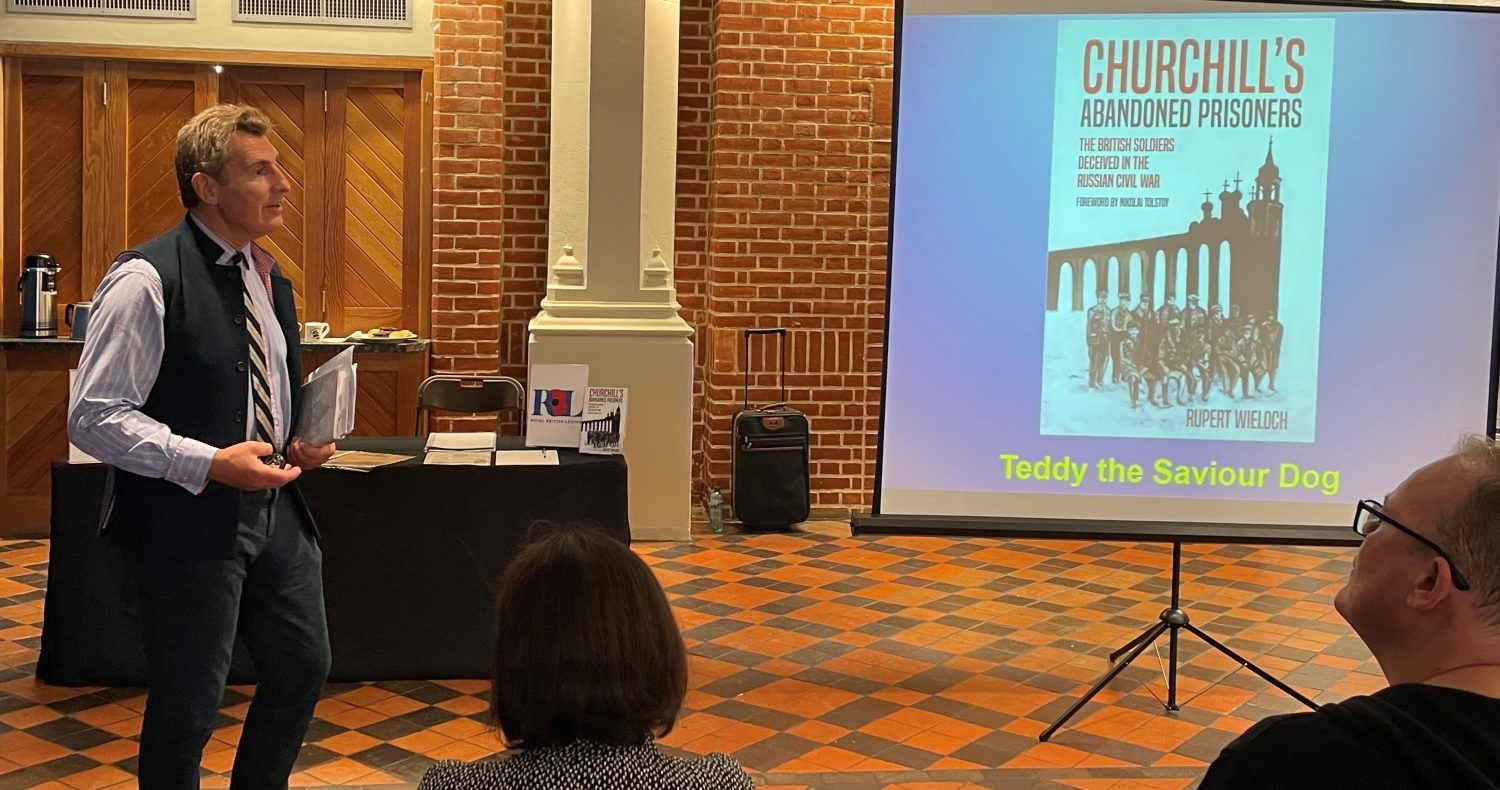
The role of the gallant Czech Legion in the Russian Civil War is revealed in Part One of Churchill’s Abandoned Prisoners. It is ironic that the Czech Republic, as part of NATO, is now involved in the war in Ukraine just over 100 years on. There will be more on this in my talk to the Wherwell History Group later this week.

Book Launch and Talks in September

This month, I am delivering talks on three subjects in Hampshire and Sussex. Two old favourites are A Christmas Card From Siberia and Churchill’s Second Darkest Hour. The former describes what life was like for the intrepid people, who served in the British Campaign in Russia towards the end of the First World War. The latter explains how the Former Naval Person (as the Prime Minister referred to himself when corresponding with President Roosevelt) turned around the war in 1942 after the humiliations of Hong Kong, Singapore and Tobruk, which led to a vote of censure in Parliament on 1 July.

The third talk is about a pivotal decade of English History (1830-1840). Much was happening at the beginning of this period, which is replicated today: climate change; a cost of living crisis; civil disturbances; the death of the monarch; violence in Europe; a disastrous harvest; and societal schisms over slavery, child labour and feudal taxes. However, by the end of the decade, England had turned a corner with a new sense of optimism and a growing economy based on innovation and production.

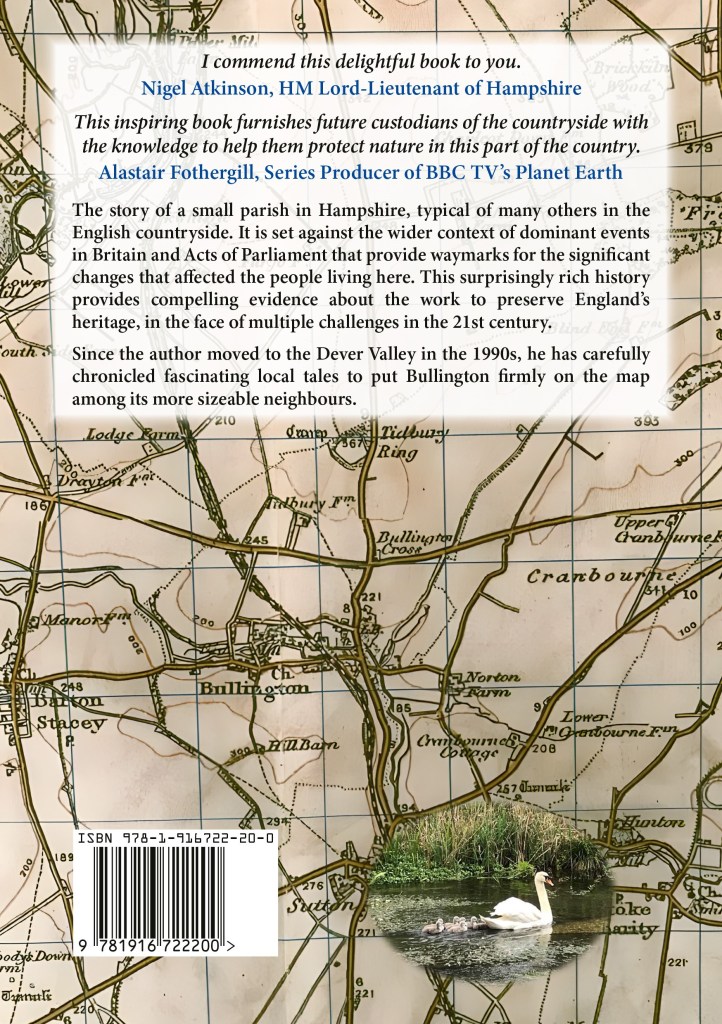
This talk is based on the research for my new publication, Where East Meets West, which will be launched on 8 September. It has Forewords by the Lord Lieutenant of Hampshire and the BBC Series Producer of Planet Earth and Blue Planet, as well as an Afterword by an award-winning Times journalist. The book will be available from P&G Wells in Winchester, or by messaging me on this website.

The Russian Way of War

Ukraine’s high risk strategy of advancing into Russia, using NATO tanks, has allowed Putin to make gains in the Donetsk region. The Russian Army’s target is Pokrovsk, a railway town similar to Swindon, that had a tragic history in the 20th century. It was overrun several times by the White Army and Red Army during the Russian Civil War. Its people suffered horrifically during the 1930s Holodomor and Great Purge. And it was the scene of fierce fighting in World War II with thousands of residents killed in a massacre by Axis forces, before a terrible retribution by the Red Army.

The forced evacuation of Ukrainian civilians and clearance of anything useful to the enemy that is taking place this week harks back to those dark days. This is the way Russia has dealt with invading forces for centuries and it has proven to be highly successful as Napoleon found in 1812. There are less than two months before the Russian winter descends on the battlefields and makes it difficult to manoeuvre. The big question is whether a decisive blow will be struck by either side, but my guess is that the cold weather will be the only winner in 2024.

A Sketch Drawn During the French Withdrawal from Moscow in 1812

A Sign of War in Russia

It doesn’t surprise me that the Media used an image of a collapsed bridge as the sign of war in Russia this week.

There are about 100,000 rivers in Russia, including the Volga, which is the longest in Europe. The country also has nearly three million lakes, including Baikal, which holds more water than any other on the planet. The bridges that cross Russian waterways are vital pieces of transport infrastructure that in war, are needed to supply front line troops with ammunition, food, spare parts and equipment. They can also form the forward edge of the battle lines as their embankments can offer good defensive positions and wide fields of view.

The well-known story of A Bridge Too Far is a fine example of the importance of possessing and preserving river crossings in mobile warfare. Reserve demolitions are very complicated operations and if the commander fails to complete his task, he can expect to be court-martialled (and in the case of Germany in World War II, executed).

To place the importance of Russian bridges in context, the Satnav route from Moscow to Irkutsk in 2011, set out a route over a bridge that crossed the mighty Kama river, which was closed. This meant a diversion of several hours and over 100 miles that caused delay and uncertainty to the journey. The opposing forces in Kursk will face this sort of disruption after the destruction of the bridge over the Seym this week.

The destruction of bridges was widespread during the Russian civil-war, as the 1919 photo below shows; and this is why the image used by the Media this week does not surprise me.

History of English Riots (And A New Book)

At the beginning of June, I presciently posted about the possibility of riots and the similarities with the situation in England in 1830. Unfortunately, my warning was not heeded and this week, we have seen an ugly reminder of what lies under the surface in society.

The five reasons for the riots, which echo those of 1830, are: climate uncertainty; cost of living crisis; technology alienation; immigration; and an out of touch political elite. Sadly, any one of these can act as a trigger for public disturbances in the current environment.

The reaction by the new government is also similar to the Earl Grey’s government in 1830 – use the judiciary to deter further unrest. In the case of the Swing Riots, the government rapidly assembled a Grand Assize in Winchester, executed a couple of rioters and transported the leaders of the movement to Australia. Lord John Russell eventually pardoned these men in 1836 and some, like Joseph Mason, returned to their families in England, but the deterrence did not last too long because the Chartist movement took up the reins of the 1830 radicals and stirred up more trouble in the following decade.

My new book, Where East Meets West, includes a section about the 1830 disturbances, which due to William Cobbett’s energetic correspondent, Enos Diddams, focused on the Dever Valley. It is a celebration of nature’s gifts in this part of Hampshire, set against the wider historic events in Britain and the World. With Forewords by HM Lord Lieutenant and the BBC series director of Blue Planet and an After word by a renowned Times journalist, it links to the University of Winchester’s English Project, which is building to the bicentenary commemoration of the Swing Riots and Grand Assize. The book will be available in September, from P&G Wells, or please DM for advance copies.

US Prisoner Exchange – Part 2

In December 2022, I wrote about a US prisoner swap with Russia, highlighting the history of Prisoner Exchanges, since the first treaty between the West and Soviet Russia signed in February 1920.

I am so pleased for Evan Gershkovich and the other prisoners released from jails in Russia. His trumped up charges were in direct contrast to the heinous crimes of Vadim Krasikov, who was serving a life-sentence in Germany for carrying out an assassination in Berlin. However, given the situation in Ukraine and the Middle East, we cannot be too moralistic about the reasons for imprisonment, but merely thankful that these men, women and children have been freed from unfair incarceration.

Unfortunately, their anguish is not yet over because the process of debriefing by the CIA and other intelligence agencies will be a long and stressful. Evan has already received a rapturous welcome back by the Wall Street Journal, and I really hope that he is able to put the trauma behind him and return to his writing, like Francis McCullagh and Margueritte Harrison who suffered a similar ordeal one hundred years ago.

Francis McCullagh and Margueritte Harrison – Irish and American Journalists imprisoned in Moscow in 1920

Shedding A Tear for Jasper

I intended to post about the Chief of the Army’s Land Warfare Conference this week, but the news about the wildfires in North America have taken priority. Every time I see the tragic consequences of bush fires around the world I feel deeply for those who have lost their homes and the devastated habitats. Australians have been particularly badly hit, but there is nothing like knowing a place for the effects to touch the soul.

Forty-two tears ago, I spent six weeks in Alberta, with my troops on the Prairie and in the Rockies. We had the most wonderful time on tank manoeuvres and canoeing down the Athabasca River and crossing glaciers in Puffa coats. We made friends in lots of strangely named places like Medicine Hat and Rocky Mountain House, as well as Calgary and Banff, but the best nights were in Jasper, where we received the full Moose and Bear Country experience.

This profound connection has kept with me all these years and so I am shedding a tear for the people of Jasper today and sending them my deep condolences for their losses. Knowing how bitter the winter can be, I am hoping they can restore the town’s infrastructure before the Fall.

Alberta in Happier Times

De-Risking Technology Fails

Like many families, we were seriously affected by the IT meltdown this week that caused chaos in the travel industry, panic in the banking sector and anxiety in the NHS. The botched CrowdStrike update has once again put our reliance on modern technology in the spotlight, but there are many ways to ensure the effects of such a collapse do not lead to total systematic paralysis.

In 2001, I was part of the original programme that identified the risks associated with globalisation and this scenario was high up on the list of possible events that we considered. In designing any software programme, the requirements manager should always ensure that the intellectual property that went into the project is maintained safely and that there is a reversionary mode incorporated in the platform.

We are very good at ensuring our aircraft do not drop out of the sky when there is a glitch, so why do we not put the same effort into human processes? It is not all about imagination and costs; there has to be well-established protocols that are familiar and practised on a regular basis. Time, as ever, is the key resource, but this was NOT an act of nature, so there are no excuses for poor preparation.

NATO Needs To Be More Than A Talking Shop

The NATO Conference in Washington this week was inevitably overshadowed by the recent elections in Britain and France and the latest Presidential News. It was nevertheless disappointing for commentators that no major initiative was announced to mark the 75th anniversary of its founding.

Ultimately, this is the only credible organisation that can deter Putin’s Russia and protect vulnerable countries from being “picked off” one by one. Talking about expenditure is a complete cop-out because it is military capability, as in high readiness brigades, ships and aircraft, which will earn the respect of our adversaries, not theoretical budgets.

Too often NATO’s members have suggested that other Allies will fill their gaps for them, but in a crisis, each country will look to their own before supporting another Member. We need to get back to counting numbers and matching our potential adversaries with a coherent, long term strategy – as we did twenty years ago.

A New Era Begins

It will be very interesting to observe how the new government in London deals with the problems of Defence and Security. In the case of British Foreign Policy and Economics, the cabinet will wish to be seen as stable and predictable, so it seems it has been elected on the basis of different people, but similar policies i.e. “change, but no change”. It is certainly the case that historically, Labour Governments have not made dramatic cuts to Defence and I am hopeful this will be the case in the next five years.

The first tests for the new Secretary of Defence will be at Budget time and when he meets his American counterpart. He will need to demonstrate that he can win the difficult argument with the Treasury and that he supports our main Ally, despite a big difference in the approach to the Middle East. I expect there will be a close alignment on Ukraine and Russia, but notwithstanding MI6 paranoia, we will not be quite so adjacent with the US about China. The key issue though will be credible military capabilities. To be taken seriously by the Pentagon, the government will have to put its “money where its mouth is” and a good beginning would be to fund a replacement for our aging tank fleet.

We Need A New Tank