Death on Military Exercise Should Not Curtail Armoured Training

The devastating death of Jethro Watson-Pickering in a Warrior fighting vehicle on Salisbury Plain on Friday has saddened everyone in the military community, but the tragic accident should not be used by those seeking to dilute the army’s capability as an excuse to make further cuts.

Throughout my time in the army, people on the touchline tried to lower the standards of training. Sometimes this was for politically correct reasons, so that lower grade applicants could reach the graduation threshold, but often it was because behind-the-scenes accountants wished to impose a moratorium on activity to save money.

There are some very hard choices being discussed in the Ministry of Defence at this moment. Unfortunately, with a Royal Navy Chief of Defence Staff (and Chief of Joint Operations), land capabilities are behind maritime and air power. The questions doing the rounds are: should we reduce the numbers of soldiers (and commandos), walk away from the army’s premier equipment project (Ajax), or dilute the highest level of training for war (tank to tank fighting)?

When this sort of discussion was held in the past, I reminded the audience of Kofi Anan’s thoughts as the United Nations Secretary General: “In Eastern Slavonia, we deployed a force of heavily mechanised infantry and helicopter gunships. We went in with such strength that we didn’t have to use force and we successfully fulfilled the mandate.” Or, as a senior officer exclaimed in the 1980s, “Clout, Don’t Dribble!”

Effective deterrence and conflict prevention require credible land forces, not shop-window dressing, so we must resist the Machiavellian plotting against the army and save our soldiers.

Ten Years Ago – Operation Ellamy

Eleven days before the Foreign Secretary officially reopened Britain’s embassy in Tripoli, I was invited to apply for the post of the Senior British Officer in Libya having worked on the United Nations authorised operation since March 2011.

The tasks in the Chief of Defence Staff’s directive included hunting the three men indicted by the International Criminal Court and the resources to do this included British Special Forces and the UK’s spy plane flying from RAF Akrotiri in Cyprus. Initially, the Ministry of Defence wished to send an officer from the Royal Air Force, but eventually they saw sense and I was put on 48 hours notice to move.

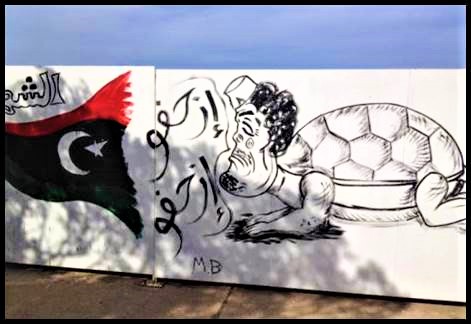
By this time, Colonel Muammar Gadhafi was holed up in his home town of Sirte, where he moved from hideout to hideout in an ever-shrinking pocket held by a dwindling group of loyalist fighters. He swung from rage to despair over his loss of power and finally he made his fatal dash for freedom on 20th October. It was an ignominious ending, which he could have avoided by handing over power six months earlier. After his body was left on public display in Misuratah for four days, he was buried secretly with his son Mutassim and Abu-Bakr Younis Jabr, an original member of the RCC and former head of the army, who was with Gadhafi when he was killed. Meanwhile, the British focus switched to his brother-in-law, the intelligence chief Abdullah Senussi and his son, Saif al-Islam…

Libya 2011

Armed Forces To The Rescue – Again!

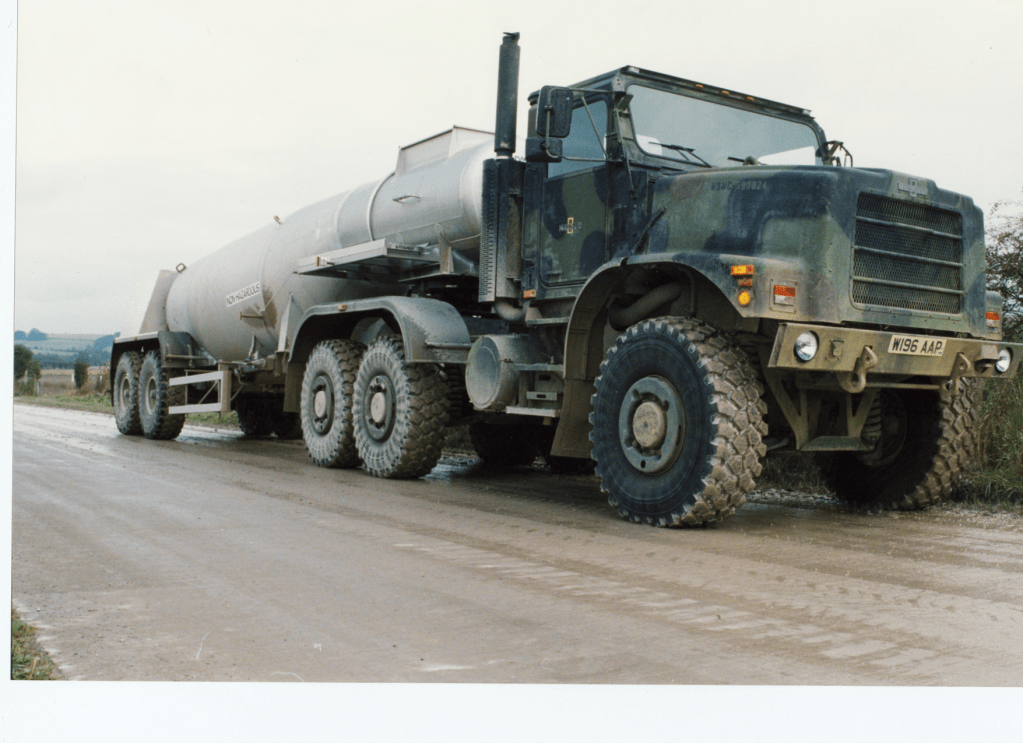
I intended to write about an emotive Libyan anniversary this week, but the news that the government has ordered the Armed Forces to deploy their drivers to deliver fuel to petrol stations cannot be ignored. This is not the first time this operation has been dusted down because in 2005, I was involved in preparing 1,000 drivers to operate tankers if the fuel blockade that was crippling the country continued.

The provision of military aid to the civil authorities is an act of desperation and only considered as the last resort. Of course the drivers from the Royal Navy, Army and Royal Air Force will be delighted to help and do their duty, but the use of Service personnel for domestic crises is becoming something of a habit for this government. The news that a royal marine general has been asked to sort out the National Health Service adds to the impression that there is a real problem in our national institutions.

The Army in Britain is not funded for domestic tasks other than a few specialist roles such as bomb disposal and ceremonial duties. They are supposed to be training for overseas operations such as the peacekeeping mission to Mali, or the conflict-prevention deployment to the Baltic states. The serious underfunding of the military in the past decade has compounded the issue of poor retention.

Society owes a huge debt to those serving in the British military who have helped the country in the past 18 months. It would be really good if our schools, colleges and universities were to recognise this debt by signing the Armed Forces Covenant (https://www.armedforcescovenant.gov.uk/get-involved/show-your-support/) and encouraging their students to join up.

Army Tanker

UN Mission to Libya – Ten Years On

The UN Mission to Libya has just had its tenth birthday, but there is not much to celebrate in 2021.

For a start, its headquarters isn’t even positioned in Libya. Yes, the valiant humanitarian co-ordinator has just spent four days in Benghazi, but most of the officials meet their counterparts in Europe, or Tunisia, rather than Tripoli, or Tobruk, where the main seats of government are located.

After the UN Special Representative resigned last year because his mediation efforts were not supported by the countries arming the warring factions, we now have a graduate of the Moscow State Institute in charge. Meanwhile, Russia (through its security contractor group Wagner) and Turkey lead the way in the ongoing civil-war.

Turkey’s interest dates back to the time before 1912, when Libya was part of the Ottoman Empire. Russia’s interest only began when Colonel Gadhafi bought Soviet equipment in the 1970s. France and Italy will never be trusted in Libya due to their colonial past. America’s links with Israel make it virtually impossible for them to play a leadership role in Libya.

The country that most Libyans wish to partner with is the UK, but we are strangely reticent about accepting the invitation. See Liberating Libya for the rationale for British involvement in helping Libya solve its problems in the 2020s.

Libya’s Partner Of Choice For 200 Years

Coat Tail Strategy

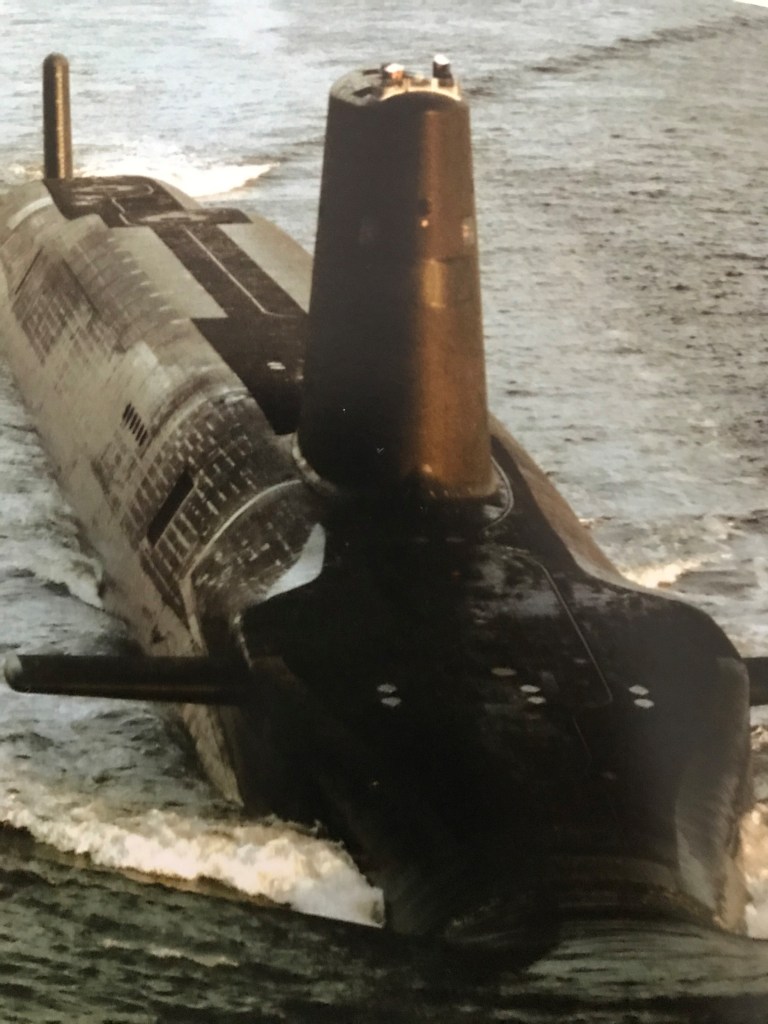
British media comments on London’s decision to join the US-Australian nuclear submarine deal seem to miss important aspects of the pact. Perhaps the wider context will come out later, but most of the focus has been on the diplomatic and economic implications, especially gazumping the French contract to supply submarines to Australia.

To my mind, this deal needs to be considered in the context of the Strategic Defence Reviews that have been announced since the economic crisis. Ever since, the government decided to prioritise maritime strategy over land operations, we have been tied to the enlightened thinking of the naval staff in the MoD. We don’t have a large enough Fleet to protect all our dependencies and we don’t have a big enough defence budget to fully equip the Fleet, so we are dependent on the USA for essential capabilities. The quid pro quo for their materiel support is to bolster American attempts to maintain dominance in a region, which militarily is of no concern to our national interest.

There are a large number of vital tasks in the Atlantic and Mediterranean that will be adversely affected by this new pact. The question we have to ask is: if we are operating in the South China Sea, what are we giving up closer to home? A similar problem faced Churchill when he was First Lord of the Admiralty before the First World War. The question was whether to abandon the Mediterranean in the event of a war with Germany; he succinctly summarised the problem in a letter to Lord Haldane on 6 May 1912: “it would be very foolish to lose England in safeguarding Egypt.”

Tomorrow’s Fish and Chip Papers

There was a real sense of moving on from Afghanistan when the Prime Minister spoke about how to pay for Social Care on Tuesday 7 October. Never was the aphorism “today’s news is tomorrow’s fish and chip papers” more apposite when Afghanistan was removed from the front pages and Taliban turpitude in the outer provinces was covered up in the cause of political expediency.

It seemed there was a collective sigh of relief when Members in the House of Commons could discuss one of the most pressing issues raised by the pandemic that affects 32 Million British Tax Payers, rather than ponder how to prevent the retribution that is likely to lead to a global humanitarian crisis.

This has happened before. In 1935 the British general election was won under the banner of Peace At All Costs as the world failed to respond to Benito Mussolini’s aggression in Abyssinia. The British Prime Minister was fully occupied with domestic issues, including: a dire economy; a vocal pacifist movement; and a royal crisis created by an American divorcee. Although Stanley Baldwin held a vast majority, the government could not reconcile its contradictory policies of disarmament and resistance to brutal regimes. It was only a matter of time before the League of Nations failed and the next generation had to pay for the moral deficiency of their predecessors.

Do I hear the sound of a ticking clock?

Kabul 2005

BBC Radio 5 Live Assignment

I was booked this afternoon to speak on Five Live Drive’s first item after the news, Afghanistan. Originally, they asked me to comment on the Chief of the Defence Staff’s admission that the UK’s Joint Intelligence Committee was wrong in its assessment and his implicit criticism of the intelligence services. However once on air, Nuala McGovern asked me more about the Prime Minister’s statement in the House of Commons and since neither he nor anyone else in Parliament mentioned intelligence failings, I had to introduce the subject myself.

The Prime Minister is understandably trying to move on and believes that by acknowledging the courageous work of the soldiers (and airmen) on Operation Pilling and highlighting the future support to those seeking sanctuary, he can draw a line under the whole affair. However, the failings highlighted by General Sir Nick Carter yesterday should not be swept under the carpet. What he seems to be saying is that there is too much “Groupthink” in the analysis and committee discussions. This might be because people are afraid of speaking truth to power on the grounds that they might lose their job, but it could also be that we are simply relying too much on radio intercepts because our human intelligence services have deteriorated so drastically in the past decade. That was certainly my experience in Libya after the botched secret service attempt at entering the country in February 2011, for which William Hague had to apologise in Parliament (see chapter 16 of my new book Liberating Libya).

The other aspect which was equally worrying was the headline about using every “economic, political and diplomatic lever” and rallying international consensus. This mirrors the US President’s approach to the problem, but apart from the disrespect to the armed forces (or military lever) who are still working on the Afghanistan project (not just drones and surveillance aircraft), the idea of holding onto “frozen assets” will only push the Taliban into the arms of our adversaries, who are less scrupulous about providing assistance to repressive regimes.

We too need to be judged by actions not words. If we wish to influence the Taliban government, we must share the risks on the ground as men like TE Lawrence, Glubb Pasha and Milo Talbot did in the past. The answer lies in history.

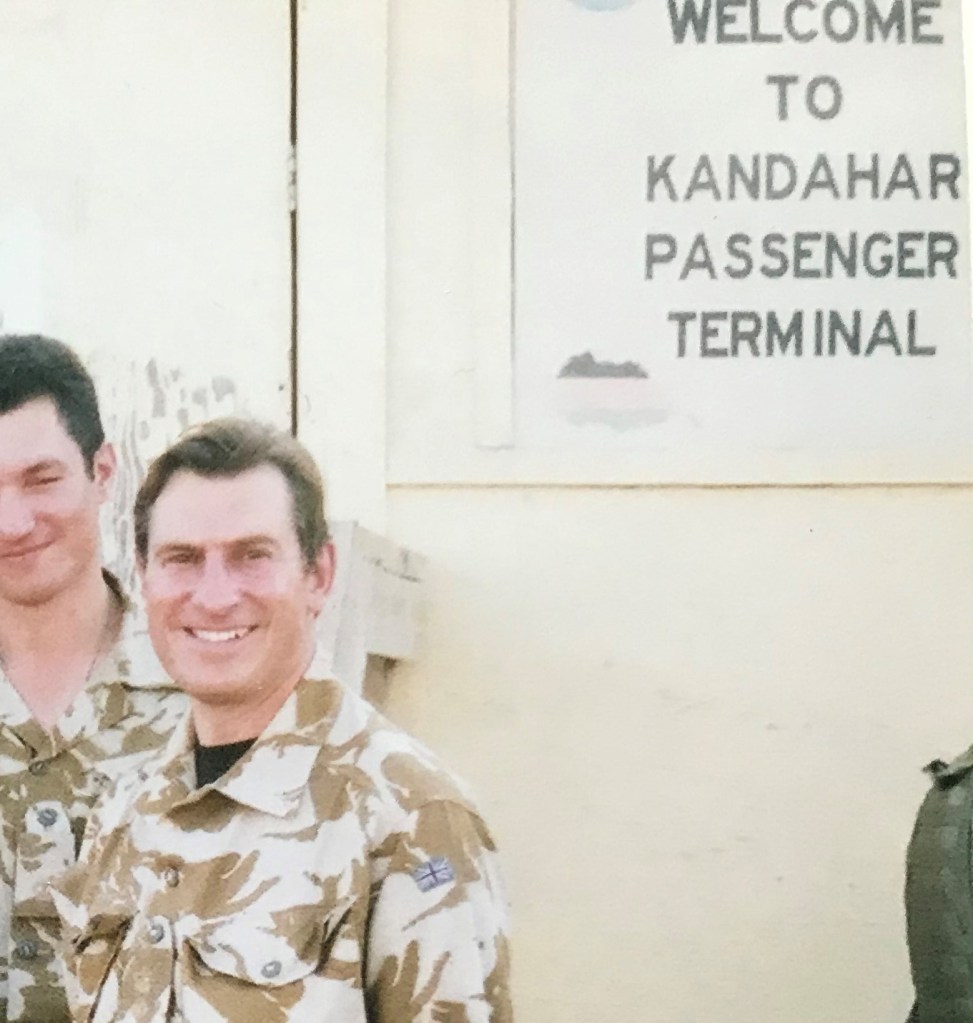
Kandahar Airbase October 2005

Remain to The Last in Kabul and Omsk

The revelation in the Sunday Times and Daily Mail that the British Ambassador was ordered to remain behind in Kabul reminded me of the situation in Siberia in November 1919. For those who have not read Churchill’s Abandoned Prisoners, a group of British soldiers were ordered to stay in Omsk to save the lives of British subjects fleeing from the Red Terror and help their evacuation along the Trans-Siberian railway.

There are other reminders in Afghanistan today of the end of the war in Siberia. These include: the collapse of the propped-up government, the failure of internationally trained army, the pusillanimous response of the international community, the humanitarian disaster and the acts of terrorism that overlapped with crimes against humanity are all strikingly similar.

Mark Twain is attributed as saying: “History never repeats itself; but it rhymes.” Unfortunately, the rhyming in this case is more akin to Wilfred Owen’s pity of war.

Khyber Pass 1972

Similarities Between Afghanistan and Libya

The dreadful situation that has developed in Afghanistan during the past week reminds me of what happened in Libya after US Ambassador Christopher Stevens was murdered in Benghazi on 11 September 2012.

For those who don’t remember there was a mass evacuation of western diplomats as the country was abandoned by its erstwhile friends. As a result, a civil war began that has been fuelled by outside actors for the best part of a decade. In addition, the country became a safe haven for Islamic State terrorists and a launch base for illegal migrants crossing the Mediterranean Sea.

Yesterday, the Italian coastguard had to rescue 539 people crammed onto a fishing boat drifting off Lampedusa. Many of these had been attacked while in Libya.

John Simpson has just said “peace is further away than ever”, but he could also say that brutal regimes are nearer than ever”.

When will we learn that we need to share the risks in dangerous countries if we are to be credible partners and fulfil our international responsibilities to prevent crimes against humanity?

Libya 2012

Afghan Regrets

In 1972, I was at school with Mir Wais Zahir of Afghanistan, which was a country like Nepal with low development, but high happiness. A year later, my father had to close his office in Kabul after the bloodless coup that ended two centuries of royal rule and I said farewell to the prince whose father went into exile in Italy. Little did I know then that I would write the UK government’s strategic concept for the reintegration of Afghanistan into the international community after decades of civil-war in 2001.

Twenty years later, the country has made so much progress and is no longer in the bottom 20 developed countries in world. Improvements to the child mortality rate, village water supplies and women’s education have been dramatic. Social justice, political freedoms and sporting achievements have followed the hard-fought stabilisation of the country by NATO.

All this progress towards the goal set out in 2001 is now being unravelled and in the blink of an eye Afghanistan seems to be reverting to the forbidding country that existed under the repressive Taliban regime of the 1990s. Time will tell whether this iteration is the same as the last, but in the meantime my thoughts are with the thousands of terrified citizens who are now living in fear of their lives as the West abandons them again. Even if Washington feels no remorse now, the key question is whether America will regret their Afghan retreat in the future?

The Khyber Pass looking east at daybreak in September 1972