
Military Assistance In The Spotlight…Again

This week we should spare a thought for the soldiers, sailors and air personnel who will lose their hard-earned Christmas leave to stand-in for ambulance drivers and border staff.

I was involved in many operations designated as military aid to the civilian authorities (known as MACA) during my time in the Army, but some were more popular than others. In my experience, soldiers preferred to help vulnerable people during natural disasters such as flooding, or severe snow storms rather than any tasks related to industrial action such as Operation Fresco, which used the iconic Green Goddess fire tenders. It worried many of us when we became involved with industrial disputes because we were seen as strike breakers and were alienating some sections of the public from who we need support. This is the main reason why the military chiefs are pitched against the planned operations (as well as the other issues such pay and availability of troops).

It used to be a rare occurrence that the military was called to help at Home, but since the Foot and Mouth operation, it seems that we have been needed more frequently for national tasks such as Olympic security, Covid relief and illegal immigration. There is a great danger the public starts to believe that the Army is organised for civil contingencies, when in fact this is not even a funded activity. The problem is that the Media does not tell the public what the Armed Forces are really doing in places such as Africa, the Baltic and Iraq because it doesn’t suit their narrative. We really do need a much better public explanation of what the military does on a day-to-day basis.
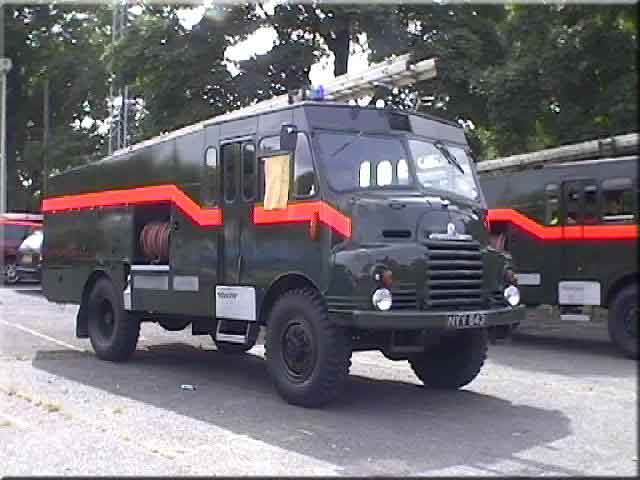
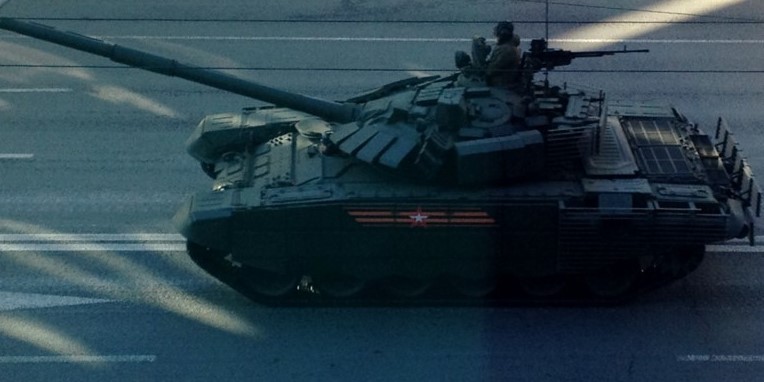
The Iconic Green Goddess on Operation Fresco
Lockerbie Suspect in US Custody

The report today that Abu Aghila Mohammad Masud has been finally handed over to US authorities, two years after Washington announced their charges against him, has catapulted the destruction of Pan Am Flight 103 into the news ten days before the 34th anniversary of this devastating terrorist attack over Lockerbie.

I have often been asked whether it was Libya or Iran that was behind the Lockerbie bombing. The argument for Iran’s involvement is that they were seeking revenge for the shooting down of one of their civilian aircraft by a US warship five months earlier. The much stronger case is that Gadhafi was retaliating for the loss of the Aouzou Strip, a disputed piece of land between Chad and Libya that is full of Uranium deposits and provided the Brother Leader with much of his nuclear weapon capability. Gadhafi believed that the French and American military assistance to Chad tipped the balance and led to 7,000 Libyans being killed in what became known as the Toyota War.

His first act of revenge was to destroy a French DC-10 that was flying from Brassaville (in the People’s Republic of Congo) to Paris on 19 September 1989. The death of all the 170 passengers and crew, from 18 countries, was not widely reported because it occurred over the Niger desert, but the use of a suitcase bomb should have put everyone on high alert.

A similar mode was used against the US Boeing-747 en-route from London to New York. The violent death of 259 passengers and crew as well as eleven residents of Lockerbie was much more widely reported than the September bombing, but I find it strange how few reporters made the connection between the two attacks that were only three months apart.

The censure of the international community and the reaction of President Reagan condemned Libya into ten years of isolation until Gadhafi agreed to hand over two individuals, who were tried by the Scottish courts. His seclusion ended after he donated $1 Billion to the families of the victims of Lockerbie and handed over his weapons of mass destruction and agreed to help US and UK intelligence agencies in the fight against Al Qa’ida. Much more of this story is covered in chapters 15 and 16 of my book, Liberating Libya, which I wrote with help from the British ambassadors at the time of Gadhafi’s reintegration into the international community.

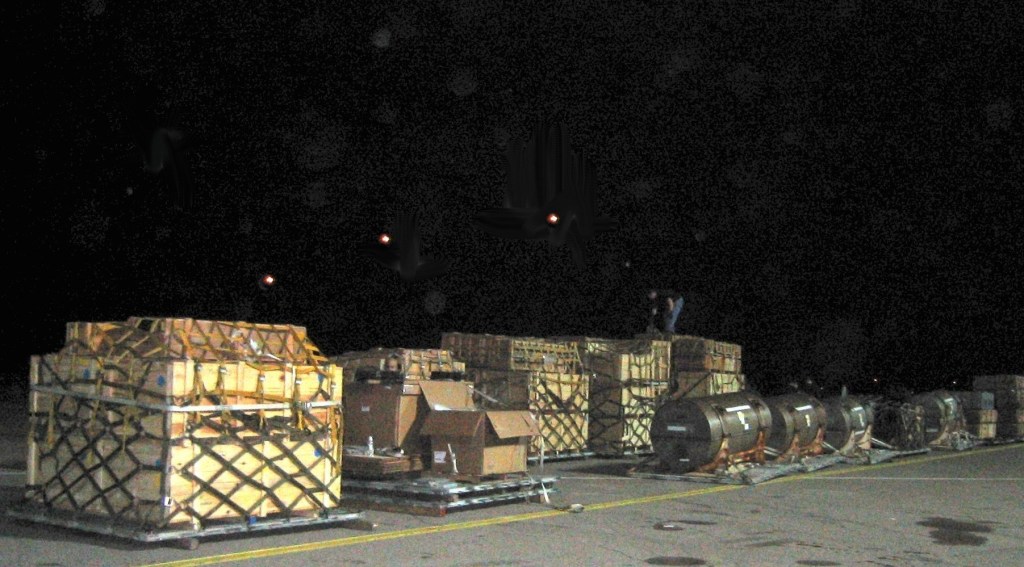
WMD Ready for Loading onto a US C-17 at Mitiga Airbase Following Gadhafi’s Lockerbie deal with the US Government

US Prisoner Exchange With Russia

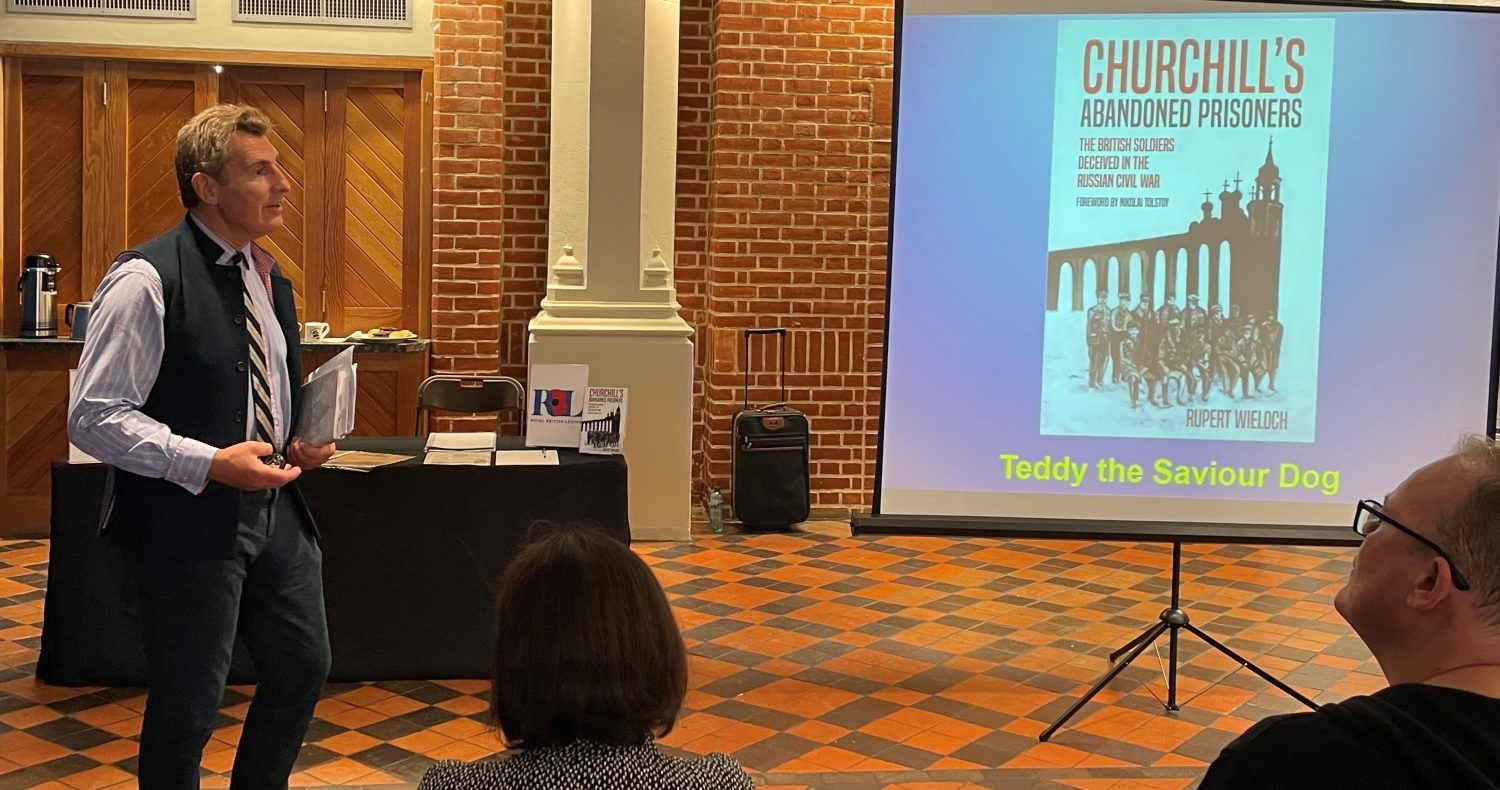
The exchange of US sportswoman, Brittney Griner with Arms Dealer, Viktor Bout, reminds us of Russia’s long history of prisoner swaps. Human hostage trades were established early in the Communist era and continued throughout the Second World War and the Cold War. The first prisoner exchange treaty, which set the standard for subsequent agreements, was brokered between the British MP, Jim O’Grady and Lenin’s envoy, Maxim Litvinov in 1920 (the draft agreement that was signed on 12 February can be found in Appendix 3 of my book, Churchill’s Abandoned Prisoners).

US military prisoners captured during the Russian Civil War were released early in 1920, but there remained a few civilians who were arrested for spying and were held in Moscow along with British and French hostages. Perhaps the most infamous case was that of Mrs Margueritte Harrison. She travelled to Moscow as the correspondent for the Baltimore Sun, but was arrested on Good Friday and taken to Lubjanka prison on the same night as Francis McCullagh. She was tortured by the Tcheka and coerced to act as a Soviet agent. Her false reports led to the arrest of Mrs Stan Harding, correspondent for the New York World, but did not save her from being re-arrested in October 1920 and sent to the Novinsky Prison for Women, eventually being released on 29 July 1921, in exchange for American famine relief.

British prisoners released by the Russians were always quarantined and “debriefed” by MI6, in order to check whether they had been “turned”, or sympathised with Soviet ideology. When you read that Brittney Griner has been taken to an Army Base in San Antonio to help her adapt back to normal life, you can be sure that an element of this programme will be controlled by the Central Intelligence Agency for the same purposes. The ten month imprisonment must have been an extremely traumatic experience for her, but not as bad as the fifteen months of Bolshevik torture suffered by Margueritte Harrison.

Why Somalia?

The visit by the Minister for Development and Africa to Somalia this week begs the question why do we put our priority there and not closer to home in Libya and the Maghreb?

London has awarded medals to troops deployed in Somalia for more than ten years. We are currently involved in several military operations including the African Union peacekeeping mission, the United Nations support mission, the European Union training mission as well as our own support to the Somali National Army in the government’s “comprehensive approach to security”. Many people who I served with in Libya moved on to East Africa to help with the fight against international terrorism.

The reasons why we are in the Horn of Africa date back to the humiliation of the US portrayed so vividly in the film “Black Hawk Down” and Washington’s decision to pull out of complex peacekeeping operations. What particularly vexed the International Community was the way Somali pirates disrupted the sea lanes in the Indian Ocean from the bottom of the Suez Canal to the Seychelles. Apart from protecting international trade, we are also helping to prevent the spread of militancy into neighbouring countries such as Kenya and the proliferation of weapons into Arabia.

The media highlighted the very important issue of humanitarian assistance in their coverage of Andrew Mitchell’s visit but yet again failed to mention the outstanding work of the British Army overseas. It is another example of the suppression of the whole truth to suit an editorial narrative that neglects our armed forces and hides them from the public eye.

NATO Treading A Fine Line In Ukraine

The continuing reports of war crimes and atrocities committed by Russian troops in Ukraine has led to a large increase in NATO deployments in Eastern Europe despite waning public support in France, Germany and Italy (where only a quarter of the population are now in favour of sanctions according to recent polls).

As a reminder, at the Madrid summit this year, member states agreed to increase the NATO Response Force from 40,000 to 300,000 troops. What we are currently seeing on the ground is a doubling of the multi-national battle-groups in Poland, Lithuania, Estonia and Latvia; with new formations in Bulgaria, Hungary, Romania and Slovakia, as well as extra divisional headquarters and pre-positioned equipment, weapon-stockpiles and missile-defence-systems in the region.

There is an element of brinkmanship at play here. From my experience of NATO operations in the Balkans, Iraq and Afghanistan, there are so many political caveats that accompany these multinational teams that it makes it almost impossible for the lead nation to send troops into the danger zones. There are also the interoperability challenges that degrade the fighting capability, which is why we used to insist that the smallest building block for effective and capable deployments was/is a brigade (not a company as seems to be the case now).

The numbers are also a long way from the size and scale of NATO forces in the Cold War. When I deployed with the NRF’s predecessor to the Russian border in the Arctic Circle and was involved in the famous Reforger exercises in Germany, Britain alone had more than 300,000 troops. However, taken with the increased support provided to the Ukrainian armed forces by individual nations and the need to avoid escalating the war into a nuclear conflict, the new deployments are important developments as the winter approaches.

Ukraine War and Torture

The Prime Minister’s visit to Kyiv has highlighted the continuing need to support the people of war-torn Ukraine and in particular protect civilians from the bombardment of the capital and other cities. Of his three overseas assignments during the last week, this was without doubt Rishi’s most important in terms of sustaining the Free World. That is not to say that economic hardships and rising sea-levels do not need our close attention, but belt-tightening and crop-growing have to be set within the context of the fight against authoritarianism.

The cases of torture that have been reported following the recapture of Kherson are very harrowing, but are not unique. In 1920, Prime Minister David Lloyd George set up a Committee to Collect Information on Russia led by Alfred Emmott who took evidence between 10 June and 17 August from British prisoners released from Moscow jails. Lord Emmott’s report, held at Nuffield College, Oxford was an important academic source for my book Churchill’s Abandoned Prisoners and provides a yardstick for comparing the treatment of captives released this week. It is intriguing that many of the techniques used by the Cheka are still used by the Russian interrogators one hundred years on and that the experience of the journalist, Anzhela Slobodian is so reminiscent of Francis McCullagh’s time in Lubjanka jail told in Chapter 11.

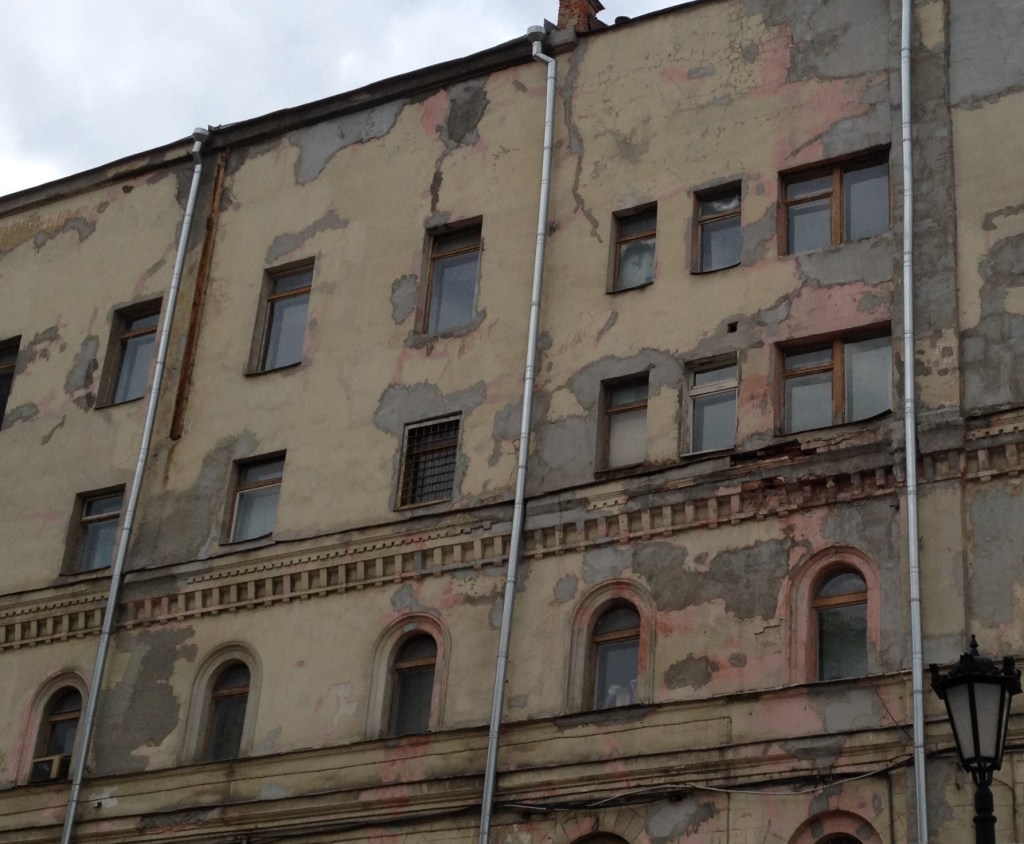
A Moscow Prison for British Prisoners-of-War in 1920

Mali Shame

The announcement of the complete withdrawal of British troops from Mali is terrible news for both international peacekeeping and the credibility of British foreign policy.

I have written about Operation Newcombe before because it began when I was in Libya and was closely linked to our Special Forces’ work to prevent the spread of Al Qaida in the Maghreb. The task in Mali is probably the most challenging of all the current British Army deployments both in terms of physical environment and conceptual complexities. It is also one of only three areas where the new General Service Medal is awarded.

Mali is designated as one of the United Nations least developed countries, where poverty is rife and mortality rates are among some of the worst in the world. The people desperately need Aid, but the delivery of medical support, food, supplies and education depends on their physical security. However, the strategic stakes are not just humanitarian, but also involve people trafficking, weapons proliferation and international terrorism. The Long Range Reconnaissance Group that operates from Gao, 250 miles from Timbuctoo, is making a vital contribution and its withdrawal will have severe consequences not only for the Sahel region, but also asylum destinations.

Unfortunately, the strong military government that took over the country in a series of coups has now allied itself to Russia through the mercenary group Wagner. The previous government was propped up by France, which led the international peacekeeping efforts in the desolate countryside. However the current government has rejected western exhortations and is looking for a military solution similar to the Russian aided Assad government victory in Syria and Khalifa Haftar’s success in Libya. Taken together with the 2019 withdrawal from Afghanistan, this is another humiliation for the West as its declining influence continues in World affairs.

As a former author of British peacekeeping policy, I find it tragic how our government has become confused about what it is doing and is now reliant on others for its key military capabilities, so it cannot act independently. If we wish to maintain our place at the high table within the United Nations, then we must be prepared to roll up our sleeves and actively help on the ground, rather than just point the finger from the touch-line (or an Aircraft Carrier).

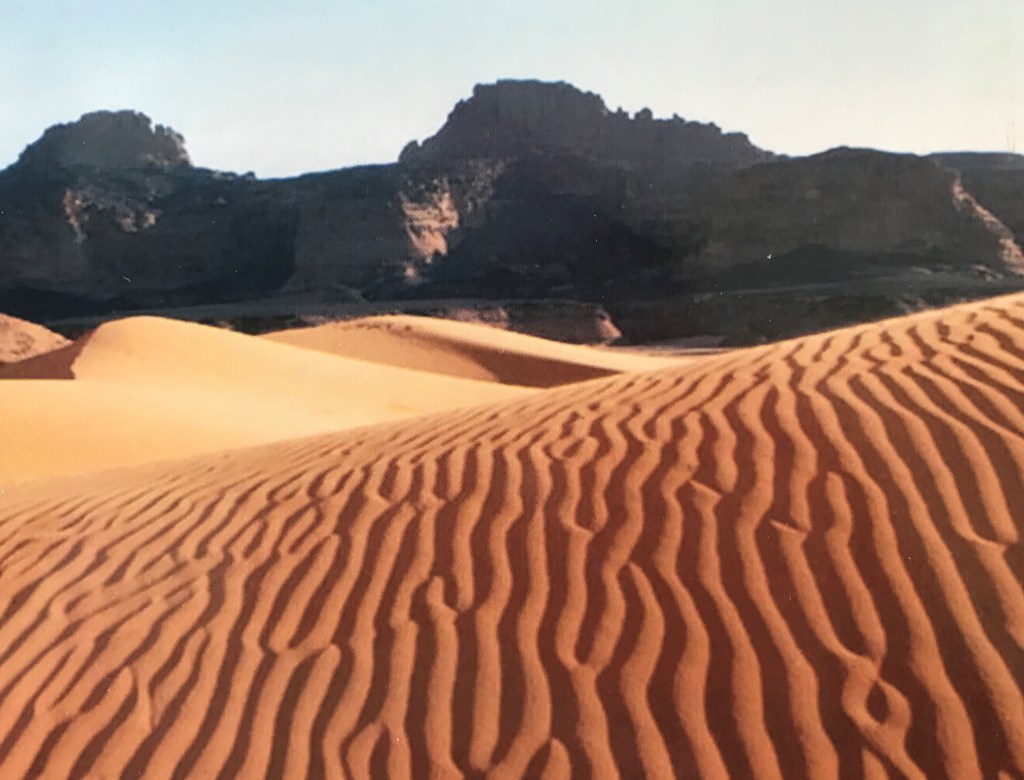
The Sahel

Winston Churchill’s Remembrance Message In 1942

Eighty years ago, Winston Churchill was invited to the Lord Mayor’s reception on the day before the anniversary of the Armistice and spoke about the ongoing war in the Western Desert. The Second Battle of El Alamein had officially ended on 5th November, but Rommel was still fighting a savage rear-guard action as he withdrew through Libya and each gain, such as Tobruk on 13 November, was accompanied by more British killed in action.

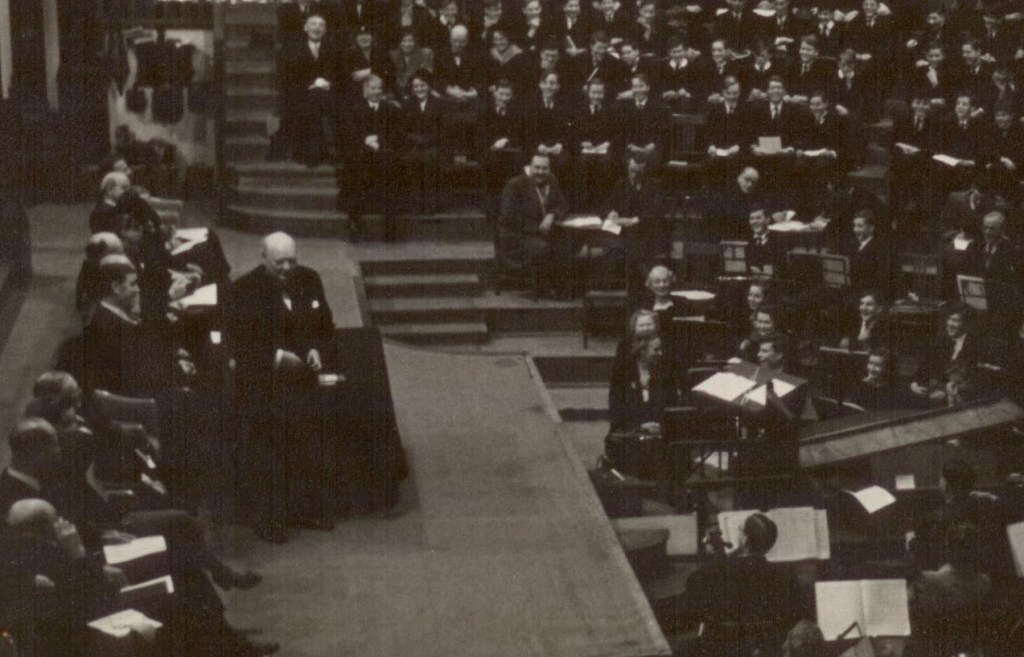
In London, Churchill delivered one of his inspiring speeches and with reference to the end of WWI said of the present situation: “Now this is not the end. It is not even the beginning of the end. But it is, perhaps, the end of the beginning.” For Remembrance Sunday, he authorised the mass ringing of church bells, not heard in Britain for over two years. Three days later, the Prime Minister visited his alma mater where he said to the assembled school: “Two years have passed since we stood alone…All we knew was that we should fight to the end…Far be it for me to say how long the road will be…but I do feel that the day will shortly come…when we shall reach a broader and brighter light..”

Such powerful words and so appropriate for our Remembrance Sunday in 2022.

The Prime Minister Speaking At Harrow During The Second World War

Approaching Armistice Day

This week we are commemorating the anniversary of the end of hostilities on the Western Front in World War I. At the time, many people claimed it was the war to end all wars, but history shows that war has not magically disappeared from the world. So it is absolutely right that we commemorate the lost lives in all wars and share a thought for the families of soldiers, sailors and air people, who are still struggling to come to terms with their missing loved ones, who died recently on operations abroad, or while training at home.

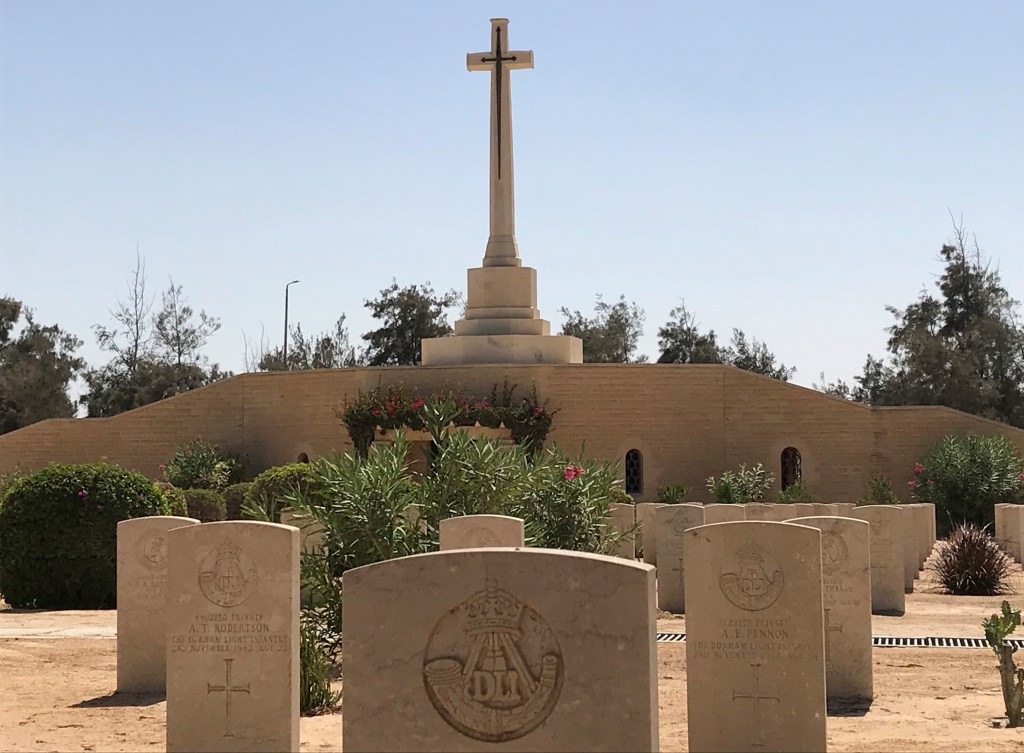
In 2022, the reason to remember is even more obvious as war has returned to Europe and so many lives have been affected by the Russian military invasion of Ukraine. Our government has been neglecting its armed forces since the Financial Crisis, but now more than ever the country’s dedicated service personnel and veterans need our support. That’s why I travelled to El Alamein to commemorate the fallen who gave their lives for our freedoms today and will be supporting the Royal British Legion this week at our local memorial.

El Alamein 80 Years On

Who Will Be My Next Colonel-in-Chief?

The announcement that HRH King Charles III will be the next Captain General Royal Marines is tremendous news for a branch of the Armed Forces that has been under threat during the 21st Century. At every Defence Review, when the Royal Navy has been squeezed by bean stealers to provide more savings, the future of one of the two United Kingdom rapid entry forces (the other being the Parachute Regiment) has been weighed in the balance.

It was particularly stark in 2010 during the Financial Crisis when we lost our Sea Harriers with no replacement available. As the Royal Navy was being severely cut by the Government, I was very happy to help the Commando Brigade articulate their justification for the Amphibious Operational Capability, so I know how important the new King taking this role will be for the future of the Royal Marines.

But what about all the regiments that proudly claimed the late Queen as their Colonel-in-Chief, including my own, The Royal Lancers (Queen Elizabeths’ Own)? A decision about who will be the next Colonel-in-Chief takes years and involves a convoluted process between the senior officers of the Regiment, the Ministry of Defence and Buckingham Palace. For example, the 16th/5th Lancers were originally listed to have HRH Princess Margaret as Colonel-in-Chief and the 9th Queen’s Royal Lancers were to have HRH Princess Elizabeth. However, when Her Majesty The Queen Mother intervened and took the “Delhi Spearmen”, her eldest daughter was bumped down to become Colonel-in-Chief of the “Scarlet Lancers” in 1947.

I have several letters that show how long it takes for a decision to be made. After the War, a number of cavalry regiments sought a Royal Colonel, including the 14th/20th King’s Hussars in 1950. Two years later, on 25 August 1952, the late, great Dick McCreary finally wrote a letter to The Under Secretary of State that begins: “I have the honour to submit that Her Majesty the Queen be approached with a view to obtaining her approval for His Royal Highness the Duke of Edinburgh to be asked if he would honour my Regiment by assuming the appointment of its Colonel-in-Chief.” Commentators who are linking the decision of HRH King Charles III as Captain General to the announcement of Harry Windsor’s Spare book, simply do not understand the time line of these decisions.

Her Majesty Queen Elizabeth II at a regimental ball one month before I was born!