
Emblem of Honour

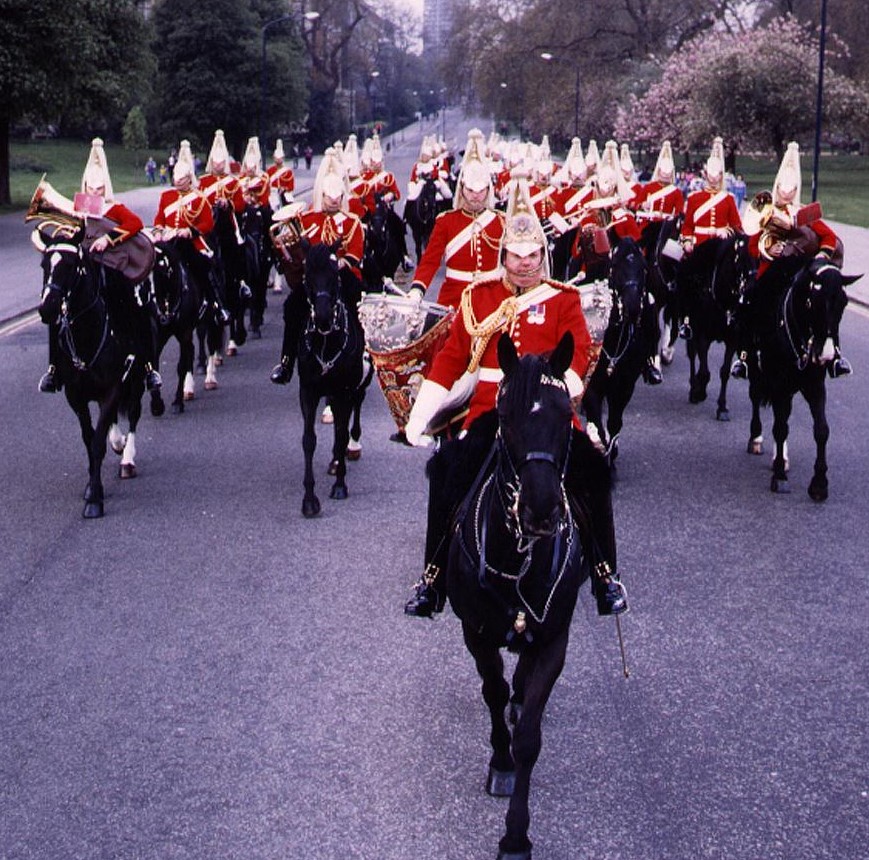
The “Three Cheers” for Their Majesties by 4,000 troops on parade was a highly significant intervention in the Coronation yesterday. Up to that moment, the armed forces had played their part as escorts, guards and stewards, supporting their monarch in a subdued way (if marching soldiers and horses can be described as muted). Having completed their task of accompanying the King and Queen to Buckingham Palace, the troops assembled in their regimental groups and delivered a resounding statement of their allegiance to the Head of the Armed Forces.

The relationship between Britain’s military and the House of Windsor, which dates to the First World War, should not be underestimated. The Royal Family has always played an important role not only in their personal involvement in regiments, but also in their embodiment of civil-military co-operation and I am sure this will continue after yesterday’s magnificent procession. There are questions for the future in terms of how this military role will sit alongside a pacifist sentiment in the country, but for now the crescendo of loud voices has drowned out any illogical republican protest. And we can add three cheers for that as well.
Sudan NEO Disguises The Truth

The latest clashes in Sudan have been predicted by the dedicated journalists and humanitarian workers who have been covering this troubled region for the past two decades. The causes (power, religion and resources) are well-known and date to the first civil-war after independence. The embers of previous conflicts have been stoked by external actors and led to an eruption of violence and the murder of three World Food Programme workers.

The reaction of the United Nations has been lamentable. Instead of deploying a protection force for its staff and telling the protagonists that it will not be intimidated by warlords and violent extremist organisations, it has fled from the scene when it is most needed. The US and UK reaction reminds me of the retreat from Afghanistan two years ago. This spineless capitulation has been disguised by the energetic work of British service personnel who have conducted the Non-Combatant Evacuation Operation (NEO) with great aplomb. In the meantime, the vacuum left by the West is being filled by Russia and other countries, which are less sensitive to casualties suffered abroad.

When will learn that words are not enough when it comes to physical security in conflict zones?

Don’t Dumb Down Our Medals

The British system of awarding medals to members of the Armed Forces has always been shrouded in secrecy, but is broadly divided into two categories. The first includes those which are earned for overseas duty in danger zones and the second includes the so-called tokens that “come up with the rations” for non-operational work. Our system is very different from the American arrangement where the low qualification threshold devalues the many ribbons worn by US personnel.

The four Queen’s Jubilee medals fall into this latter category. They are obviously worn with great pride by anyone lucky enough to have received them, but they are in no way comparable to the hard-earned awards for front-line service in Northern Ireland, the Falklands, the Gulf, the Balkans, Sierra Leone, or Afghanistan.

Unfortunately, the current discussion about Coronation medals has become mired in the cost of the metal, but this misses the most important point, which is that a British medal should be something that is rare and treasured, not handed out like a Boy Scout badge. The armed forces were not recognised formally for their much-needed help during the 2012 Olympics, nor their outstanding assistance during the pandemic, so on that basis they should not receive gongs for security duties during the Coronation. Please do not dumb down our historic British awards by handing coronation medals to all and sundry.

General Service Medal 2008 with North Africa clasp

Francis McCullagh Arrested in Moscow on Good Friday 1920

Francis McCullagh was arguably the finest war correspondent since William Howard Russell, earning the highest praise of the great newspaper editor WT Stead (who went down in the Titanic). In World War I, he joined the British Army and was assigned to help Alexander Kolchak’s White Russian Government in Omsk, for which he was awarded an MBE in the Siberian honours list. As an accomplished cypher operator, he ended up with the last group of British soldiers ordered to remain behind and assist the evacuation of the city as the Red Army approached from the Ural mountains.

With these soldiers, he was captured at Krasnoyarsk on 6 January 1920, but instead of becoming a prisoner-of-war he resumed his journalistic career and accompanied a Bolshevik reconstruction team on its way to Moscow. En route, he managed to interview the Tsar’s murderer and many leaders of the Russian revolution, but on Good Friday 1920 he was arrested by the Secret Police and taken to Lubjanka prison where he was tortured by the infamous Tcheka. Although, he had a terrifying experience, he was more afraid of catching epidemic typhus than the interrogation by the brutal inquisitors.

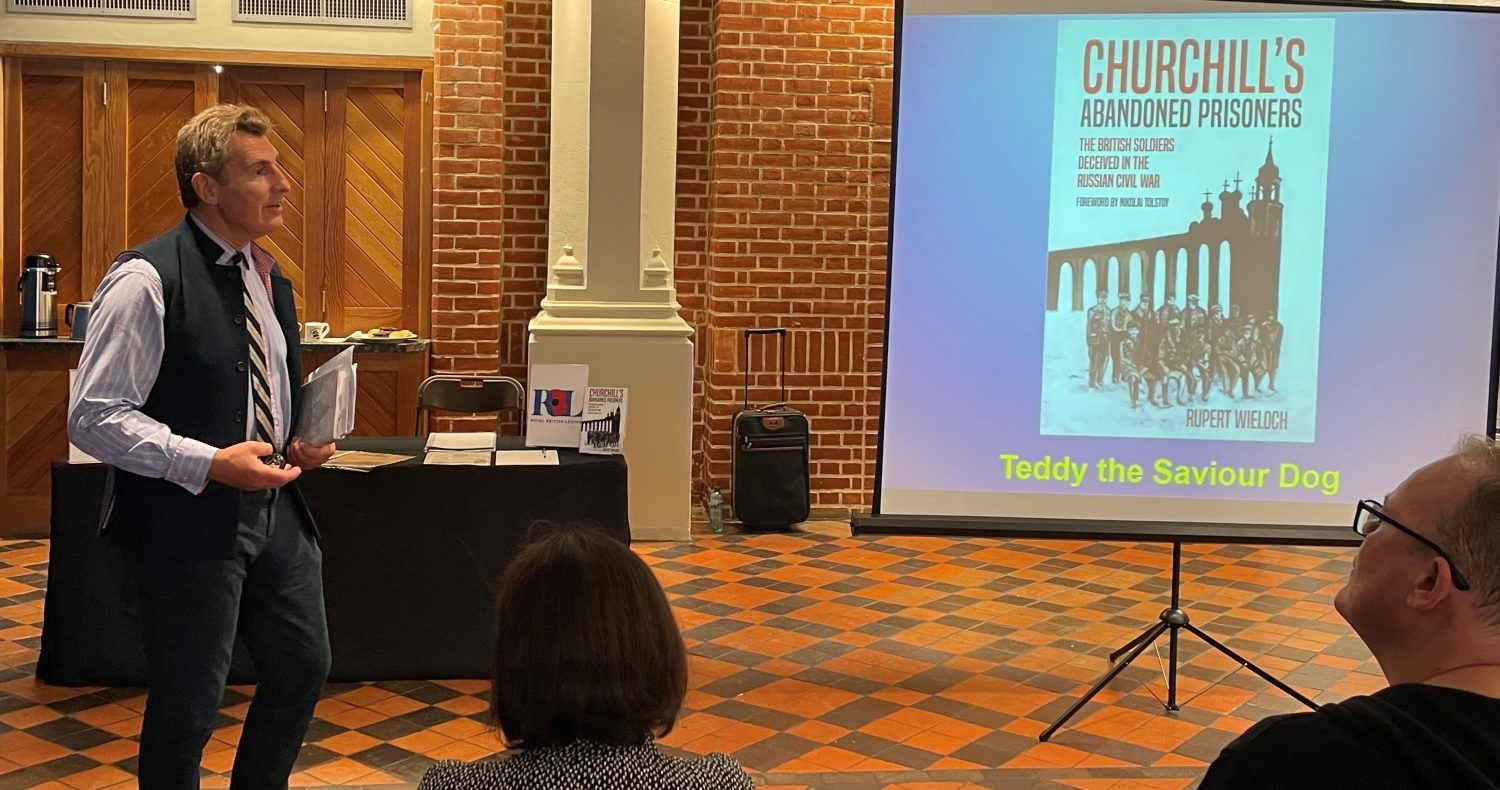
After his release, his name was added to the list of British prisoners being repatriated as part of the exchange treaty negotiated by the British and Russian envoys, Jim O’Grady and Maxim Litvinov. McCullagh’s extraordinary story touches so many themes that are relevant today and which I will include in my book-talk at Dartmouth House in London on Tuesday 11 April at 6 p.m. I am delighted that for this event, I will be joined by a special guest and relatives of British soldiers, marines and pilots who fought against the Bolsheviks in Russia in 1919. Tickets are available by contacting me direct, or on the ESU website at: https://www.esu.org/event/churchills-abandoned-prisoners-with-rupert-wieloch/

Captain Francis McCullagh with Admiral Kolchak before the collapse of the White Government in Omsk

Is The UN Past Its Sell-By Date?

The appointment of Russia as President of the United Nations has cast a doubt on the integrity of its role in maintaining international peace and security. In 2001, I was closely involved in the efforts to improve its peacekeeping capability under the leadership of Lakhdar Brahimi. Unfortunately, all the lessons that were learned following his influential report appear to be forgotten twenty years on and the UN has regressed in its stated aims.

The problem should not simply be defined in terms of the relationship between the USA and Russia because at its heart, there is the ideological question about the relationship between the individual and the state. The origins of this impasse were founded just over 100 years ago, when an international coalition fought against the Bolsheviks who had taken control in Moscow. On Tuesday 11 April, I will be touching on this subject in my talk “A Christmas Card from Siberia” when I tell the story of the last British prisoners-of-war in World War I. Tickets for the evening event at Dartmouth House in London are available on the English Speaking Union website: https://www.esu.org/event/churchills-abandoned-prisoners-with-rupert-wieloch/

British Prisoners of War at Captured at Krasnoyarsk on Russian Christmas Eve 1920

What is the UN doing about War in Ukraine?

The visions of mud, craters and shattered trees have brought the horrors of the battlefields in Ukraine to our attention again this week. Brave correspondents such as Luke Harding, who delivered a compelling talk in Winchester on Thursday, have reinforced the impression that this war has settled into a stalemate and is unlikely to end in 2023.

The late David Trimble said at his Nobel award ceremony in Oslo that “No single conflict can be used as a model to find the solution to other conflicts”. That is certainly the case with the Ukraine War. The front-line images remind me of the situation in Bosnia 30 years ago, but the UN is not capable of intervening because the Security Council is split and there is no impartial power that can “enforce” the peace.

There are several long-term UN peacekeeping missions that impartially monitor and patrol so-called “green-lines”, including Kashmir, Lebanon and Cyprus. This must be the next stage of the war in Ukraine, but it will need a complex mission and first there must be a diplomatic truce. It seems incongruous that nobody in the UN is preparing for an effective peace support operation and begs the question what are they actually doing about it.

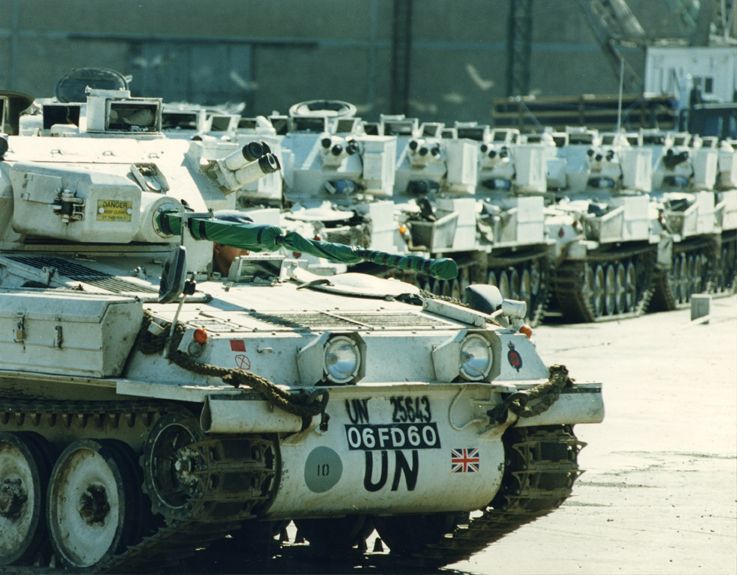
A Time When the UN was Effective

Iraq War Twenty Years On

On 18th March 2003, MPs in the House of Commons passed a motion to authorise military action in Iraq by 412 votes to 149. Two days later, the most contentious war in my lifetime began and tomorrow the Ministry of Defence will commemorate this forlorn milestone.

From a strategic viewpoint, the false intelligence did huge harm after it was discovered there were no weapons of mass destruction in Iraq. The repercussions in terms of public support for military operations are still being felt today as the logistics planning and combat training were woefully inadequate and caused the unnecessary death of many soldiers, marines and pilots, including crewmen from my regiment. Reputational damage increased as the insurgency continued until the ignominious withdrawal from Basra after six years.

Despite all the recriminations about the war, it is still right that we remember those who were killed (on all sides) and offer sympathy to the families affected and to the thousands of people who are still touched by the consequences. I will be particularly thinking of Corporal Steve Albutt and Trooper Dave Clarke in my old squadron, who both died in a fratricide attack that destroyed their Challenger battle tank on 25 March 2003.

Basra Insurgency

Hunting Trophies Bill Needs To Be Rewritten

This week sees the third reading in Parliament of the Bill to ban the import of hunting trophies. As a committed conservationist who has never hunted, but travelled all over Africa, I am really concerned that in its current form this new law will make the current situation much worse.

The problem was articulated succinctly by the ecologist George Monbiot when he asserted that the hunting industry in Southern Africa has “contributed to the remarkable rise in the number of both white and black rhinos…”

The bottom line is that prohibition of wildlife hunting in Africa is likely to result in the increased slaughter of wild animals that pose a threat either to life (e.g. lions), or livelihoods (e.g. elephants).

What is needed is a comprehensive strategy to provide alternative incentives to the farmers and communities that facilitate the hunting and better control to prevent poaching. If we are going to interfere in Africa, we need to fully understand the consequences of our decisions in terms of species conservation.

Proud Mother 2019

Reasons to be Cheerful – World Wildlife Day and The High Seas Treaty

Although climate activists seems to attract most of the environmental headlines, there other arguably more important United Nations frameworks than the one discussed at COP 27 in Egypt last year.

The Convention on Biological Diversity, which amongst other things seeks to cut the rate that animals are becoming extinct and links to international conservation organisations, has its own Conference of the Parties where participants recently agreed a historic deal, despite protests from some nations. The ambition of the Kunming-Montreal Global Biodiversity Framework is to reverse biodiversity loss by 2030 and cut the extinction rate for all species by a factor of ten by 2050. This over-arching agreement provides the structure to restore degraded areas and to police the trade in endangered species. World Wildlife Day on 3 March is important to highlight this work by dedicated conservationists and international task forces tackling environmental crime, reported to be worth $281 Billion per year.

The High Seas Treaty that was signed today after nearly 20 years negotiation, is perhaps an even greater success story and I hope that one day it will be looked upon as ground-breaking as The Antarctic Treaty. Having been involved in marine conservation projects since the 1980s, I congratulate the delegates and look forward to the agreement being enforced through the Convention on the Law of the Sea.

Ajax Not Back On Track

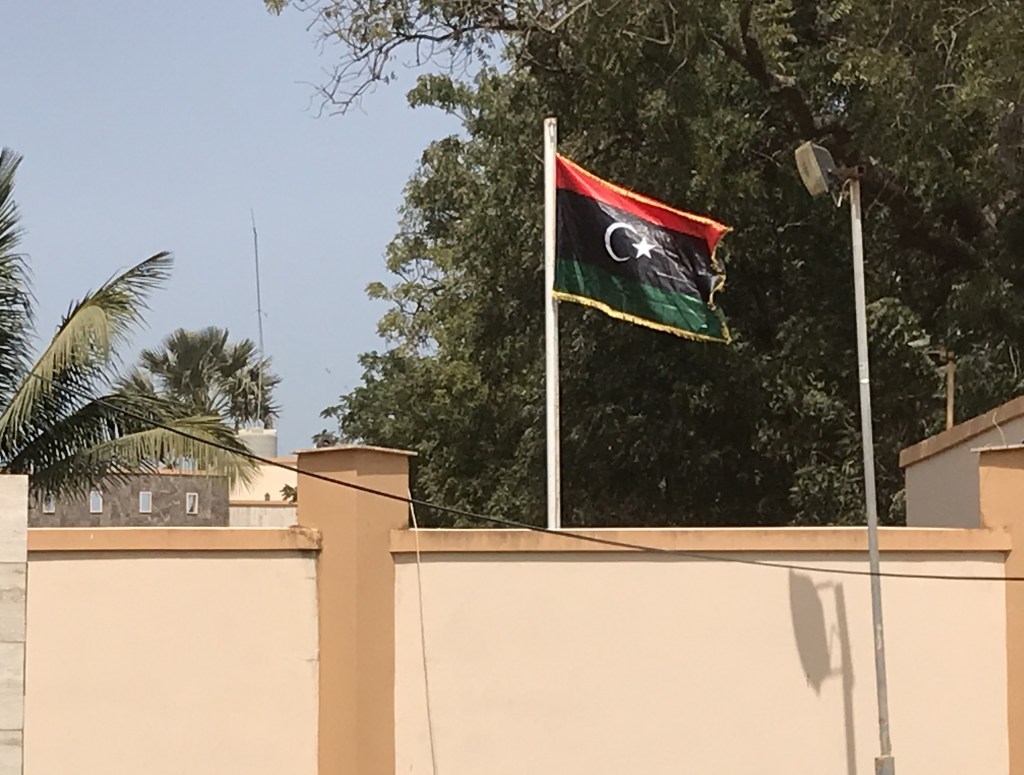
On the coast of West Africa this week, staying next to the Libyan Embassy, astride one of the 15 countries that did not support the United Nations General Assembly vote on Ukraine, I am struck by two related questions.

Why are fearful migrants still dying in the Mediterranean Sea and why have we withdrawn our British Army forces from arguably the most important security operation in Africa (Mali)?

Part of the answer to this question lies in Merthyr Tydfil with the Ajax programme that the Defence Secretary has been speaking about. It should have entered service with the British Army five years ago, giving our combat troops a credible modern armoured capability and replacing outdated equipment that not even Ukraine would want. Just because we have started paying General Dynamics again does not mean the programme is back on track. It has been put on a completely new schedule and the reliability problems have not been solved, so I don’t understand why the Media has reported that all is well.

Libyan Embassy in West Africa