SAS Accusations

I was very disappointed with the Panorama programme last night. Of course, if Richard Bilton has new evidence the MoD should reopen their investigation into the alleged killing of unarmed detainees in Helmand. However, what we were shown was a few bullet holes, which he alleged were caused by British soldiers 11 years ago and the testimony of Taliban sympathisers, much of it second-hand. The subsequent emails by people in London who did not know the context and the views of Australians who were nowhere near the events do not pass any threshold for a legal case.

Colonel Lee of the Royal Marines cannot be faulted for his clear exposition of some of the legal and moral rights and wrongs, but no-one explained how these operations were launched in the immediate aftermath of the assassination of British soldiers in Gereshk, Nah-e Saraj and Nad-Alieriod. Nor did anyone explain how NATO and Coalition Special Operations worked in unison with capital cities. We have all seen the imagery of the operation to lift Usama bin Laden and the level of scrutiny from the highest commanders for these sorts of operation, but Bilton provided no discussion about how many soldiers lives were saved in Musa Qala and Sangin and there was nothing about the intelligence feeds on operations of these sorts.

This subject (Morality in Asymmetric War) was debated at length in London in the aftermath of 9/11 under the “Greater Good Principle” and there is plenty of open source material such as the Oxford Research Group papers, which the programme could have used to avoid the criticisms of poor research and bias.

Helmand Task Force Planning Group

Ukraine Support

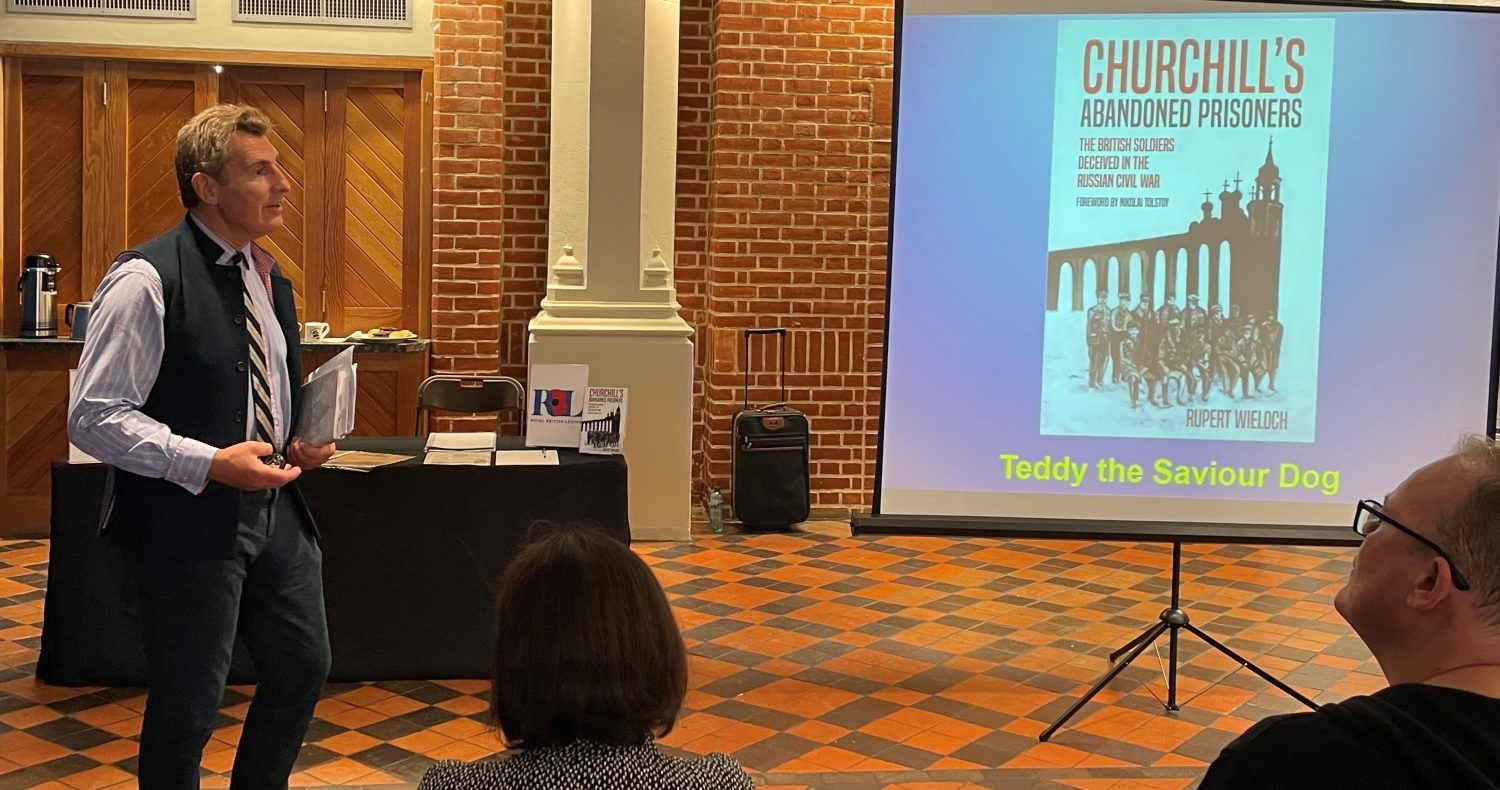
The venue for my talk on British involvement in the Russian Civil War this week was Holland Park, where this statue of Vladimir the Great has stood since 1988. Although he had to fight fiercely to become Grand Prince of Kiev, he became an iconic ruler and is recognised widely as a saint. His reign was marked by relative peace as he reformed some of the harsher laws in Kiev and abolished the death penalty and judicial torture.

Speaking about the British help to Russia in the First World War, which morphed into support for the White Russians, I reminded the audience of the similarities with the current assistance provided to Ukraine against the Russian invasion and identified some of the mistakes of the past. History should be used to make the future better, not worse.

Land Warfare Conference and NATO Summit

Having had the honour to organise three CGS conferences for Lord Dannatt (2009), Lord Richards (2010) and Sir Peter Wall (2011) at a time when the British Army was highly respected around the world for its performance on combat operations, I understand the work that goes into these events. Having also conducted the equipment review that identified exactly when the money allocated by the government did not cover the planned activities to deliver the agreed capabilities (and still hold all the paperwork that this entailed), I know the inside story of the army’s decline from its peak.

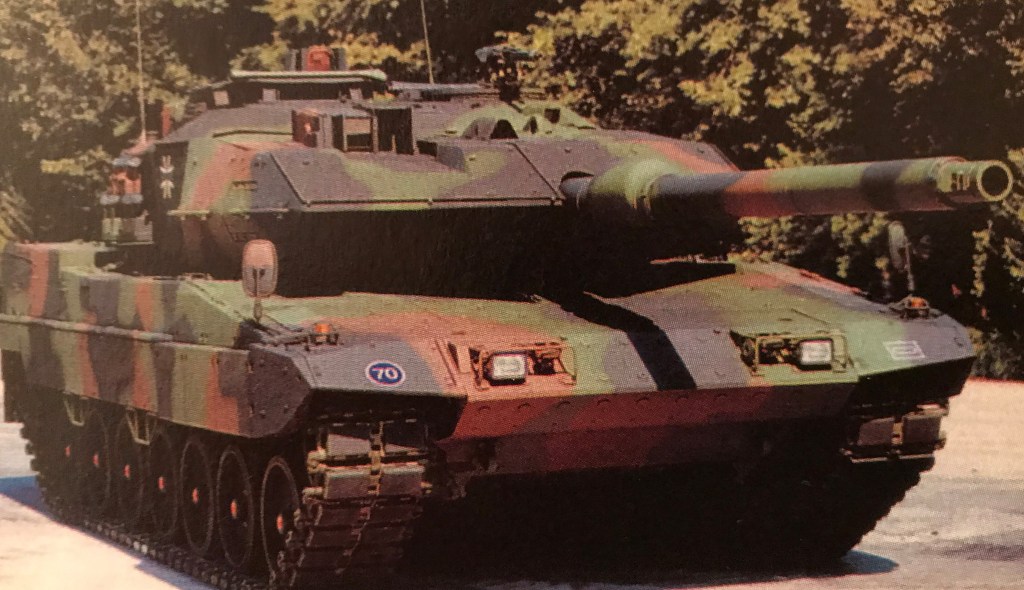
This week’s conference for the new CGS was a complete sham as it was focused on the wrong capabilities to face Putin’s army. We have strayed too far from the fundamentals in our belief that information war, technology and security capabilities will somehow deter the Russian president. In the meantime our major combat equipment lags behind all our major competitors. It will take ten years to rebuild a half-decent armoured formation once all its equipment has arrived, but there is still no sign of the necessary fighting vehicles and training schedules. Challenger, Warrior, Scimitar and AS 90 are all 1980s technology (with a few upgrades) and need to be replaced rapidly, otherwise Putin will continue to laugh in the face of the political hogwash that will no doubt be heard at the NATO Summit in Madrid next week.

Latest Russian Tank

Armed Forces Day – Time To Bring Back The Royal Tournament

It was tremendous to see the fantastic turnout for Armed Forces Day yesterday and the support of Scarborough for their event, which was originally scheduled for 2020.

The reception for the Platinum Jubilee parade and trooping the colour earlier this month shows that there is still a large public appetite for British pageantry, so perhaps it is time to bring back The Royal Tournament. A scaled down version was held between 2010 and 2013, but it was very difficult for the military at that time because so many personnel were preparing for, or deployed on military operations in Afghanistan and around the world.

Now that we have far fewer military operations, it is even more important to keep the Services in the public eye and a revamped Royal Tournament in London during the school holidays would provide a positive focus for the nation.

Every Performance Was Sold Out In 1999

New Chief of the General Staff Message

Here’s wishing the new Chief of the General Staff the very best luck as he assumes responsibility for the British Army in these uncertain times. With both the Prime Minister and the Head of NATO telling us to expect a long war in Ukraine/Europe, the challenges facing Britain’s land forces could not be greater because devastating financial cuts have left the army unable to deploy and sustain an armoured division as we did in the Gulf War.

I worked alongside Patrick Sanders after he returned from his outstanding operational command in Basra in 2008 and he grappled with the strategic dilemma facing the Army – the call to focus solely on Afghanistan. His rallying cry to troops this week – telling them to prepare for war with Russia – echoes his writing then, but cancelled training exercises and failed equipment programmes in the past few years have left the British Army in a more parlous state than it has ever been before.

However, the biggest challenge facing the professional head of the army is not physical, but moral – how to incorporate recent changes within society while retaining the “will to fight”? As we approach the annual RUSI Land Warfare Conference on 28 June, there has never been a greater need for a major re-evaluation of current dogma and a return to the basics of a credible and capable army – combined arms manoeuvre.

Gulf War 1991

British Soldiers Sentenced To Death in Ukraine

This week has brought the devastating news for the families of the two British prisoners-of-war who were sentenced to death after they were captured in Mariupol. With the death of Jordan Gatley, who left The Rifles in March to fight in Ukraine, announced yesterday, this is an important moment as the extent of British involvement in Putin’s war comes into focus.

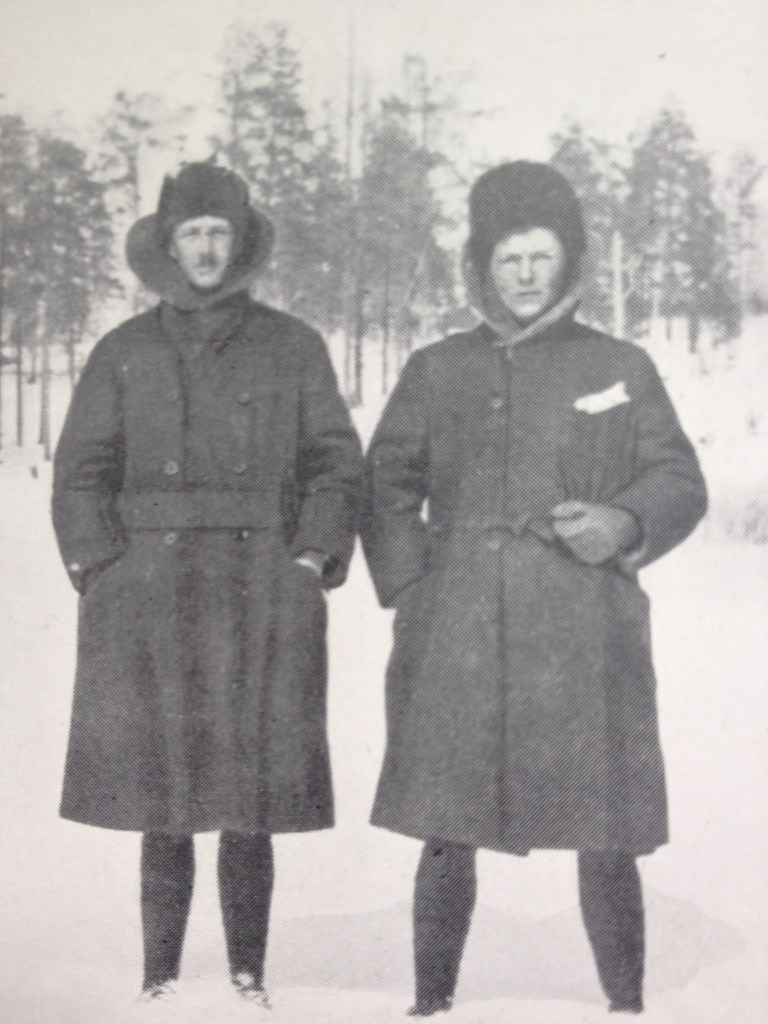
The British prisoners-of-war who were captured in 1920 were never sentenced to death because Lenin wished to use them as hostages. They did have to endure lice-infested prison cells and starvation rations, but they were visited by the French Red Cross, who provided them with a few supplements such as potatoes and the occasional egg. Some of the soldiers were interrogated by the Secret Police, who tried to persuade them to kill their officers and to act as spies, but their loyalty to the group was never compromised.

Here’s hoping that there is similar Red Cross support for Aiden Aslin and Shaun Pinner and that if there is to be a prisoner exchange it occurs soon.

Two of the British PoWs captured in Siberia in 1920

The Queen’s Platinum Jubilee

It was wonderful to pay tribute to Queen Elizabeth II today and sing the National Anthem at our local celebration. For seventy years, Her Majesty has been a serene symbol of peace and security in Britain, despite the world being in conflict for most of that time.

After her coronation, The Queen and Prince Philip undertook a global tour ending up in the newly independent Libya, which had just signed a friendship and co-operation treaty with Britain. During this visit, the Royal Couple met the King and Queen of Libya, paid their respects at the Commonwealth War Cemetery and inspected the British troops stationed in Cyrenaica, including the Royal Scots Dragoon Guards, the Royal Tank Regiment and the Sherwood Foresters.

The photograph below invokes the exploits of another intrepid woman who had completed two journeys across Libya in a Land Rover Series One named Pollyanna. Barbara Toy did not publish her books about her time in Libya until after The Queen’s visit, by when the British interest in this fascinating Mediterranean / North African country was at its height. See Liberating Libya for more forgotten stories about the long-standing Anglo-Libyan friendship.

The Royal Couple in Libya in May 1954

British Support To Ukraine – Now and Then

There is a great similarity between the military support that Britain is providing for the Ukrainian Army in 2022 and the help provided by the UK government to General Anton Denikin and General Pyotr Wrangel in Ukraine in 1920.

British medical support to Russians fighting in Ukraine during the first World War had ended when Lady Muriel Paget pulled out her nurses in 1918 and escaped from the Red Terror to Vladivostok. The mission in South Russia reduced in size in April 1920 with the Senior British Military Commander responsible for 150 officers and 450 other ranks. A huge amount of military materiel was provided by the Royal Navy in the Black Sea and there were several casualties, including the last British officer to be killed by the Bolsheviks, 24 year old William Frecheville, who was captured close to the Luhansk Oblast.

One soldier who survived being captured was 19 year old Private Lionel Grant of the Gloucestershire Regiment. He was transferred to Moscow in October 1920 and joined Brian Horrocks’ group in the Andronovsky Prison. Here’s hoping that the current British prisoners in Russia will have a happy ending; similar to Grant and the last British prisoners-of-war of World War I.

The Last British PoWs in WWI – Lionel Grant is standing in the centre of the back row

Royal Visits To Libya

As we approach the Platinum Jubilee celebrations, I am reminded that Her Majesty Queen Elizabeth II visited Tobruk with the Duke of Edinburgh and met the King and Queen of Libya at the end of her first world tour in May 1954. During her visit to Cyrenaica, she toured the Tobruk war cemetery, attended a parade in the desert by the Royal Scots Greys and met families of the garrison troops.

At the end of the stopover, she and Prince Philip boarded The Royal Yacht Britannia, which had brought Prince Charles and Princess Anne from England on its maiden voyage. An enthusiastic heir to the throne rushed up to Her Majesty when she was piped aboard, but according to the magazine, Vanity Fair, the Queen adhered to protocol and said “No, not you, dear,” as she greeted dignitaries first, then shook the five-year-old’s extended hand before privately sharing a “warm and affectionate” reunion with her “enchanting” children in her cabin.

This was not the first British royal visit to Libya because her father, King George VI, had travelled to Tripoli on 19th June 1943 on his way to Malta to present a Field Marshal’s baton to Viscount Gort. In Libya, the King was hosted by Major General Brian Robertson, who later earned fame for his part in the relief of Berlin. This was a low key visit compared with the triumphant parade for the Prime Minister, Winston Churchill in February because the Luftwaffe was still very active along the North African Coast, as evidenced by the near-death experience handed to General Horrocks a fortnight earlier.

Her Majesty Queen Elizabeth II with King Idris as-Sanussi in Tobruk in May 1954

Horrocks’ Ashes Ceremony

News that Lieutenant General Sir Brian Horrocks’ ashes were never scattered after his funeral in 1985 has come as a complete surprise this weekend.

The ceremony on Monday gives us another chance to pay our respects to one of the finest British generals of World War II. Horrocks was awarded an immediate DSO for his leadership of XIII corps at El Alamein, took over X corps in Libya for the Advance to Tripoli and in 1943 led IX corps during the final Allied offensive in North Africa, before he was badly wounded by enemy aircraft on the coast of Tunisia. A year later, he was given XXX corps in France, which he commanded until the end of the war, when he sadly had to be medically-discharged due to the injuries he had sustained.

In researching for my book, Liberating Libya, I interviewed one of his platoon sergeants, Jeff Haward MM, of the Middlesex Regiment and had tremendous help from the actor Edward Fox, who became good friends with him when he prepared for his role in the film A Bridge Too Far. However, the biggest discovery was when I learned that he nearly died of Typhus after he was captured by the Red Army in Krasnoyarsk in 1920 and it was only through the care of his best friend, Captain Eric Hayes, that he lived to become such a success twenty years later. See Churchill’s Abandoned Prisoners for the full story of the Horrocks’ time as a PoW in Russia during WWI.

Brian Horrocks, seated second from left, with the last British Army prisoners of war in Russia in WWI