
Sergeant Joseph A Rooney was the most written about prisoner-of-war in the other soldiers’ memoirs and diaries. He is described as fluent in Italian, French and German and a marvel on the piano. Apparently, he was “well-known” as an accomplished musician and performer in the theatrical world of London before the war, but how he ended up as a Royal Engineer in the British Railway Mission at Omsk in November 1919 is anyone’s guess.
There is no doubt that Rooney’s talents were much appreciated after the soldiers were captured at Krasnoyarsk because they had to earn money for food and Joe brought in more than anyone by teaching Italian during the day and playing the piano in the evening.
After the prisoners were deceived at Irkutsk and sent to Moscow, they refused to work for the Bolsheviks and to raise morale, they had a sing-song most evenings. Rooney’s inexhaustible repertoire of music-hall songs were pinpricks of light in the pervasive gloom. Later, in the Ivanovsky gaol, he wrote a play that was performed by the soldiers and earned a thunderous ovation from the political prisoners and the guards alike.
These stories should have provided me with enough leads to discover much more about Rooney’s life after returning from Russia, but sadly I have only found one subsequent reference, when he travelled to Italy with his wife in the 1930s. I have searched many theatre sources including JP Wearing’s authoritative The London Stage: Calendar of Productions, Performances and Personnel for the decades before and after the war, but found no records of his performances. Perhaps someone out there can help?
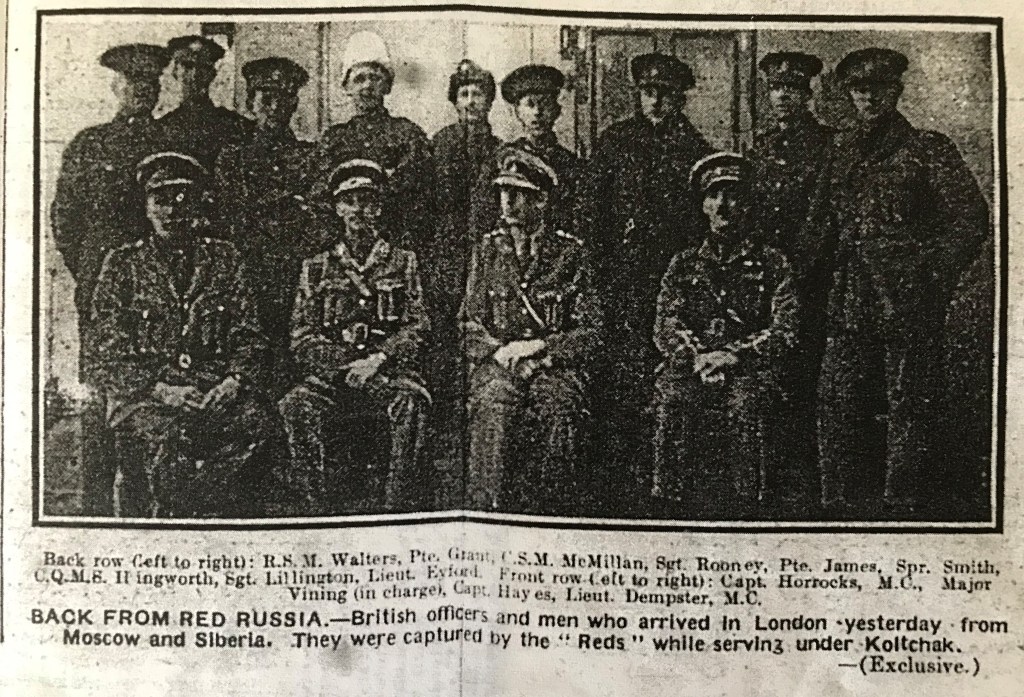
Joe Rooney is Standing, Fourth from the Left in this Photograph





 Rupert Wieloch