No Closer To Peace Than Before

One of the illusions that political leaders attempt with their populations is to try and make people believe the God of War can be controlled. However, in my experience, once Mars has been unleashed, it is not possible to corral him until the innate energy of conflict has been spent. It is like striving to contain a hurricane in a box.

It’s also true that in this day and age, the war lords on the front line (and their henchmen) take perverse pride in controlling the freedom of movement in their zones and ignoring their own political masters. On the third anniversary of Putin’s so-called Special Military Operation (SMO), there is little sign of Russian withdrawal or Ukrainian defeatism, so despite all the political hype in the Capital Cities of Europe and America, we are no closer to peace in Ukraine than we were a week ago.

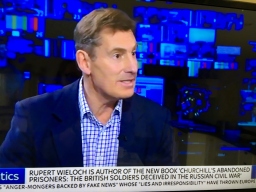
On Sky News, I was asked about a possible Peacekeeping operation in Ukraine, but people seem to forget that this type of operation needs an international mandate from the United Nations to be legal and I do not see the Security Council, as it is currently formed, agreeing any Resolution in the near future. That is not to say that we shouldn’t prepare our troops for such an undertaking because it would need a highly trained force (at least nine months) to be capable for such a mission.

So what are we left with on the third anniversary of the SMO? A deep sense of sympathy for the people of Ukraine and especially those who have lost family and those currently serving, under fire, on the Front Line. A moment to pause and reflect.

Will We See Peace In Ukraine In 2025?

The political statements by US, EU and UK leaders this week were a gift to Chess-Master Putin and an acknowledgement of what I wrote in my last posting. Sure enough, Trump delivered his “Bizarre-eccentricity”, which caught the World by surprise. Except that it shouldn’t have because he has been singing from the same songsheet for ten years. He believes European countries are not pulling their weight in matters of Defence (a fair criticism); he admires the way Putin turned Russia around from the failed state of the 1990s into a global powerhouse; and he cares as little about the territorial integrity of Ukraine as he does about the right of Palestinians to live in Gaza. So will his rapprochment with the Russian President lead to Peace In Our Time, or will it lead to a European Union force deploying boots on the ground in Ukraine?

Despite the predicament that Ukraine finds itself in after three hard years, I do not believe that her army will capitulate like Syria’s did in December last year. However, if the US withdraws its military assistance, it is only a matter of time before the Russian Army breaks through the front line. In the short term, I do not see the EU having the capabilities to replace the USA or even to deploy an effective Peace Support Operation because they always place ridiculous caveats on commanders when it comes to casualties.

I have written before about what Putin wants from this war, which above all is to end NATO’s encroachment of Russia. With Finland and Sweden joining NATO in 2023 and 2024, it looked as if he had failed in this objective, but if he persuades Trump to cut the lifeblood to the 75 year-old pensioner, he will have achieved more than any of his Soviet predecessors. The stakes are really high because so many European countries have run down their Armed Forces and relegated their military to Cattle Class. As Kipling wrote: For it’s Tommy this, an’ Tommy that, an’ Chuck him out, the brute!” But it’s “Saviour of ‘is country” when the guns begin to shoot…

Tommy Saving His Country

Approaching The Third Anniversary

As we approach the anniversary of Putin’s “special operation”, there will be much wringing of hands in Western Capitals and no doubt a Trump “Bizentrecky”. However, we must always remember that the true start of Russia’s invasion of Ukraine was 2014, not 2022. That said the span and intensity of fighting increased significantly three years ago; with everything from traditional trench warfare to modern drone attacks and Special Forces operations leading to the tragic milestone of a million casualties.

Despite Donald Trump’s reassurance, we are as far away from peace in Eastern Europe as we have ever been. The Russian Army, supported by anti-American allies such as North Korea, has made steady progress during the winter months. Putin has solved the two challenges he faced of economic sanctions and ageing demographics, so it is likely that he will continue to take more Ukrainian land this year – unless the balance of power shifts with a serious NATO intervention.

However, the quandary for the West remains the same as it was three years ago. If the war continues, Russia will continue to slowly gain more land, but if a peace is agreed that allows Putin to keep the Crimea and so-called republics of Donetsk and Luhansk, this will reward the aggressor and punish the victim. The bottom line is that there is little appetite (and no votes) in the high-tech, social-media influencing Western world for putting “boots on the ground” and risking nuclear Armageddon. So all that will be done is to send more truck-loads of weapons, ammunition and humanitarian assistance, but this will only delay the inevitable…

Russian Artillery Used in Ukraine

Blackwood’s 1899 Article on Russian Aggression in Finland

Before Russia lost its war with Japan and expanded its interests in the Balkans, it was aggressively attempting to assimilate its neighbours into its Empire. Although it succeeded in the Baltic countries and Poland, it was unsuccessful in Finland, despite the efforts of the Governor General, Nikolay Bobrikov, to fully integrate Suomi through the February Manifesto of 1899.

The history of how Finland resisted Russian aggression over many years and eventually gained and held onto its independence is a salutary lesson, which we would do well to remember as we approach the third anniversary of Putin’s invasion of Ukraine.

Blackwood’s article in July 1899 (the year it published Heart of Darkness), epitomised the role of free British press in exposing the truth behind dictatorial regimes, which used secret police to quell public unrest. This pivotal role continues today through organisations such as The Frontline Club in London, which is showing Dancing with the Russian Bear later this month. This is a critical insight into the question why the West has misread Putin and definitely worth watching.

Moscow May Parade

Outdated Views Of Russia

Today, I reminded myself of the Russo-Japanese War, which began with a surprise attack on the Russian Pacific Fleet in 1904 (a pre-empt for Pearl Harbour). This conflict is important because it not only changed the face of modern warfare, but it also set in motion a sequence of events that led directly to the global catastrophes that characterised the first half of the twentieth century.

At its heart, this little-known struggle was about territorial ambitions in Manchuria and Korea, but the two massive battlefield victories at Muckden in March 1925 and in the Tsushima Strait two months later sealed Russia’s total defeat and forced the Tsar to sue for peace. This led Russia to focus their foreign policy more towards the Balkans, where they caused the “Bosnian Crisis” of 1908 and in turn, sowed the seeds of the assassination of Archduke France Ferdinand six years later.

The Japanese victory, which was a wake-up call for the West, was partly due to the Anglo-Japanese Treaty that had been signed in 1902. This pact balanced the odds by preventing Russia’s ally, France, from deploying troops because if Paris joined the fight, then London would enter the war on the opposite side. The controversial treaty put Britain at odds not only with France and Russia, but also with the USA, which was competing with Japan for Pacific colonies.

Returning to 2025, as I read the over-simplified commentaries about Putin and Russia that were re-hashed this week, I sense we are as far away from understanding how to end the Ukraine war as at any time in the past two years. Russia’s economy is in better shape than ever because it is still trading with some of the richest and largest countries in the world. The West’s strategy of economic warfare is outdated, so we must use other levers of power to re-balance the equation and achieve our aims. It is worth looking at history for some inspiration from the past.

British War Correspondent at the Battle of Mukden

Red Cross Heroines and Heroes

Whatever one thinks of the events of the past 16 months in Gaza, we all have to acknowledge that the World would be a far worse place without the Red Cross Movement.

The fact that the International Committee of the Red Cross has been selected to act as the go-between for the hostage handover, over other humanitarian organisations such as the United Nations, is very telling. Its hard-earned reputation for impartiality and independence is its most important asset, but this has not been maintained without huge challenges.

After several ICRC field-workers were killed in places such as Chechnya, I was invited to Geneva as the first serving military officer to work in their headquarters. They had genuine concerns that unlike the World Wars, when my grandmother was a red cross nurse, they were now seen as legitimate targets by terrorist organisations. This was compounded by the fact that Special Forces soldiers were impersonating them to gain access behind the lines.

As we begin 2025 with renewed hope for peace in the Middle East, and relief for those affected by the current conflict, we need to acknowledge and applaud the courage of the ICRC in maintaining morality in war.

Fighting Spirit In The British Army

Fighting Spirit is an ethereal quality, which is an essential element of a combat unit. In many ways, it is the defining feature of a regiment’s fitness because it is the vital attribute that makes soldiers sacrifice themselves for their mates in the heat of battle.

After the Cold War, there was a lamentable loss of this characteristic. In the 1990s, there was an insidious mantra purported by influential officers who had not seen battle, claiming that UN Peacekeeping was not worth dying for. This idea became so widespread that the Chief of Defence Staff, Charles Guthrie, published an article stating that the British Army was losing its way due to its UN commitments (it also led to the US Government refusing to take on peacekeeping missions).

Twelve years of tough wars in Iraq and Afghanistan ensured that Fighting Spirit was back in vogue. Although the Army had lost its ability to manoeuvre at scale, it nevertheless comprised many courageous young men and women, who individually were battle-hardened and knew all about Fighting Spirit.

Now in 2025, there are increasing signs that we have lost this trait. It is rare for teachers in British schools, or celebrity media influencers in society to promote its value. A predominant policy of Do Nothing in the face of hard challenges, of individualism over team and rewriting history are insidiously weakening the Armed Forces. Our Special Forces are one of the very few places where Fighting Spirit is maintained. That is why I am not supporting the BBC’s witch-hunt into the SAS, which is based on a Royal Navy malcontent’s evidence.

Fighting Spirit at El Alamein (Kidney Ridge) depicted by Terence Cuneo

Special Forces Abuse

The use of Special Forces changed dramatically after 9/11. During the Cold War the roles of these regular and territorial elite forces included stay-behind-information-gathering and countering Soviet Spetsnaz. Special Forces were also used for Out-Of-Area operations, such as the Dhofar Campaign in the Gulf and in Northern Ireland to support the Civil Authorities. During the Civil-War in Bosnia, they played an important communications role in places such as Maglaj, where I was based in 1995.

After 9/11, there was a high-level discussion about the use of Special Forces for targeted assassination against the planners of the worst terrorist atrocity against American and British people (similar ethical debates were held about the use of torture and nuclear weapons). Apart from the moral aspects, the nub of the debate was the consequences and effects on other troops and the question: “would it make people feel safer?”

The British Government took a different stance to the US Government, with much tighter rules placed on British Special Forces. There were a few contraventions, which were reported by the International Committee of the Red Cross, such as members of the SAS pretending to be NGOs in Afghanistan, but overall, British Special Forces were held in check by London… until Helmand became very messy.

Everything changed in Britain after Parliament voted against taking action when Assad used chemical weapons on his people in 2013. Since then, the Government has been reluctant to hold any vote about the use of Armed Forces and instead, they deployed Special Forces and precision weaponry with US Forces, which work to a different ethical regime. It is therefore no surprise to me that this week it was announced that nine members of UK Special Forces could face prosecution over alleged war crimes in Syria. It is the inevitable consequence of politicians bypassing the chain of command and confusing the ethical rules of engagement.

Working with Special Forces in Libya

Putin’s 25th Anniversary

The President of Russia was supposed to only hold the post for a decade, but constitutions can be changed (for better or worse) and we are now marking 25 years since Boris Yeltsin handed power to the then 47-year-old Secretary of the Security Council.

Initially, NATO leaders welcomed his arrival and helped him deal with many of the post-Cold War legacies, such as a broken economy and international terrorism. However, as NATO enlargement hemmed-him-in, his foreign policy changed tack and Russia became more assertive against the West.

From a practical perspective, I remember hosting friendly Russian generals on Arms Control visits and late-night-discussions after 9/11 with cordial Spetsnaz colonels. However, everything changed in 2008, when Russia invaded Georgia (Putin was actually the Prime Minister with his younger acolyte, Dmitry Medvedev, serving as President). At the time, I was with three Ukrainian special forces colonels at the time and they confided in me that their country was also under threat. Their prediction was sadly prescient.

No one knows Russia completely, but those of us who studied its history and followed the path to Putin’s invasion of Ukraine, know that the current story is all too familiar to ordinary Russian people. As we approach the New Year, my thoughts continue to be with everyone affected by Putin’s war. Here’s hoping for an end in 2025.

Lockerbie – Cause and Responsibility

The tragic 36th anniversary of the Lockerbie bombing has been marked by yet more controversy over one of Colonel Gadhafi’s most despicable acts of terrorism.

The Leader of the Scottish Alba party, who infamously released the convicted Lockerbie bomber, Abdelbaset al-Megrahi, from jail in 2009, claimed on radio yesterday that he believed Abu Agila Masud is the real bomber. Whether this is to deflect from his role in granting freedom to Megrahi, or merely to raise the stakes in the forthcoming trial of Abu Agila Masud in Washingron, is not known. However, it does re-open the wounds of the families at a moment when we should be respecting their dignified commemoration.

The BBC is rekindling the controversial theories about those responsible because a new drama “Lockerbie: A Search For Truth”, is due to air on 2 January 2025, starring Colin Firth. This will focus on the role of a Palestinian terrorist organisation, which allegedly acted in response to the shooting down of an Iranian aircraft by the USA. However, it is more likely that Gadhafi was acting in revenge for his defeat by the French and US backed Chadian army in the Aouzou Strip. The Libyan Army lost 7,000 men killed in what was known at the time as the Toyota War, but more importantly for Gadhafi, he lost access to Uranium deposits for his Nuclear Programme.

Pan Am Flight 103 was not his only revengeful target because he also sponsored the destruction of a French DC-10 flying from Brasseville to Paris. The 170 passengers and crew from 18 countries in Union de Transports Flight 772 were all killed in a very similar suitcase bomb attack, which is hardly ever mentioned in the context of Lockerbie, but is key to understanding the true cause of the bombing. Further details are in Chapter 15, Line of Death, of my book, Liberating Libya.

Gadhafi’s Nuclear Programme