Special Forces Data Blunder

The Sunday Times article about the inadvertent exposure of Special Forces names is a real embarrassment for the Armed Forces and highlights the continuing problem of poor security in the Ministry of Defence. In the past five years, there have been many breaches with over a thousand laptops, mobile phones or hard drives missing due to loss or theft. But allowing the names of SAS soldiers to be accessed by our adversaries on the internet is unforgiveable given our current involvement in the Middle East and the War in Ukraine.

The MoD used to have a much tighter grip on what is published about the Armed Forces. When I wrote my book about the changing face of military operations, it was vetted by several teams in Whitehall and I was asked to change a number of stories. However, when I pointed out that senior civil servants had already revealed the classified details to the Media they relented. In the end, I agreed to change one story about the deployment of Special Forces in Afghanistan after 9/11. Although the information had been published in an Obituary in South Africa, I did not want to interfere with a court case that was still running fifteen years later.

For those who wish to dig into Britain’s Special Forces, there are many open source academic and technical media articles that expose information that the MoD should really keep under its hat. These are not too difficult to find, so I am not surprised if the ST and other newspapers have full files of classified information, which the Government would rather the public did not see.

VE Day Anniversary

On the 80th anniversary of VE Day on 8 May, I will be raising funds for the Royal British Legion in London. It is a poignant day because my mother was in the Royal Navy contingent that marched past the King and Queen at Buckingham Palace. She would have been 101 this week and was very proud of her wartime service as a morse operator working on top secret Y work.

Although Easter 1945 was filled with hope for the end of the war, the fighting on the Eastern Front and the Ruhr Valley in Germany was still very grim, with many casualties falling withing site of the end. One of the most poignant was Major John Poston, Field Marshal Montgomery’s ADC who had been with him since before the Battle of El Alamein.

He was killed in a German ambush at Luneberg Heath (where I spent many weeks in the 1980s on reconnaissance manoeuvres) on 21 April 1945. A testament to what this 25 year old Cavalry Old Harrovian did for his country comes from the Field Marshal’s pen: “I trusted him absolutely and he never once failed me…I was completely devoted to him and I feel very sad; something has definitely gone out of my life.” Less than two weeks later, Monty accepted the German surrender from Admiral Doenitz at the palce Posten was killed.

No Cease Fire In Prospect

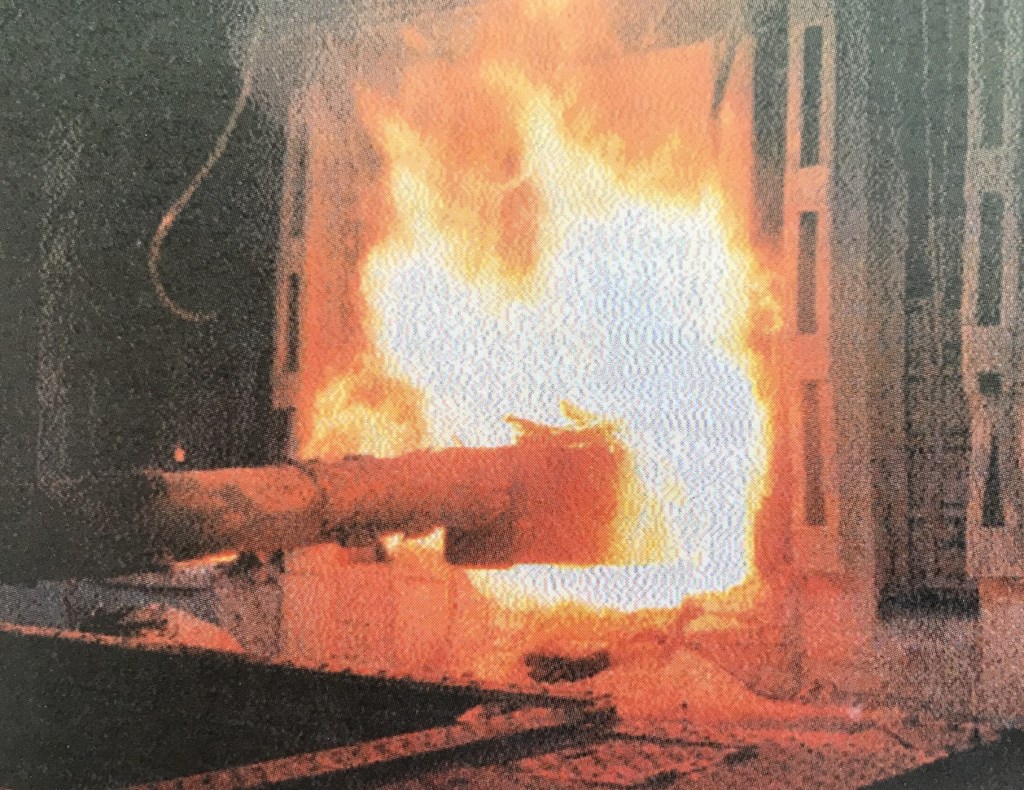
The latest devastating use of Iskander Ballistic Missiles against Ukraine on Palm Sunday is clear proof that President Putin is not changing the strategy that he laid out three years ago in his so-called “Special Operation”.

Since the free people of Ukraine are not giving up the gallant defence of their country and the British and European leaders are remaining steadfast in their “Support from the touch-line”, it remains to be seen what effects the US will have on the War. The US envoy’s clumsy words this week have exposed a worrying lack of understanding and resolve. No previous conflict can be used as an exact peace model for this war, so it is not helpful to compare the current situation to what happened in Germany after World War II.

The application of technology may not have changed the character of war, but it certainly has changed the way modern wars are fought. Cruise missiles, Satellites and Drones, and the use of Mobile Telephones and the Electro Magnetic Spectrum has made it easy for politicians in capital cities to play as armchair generals, but they have equally made it much tougher for the ordinary soldiers in the trenches.

Russian Cruise Missiles

A Corner Turned, Or Just A Bend In The Road?

I have read some drastic descriptions of what the past week means for the future, but is this really a moment like the end of the Cold War, when history, according to Francis Fukuyama, ended (the phrase was actually first used by a 19th Century French Philosopher)?

I look at this apparent “End of Globalisation” in three ways. The first is to compare it to other recent economic shocks (Dot-Com Bubble-Burst in 2000; Subprime Mortgage Scandal in 2007 and Covid 19 Lockdown Crash in 2020). After each of these the global market took about three years to rebound, which could be a good benchmark for the Trump Throttle.

The second is to consider whether the Tarriffs will lead to World War III. Although there is a clear connection between Germany’s economic woes in the 1920s and the rise of Hitler, I suspect the imposition of US duty on the rest of the World will not lead to a Global power re-alignment. There have been far worse years, such as 1979, when the World was introduced to Islamic Terrorism and the Soviet Union invaded Afghanistan, but nuclear Armageddon was avoided.

The third way to look at this is against the other five Mega-Trends that we defined 24 years ago at the Joint Concept Centre in Shrivenham (Climate Change; Shifting Demographics; Fragile States; Weapons of Mass Destruction and Uncertain Natural Resource Availability). And again, in this case, it seems to me that we are not at the end of the road, but merely travelling along a dang-hard, Rocky Mountain dirt track and therefore should adapt to the ride and make the most of the opportunities that will follow the chaos.

No Friend Of America Is Safe

I am extremely honoured to wear the Bronze Star that was presented to me by the US President in 2008 and delighted that I can say that my father became an American Citizen before he died. However, as a long term supporter of the USA, it is becoming extremely difficult see what is happening in Washington at the moment.

I listened to an excellent interview of an independent American journalist, who suggested that no-one was safe if they got in the way of what Mr Trump wants. We have seen plenty of evidence of this assertion this week with the attacks on several NATO Allies, including Canada, Britain and Denmark. This is the same Denmark that was one of the most supportive countries to the USA after 9/11, putting bodies on the line for two decades in Bosnia, Iraq and Afghanistan.

The lack of respect for neighbours and allies reminds me of when Colonel Gadhafi took over in Libya in 1969. His ignorance about what the international community had done for his country and the lack of understanding how diplomacy works in a modern world led to him becoming an international pariah and isolated his country from the Global community.

There is a simple way to respond to this sort of bullying and that is to change the World’s reserve currency from the US Dollar. There are several replacement candidates and if enough countries clubbed together through the United Nations, it could not only work effectively, but also change Mr Trump’s behaviour.

Denmark and Ukraine provided support to the USA in Iraq

Short Termism Loses To Long Term

It is so tempting for politicians in true democracies to deal in the short term to secure a quick profit. However, as we are seeing in the World Today that sort of fickle thinking can be finessed quite easily by long-term-strategists in authoritarian regimes.

The BBC has produced a very good summary “why [President] Trump is struggling to secure [a] fast ceasefire in Ukraine”. It suggests there are five contributing factors, but the author steers clear of the fundamental issues of cultural, ideological and personality divides, which are not being bridged.

The American Envoy’s view that President Putin is in the right and the European Reassurance Force is “a posture and a pose” is further evidence that the USA is effectively abandoning Ukraine. What no-one is saying to the Public though is that the Europeans are already involved in the war and there are already about 500 British troops deployed in Western Ukraine as military advisors, operators and trainers.

Washington doesn’t seem to realise that although European Governments ran away from Baghdad and Kabul when the US troops pulled out. The EU is unlikely to withdraw from Kyiv because Ukraine is now a Candidate Country (along with Georgia, Moldova and six others).

So what will happen in the medium term? Well the immoveable Putin will not alter his viewpoint and will continue with his air and land campaigns. Trump will blame everyone but his own advisors and negotiators for the failure to achieve a ceasefire. European defence spending will increase, but there will still not be an effective war-fighting capability by the end of the year. And the poor Ukrainian people will continue to suffer appalling loss and deprivation. We must not forget their sacrifice on behalf of all of us who live freely in true democracies.

British Reassurance In Action

Not The Worst Case

I have the greatest respect for our National Security Advisors, but their cautious political advice can too often sound like defeatism and encourage authoritarian regimes such as Putin’s Russia. The latest pronouncement from Lord Ricketts on BBC 5 Live Breakfast on 15 March was straight out of the appeasement manual: “At worst case, that could land up with European forces fighting the Russians. Certainly nobody wants that.”

I can think of several worse case scenarios. For example, Putin takes over Ukraine and uses that as a launch-pad to invade another European country with America standing-by in isolation. I can imagine other worse cases that stem from the West not committing troops to ensure Ukraine’s survival as a sovereign state.

It may well be that there is no such thing as a military solution, but at this moment in time the only language that Putin understands is military capability. That capability is partly made up of tangible forces and partly of mental willpower. There has to be a political acceptance that to preserve our freedoms and deter Russian aggression, we HAVE to deploy our troops with well-considered rules of engagement and back that up with a plan for total commitment.

Government communicators should then support that decision, rather than undermine it.

Changing Reasons For Going To War

Talk from Whitehall is now less about a legally defined (and constrained) “Peacekeeping Force” and more about a standing deployment of a Coalition of Armies to protect Ukraine’s territorial integrity. Asking for “strateic patience” in this situation sounds very much like we are going back in time to the origins of NATO in 1949.

At that time, the British Army of the Rhine (BAOR) changed from being an occupying force to focus more on the increasing threat of invasion of West Germany by the Soviet Union. Standing shoulder to shoulder with Allied Armies, BAOR kept the peace in Europe for forty years until the end of the Cold War in 1989.

It is clear that there will be no UN Security Council Resolution to provide a mandate for a “British Army of the Dneiper”. Nor is it likely that traditional peacekeeping principles would apply. Putin has already said there will be no Russian consent to NATO troops in Ukraine; the Force is unlikely to be impartial; and the Rules of Engagement will not be restricted, so it will be “Minimum Force”, rather than “Self-Defence”.

Although France is willing to share the burden of this intervention force, it needs more of the NATO Members to commit effective troops to the Mission. Hopefully, we can rely on some of the former Warsaw Pact, Scandanavian and Mediterranian countries as well as a vitally important North American Ally – Canada.

British Peacekeeping In Bosnia

Three Types Of Delusion

In Baghdad, I had the honour of attending Iraqi Ministerial meetings and US Senate Briefings so I was fortunate to be present at one of the pivotal decisions in 2008 that brought about the withdrawal of US troops from the Green Zone. This was the Iraqi decision to buy Naval Patrol Craft from Malaysia, rather than from Washington. After this multi-million pound deal was announced, a distinguished US Senator was heard to say: “Don’t They Know They Owe Us?”

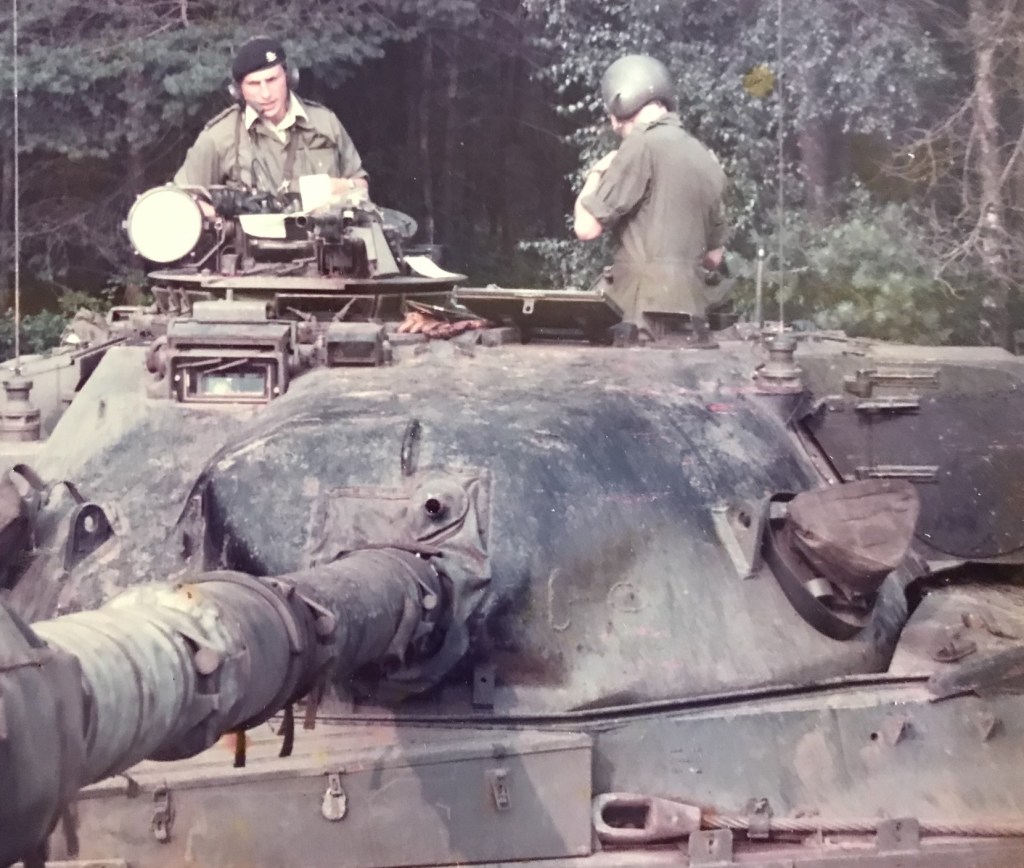
The two types of delusion that were behind this (Iraqis believing they were free to choose and Americans believing that Iraqis should be grateful for the US occupation) were played out again in Washington between President Trump and President Zelensky this week. But there is a third delusion that has also raised its head and that is the belief that a nation can conjure combat military capability from nothing. It takes years of team practice to build an effective armoured battle-group, but the British Army, with misguided concepts such as Whole Fleet Management and Casualty Aversion Wokery is nowhere near the standards needed for an Operational Readiness Test, let alone a complex peacekeeping deployment.

We need to remember Kofi Anan’s hard-earned wisdom about the best peacekeepers being trained for full-scale war. There is only one answer to this conundrum, but it will be politically unpopular, economically taxing, diplomatically demanding and militarily challenging.

Tank Warfare Is A Lost Art

Untying Ukraine is not the same as Abandoning Afghanistan

When President Trump negotiated a US withdrawal agreement from Afghanistan five years ago, it precipitated a Taliban takeover and chaotic scenes across the country 18 months later. After his cosy with President Putin and spat with President Zelensky this week, will history repeat itself in Europe?

The first thing to say is that France and the United Kingdom are looking as isolated at the United Nations as they did during the Suez crisis. The difference though is very stark with Suez marking the end of European Imperialism, whereas the current crisis leading potentially to the end of European Democracy.

There are plenty of 21st century precedents of US conflict withdrawal, including Bosnia in 2004 and Baghdad in 2010. The former led to an EU Mission, which was guaranteed by NATO Over The Horizon Forces. The latter left a void, which allowed Islamic State to develop as an international force and in turn, led to ten more years of war. The abandonment of Syria by President Obama in 2013 did not end well either.

Untying US commitments to Ukraine (and Eastern Europe) will not be easy. It is certainly possible for Trump to pull the plug on the troops, arms, missiles and connected surveillance systems that are based in the former Warsaw Pact countries, which are now part of NATO. But ultimately, would that solve his economic problems at home, or give him Allies to do what Washington wants to do in the Middle East and Persia?

Happier Days For NATO Allies