British Embassy To Re-open

The announcement that the British Embassy in Tripoli will re-open after a gap of three years is a welcome sign of diplomatic progress.  The chancellery and ambassador’s residence, burned by Qaddafi’s henchmen in 2011, occupies disputed land, so it will not be rebuilt.  The Embassy in Tripoli Towers was a place of new hope in 2012 and can assist the Libyans resume their important place in the International Community as a leading nation in North Africa.

See Chapter 6 of Belfast of Benghazi to read about the rebuilding work completed at the British Embassy in 2012.

https://www.waterstones.com/book/belfast-to-benghazi/rupert-wieloch/9781861515667


Layout 1


Belated Condemnation of Mass Killing

Three days after the discovery of 36 tortured and killed men near al Abyar, the UNSMIL chief Ghassan Salamé has made a belated public condemnation of the crime.  This happened in the Government of National Accord’s area of responsibility and is an important test whether they are capable of bringing those responsible to account.

The Libyan National Army is distancing itself from the atrocity, but the fingerprints of their Special Forces are all over this.  It’s time for the ICC and UN to act, not just to wring their hands.  The Libyan people deserve better from those in authority.

4 Zawiyah

United Nations Libyan Talks Stall

Tomorrow is the 72nd anniversary of the day the UN Charter came into force.  The UN in Libya needs all the strength it can muster to resolve the differences between the House of Representatives, elected in 2012, and the Presidency Council created two years ago as part of the Libyan Peace Agreement.

It is disappointing that the Libyan talks in Tunis, led by UNSMIL Chief, Ghassan Salamé, have ended without compromise.  Given the security improvements this year, it is important that the Libyan political leaders support the action plan that was approved by the UN Security Council last month.    See Chapter 6 of Belfast to Benghazi for the challenges leading to the 2012 Election.

https://www.waterstones.com/book/belfast-to-benghazi/rupert-wieloch/9781861515667


Layout 1

Haftar’s Army Controls Most of Libya

The commander-in-chief of the Libyan National Army, Khalifa Haftar, has claimed that he now controls 98% of the 17th largest country in the World.  However, this does not include the capital, Tripoli, nor the industrial port of Misrata.  It is unlikely that Haftar will force his way into these cities, but some of their militias might declare for the LNA.

Haftar’s victories over Islamic Terrorism brings him popularity among ordinary Libyans and takes him closer to the UN viewpoint, but his rivalry to the Presidency Council’s leader and close association with Russia may still prove to be obstacles to a unified solution.

https://www.waterstones.com/book/belfast-to-benghazi/rupert-wieloch/9781861515667
Layout 1

Libya Condemns Boris Johnson Remarks

The House of Representatives, a key institution in Libya, has condemned Boris Johnson’s insults about Sirte.  The Egypt aligned HoR was elected in 2014 and has the backing of General Hafter’s Libyan National Army and Egypt.  It is a vital part of the UN brokered Peace Agreement.

The Foreign Secretary’s comments will make it very difficult for the British contractors who are being sent to the region to undertake de-mining activities with the recently announced DfID funding.   The Government needs to do something to ensure there is no retaliation for this insult.

12 Misratah


Army Vehicles ‘Keep Breaking Down’

Reports about the poor reliability of Foxhound are not surprising.  From 2006 to 2008, the MoD watered down the Technical Assurance rules and reduced the Reliability and Maintenance Group by over 100 system design engineers.

Authoring the UOR Coherence Study in 2007, I highlighted the need for good reliability to  ensure high availability, prevent equipment failures and reduce the need for spares and maintainers.  But there are no short cuts to reliability growth testing as we are now finding in Iraq.

IMG_2043.JPG

Six Days of Fighting in Sabratha

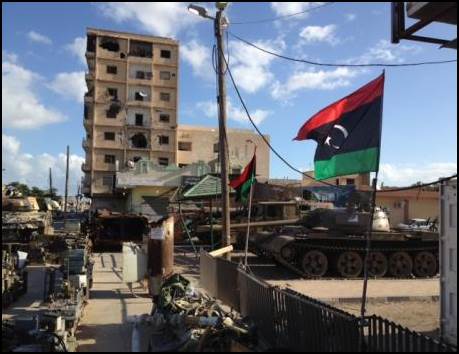
In July, the LNA pushed Islamic State out Sabratha, but the power struggle in this important town continues.  The latest fighting between 48 Brigade and the Anti-Daesh Operations Room is now a week old.  Damage has spread from the town centre to Dahman district.

Sabratha controls the main route between Tripoli and Tunisia and sits next to the Zawiyah Oil Refinery.  That is why the local elders from Zintan, Zawiyah and Sabratha have been joined by those from Zuwara, Khoms, Zliten and Misrata in calling for an immediate ceasefire.

Our examination of Sabratha and the western coastal towns in 2011 is covered in Chapter 6 of Belfast to Benghazi.

http://www.waterstones.com/book/belfast-to-benghazi/rupert-wieloch/9781861515667


Sabratha Forum
Sabratha Forum

Tawergha Still Scars Libya

The recent move by Misrata to allow Tawerghans to return home has failed at the outset.  Reconciliation appears a long way away after four families, who returned to the ethnically cleansed town for a temporary visit, were assaulted by local militia, while they prepared a celebration meal.

In 2012, MSF pulled out of the Misratan jails after claiming they were keeping prisoners alive so the guards could continue to torture them.  See Chapter 6 of Belfast to Benghazi to read about the other nine strategic security risks in Libya after the death of Colonel Gadhafi.

https://www.waterstones.com/book/belfast-to-benghazi/rupert-wieloch/9781861515667

Tawergha 2012


US Secretary of State in London for Libyan Talks

The UK Media is concentrating on Aid to the Caribbean following Irma’s wrath, but US Secretary Tillerson’s reason for joining Boris Johnson in London is the Political Summit focused on achieving peace in Libya.

The new UN Special Representative for Libya, Ghassan Salamé, will discuss what can be done to maintain recent momentum with the delegations from France, the United Arab Emirates, Italy and Egypt.  Qatar is the only member of the 2011 “Group of 4” not represented – a pointed omission.

See Chapter 6 of Belfast to Benghazi to read how they tried to influence Ministerial decisions in Tripoli and backed Abdul Hakim Bel-Haj.

https://www.waterstones.com/book/belfast-to-benghazi/rupert-wieloch/9781861515667

picture1

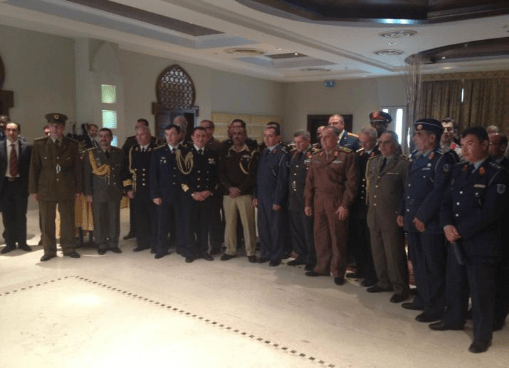
Libyan Chief of Defence with International Military Staff 2012


Tebu Policing Libyan Southern Border

The Desert Eagles, a Tebu Brigade operating 1,000 kilometres south of Tripoli in the Fezzan, has seized a convoy of 60 lorries crossing the Libyan southern border.  This region is rife with smugglers of contraband and one of the key routes that human traffickers use to transport Sub-Saharan migrants to the Mediterranean.

Border security in the ungoverned and porous Sahel was one of the key concerns when I served in Libya. Millions of Euros have been spent trying to secure the southern border in the past 20 years without success.  Is this the start of a more sustainable solution?

See pages 283-287 of Belfast to Benghazi for our visit to the Fezzan.

 https://www.waterstones.com/book/belfast-to-benghazi/rupert-wieloch/9781861515667
Layout 1