This week we are commemorating the anniversary of the end of hostilities on the Western Front in World War I. At the time, many people claimed it was the war to end all wars, but history shows that war has not magically disappeared from the world. So it is absolutely right that we commemorate the lost lives in all wars and share a thought for the families of soldiers, sailors and air people, who are still struggling to come to terms with their missing loved ones, who died recently on operations abroad, or while training at home.
In 2022, the reason to remember is even more obvious as war has returned to Europe and so many lives have been affected by the Russian military invasion of Ukraine. Our government has been neglecting its armed forces since the Financial Crisis, but now more than ever the country’s dedicated service personnel and veterans need our support. That’s why I travelled to El Alamein to commemorate the fallen who gave their lives for our freedoms todayand will be supporting the Royal British Legion this week at our local memorial.
The announcement that HRH King Charles III will be the next Captain General Royal Marines is tremendous news for a branch of the Armed Forces that has been under threat during the 21st Century. At every Defence Review, when the Royal Navy has been squeezed by bean stealers to provide more savings, the future of one of the two United Kingdom rapid entry forces (the other being the Parachute Regiment) has been weighed in the balance.
It was particularly stark in 2010 during the Financial Crisis when we lost our Sea Harriers with no replacement available. As the Royal Navy was being severely cut by the Government, I was very happy to help the Commando Brigade articulate their justification for the Amphibious Operational Capability, so I know how important the new King taking this role will be for the future of the Royal Marines.
But what about all the regiments that proudly claimed the late Queen as their Colonel-in-Chief, including my own, The Royal Lancers (Queen Elizabeths’ Own)? A decision about who will be the next Colonel-in-Chief takes years and involves a convoluted process between the senior officers of the Regiment, the Ministry of Defence and Buckingham Palace. For example, the 16th/5th Lancers were originally listed to have HRH Princess Margaret as Colonel-in-Chief and the 9th Queen’s Royal Lancers were to have HRH Princess Elizabeth. However, when Her Majesty The Queen Mother intervened and took the “Delhi Spearmen”, her eldest daughter was bumped down to become Colonel-in-Chief of the “Scarlet Lancers” in 1947.
I have several letters that show how long it takes for a decision to be made. After the War, a number of cavalry regiments sought a Royal Colonel, including the 14th/20th King’s Hussars in 1950. Two years later, on 25 August 1952, the late, great Dick McCreary finally wrote a letter to The Under Secretary of State that begins: “I have the honour to submit that Her Majesty the Queen be approached with a view to obtaining her approval for His Royal Highness the Duke of Edinburgh to be asked if he would honour my Regiment by assuming the appointment of its Colonel-in-Chief.” Commentators who are linking the decision of HRH King Charles III as Captain General to the announcement of Harry Windsor’s Spare book, simply do not understand the time line of these decisions.
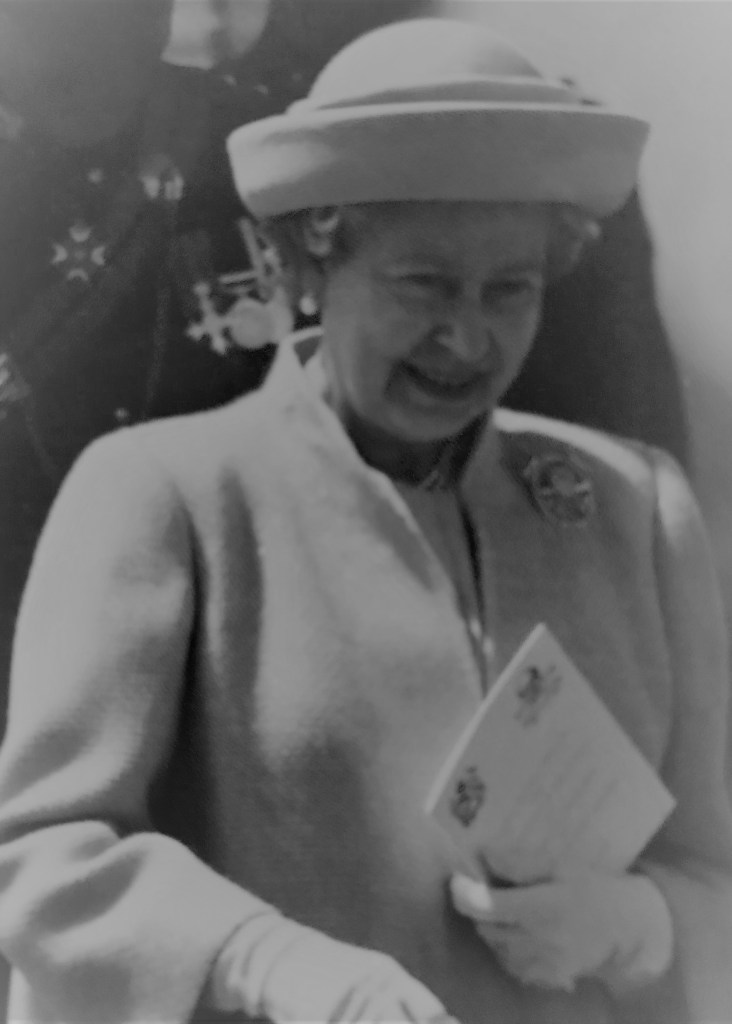
Her Majesty Queen Elizabeth II at a regimental ball one month before I was born!
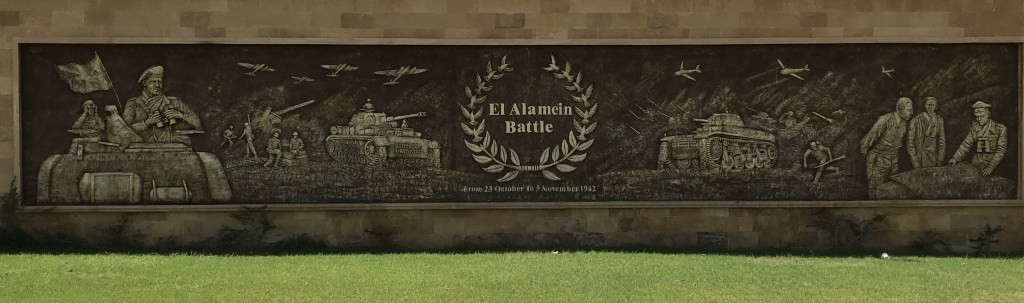
This weekend we are commemorating the 80th anniversary of the Second Battle of El Alamein, which took place between 21 October and 5 November 1942 and according to the Prime Minister, Winston Churchill, marked “the end of the beginning” of World War II. Some believe that North Africa was a side-show compared with the Normandy landings, however if you look at the proportion of casualties, numbers of troops and intensity (bombs dropped and ammunition used), the evidence points to the battles of Alamein being the true turning point of the war.
Whatever the answer, we should spare a thought today for the PBI (poor bloody infantry) who were forbidden from leaving their slit trenches even for a call of nature as they waited all day in trepidation for the crescendo of noise that accompanied the five hour artillery barrage, which began the first phase, known as Operation Lightfoot. Things were not much better for the tank troops. In the Sherwood Rangers Yeomanry staging area, the padre, George Hales, conducted a final service. All who were present in that tense and apprehensive atmosphere remembered his talk, with his quotation from Robert Louis Stevenson: “Endure a while, toil a while, never look back.” However, it was the Sappers who perhaps deserve our deepest admiration because as you can see from the brilliant painting by Terence Cuneo, (thanks to his Estate for allowing me to show his art), the mine clearers had to lead the way in the two designated corridors and were exposed to enemy fire with very little protection.
There is still much controversy about Montgomery’s attritionist doctrine, which dominated British military thinking for many years afterwards and resonates in Ukraine today. What is more important, however, is that as we approach the season of Remembrance, we continue to pay tribute to the fallen, who gave their lives for our freedoms today.
Royal Engineers Clearing the Mine Fields at the Start of the Battle of El Alamein, 23 October 1942
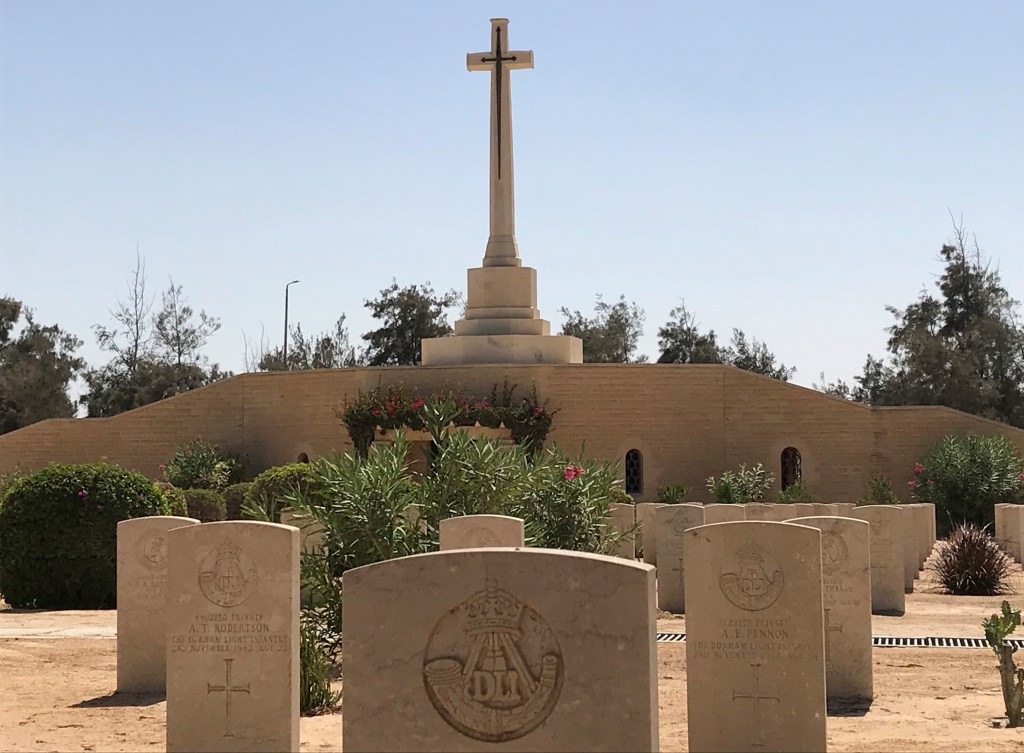
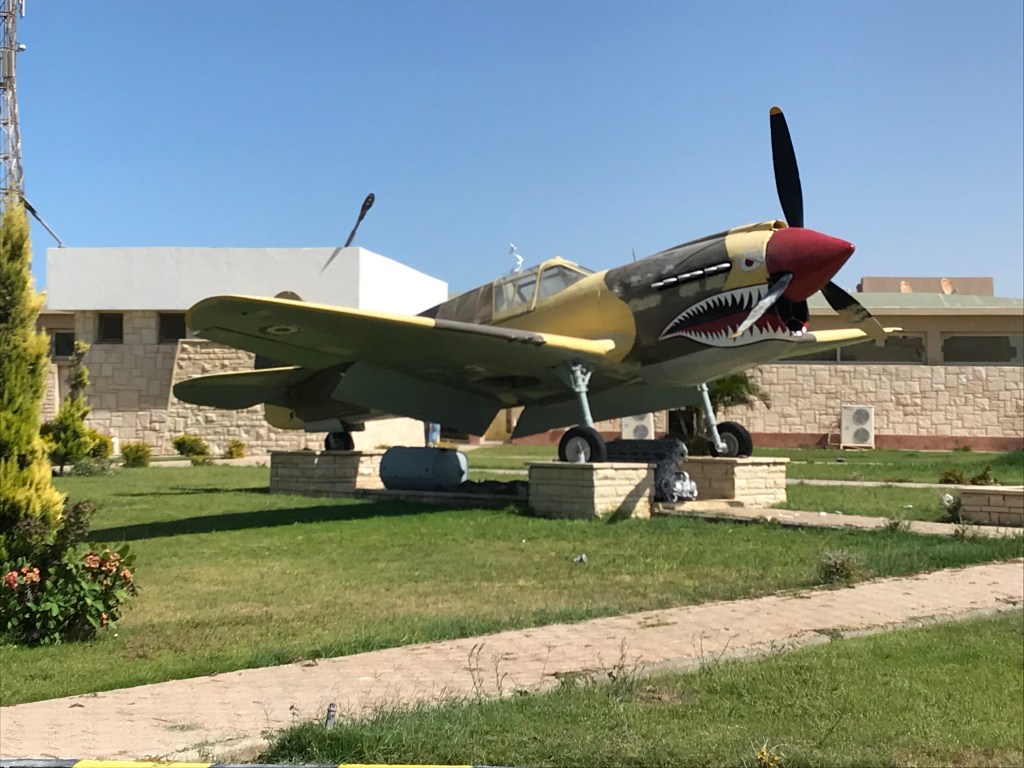
On Friday 21 October, I will be giving the second of two talks on El Alamein to commemorate the 80th anniversary of this iconic battle. In preparation for the event, I visited the battlefield on the north coast of Egypt and paid tribute to those who gave their lives in the cause of freedom at the Commonwealth War Cemetery. For those who have not visited El Alamein for some years, there is a new exhibit at the museum, which is a pristine Curtiss Kittyhawk (known in the USA as the P-40 Warhawk). This was found in the desert abandoned by its pilot who “disappeared” among the local community.
The talk on Friday will place the Second Battle of El Alamein within Britain’s Mediterranean strategy and the desperate situation in 1942 when Britain lost Hong Kong, Singapore, Burma and Tobruk in rapid succession. I will discuss the roles and relationships of Churchill and the top generals, including: Alexander, Montgomery and the old sweats, Gott and Lumsden and answer the question why Alamein is classified in the same category as Agincourt and Waterlooo, as one of the most important military victories in British history. Tickets are available on the NAM website ahttps://www.nam.ac.uk/whats-on/end-beginning-second-battle-el-alamein
I recently gave a talk about Churchill’s Second Darkest Hour after the loss of Hong Kong, Singapore and Burma, when he was passed a telegram by President Roosevelt on 21 June informing him that Tobruk had surrendered without a fight. He later wrote about the bitter shame he felt: “Defeat is one thing; disgrace is another.” However, before travelling to North Africa to sort out the army’s mess, he had to face down his opponents in Parliament during a vote of censure about his leadership. In the two-day debate, he delivered another of his great speeches and won the vote emphatically on 2 July, while the first battle of El Alamein raged in Egypt.
After changing the Army Commanders in the Middle East and holding a tetchy meeting with Stalin in August, the Prime Minister returned to London and received yet more bad news when HRH The Duke of Kent was killed in a Sunderland Flying Boat, during a mission to Iceland, while serving with the Royal Air Force.
Churchill had to send an immediate telegram on 25 August to King George VI in Scotland: “Mr Churchill with his humble duty to Your Majesty STOP Sir it is with intense sorrow that I have just learned your brave and charming brother this day killed in action STOP pray allow me to offer my deepest sympathy for the loss of a beloved brother which Your Majesty has sustained STOP” as well as to Queen Mary of Teck and to the Duke of Windsor, who was Governor of the Bahamas.
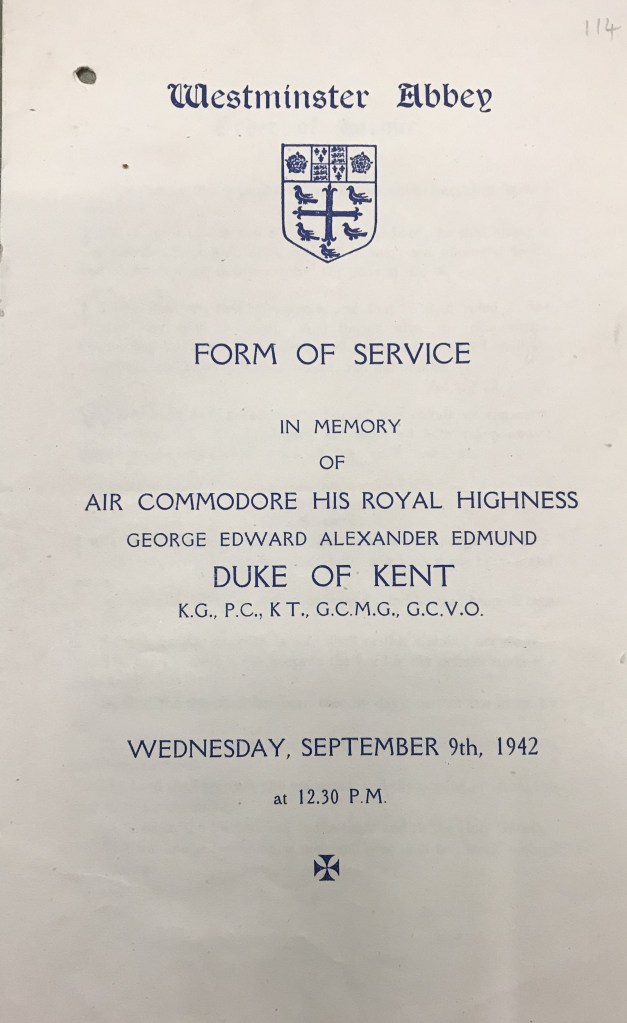
The secret report of the tragedy shows how similar it was to the 1994 Chinook crash on Mull. It was deemed that the Duke’s funeral four days later would not be a major event since the war situation was so bleak. However, a significant memorial service was held at Westminster Abbey on Wednesday 9th September at 12.30 pm.
In recent days, there has been positive news about Ukraine’s defence of its national integrity, despite Putin’s illegal annexation of captured land. Progress is due to the extraordinary courage of ordinary Ukrainian men and women who are serving on the front line, but a key contribution has been provided by the military assistance from NATO countries, including British missiles, guns, equipment and training. It is all uncannily similar to the support provided at the end of WWI to the White Government in Omsk, led by Admiral Kolchak, except in one very important respect.
In 1919, Britain had 4,000 troops in Siberia, including two infantry battalions (Middlesex Diehards and Hampshire Tigers), a Royal Marine combat team that provided support along the River Kama, a Royal Horse Artillery fire support team, three capital ships (HMS Carlisle, HMS Kent and HMS Suffolk), a medical mission that helped tackle the Typhus epidemic and a railway mission that transported millions of pounds worth of arms and equipment to the front line. This contingent was part of a force of 170,000 thousand European, American and Japanese soldiers bolstering the White Army, which was fighting the Bolsheviks. In today’s war, there are plenty of foreign politicians cheering from the touchline, but very few countries have committed “boots on the ground”.
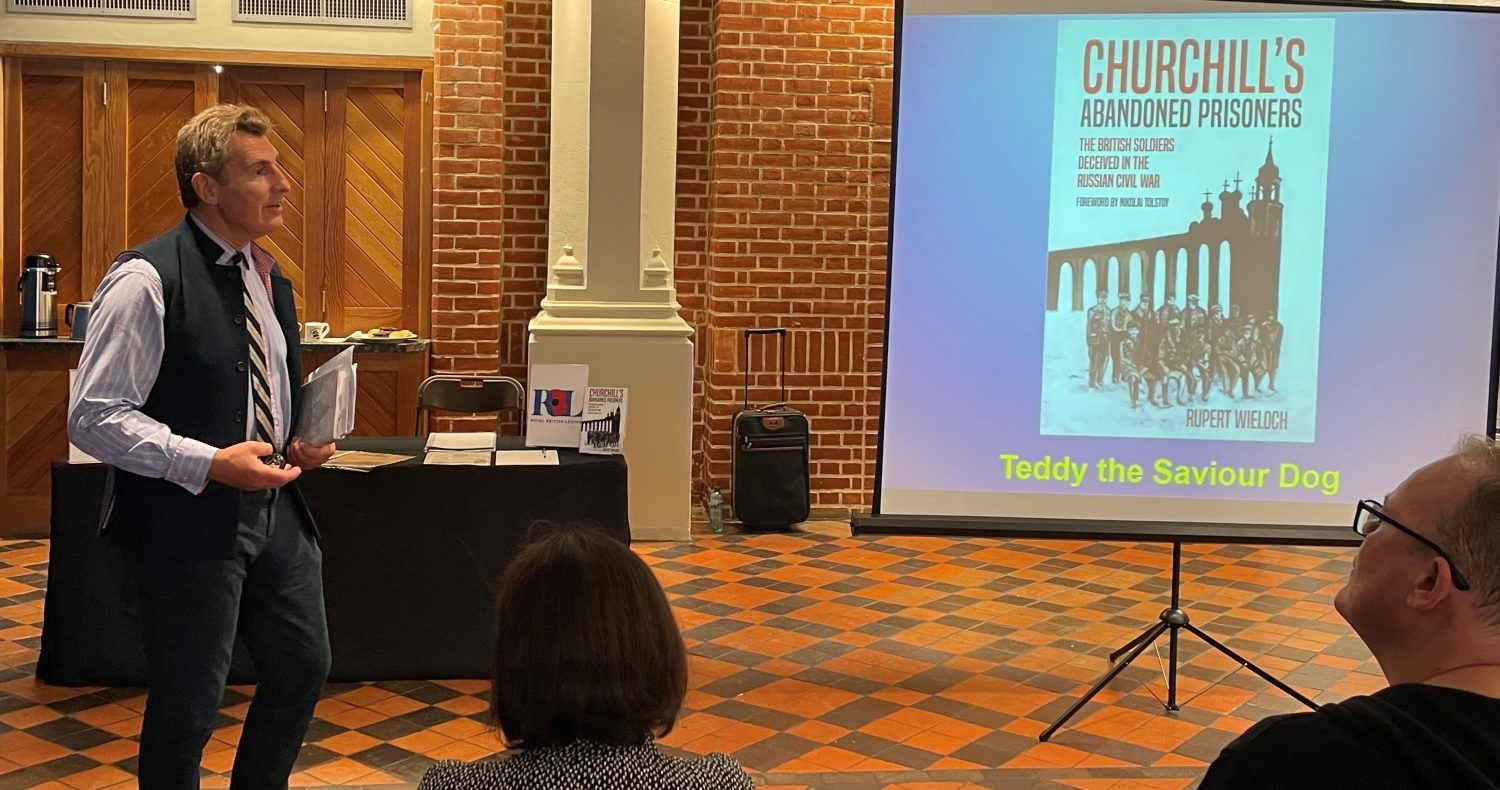
The big test is about to come. A Russian winter can change everything as Napoleon and Hitler discovered. It will be fascinating to see whether the fighting pauses, or whether a new offensive is launched as in October 1919. Read more about the similarities between the current war in Ukraine and the war in Siberia in Churchill’s Abandoned Prisoners.
I am looking forward to the Early Early Christmas Fair at Tidworth on Tuesday 27 September from 4 p.m. when I will be signing books and talking about Churchill’s Second Darkest Hour in World War II and the four Battles at El Alamein, which marked the “beginning of the end” according to his famous address at the Lord Mayor’s Reception in November.
I have recently toured the battlefield and paid homage to the thousands of soldiers and airmen who are buried at El Alamein. The coast line is unrecognisable from even ten years ago, but the family looking after the Commonwealth War Cemetery are still doing a fantastic job in testing conditions. The museum has a new addition since I was last in North Africa with the arrival of a P-40 Kittyhawk found in the desert in immaculate condition.
On his way to take command of 13 Corps at El Alamein, Lieutenant General Brian Horrocks felt a certain amount of trepidation because generals, at that time in the Middle East, didn’t as a rule last very long. He subsequently wrote that: “Command in the desert was regarded as an almost certain prelude to a bowler hat.”
He need not have feared because he was supported fully by the Eighth Army commander, Lieutenant General Bernard Montgomery and despite an uncomfortable interview with the Prime Minister, he earned huge plaudits for blunting Rommel’s attack at the Battle of Alem Halfa, 80 years ago today.After his success with 13 Corps in Egypt, he went on to even greater exploits with 10 Corps in Tunisia and 30 Corps in North West Europe, but sadly was medically discharged due to the wounds he suffered, so we never saw him as a peace time general.
There is still a fierce debate about when exactly the turning point of the war occurred. Churchill’s wonderful quotation about “…the beginning of the end” leads many people to believe that it was November 1942. However, others including distinguished historians such as Basil Liddell Hart believe it was earlier in July at the first Battle of El Alamein, or at the beginning of September when Horrocks held firm on the Alem Halfa ridge.
On Friday 21 October, I will be speaking at the National Army Museum about what for many is the most important British battle of the 20th century to commemorate its 80th anniversary. Tickets are available now at: https://www.nam.ac.uk/whats-on/end-beginning-second-battle-el-alamein





 Rupert Wieloch