Reasons to be Cheerful – World Wildlife Day and The High Seas Treaty

Although climate activists seems to attract most of the environmental headlines, there other arguably more important United Nations frameworks than the one discussed at COP 27 in Egypt last year.

The Convention on Biological Diversity, which amongst other things seeks to cut the rate that animals are becoming extinct and links to international conservation organisations, has its own Conference of the Parties where participants recently agreed a historic deal, despite protests from some nations. The ambition of the Kunming-Montreal Global Biodiversity Framework is to reverse biodiversity loss by 2030 and cut the extinction rate for all species by a factor of ten by 2050. This over-arching agreement provides the structure to restore degraded areas and to police the trade in endangered species. World Wildlife Day on 3 March is important to highlight this work by dedicated conservationists and international task forces tackling environmental crime, reported to be worth $281 Billion per year.

The High Seas Treaty that was signed today after nearly 20 years negotiation, is perhaps an even greater success story and I hope that one day it will be looked upon as ground-breaking as The Antarctic Treaty. Having been involved in marine conservation projects since the 1980s, I congratulate the delegates and look forward to the agreement being enforced through the Convention on the Law of the Sea.

Ajax Not Back On Track

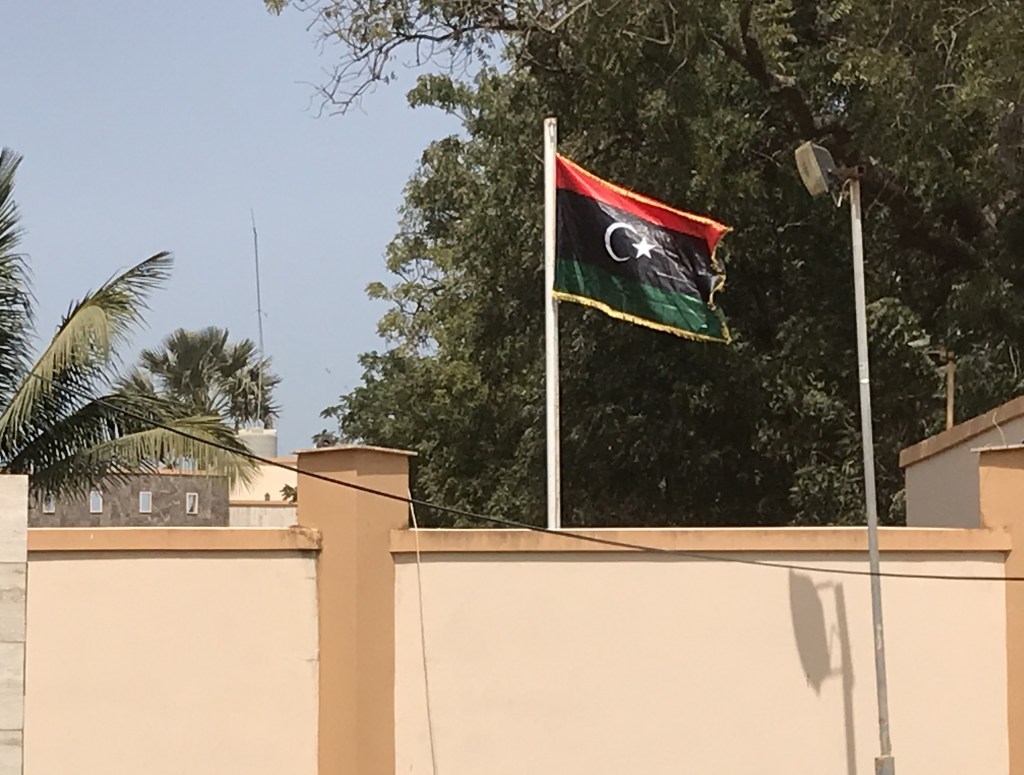
On the coast of West Africa this week, staying next to the Libyan Embassy, astride one of the 15 countries that did not support the United Nations General Assembly vote on Ukraine, I am struck by two related questions.

Why are fearful migrants still dying in the Mediterranean Sea and why have we withdrawn our British Army forces from arguably the most important security operation in Africa (Mali)?

Part of the answer to this question lies in Merthyr Tydfil with the Ajax programme that the Defence Secretary has been speaking about. It should have entered service with the British Army five years ago, giving our combat troops a credible modern armoured capability and replacing outdated equipment that not even Ukraine would want. Just because we have started paying General Dynamics again does not mean the programme is back on track. It has been put on a completely new schedule and the reliability problems have not been solved, so I don’t understand why the Media has reported that all is well.

Libyan Embassy in West Africa

Defence Cuts and NATO’s Reaction Force On The Line

I was delighted this week when the Defence Secretary echoed my description of the British Army being hollowed out in his pronouncement about the need to increase Defence Spending.

The implied financial attack on the Chief of the General Staff’s budget comes from three directions. First, the other Services (Royal Navy and Royal Air Force) which have done very well in the past decade as long range stand-off weaponry has been politically more acceptable than close combat. Second, the Intelligence budget (including GCHQ, Cyber capabilities and counter-terrorist programmes) that has absorbed a huge chunk of the money destined for the Armed Forces. And third the rival domestic departments, including the Health and Education that have squeezed the allocation of money that previously was spent on Foreign Policy objectives.

Standing above all this is the Treasury, which scrutinises departmental spending and plays one off against the other. They have special agents inside the Ministry of Defence and many of these RP staff are contemptible for the way they cut programmes on a whim. I was involved in several fights for money between 1994 and 2014 and was astonished how badly some uniformed officers behaved when it came to hollowing out Defence capabilities. The truth is that it was 2005 when the Army could no longer afford its planned activity; I had to write the Review Year Study that year, which was based on the Key Equipment Issues List; an outstanding computer modelling system which was closed down soon afterwards for telling it as it was.

Rather than preparing wisely for the future, the Government now prefers to pay for emergencies through its Contingency Fund (Royal Air Force for the withdrawal from Afghanistan, Royal Navy for the migrant problems in the English Channel and British Army for training Ukraine soldiers on the front line). Due to this poor management, our leadership of the NATO Reaction Force is on the line and it’s no wonder that the Chief of the General Staff has been reported as threatening to resign!

Challenger Main Battle Tank – When The Army Was Fully Supported

London Book Talk

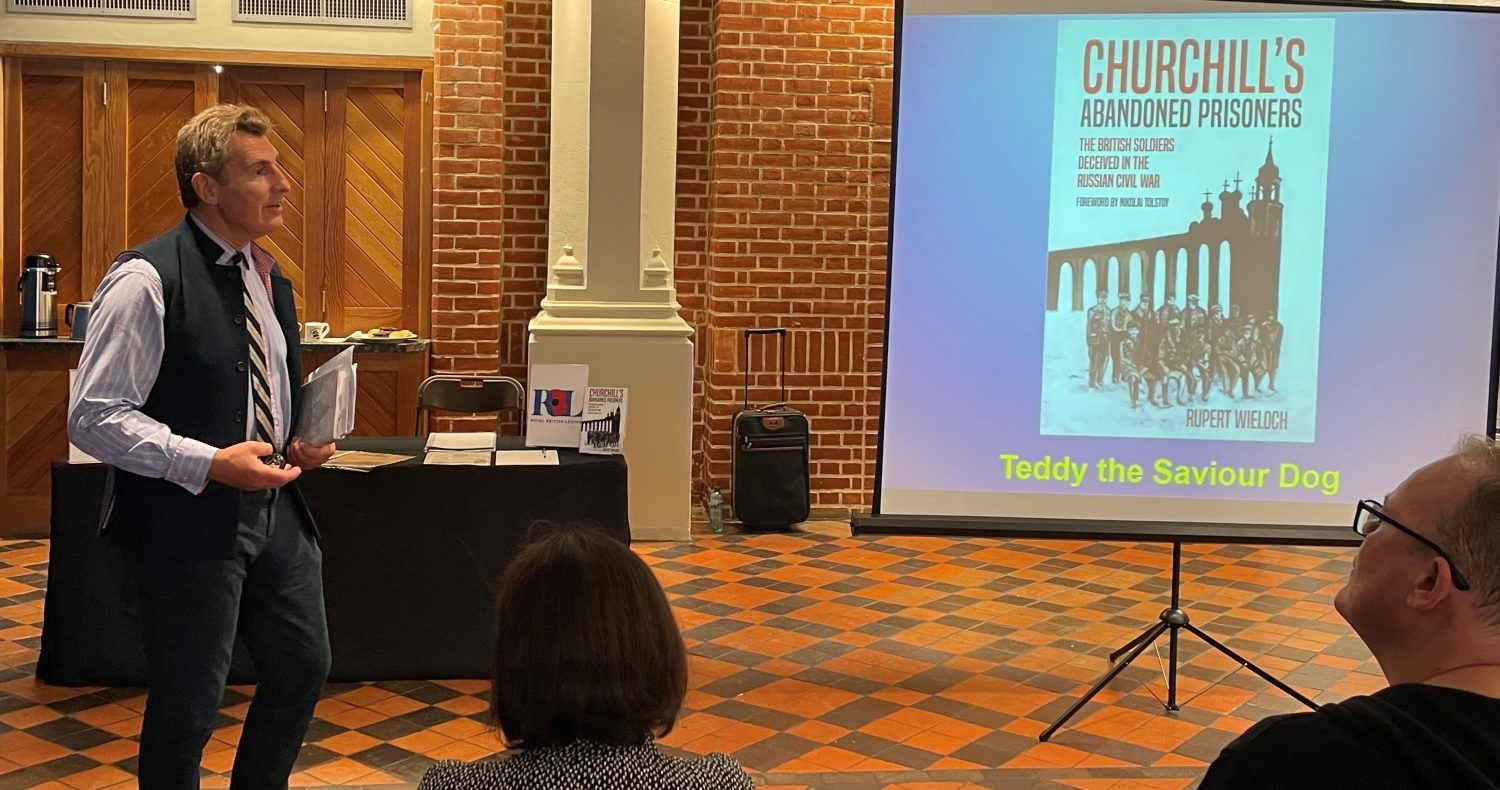
My twice postponed (once for Lockdown and once for Her Majesty’s funeral) talk at Dartmouth House on the last WWI British prisoners of war in Moscow has now been confirmed for the evening of Tuesday 11th April.

I am delighted to announce that a few of the children and grandchildren of those who served in Siberia, or suffered imprisonment in Moscow are joining the audience for the evening. We will be discussing how the prisoners survived their horrendous ordeal with their pet puppy and why their incarceration became such a hot political issue in 1920. Tickets and more information about the talk are available on the English Speaking Union’s website at: https://www.esu.org/event/churchills-abandoned-prisoners-with-rupert-wieloch/

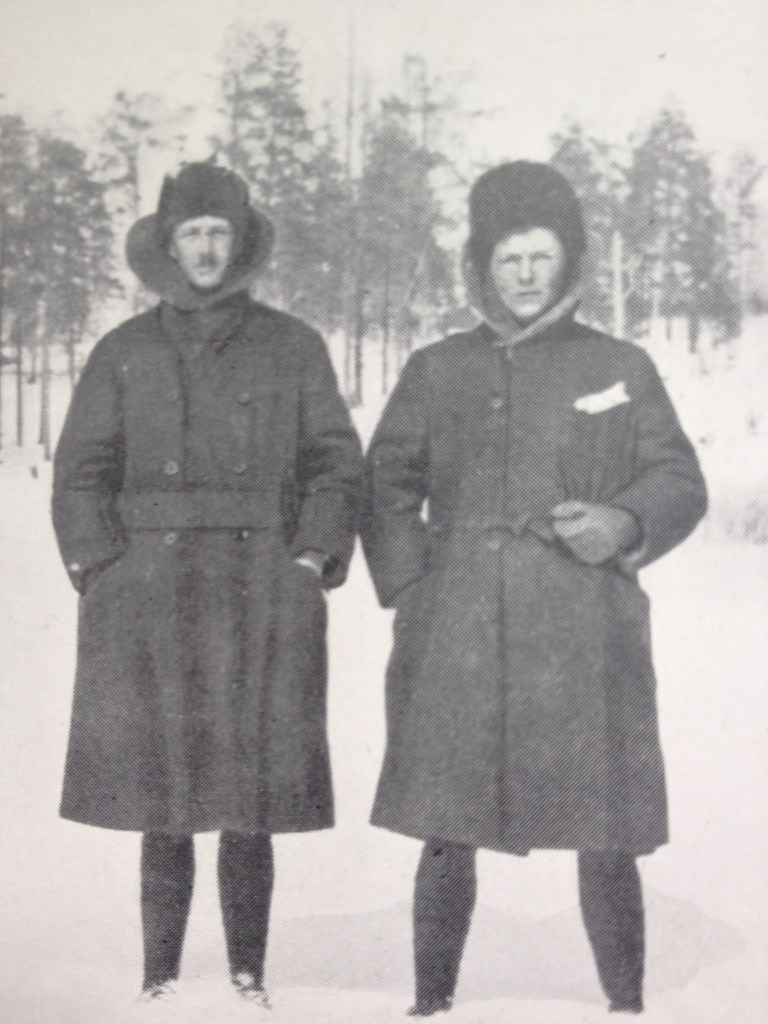
Two of the British Prisoners of War in Siberia in 1920

Latest US Views on the British Army

It is reported that a prominent US general has told the Secretary of State for Defence, Ben Wallace, that the UK is no longer a ‘tier one fighting force’ and the British Army has a ‘diminished war-fighting capability’.

This does not surprise me one iota. The US Defence capability has been forging ahead in the past decade and we have been left behind through deliberate neglect and bungling mis-management. A classic example, which I have regularly written about, is the procurement of the next generation armoured vehicle, known as Ajax. This light tank was due to be in service now, replacing the antique Scimitar, which I operated in Norway, Denmark, Germany, England and Bosnia and is well past its sell-by date (despite several brilliant upgrades for Iraq and Afghanistan).

It is not just our equipment that has been hollowed-out. We have tremendous Special Forces and the Household Division can still put on a fantastic show, but the overall standard of physical fitness, mental toughness and commitment to the team has dropped significantly, according to senior soldiers at training regiments, who I have spoken to in 2022.

The seeds for this situation were sown before the 2010 Strategic Defence and Security Review. Unfortunately, it is not just money that will get us back to Tier One, but at least we have not yet plummeted to the depths of the 1930s, when according the late, great, Brian Horrocks the British Army at home had been reduced to a flag basis and young officers wondered whether the German Army understood that a green flag represented an anti-tank gun!

What Would He Say?

Remembering Sylvia Syms In Libya

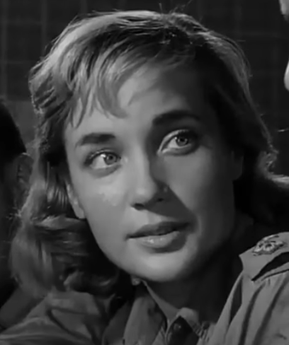
Very sad to hear that the brilliant Sylvia Syms died this week. She made her name as the lead actress with two giants of the acting world, Sir John Mills and Sir Anthony Quayle, in one of the most iconic war films, Ice Cold In Alex.

The film was due to be made in Egypt, but the Suez Crisis in 1956 resulted in a location switch to Libya. Filming began close to the Sahara on 10 September 1957. During an interview when she was 77 years old, Sylvia Syms said that conditions during the desert shoot were difficult and that: “You may find this hard to believe, but there was very little acting. It was horrible. We became those people…we were those people”. She suggested the crew “didn’t know what Method Acting was, we just called it ‘getting on with it’.” However, I believe she is playing this down because she was at RADA in the same era as Albert Finney, Alan Bates, Siân Phillips and Glenda Jackson, while Marlon Brando and James Dean were trailblazing the technique in Hollywood.

Although the film was a great success in Britain, it did not break into the Hollywood award scene in the manner of The Bridge On The River Kwai. Its legacy, however, is greater than many movies of that era thanks to its use in a number of lager advertisements. It was also one of several films that were assisted by the British Army in Libya. The tanks of the Queen’s Bays, which had earned six Libyan Battle Honours in 1942, appeared in one of Cubby Broccoli’s early films, No Time To Die with Victor Mature and Anthony Newly. Many of the extras in the wartime adventure Sea of Sand, in which Michael Craig was nominated for the Best Actor prize at the BAFTAs, were British Army personnel serving in Libya and their autograph books filled up when Richard Burton, Nigel Green and Christopher Lee featured in Bitter Victory, a war film typical of the genre that portrayed the clash of classes and ranks. However, the most famous cast appeared in the Legend of the Lost, filmed at Leptis Magna and Ghadames, which starred John Wayne and Sophia Loren.

There are more stories about filming in Libya and intrepid women in the desert in Chapter 14 of Liberating Libya.

Sylvia Syms – Ice Cold In Alex

Why The Leopard Tank Is So Controversial

There were few political qualms about sending a squadron of British Challenger 2 tanks to the Ukraine last week because on their own, they will make little difference to the course of the war. So why are there so many problems with Germany sending Leopard 2 tanks to their near neighbours?

The reason is threefold. First, the technical side. The Krauss-Maffei Wegmann Leopard 2 is much easier to master than Challenger 2; the 120 mm smooth bore gun is quicker to fire and more simple to aim; the mobility is better because it is a lighter tank and the power to weight ratio is much higher, so it is 10 mph faster than Challenger 2. It is used in a dozen European countries and has been manufactured in a way that makes it easy for export. The only area that the Challenger 2 wins is in the protection of the tank because it carries the best armour in the world and it is 15 cms less in height.

The second reason is tactical. Tank warfare is essentially offensive war. Up to now, we have been helping the Ukrainians protect their territory with stand-off, defensive weapon systems used against a hated aggressor. The deployment of Leopard 2 from Germany (and other European countries) changes this dynamic, so that NATO will inevitably be drawn into direct combat with Russia.

And this leads to the third reason: the political-strategic unintended consequences. What does this mean for Germany’s constitution which allows for its armed forces to be used solely for defence of its own territory? What retaliation will come from Moscow if German tanks kill Russian soldiers? What will happen when Leopard 2 tanks are destroyed on the battlefield? How will the donation denude the German Army of some of its key battle-winning capability?

It is no wonder that the Berlin government is hesitant about deploying Leopard 2 against the Russian Army.

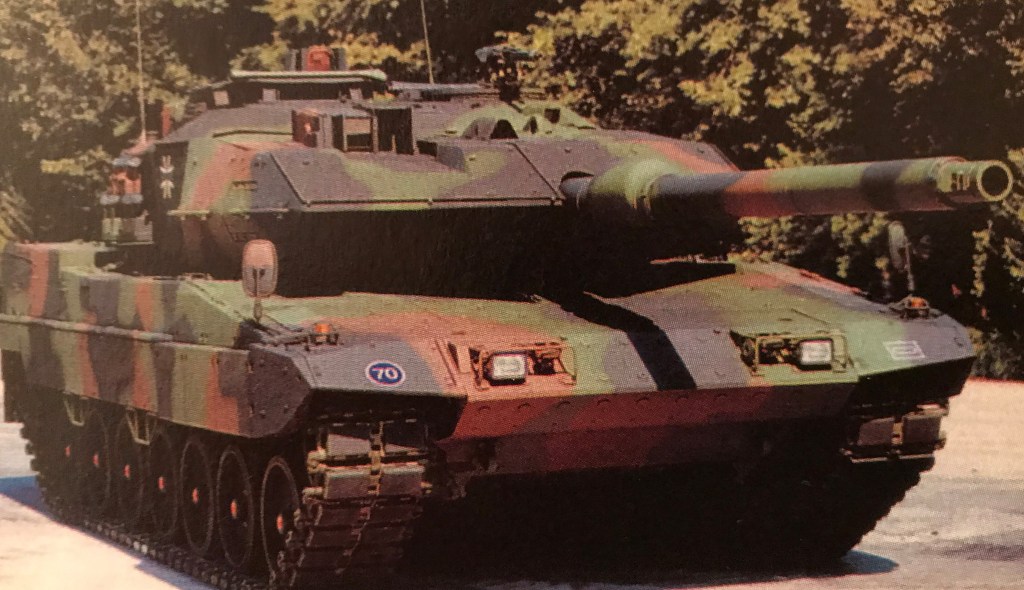
Leopard 2 Twenty-two Years Ago

Challenger 2 Tanks To Ukraine

Twenty years ago, the Challenger 2 proved to be the finest tank in the world against its contemporaries in the Middle East, but unfortunately, the British Army did not look after them as well as they might.

The recovery of one tank that was destroyed in a “blue on blue”, which killed two crew members in 2003 was a particular problem. We moved the remains (of the tank) to Kirkcudbright where they were pieced together to discover what went wrong. The jigsaw puzzle took more than a year to solve. Unfortunately, despite having the best armour protection, Iraqi insurgents also found a weak spot in the front of the tank a couple of years later and it has since become vulnerable to top attack missiles from unmanned air vehicles, which are prevalent in the Ukraine war.

I remember having to respond to a letter to the Prime Minister from the Chief Executive of the local borough council, who was angry about the effect of budget cuts on the Ministry of Defence, resulting in the cannibalisation of equipment. The fact is that 190 Challenger 2 tanks were cannibalised to sustain the operational fleet and this reflected a much wider problem of hollowing out vital equipment from ships, aircraft and land vehicles due to a shortage of money. This partly led to the mothballing of many vehicles at Ashchurch and the subsequent decimation of tank regiments in the last decade.

It will be very interesting to see how the 16 Challenger 2 tanks perform in Ukraine in 2023. I suspect it will not be easy for them because the war is relatively static and they are better suited to battles of manoeuvre. It is also difficult to master the rifle barrelled 120 mm gun; the electronics and engines are in poor condition and the weight is a problem in muddy ground off the beaten tracks. Nevertheless, I wish the Ukrainian Army every success with their new capability.

Challenger 2 Twenty-two Years Ago

Harry’s Greatest Fear

The Duke of Sussex was keen to talk about his military service during the media interviews to promote his ghost-written memoir this week. He is not the first ex-soldier who only spent a short time in the British Army to indicate that this was the most meaningful time of his life, but he has crossed a line with his boasts about how many kills he has notched on his belt.

It all smacks of someone who is desperate for the limelight and shows no respect for his comrades-in-arms. From a historical perspective, there are so many similarities to the life of the Duke of Windsor, who was described as a “Traitor King” in a book last year. However, there is an important difference in that Edward was not born as a “Spare”, as Harry identifies himself. To my mind, this shows that it is not what fate bequeaths to you, but the path you choose that marks out what sort of man you are.

There is another lesson that I draw from the similarities. In his memoir, the Duke of Windsor wrote about travelling to London when Queen Elizabeth II was on the throne and walking down St James’s Street without being recognised. He felt deflated as it was the moment he realised that he was irrelevant in Britain. Perhaps this is Harry’s greatest fear and is what has driven him to a life of hypocrisy and delusion.

We Three Kings

Sky News Tonight on Prince Harry’s Memoir

Tonight, I am discussing the implications of the Duke of Sussex’s revelations in his memoir with Sophy Ridge on Sky News. Inevitably, I will be asked about his claim that he killed 25 Taliban and his description of them as pawns. I won’t spoil what I intend to say, but perhaps Harry should have remembered Gandalf’s advice to Bilbo Baggins in The Hobbit: “True courage is about not knowing when to take a life, but when to spare one”.

There are also some serious ramifications that he should have considered. First, the fate of the crews who served with him in the Household Cavalry and Army Air Corps (it is not just his family, who will be at a higher risk of attack by revenge-seeking assassins). Second, to those who gave him exceptional support when he initially failed his Apache helicopter tests. Third, to the families of those he killed – real combat soldiers respect their enemy and don’t describe them as “pawns”. And finally, to the MoD as a whole; now that he has broken the code of what retired officers can write about in their memoirs – has he opened Pandora’s box?

For my next book, I have researched an incident after World War I when Harry’s Great Great Grandfather established the values of the House of Windsor. King George V had to reprimand Field Marshal Viscount French of Ypres when he discovered he was about to publish a memoir of the war, before the Treaty of Versailles was signed. As Head of the Armed Forces, the King was unceasing in his efforts to promote concord and to allay dissension. He believed that “people who write books ought to be shut up” and that “angry disputes” and “personal wrangling” with regard to either the conduct of operations, or the leadership of troops, would not help the cause of peace.

For the record, I never served in the same unit as Harry, but I was in Camp Bastion with him in December 2012 and have interviewed soldiers who were with him during his first tour of Afghanistan. The story of his cancelled deployment to Iraq is told in Chapter 5 of Belfast to Benghazi.

Operation Herrick Arrival