There is a saying in the Army that runs along the lines: “there are no bad soldiers, only bad officers”. Like all generalisations there are many exceptions to this maxim, but from my experience of commanding soldiers on 7 different operations (including as a platoon commander in West Belfast), it is founded on truth. In the case of the soldiers who shot dead 13 protesters on 30 January 1972, I would personally direct my focus on the military leadership, rather than the “out-of-control”, poorly-trained troops.
Another focus would be on the Media and especially the BBC, whose reporting continues to be biased against the Army. Their historical context always begins with the introduction of Internment, but makes no mention of the murder of over 50 British soldiers and policemen that led directly to Bloody Sunday. This is similar to reporting on the war in Gaza without explaining that Israel was responding to the heinous crimes committed by Hamas. It is about time the BBC leadership corrected its prejudicial reporting on the Troubles.
Neither of these observations will comfort the families of those who were killed in Londonderry at the end of January 1972. They have my full sympathy, but at the same time persecuting veterans for politicians’ mistakes is the wrong way to deal with legacy issues in Northern Ireland.
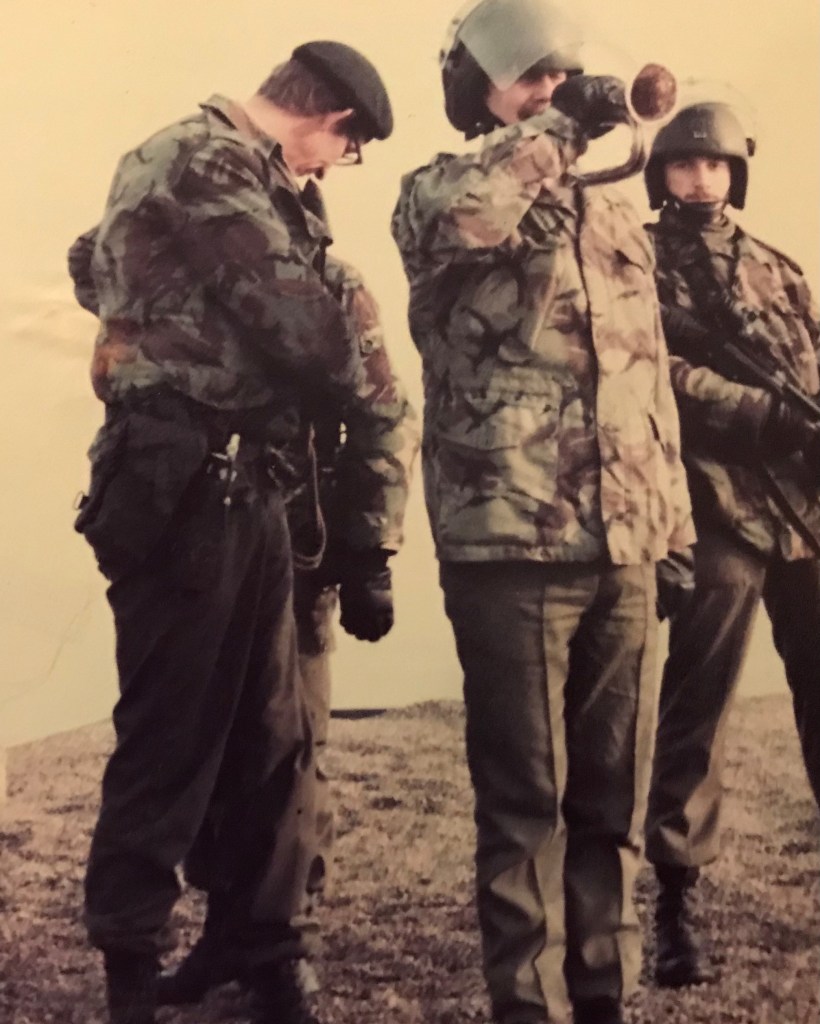
A Decent Leader In Northern Ireland 1981






 Rupert Wieloch