
Chinese Spy Threat Hyperbole

MI5, which stands for Military Intelligence Section 5, was originally formed in the run-up to World War I to counter the domestic threat from countries against which we were about to fight i.e. Germany and its allies. Due to the counter-espionage success, its role was expanded to include fifth columnists and Soviet propagandist sympathisers, who worked to overthrow the legitimate government of the United Kingdom. After the Cold War, when Francis Fukuyama told us history had “ended”, MI5 lost its sense of purpose until 9/11, when international terrorism raised the threshold of domestic attacks in western countries. Since then, it has never been busier because Britain created a National Security Register, which now runs to thousands of serials.

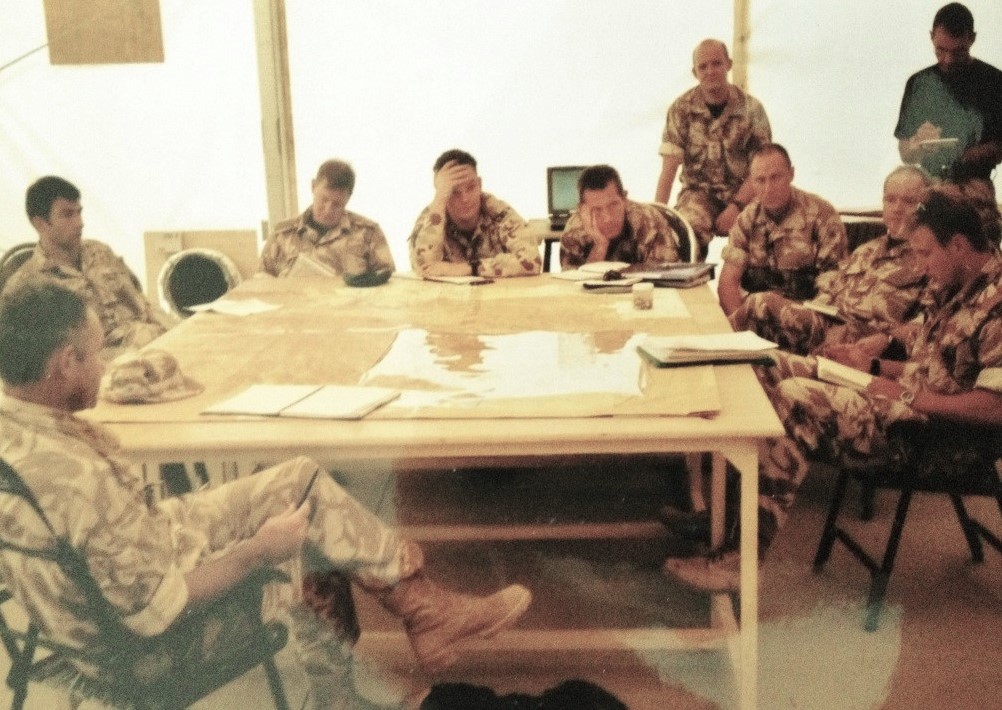
Reading the MI5 dire warnings about China by the head of MI5 today, one might be led to believe that the People’s Republic is about to invade a British Territory, or a NATO ally. Whereas in fact, the Armed Forces have been encouraged to share information with China for many years. A good example was the Chief of the General Staff’s land warfare conference, which I organised in 2011. On day 1, at 10.15 after the US Chief of the Army, General Martin Dempsey delivered a keynote address, the next speaker was General Zhang Qinsheng, who as Deputy Chief of the People’s Liberation Army gave a vivid strategic overview. The following day, after Rhett Hernandez, Commanding General of US Army Cyber Command, provided the conference with an update about American cyber capability, he answered a myriad of questions posed by the Chinese delegation (see the unclassified photograph below).

I am sure Sir Ken McCallum is truthful when he states that MI5 is disrupting Chinese intelligence gathering in the United Kingdom, but if we are so worried about this, why are we giving academic scholarships to Chinese students at our prestigious universities, who then have access to incredible levels of private knowledge? And why are we not being consistent with other economic competitors which are also “spying” and attempting to steal copyright material?

Successive governments have fudged this issue partly because China is not a direct military threat to Britain and partly because even though there is a trade deficit, the People’s Republic is our fifth largest trading partner and, according to a government factsheet, we exported £28.8 Billion of goods to China in the four quarters to the beginning of 2025.

Conflicts in Context

I was very grateful to the organisers of Battles through History for inviting me to join the eclectic mix of authors in the Norfolk Pavilion last week. Despite Storm Amy, there were plenty of visitors to this tremendous military show at Ardingly, many of whom joined us upstairs for the fascinating book talks.

Although we focused on the past, the news in Ukraine and the Middle East, was still very much to the fore and had me thinking about casualty rates. During my talk about the Victoria Crosses awarded in North Africa, I pointed out that the casualty rates at Gazala and El Alamein were as bad as Normandy and North West Europe. For example, at Gazala, the Allies suffered 50,000 killed, wounded or captured out of a force of 110,000.

Looking at casualty numbers in the two worst current conflicts, there have been about 60,000 fatalities in Ukraine this year and about 24,000 in the Middle East. These levels are equivalent to what was happening in World War II and suggest the character of war has not changed even if the tools may be different. It is good that a ceasefire has been agreed in Gaza, but the real challenge is 2,000 miles north of there.

Battles Through History

Two more book talks this week in Hampshire and Sussex. The first is about the year 1830 in England. This was a time that the present day echoes, with the dominant features being: climate change; economic depression; and political violence – The King’s Petition and Swing Riots.

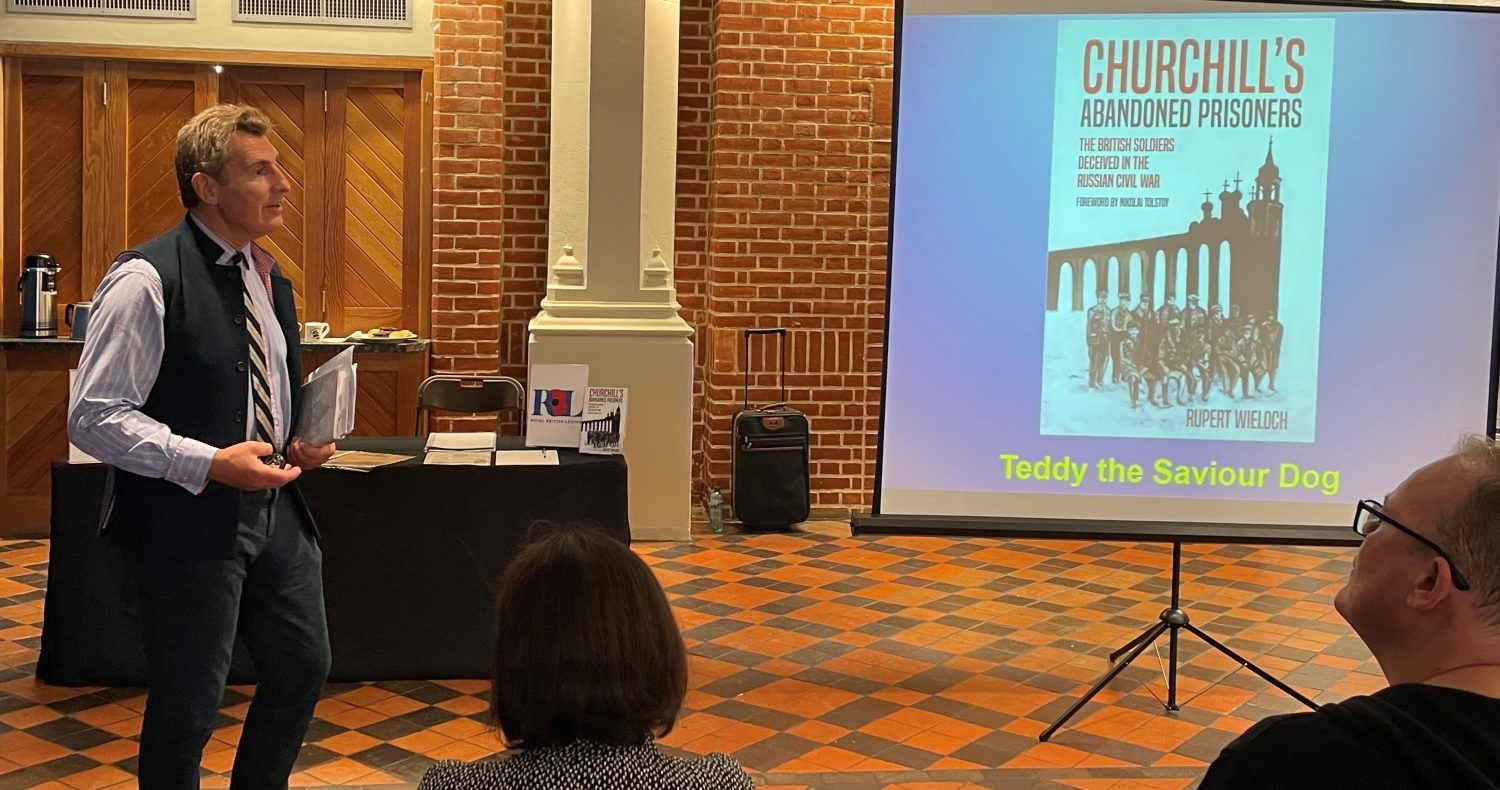
The second is about the Victoria Crosses awarded (and downgraded) in North Africa and will be part of the Battles Through History military show at The South of England Showground, Ardingly RH17 6TL. When I am not enjoying the fabulous arena events and displays, I will be in the Norfolk Pavilion on Saturday 4th and Sunday 5th October.

Farewell To The First Honorary Field Marshal

Thirty years ago, a Ministry of Defence report recommended cost savings by abolishing the rank of Field Marshal in the British Army. As a result, General Sir Charles Guthrie was not promoted when he became Chief of the Defence Staff in 1997 and it was only when Her Majesty Queen Elizabeth II wished to appoint the Prince of Wales to that rank fifteen years later that the moritorium was lifted and Guthrie became the first honourary Field Marshal in the new era.

I first worked for this distinguished soldier in 1983 when I was Close Reconnaissance Troop Leader in 4th Armoured Brigade in the British Army of the Rhine. After completing a couple of military tasks for him, I received a generous letter that I retain to this day. Twelve years later, when he was Chief of the General Staff, he visited me on the front line in Bosnia and was equally complimentary with his words. The photograph of me with him wearing a UN beret below is quite amusing because he was not a fan of peacekeeping operations and was often quoted as saying that they undermined the British Army’s warfighting ethos.

I find it very strange that there has been so little coverage of his death in the Media. Yes, he served in the Special Forces, but there is a huge amount of other important work that he did for the country, which should be revealed to the public. Considering the number of words the BBC has given to people like Ozzy Osbourne, it is totally disrespectful to relegate this eminent soldier’s legacy to the back pages.

Chief of the General Staff Visiting Maglaj School in 1995

Touchline Support Makes A Difference

Football managers have been known to call for their team’s supporters to be their “twelfth man” because some clubs have such vociferous fans that the opposition is intimidated by the noise they make and they help to win the match.

The analogy in warfare is not exactly the same, but there is no doubt that the touchline support from the EU to Ukraine has sustained the country in its fight for freedom. This week’s response to the latest Russian aggression is a good example, with NATO countries providing the means for Ukraine’s 221 drone counter-attack on Putin’s energy resources and the deployment of extra troops, artillery and air defence systems to the Russian border area after the incursion into Polish airspace.

Prince Harry’s visit to Kyiv may seem trivial against this support, but there is no doubt that it symbolises Britain’s deep empathy with Ukraine and represents our unifying sentiment towards the victims of war. So, this time: “Well Done Harry!”

Tithe Walk Today

Looking Forward to the Tithe Walk today over the disused Didcot, Newbury and Southampton railway line and along the beautiful chalk stream. The theme this year is heritage architecture and we will be looking at medieval structures, as well as Tudor thatched cottages and Georgian rendered properties. We will see two SSSIs and half a dozen listed properties, but sadly no time to view the historic monument.

Hopefully, the swans will be feeding in our part of the river, but just in case they are not, here is a picture of the Cob and Pen cruising their patch yesterday afternoon.

Chilling Developments In Kyiv

This has been the most important week of the year for Ukraine. After months of bluster and stagnation on the front line, it is now a very dangerous moment in the war for three reasons.

The air attack on the main government building in the capital and the assassination of Andriy Parubiy are symbolic of Russia’s intention to continue with their strategy of attrition. The support from China, India and North Korea, which comprise about 35% of the world’s population (2.8 Billion people), has made a mockery of the West’s attempts to squeeze Russia economically. The failure of the USA to back President Zelensky to the hilt has encouraged President Putin to continue with his current military campaign and threaten any country that sends peacekeepers to Ukraine.

Playing to his audience in Vladivostok, Putin has reminded us that for him nothing has changed since he began the war and that he is winning the diplomatic, economic, military and information battles. I have said many times that Russia is playing a long game in Ukraine and is happy that the interim objective of Ukraine not becoming a member of NATO is being achieved. The situation reminds me of Bismark’s famous quote about the Balkans not being worth the healthy bones of a single Pomeranian soldier – I do not see any of the current European or American leaders committing troops on the ground this year.

The key question now is whether Ukraine can manage through the winter without land reinforcements from NATO. Reading about why the Ukrainian flag has the same colours as Sweden and how they fought in previous wars encourages me to think they will not give up, but they do need a game-changer to rebalance the equation. NATO needs to step up to the plate.

Norway Is A Proper Ally

Britain’s military friendship with Norway goes back a long way. In World War I the government was officially neutral, but it permitted Britain to control its merchant fleet, which suffered badly from German U-Boat attacks. Norway also supported our army fighting for Russia’s white government, after the Bolshevik government made peace with Germany. In World War II, we failed to prevent Hitler’s troops from taking over the country, but the King and many Norwegians were very much on the side of the Allies.

Although there has been some economic rivalry over North Sea resources (oil. gas and fish), it is good to see that the maritime alliance has blossomed recently. Today’s announcement of a deal to supply the Norwegian Navy with at least five new frigates is not only good for the bank balance, but it is also tremendous news for NATO.

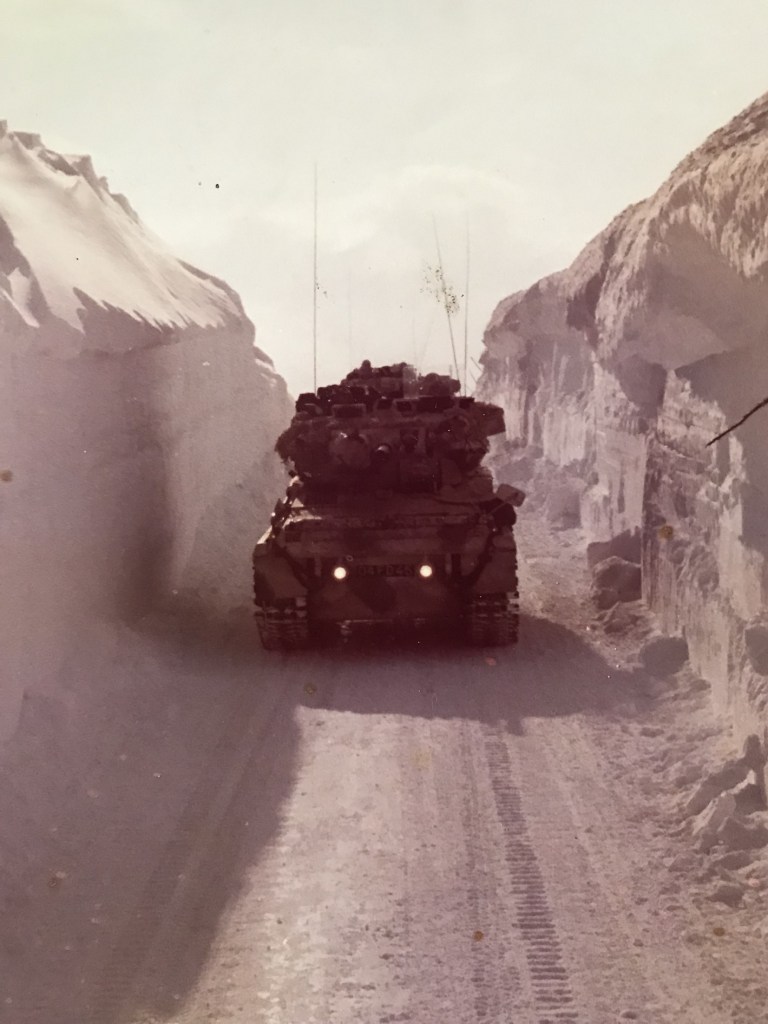
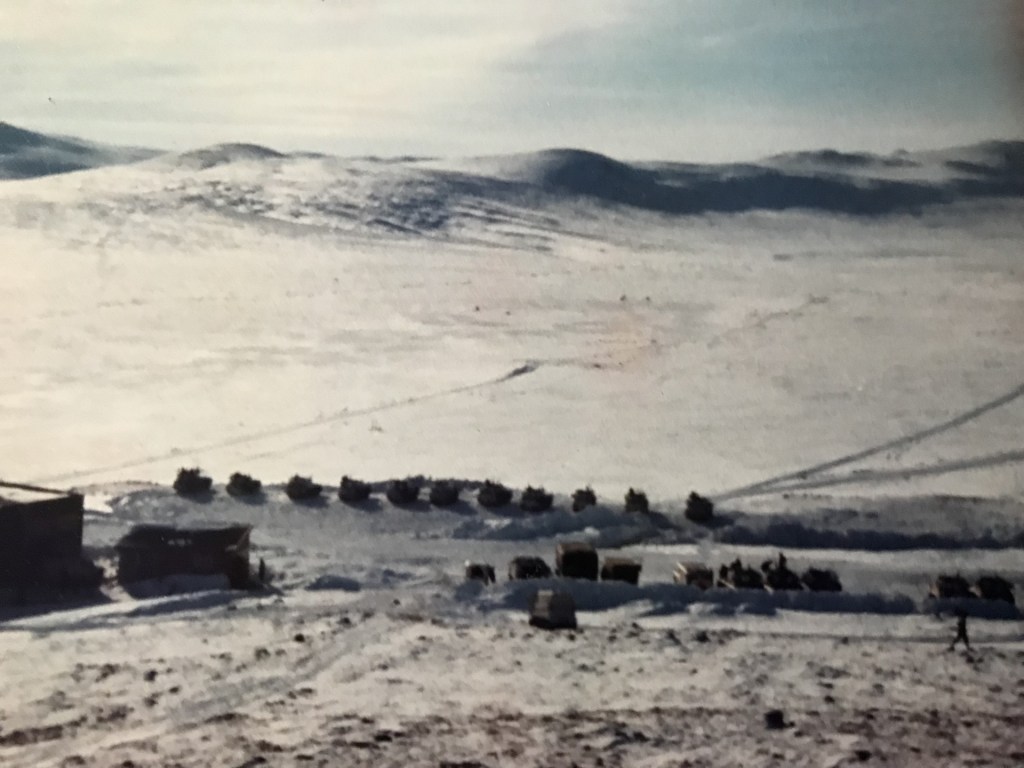
My first task after joining my regiment was a three month NATO winter deployment to northern Norway, where I patrolled inside the Arctic circle close to Russia in our light tanks. I have never experienced worse conditions than on Hjerkin Ranges. The weather was especially cruel on the Royal Marines, who suffered multiple cold injuries with many of them have to be flown back to England for medical treatment. From my perspective, the lessons our wonderful Norwegian army liaison officer taught me about surviving in the cold were some of the most important in my life. If the worst happens and we end up in a fight with Russia, I know that we will be able to rely on the Norwegian Armed Forces and with this new contract, protect the vital waters of the North Atlantic.

Trialling Winter Camouflage in Norway 1980

Ukraine Independence Day

The damage caused by Donald Trump’s meeting with Vladimir Putin on 15 August in terms of undermining the West’s support of Ukraine is yet to be fully understood by observers on both sides of the war. Trump has said that he will wait for two weeks before deciding what to do, but what is clear is that Putin has played the US President like a puppet throughout 2025 and shown him for what he is – out of his depth.

In contrast, the rallying of other NATO leaders behind President Zelensky, culminating in the Independence Day anniversary today has been dignified and highly effective. By continuing to provide diplomatic, economic, military and intelligence support, Ukraine still has a chance of coming out of this conflict as a free nation. Of these four levers of power, the most important, and the only one that really hurts Putin, is military capability that allows the Ukrainian Army to counter-attack into Russia.

As I have written before, I see no prospect of peace this year and am surprised by how many naïve politicians have been taken in by Putin’s stalling tactics. Of all the leaders who have spoken publicly about the situation, the one who makes the most sense is the former Prime Minister of Estonia, who is now the Vice President of that much derided organisation, the European Commission. Coming from a country on the front line with Russia (and one of the UK’s best allies in Afghanistan) her blunt analysis about land concessions and the vital need for a strong Ukrainian Army should be heeded by all those who support a free world.

Carrots Are Dangled In Ukraine

In talking about the State of the British Army this week, I used as my benchmark two reference points in time. The first was 1984, when we were able to deploy 131,565 troops to reinforce NATO’s central front and successfully manoeuvre over 200 main battle tanks against German, US, Canadian and Dutch forces on Exercise Lionheart. The second was 2004, when the British Army could no longer afford to generate the agreed Force Elements at Readiness and declared itself broke!

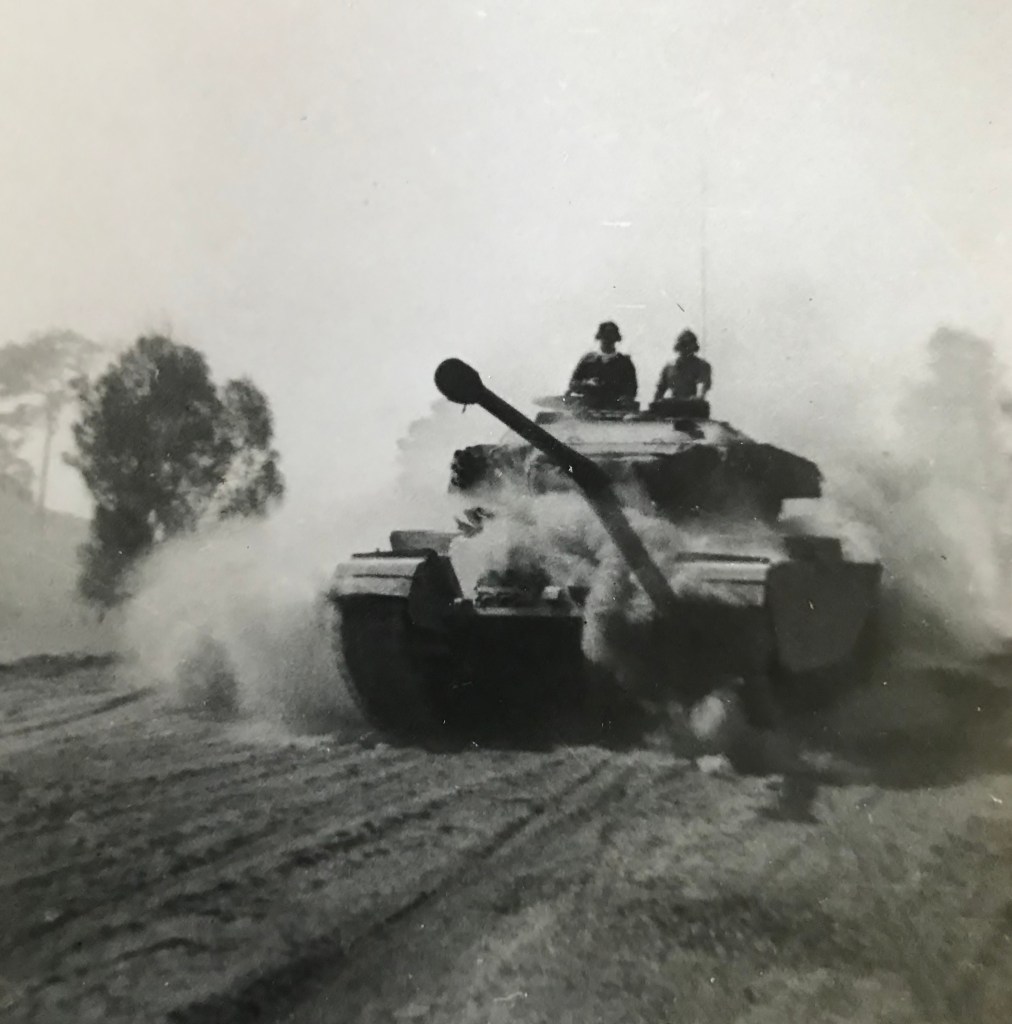
These moments in history were the pinnacle of power and the financial turning point, after which we began to cancel armoured training exercises in Canada and cannibalise tanks as part of the flawed concept of Whole Fleet Management. The stark truth is that in 2004, we had 386 Challenger 2 tanks, with 80% availability. Now, we have 212 tanks, with less than 20% availability and the Challenger 3 replacement still many mile away from Full Operating Capability. But does this matter?

One of the most interesting aspects of the war in Ukraine is how the character of the war has changed over the three years. The Ukrainian incursion into Kursk has hurt Putin, but it is not the NATO tanks such as Challenger 2 that have brought him to the table, but the Unmanned Air Systems, which have devastated deep targets, harassed supply lines and wearied civilian populations.

This new type of warfare with layered ground and air sensors that trigger loitering drones, mines, missiles and mortars has been highly successful at reducing Ukrainian casualties (still too high), but it is not much good at re-capturing the Donbas. For that, the leaders will need more tanks because armour is still the only thing that can take and hold ground.

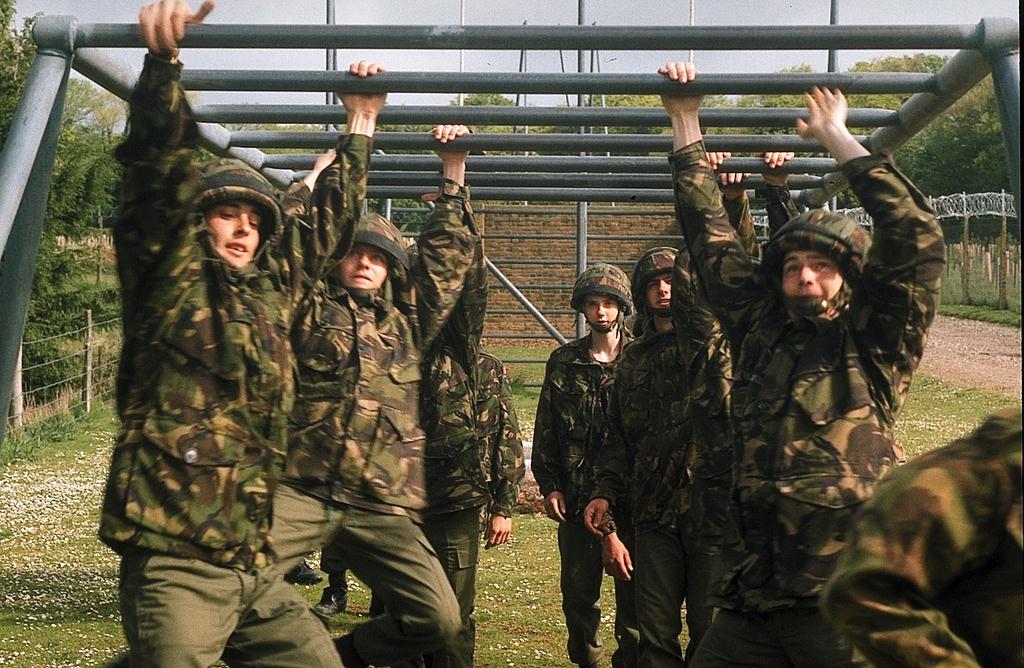
In the meantime, Putin and Trump are dangling carrots in front of each other and there is more hints of peace. If I was Putin, offering a pause would benefit my war aims while allowing me time to make plans for a Spring 2026 offensive. Which is why, our Government must ensure the British Army is capable of fighting and sustaining a Medium Scale Land Formation in high intensity warfare by completing the overdue purchase of Challenger 3, Ajax and Ares, MLRS and the new Mobile Fires Platform, as well as the new medium helicopter. Perhaps, more importantly they must also inspire a sense of duty in our young people today and reverse the desperate decline in the Armed Forces recruiting.

Ajax and Ares On Trial