
Is History Repeating Itself?

I gave a talk today about the Swing Riots in 1830 and it struck me how similar the country is now to those former times.

In the first place, the climate was changing drastically with extreme events occurring on an increasing basis. This resulted in a disastrous harvest in 1829 and another meagre one a year later. There were regular “hurricanes” during the winter and one diarist recorded on 3 April that: “It was so cold to-day that cartloads of ice were brought in.”, but four days later “It was so hot by day as to be quite overpowering ; and so warm at night that one could scarcely bear any clothes, beyond the sheet, over one in bed.”

Secondly, there was something akin to the current cost of living crisis. Farm labourers earned eight shillings a week (40 pence), which left them with nothing after their rent and food was paid. Their clothes were in shreds and there were no treats for their children.

Thirdly, technology was putting people out of work. For example, the introduction of threshing machines meant that many families found no work in the winter months.

Fourthly, there was a sense that the political elite were out of touch and that ordinary people had no say in the decisions that affected them. This was particularly the case in the countryside where changes such as “Enclosure” were restricting the traditional freedoms and rights of ordinary folk.

There were many protest movements, which inconvenienced ordinary people, who were going about their daily business. Some of these turned ugly and were known as the Swing Riots.

And immigration from Europe was at its peak with the French and Belgium revolutions increasing this flow of refugees and displaced people. With a new king (William IV) and a national election that was hotly contested, there was a real worry about revolution being imported from abroad.

The good news was that within a decade, most of these ills had been resolved and the revitalised country embarked on a period of tremendous growth and prosperity.

The question is – Will history repeat itself?

National Service In A Nutshell

One of the most frequent questions I heard from the public as a spokesperson for the Army Board in 1999 was about bringing back National Service.

At the time, the Chief of Defence was Charles Guthrie, who incidentally has exactly the same background as the new Head of the Army (Guards and SAS). His opinion was that the Armed Forces should be focused on warfighting skills and train for the worst case scenario. This view proved to be prescient as the following decade saw British soldiers, sailors and pilots involved in some of the hardest fighting experienced since the Second World War.

The idea of conscription is to instil a sense of duty and purpose in young people, rather than entitlement and indolence. This is a huge task, which in itself will further dilute the current Armed Forces capability that has been ravaged during the past ten years. It will also distract the MoD from its primary purpose, which at this time of extreme Global tension is both unwise and unhelpful to our Allies.

Attempting to force 18-year-olds to do what they don’t want to do will also open the Services to even more medical problems, litigation claims and negative media than they currently experience.

I believe the purpose of helping young people to escape from their “bubbles” is a tremendous idea, but the Armed Forces are not there as a grown-up guide, or scout movement. We need to deal with the causes and tackle the problem at its root. It is for the Department for Education to teach children in their early years about the importance of team work, loyalty, contributing to society and being the best.

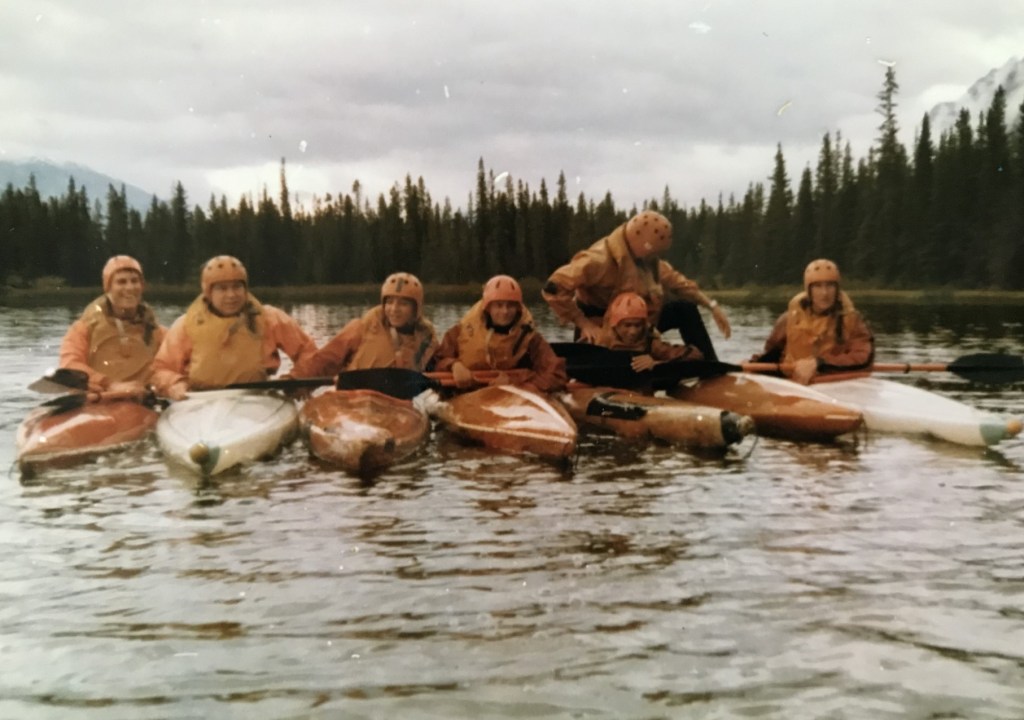
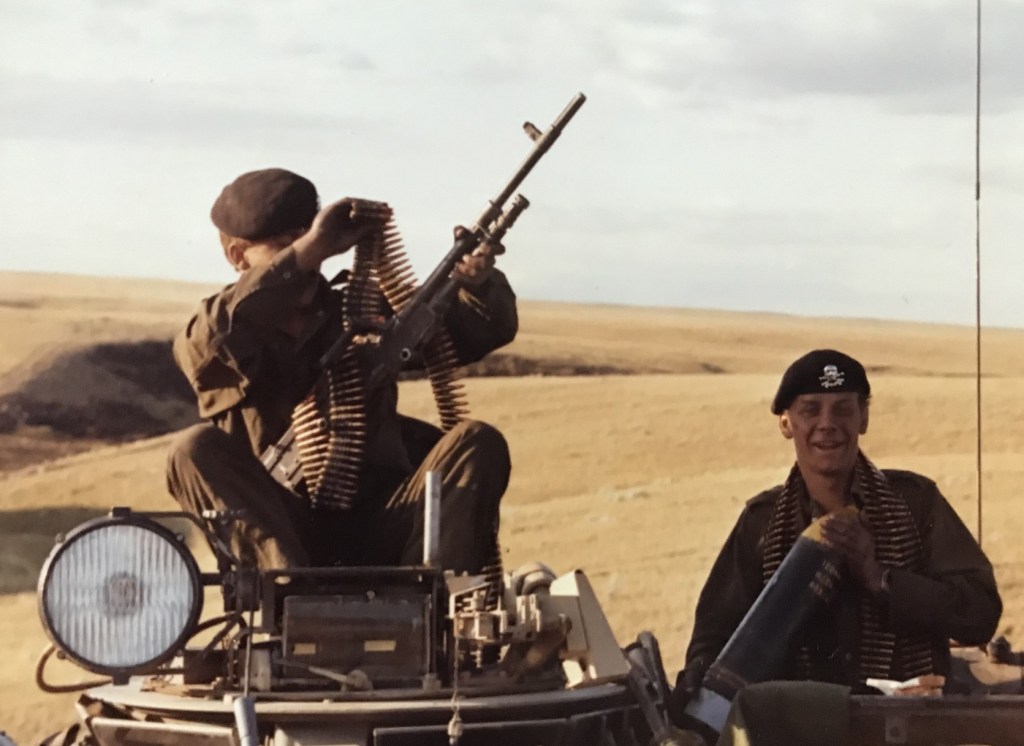
Recruit Training 25 Years Ago

Russian May Offensive

There is something very predictable about what is happening in Ukraine at the moment. The latest attacks by the Russian Army (with support from Cubans and other mercenaries) has been foreseen by many people, as the overwhelming numbers of soldiers and materiel begin to take effect and wear down the gallant defenders.

I always think that Putin likens himself to a Russian Tsar, rather than a Soviet Leader, but his method this year seems to be straight out of the manual that we studied in the Cold War. In a folded aide-memoir, we were told to imagine the approaching Soviet Army as an animal that constantly changes shape. It begins as a tortoise, with a thick outer shell protecting the important body as the head looks out for the enemy. In the deployment phase, it resembles a slither of snakes, which probe for gaps and weaknesses in the enemy positions. Finally in the attack, it is like a bear that growls to hold the enemy’s attention while its paws sweep in from the flanks.

In terms of his long term goals, I do not believe that Putin completely wishes to decimate Kharkiv and turn it into a “Grozny”, but he will do it if he believes it will tip the balance to win the war (and the peace). The short term goal is clearly to push the Russian boundaries further away from Moscow and to create as wide a buffer zone as possible, but there are other objectives, which are discussed in an excellent podcast by distinguished writers, Saul David and Patrick Bishop, that is definitely worth a listen at: https://www.goalhangerpodcasts.com/battleground?utm_source=substack&utm_medium=email

Winchester Book Talk

I am looking forward to giving part two of my book talks on the Western Desert Campaigns, in Winchester tomorrow. Having given separate talks on Churchill’s Second Darkest Hour, the Birth of British Special Forces and Giants of El Alamein, I know how tricky it is to condense all the World War II material into one 45 minute talk.

There are some stirring anniversaries at this time of the year with the Siege of Tobruk and the Battle of Gazala this month and the visit of HM King George VI in June, when he presented a Field Marshal’s baton to Viscount Gort for the part he played in securing the freedom of Malta.

Since we are also approaching the 80th anniversary of the Normandy Landings, I will include a comparison of the two theatres of war and show how the neglected 1942-43 North African campaign was every bit as tough as the 1944-45 fight in Western Europe.

HRH King George VI in Monty’s Humber, being cheered by soldiers in Tripoli in June 1943

Russian Display of Western Tanks

There is no denying that unveiling the captured US Abrams and German Leopard tanks a week before the annual Victory Parade in Moscow is a big moral booster for the Russian Army. Not only does it reinforce the mendacious message about the “Special Operation” in Ukraine, but it also demonstrates to the Russian population that NATO does not have a technical advantage over Russian tanks.

There was always a high probability that this humiliation would happen, which was one of the main reasons why Western governments were reluctant to donate their heavy armour to Ukraine in the earlier part of the war.

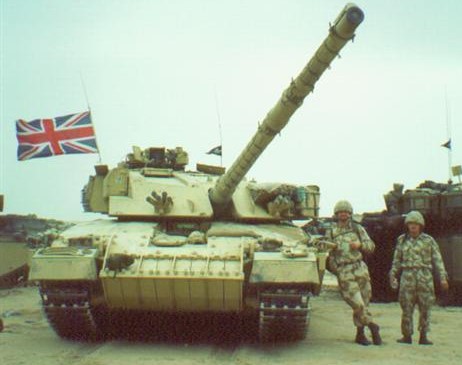
For me, however, there is a more notable point that the mainstream news outlets have missed. The design of a main battle tank has three competing characteristics: firepower (the range and power of the gun); mobility (its speed and manoeuvrability); and protection (the thickness of the armour and survivability of the crew). I have always said that I would prefer to be in a British tank than a tank designed by any other nation because its protection is the best. Yes, there are some weak points that were exposed by tandem warhead missiles in Iraq, but pound for pound the Challenger 2 is the finest tank for European conditions.

Unfortunately, since 2007, successive governments have prioritised aircraft carriers over tanks, thinking that we can rely on American and German designs. Given what we have seen this week, it really is time that we invested in our own tank building capability again.

Challenger 2 Tank – Not On Display In Moscow!

Royal Marine Landing in Gaza?

The MoD is currently weighing the wisdom of deploying the Royal Marines to help deliver humanitarian aid to the starving population in Gaza. There is no doubt the commandoes are the most suitable troops to undertake this risky task, but would their involvement develop into something bigger? As Field Marshal Inge once said metaphorically about peacekeeping in Bosnia, there is a high chance of “putting our hands in a mangle”.

History tells us that this has happened before. In April 1918, a party of Royal Marines landed in Vladivostok to protect the supplies that were sent by the British Government in support of our Allies. Thus began an entanglement in Siberia that lasted until the British headquarters left in May 1920, with the Royals becoming deeply involved in the Russian civil war and earning many distinguished awards for their fire support to the White Army on the Kama River.

Given the complicated situation in Gaza, it is not beyond the bounds of imagination that the Royal Marines will still be there in two years time, if the government deploys them in May.

Captain Tom Jameson of the Royal Marines with the White Fleet commanders in Siberia

To The Shores of Tripoli

The anniversary of the first American military overseas intervention takes place this week. Six months before the Battle of Trafalgar, the US Marine Corps launched a land attack on the important Ottoman port of Derna. This operation was planned because the crew of the captured frigate, USS Philadelphia had been held hostage in Tripoli for over a year.

The expedition was authorised by the President, Thomas Jefferson, who had been recently re-elected for his second term of office. The marines were commanded by 29 year-old Lieutenant Presley O’Bannon from Virginia, who had also recruited a multicultural force of Greeks and Arabs in Alexandria. Under the overall leadership of the envoy, William Eaton, who had persuaded the brother of the Tripoli Pasha, Hamet Qaramanli to accompany him, they marched 521 miles along the coast, passing the “pretty port of Toubrouk” on the way.

On 27 April, Eaton divided his force into two and co-ordinated fire support with Captain Isaac Hull from the frigate, USS Argus. Hamat Qaramanli approached the port with the Arab force from the west, while the marines attacked the fort from the east. Passing through a shower of musketry, the battle was soon over and the USA flag was raised over a captured city on foreign soil for the first time.

Soon afterwards, a diplomatic solution was agreed with the Pasha in Tripoli and the hostages were released. Meanwhile, the American troops returned home as national heroes and the phrase “To The Shores of Tripoli” was added to the flag of the US Marine Corps.

Lieutenant Presley O’Bannon at Derna

Tribute to The Duke of Kent

Today, HRH Prince Edward, Duke of Kent has handed over as Regimental Colonel of the Scots Guards to HRH Prince Edward, Duke of Edinburgh. His record-breaking tenure has seen dramatic changes in the makeup of the regiment with LGBT, beards and women now allowed where once they were banned. However, the best tribute to his achievement is that before he took over, it was unusual for the monarch’s close family to hold the Guards’ colonelcies, now all but one are in the hands of HRH The King’s immediate family.

Sir Allan Adair was Colonel of the Grenadier Guards until 1974 – now it is HRH Queen Camilla; the 3rd Baron Methuen was Scots Guards Regimental Colonel until he handed over to the Duke of York in 1932 – now it is the King’s youngest brother; the Earl of Gowrie was Regimental Colonel of the Welsh Guards until handing over to the late Duke of Edinburgh in 1953 – now it is the HRH Prince of Wales; the Irish Guards did not have a royal Regimental Colonel until 2011 – now it is the the Princess of Wales. The only Guards regiment without a royal regimental colonel is the Coldstream Guards, but perhaps this is understandable because their original loyalty was to Oliver Cromwell.

For my part, I am sad to see the Duke of Kent retire. He held enormous respect in the British Army because he was a professional soldier in his own right, so he could empathise with those serving in the armed forces. In 1998, I had the honour of teaching him how to ride a traditional toboggan in Switzerland. As you can see from the photograph, we were both quite nervous when I launched him into the Cresta Run, but fortunately, he survived unscathed and enjoyed telling me about it later, when he presented me with the Scots Guards Cup.

HRH The Duke of Kent on the Cresta Run

NATO at 75 Misunderstood and Mistaken

My long involvement with NATO began in 1980 with its extreme cold weather exercise, Anorak Express in Norway and took in the largest Dutch fighting troops tank exercise as well as major Reinforcement of Germany training such as Certain Strike and Iron Hammer. Cold War manoeuvres gave way to peace support operations in the Balkans, partnership for peace in Eastern Europe and security assistance in Afghanistan, Iraq and Libya. These were all primarily political deployments, albeit with strong military forces attached to the missions.

The misunderstanding that NATO is purely military stems largely from incorrect media sources such as Britannica and Wikipedia, which fail to explain that it is primarily a political alliance that uses military means as a last resort for the purpose of collective security. Even today, the BBC described NATO as a “military alliance”. This is dangerous on two counts. First, it panders to Putin’s version of the truth about the risks to Russia if Ukraine joins NATO. And second, it promotes the pretence that we can rely on others for our defence, rather than ensuring we have Armed Forces that are capable of operating independently for our own good.

Politics is all about perceptions and I have to admit that I hold a different view to the Secretary General about the “alliance of authoritarian powers” (which sounds like a rehash of the 2001 “axis of evil”). More than 50 countries have not supported the West in their recent foreign affairs’ decisions, including most of Africa and Asia. Does this mean that India, South Africa (and Brazil) are also enemies now, or are we the ones that are missing something?

NATO Allies In Action

A Human Link Between Tripoli, Moscow and Easter

Four notable characters feature in both Churchill’s Abandoned Prisoners and Liberating Libya. The first three were a courageous soldier, a distinguished diplomat and a political titan. The soldier, Brian Horrocks, was one of the last British prisoners to be released from Moscow in World War I and then earned an immediate DSO commanding XIII Corps in the western desert during World War II. The diplomat, Miles Lampson (later Lord Killearn), was the last British Consul with Admiral Kolchak in 1920 and the first British Ambassador to Egypt (when the appointment changed from High Commissioner). The politician, Winston Churchill, did more than anyone to secure the release of the prisoners from Moscow and later as Prime Minister, stayed with the Lampsons in Cairo while he met General Horrocks for the first time (and then told Monty to sack him).

The fourth character was, however, more prominent in both books through the strength of his “ready pen”. Francis McCullagh was heralded by the great newspaper editor, WT Stead, as having “a potent influence of the policy of Great Britain”. He was a worthy successor to William Howard Russell and could be described as the finest War Correspondent of his generation. His influential writings about Bolshevik Russia and Italian Libya are extraordinarily powerful, but what sets him apart are his “fearless spirit” and intrepid adventures in Tripoli and Moscow. These culminated with his arrest, torture and interrogation in Lubyanka by the Tcheka during the Easter weekend of 1920. For those thinking of Evan Gershkovich at this time, Francis McCullough provides some hope and inspiration for a happy ending.

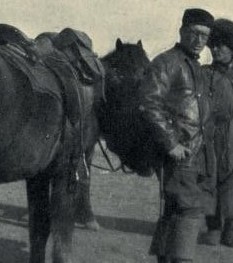
Francis McCullagh in Russia