Soldier F Fallout

There is a saying in the Army that runs along the lines: “there are no bad soldiers, only bad officers”. Like all generalisations there are many exceptions to this maxim, but from my experience of commanding soldiers on 7 different operations (including as a platoon commander in West Belfast), it is founded on truth. In the case of the soldiers who shot dead 13 protesters on 30 January 1972, I would personally direct my focus on the military leadership, rather than the “out-of-control”, poorly-trained troops.

Another focus would be on the Media and especially the BBC, whose reporting continues to be biased against the Army. Their historical context always begins with the introduction of Internment, but makes no mention of the murder of over 50 British soldiers and policemen that led directly to Bloody Sunday. This is similar to reporting on the war in Gaza without explaining that Israel was responding to the heinous crimes committed by Hamas. It is about time the BBC leadership corrected its prejudicial reporting on the Troubles.

Neither of these observations will comfort the families of those who were killed in Londonderry at the end of January 1972. They have my full sympathy, but at the same time persecuting veterans for politicians’ mistakes is the wrong way to deal with legacy issues in Northern Ireland.
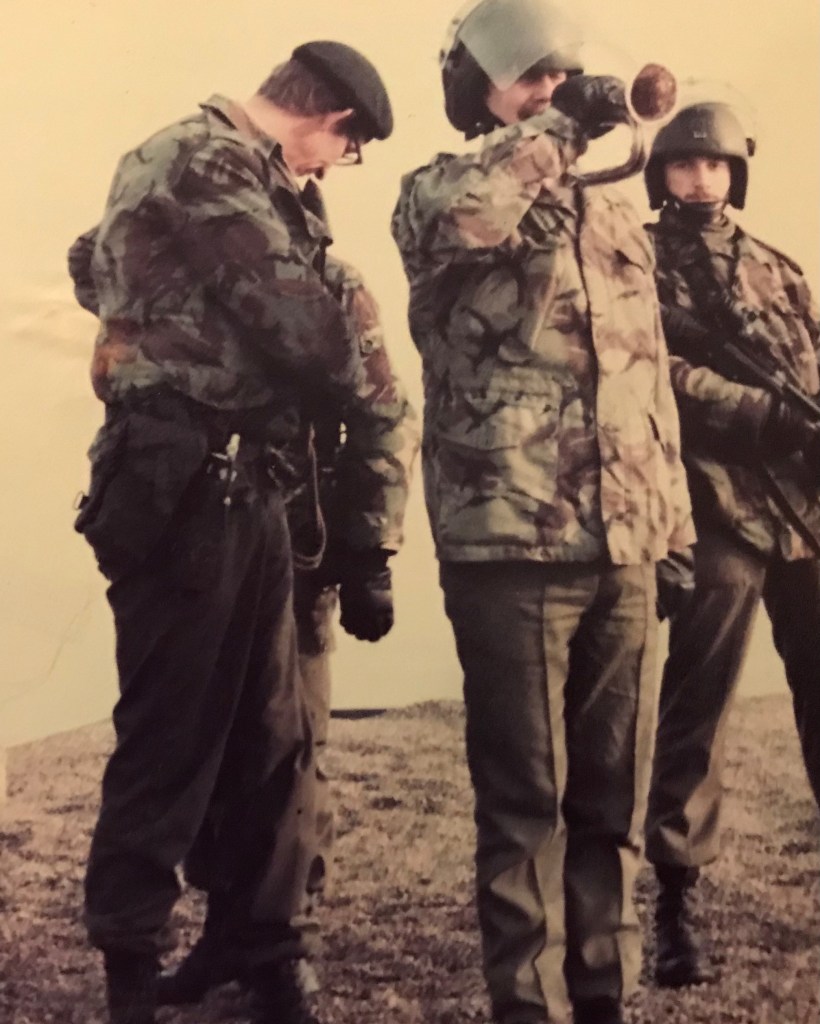
A Decent Leader In Northern Ireland 1981

Tomahawk Missiles Could Be The Answer

To many people, Tomahawk missiles are a game-changer that could end the war in Ukraine overnight. However, my experience of their use in wars in the Balkans, Middle East and Africa is that they were less important than the armoured brigades and ground troops that were deployed to the battlefield by NATO and other Coalitions. I watched several of Tomahawks fly over my base in Maglaj on their way to Banja Luka on 10 September 1985, but it was the Challenger 2 tanks that were the real game-changers during Operation Deliberate Force.

Looking at the war in Ukraine, the Pentagon has to weigh-up whether the deployment of Tomahawks would deter further Russian aggression, or act as provocation. On the one side, we know that Putin and his acolytes believe Ukraine is their “property” and are unwilling to see it join NATO. On the other side, Ukraine has done a magnificent job of defending its independence and has hurt Russia recently with its clever strategy and tactics.

Trump is treading a fine balance between the two sides. He clearly does not wish to start World War III, but at the same time he wishes to be seen as a peacemaker and knows that Putin only respects strength. So what chance of a ceasefire before the end of the year? My view is that if there is a pause, it will more than likely be due to the winter weather than military diplomacy, but that in itself will be of benefit to ordinary citizens living with the constant fear of attacks from the Air. So, here’s hoping…

Chinese Spy Threat Hyperbole

MI5, which stands for Military Intelligence Section 5, was originally formed in the run-up to World War I to counter the domestic threat from countries against which we were about to fight i.e. Germany and its allies. Due to the counter-espionage success, its role was expanded to include fifth columnists and Soviet propagandist sympathisers, who worked to overthrow the legitimate government of the United Kingdom. After the Cold War, when Francis Fukuyama told us history had “ended”, MI5 lost its sense of purpose until 9/11, when international terrorism raised the threshold of domestic attacks in western countries. Since then, it has never been busier because Britain created a National Security Register, which now runs to thousands of serials.

Reading the MI5 dire warnings about China by the head of MI5 today, one might be led to believe that the People’s Republic is about to invade a British Territory, or a NATO ally. Whereas in fact, the Armed Forces have been encouraged to share information with China for many years. A good example was the Chief of the General Staff’s land warfare conference, which I organised in 2011. On day 1, at 10.15 after the US Chief of the Army, General Martin Dempsey delivered a keynote address, the next speaker was General Zhang Qinsheng, who as Deputy Chief of the People’s Liberation Army gave a vivid strategic overview. The following day, after Rhett Hernandez, Commanding General of US Army Cyber Command, provided the conference with an update about American cyber capability, he answered a myriad of questions posed by the Chinese delegation (see the unclassified photograph below).

I am sure Sir Ken McCallum is truthful when he states that MI5 is disrupting Chinese intelligence gathering in the United Kingdom, but if we are so worried about this, why are we giving academic scholarships to Chinese students at our prestigious universities, who then have access to incredible levels of private knowledge? And why are we not being consistent with other economic competitors which are also “spying” and attempting to steal copyright material?

Successive governments have fudged this issue partly because China is not a direct military threat to Britain and partly because even though there is a trade deficit, the People’s Republic is our fifth largest trading partner and, according to a government factsheet, we exported £28.8 Billion of goods to China in the four quarters to the beginning of 2025.

Conflicts in Context

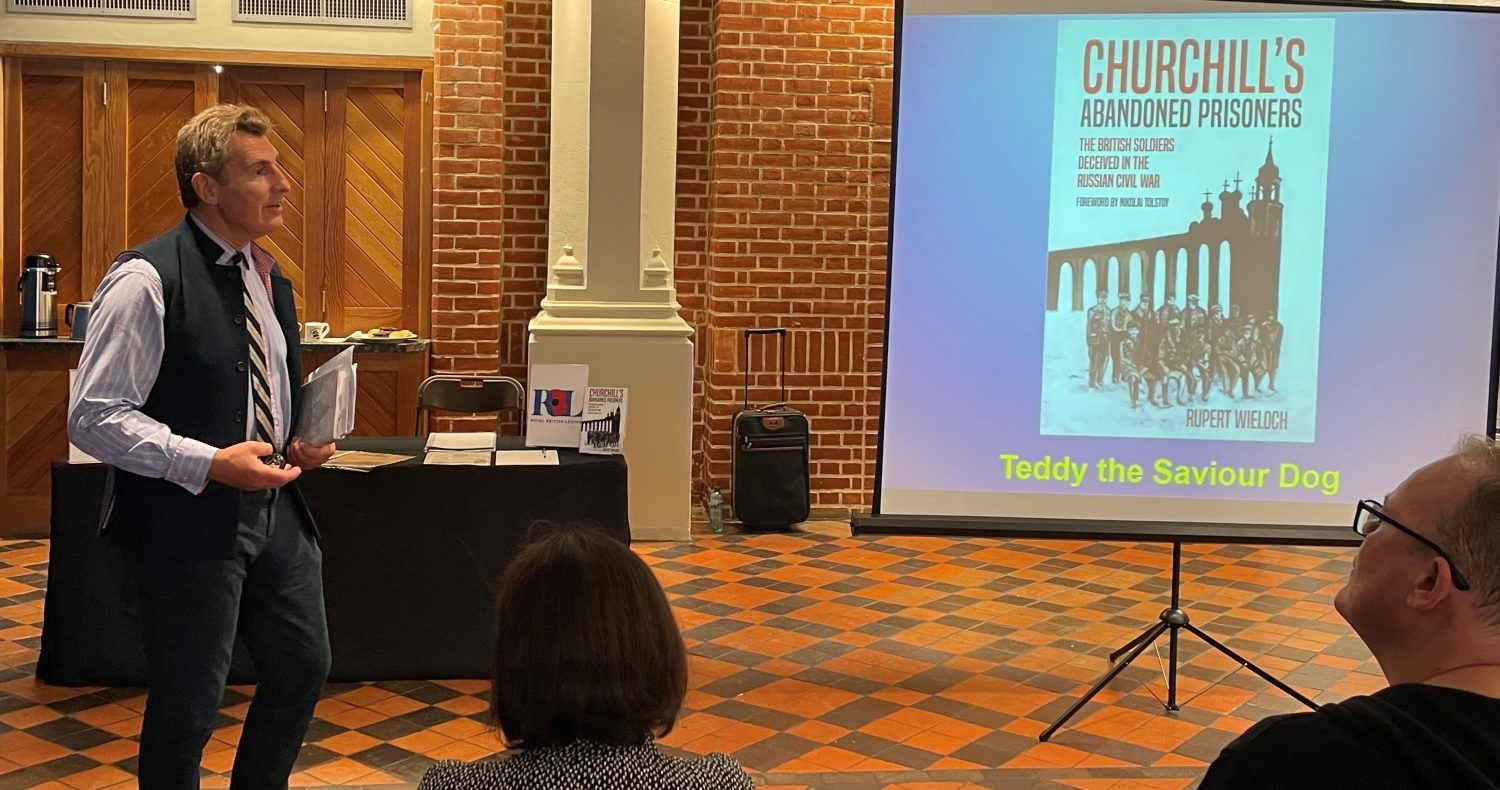
I was very grateful to the organisers of Battles through History for inviting me to join the eclectic mix of authors in the Norfolk Pavilion last week. Despite Storm Amy, there were plenty of visitors to this tremendous military show at Ardingly, many of whom joined us upstairs for the fascinating book talks.

Although we focused on the past, the news in Ukraine and the Middle East, was still very much to the fore and had me thinking about casualty rates. During my talk about the Victoria Crosses awarded in North Africa, I pointed out that the casualty rates at Gazala and El Alamein were as bad as Normandy and North West Europe. For example, at Gazala, the Allies suffered 50,000 killed, wounded or captured out of a force of 110,000.

Looking at casualty numbers in the two worst current conflicts, there have been about 60,000 fatalities in Ukraine this year and about 24,000 in the Middle East. These levels are equivalent to what was happening in World War II and suggest the character of war has not changed even if the tools may be different. It is good that a ceasefire has been agreed in Gaza, but the real challenge is 2,000 miles north of there.