
Apart from hunting war criminals, the NATO peacekeeing force in Bosnia had to help the International Criminal Court build evidence for the prosecutions in the Hague. In 2003, we discovered the largest (at that time) mass grave in the country at Crni Vrh, which helped to convict a number of accused people. It is a desperate but essential job, exhuming the remains of people, who have been murdered and those involved deserve huge respect.
A less stressful, but arguably more important task to build stability in a post-conflict country is to help combatents transition to civilian life. Known as DDR, Demobilisation, Disarmament and Reintegration is the key task that never happened in Libya and its absence led to a second civil war and continuing crisis. Compared to this, Bosnia was a success; during the first six months of 2003, NATO harvested over one billion rounds of ammunition and over 30,000 weapons. Most of this ordnance was destroyed at the steel factory in Zenica, close to where I was based in 1995.
Perhaps the most dangerous peacekeeping task is de-mining. In Bosnia, many civilians were killed or maimed by unmarked mines even in the decade after the end of the conflict. In Libya, one of my soldiers was awarded a Queen’s Gallantry Medal for defusing Chinese mines after they killed an Estonian UN de-miner near Misruatah.
If the British Army is to send a peacekeeping force to Ukraine, they will need highly trained soldiers, capable of not just military patrolling, but also a huge variety of confidence-building tasks to rebuild a country suffering from the deep traumatic effects of modern war.

Doboj Weapons Harvest 2003
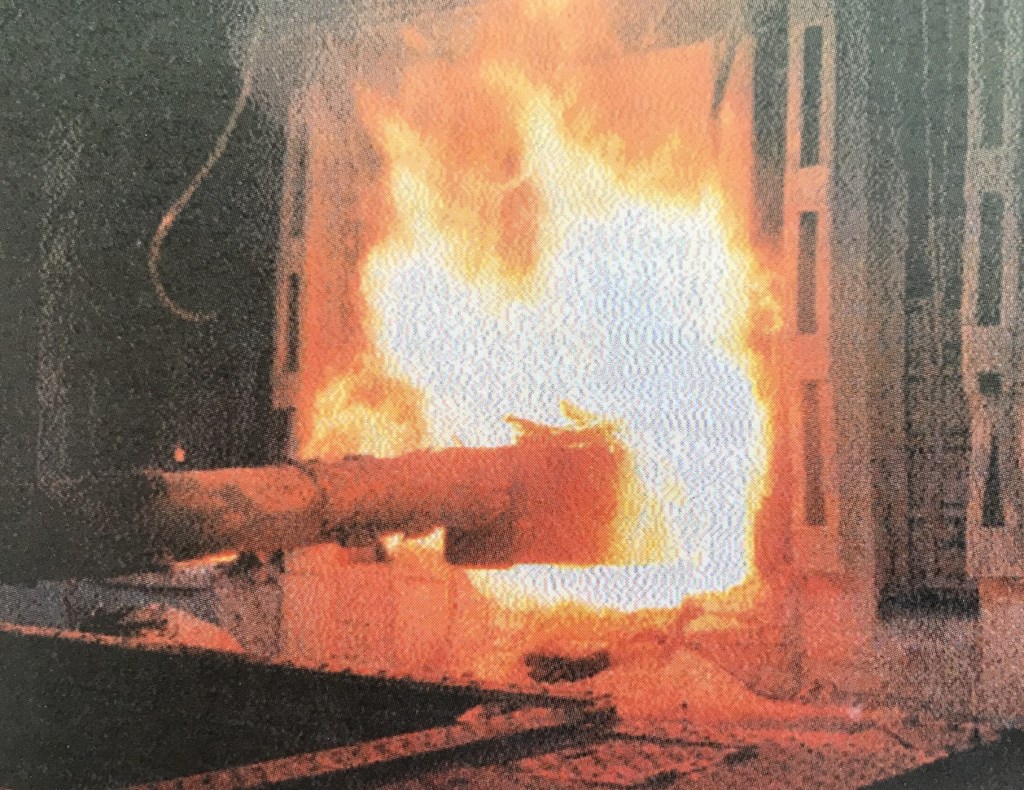
Weapon Destruction at Zenica Steel Works 2003
 Rupert Wieloch