
The New British Tank

When I give my talk about the state of the British Army in August, one of the important topics will be our battle equipment, including the new British tank, named Challenger 3.

I had the honour of operating all the different types of British tanks in service between 1970 and 2020. These included the lightly armoured Saladin, Scorpion and Scimitar (all of which were manufactured by Alvis) and the heavily protected Chieftain and Challenger Main Battle Tanks with their 120mm rifled-bore main armament. Perhaps more importantly, I held the appointment of Head of Defence Equipment Reliability, when our new British tanks were conceived, assessed and designed.

Designing a tank is like playing rock, paper, scissors. It is a balance between firepower, mobility and protection (or survivability). Users who desire perfection will only be frustrated because compromises have to be made; for example, if you increase the calibre of gun, or weight of armour, the tank may end up as a slow, sitting target. So, it is not surprising that the new British tank is closely related to the old British tank with the same hull but a new turret, active protection system and (smooth-bore) gun. For traditionalists, it is sad to see that we are buying a German tank and that the gunnery skills will be diminished, since we will no longer be able to accurately shoot High Explosive rounds beyond two miles.
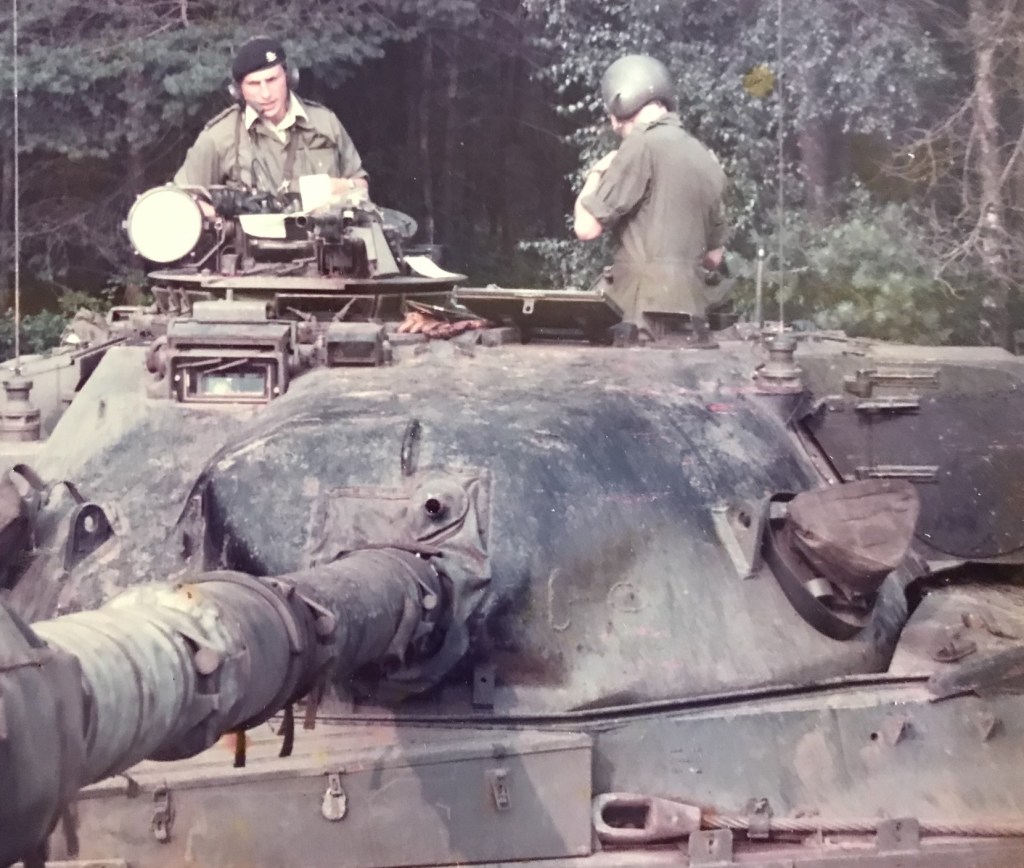
Fighting Vehicle 4201 Mark 10 Chieftain with Improved Fire Control System

State of the Army 2025

Fourteen years ago, I wrote the Army’s contribution to the Future Land Operating Concept (FLOC), so it was disappointing that at the recent RUSI Land Warfare Conference in London, there was a desperate discussion about the British Army’s decline during the past ten years.

It is quite easy to trace when we started to cannibalise major equipment, such as Challenger 2 battle-tanks, through flawed concepts such as Whole Fleet Management. It is much harder to lay out a programme of re-armament to address the weaknesses in manoeuvre warfare, let alone deliver this in a five-year time-line.

Next month, I have been invited to speak about the current state of the British Army. The problems of equipment will of course be part of this talk. However, the more important aspect will be the assessment of fighting spirit and the ability of our soldiers to defeat an enemy that attacks us with a full range of capabilities in the worst-case scenario.

From this analysis, I will conclude with what I consider to be the top five priorities for the British Army in the next five years.

Ajax photograph thanks to UK MoD

NATO’s Peacekeeping Tasks

Apart from hunting war criminals, the NATO peacekeeing force in Bosnia had to help the International Criminal Court build evidence for the prosecutions in the Hague. In 2003, we discovered the largest (at that time) mass grave in the country at Crni Vrh, which helped to convict a number of accused people. It is a desperate but essential job, exhuming the remains of people, who have been murdered and those involved deserve huge respect.

A less stressful, but arguably more important task to build stability in a post-conflict country is to help combatents transition to civilian life. Known as DDR, Demobilisation, Disarmament and Reintegration is the key task that never happened in Libya and its absence led to a second civil war and continuing crisis. Compared to this, Bosnia was a success; during the first six months of 2003, NATO harvested over one billion rounds of ammunition and over 30,000 weapons. Most of this ordnance was destroyed at the steel factory in Zenica, close to where I was based in 1995.

Perhaps the most dangerous peacekeeping task is de-mining. In Bosnia, many civilians were killed or maimed by unmarked mines even in the decade after the end of the conflict. In Libya, one of my soldiers was awarded a Queen’s Gallantry Medal for defusing Chinese mines after they killed an Estonian UN de-miner near Misruatah.

If the British Army is to send a peacekeeping force to Ukraine, they will need highly trained soldiers, capable of not just military patrolling, but also a huge variety of confidence-building tasks to rebuild a country suffering from the deep traumatic effects of modern war.

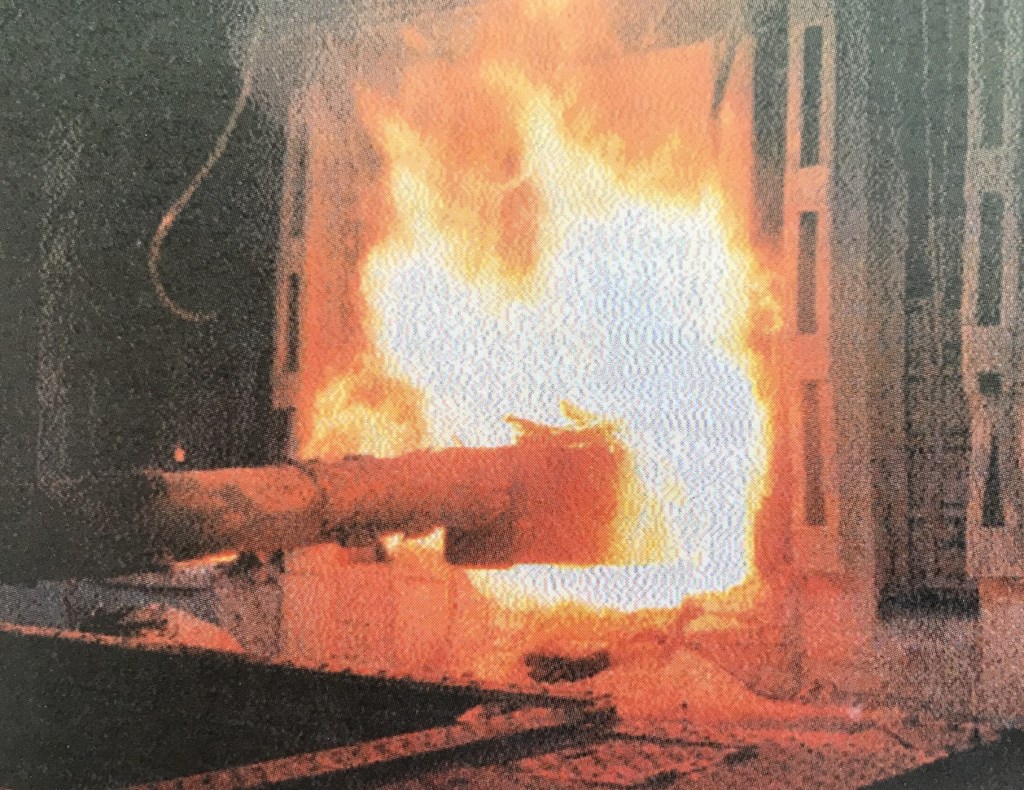
Doboj Weapons Harvest 2003

Weapon Destruction at Zenica Steel Works 2003

Srebrenica Remembered

Thirty years ago today, I was in Bosnia commanding the northernmost British troops, closest to the beseiged town of Srebrenica, which had been a UN Safe Area for two years. I was in the middle of hosting a number of British and UN VIPs, including the Chief of the General Staff when we heard about the launch of the Bosnian Serb Army attack and the capture of the UN Observation Posts. Unfortunately, the Dutch Battalion and the Army of the Republic of Bosnia and Herzegovina capitulated and allowed General Mladic to take over the UN compound and surrounding area.

I had been attacked in a similar way when I arrived in Maglaj two months earlier. The Bosnian Serb Army had used white phosphorus artillery shells, mortars, rockets and a T-55 tank over a period of five days. However, with the use of British light tanks, Canadian TOW missiles and a New Zealand tactical air control party, we repelled the assault and saved the lives of thousands of civilians.

In Srebrenica, the world did nothing to intervene and as a result, over 8,000 men and boys were murdered in the worst atrocity on European soil since World War II. What has always shocked me was the testimony of a Dutch sergeant-major in Potocari, who was quoted in Newsweek as saying that his battalion knew the British had defeated the Bosnian Serb Army using TOW missiles, so he couldn’t understand why the Dutch did not use their missiles and call upon air support to defend their Observation Posts.

In 2003, I was responsible for planning NATO’s operations against the indicted War Criminals in Bosnia, when Bill Clinton took part in the dedication of the Srebrenica Potocari memorial and cemetery on 11 July. Later on, I visited the area with an American military colleague, with three aims in mind. First, to pay homage to the victims away from the hubris of the anniversary. Second, to see for myself the mass graves which were being exhumed to provide forensic evidence for the International Criminal Court (difficult because there were still many unaccounted mines in the area). Third, to assess from a military point of view whether the UN troops that were on the ground could have prevented the genocide.

What struck me most about that day was the suffocating sense of haunting that accompanied me as I walked alone through the rusty UN compound. It is a profoundly moving location in a way that is similar to visiting Ground Zero and the Belsen concentration Camp. I do hope the international representatives who attend the 30th anniversary this week take the time to look behind the scenes and reflect on how the international community can reassert the rule of law in today’s angry world.

July 1995 in Northern Bosnia with the Chief of the General Staff