
Hollow NATO is a Shadow of the Past

I know NATO very well. My first decade in the British Army was spent patrolling the Northern Flank in a light tank (Scorpion) and manoeuvering around the Central Front in a tank regiment (Chieftain and Challenger). The annual operational readiness tests were taken very seriously with all 60 tanks in the regiment ready to drive to their war positions at the drop of an Active Edge hat. The complex reinforcement in Germany exercises were impressive war-rehearsals with the one in 1984 involving 131,565 British personnel – more than twice the size of the current British Army.

That immense strength was a potent deterrent to Moscow and acted as a significant tripwire before the battlefield nuclear weapons of 50 Missile Regiment were to be used. If you wish to read more on this, The National army Museum has put together an excellent summary of the British Army and NATO at that time: https://www.nam.ac.uk/explore/nato-and-british-army

Our capability of 1980s proved itself in the Falklands and Gulf Wars and was the foundation for NATO’s first military operation after the Cold War. I was in Bosnia for Operation Deliberate Force in 1995 and also for Operation Joint Forge seven years later. I also deployed to NATO operations in Afghanistan, Iraq and Libya after 9/11 and had to develop numerous concepts for NATO headquarters, such as the Over The Horizon Force for the Balkans in 2003.

One has to remember that NATO is a political organisation as well as a military alliance. However, it is tragic for those of us who worked for a highly capable military organisation to see what it has become. Having visited Estonia recently and spoken to several Royal Engineers, Medics and Combat soldiers who have returned from their deployments, it is clear that we are being mis-informed about the deterrence capability on the ground. The British Army (along with most of the other NATO armies) has been completely hollowed-out, so Its no wonder, the Government has agreed this week to raise the Defence Budget by a small amount.

Battle Group Training In Canada In 1982
Iran War – End of Part One

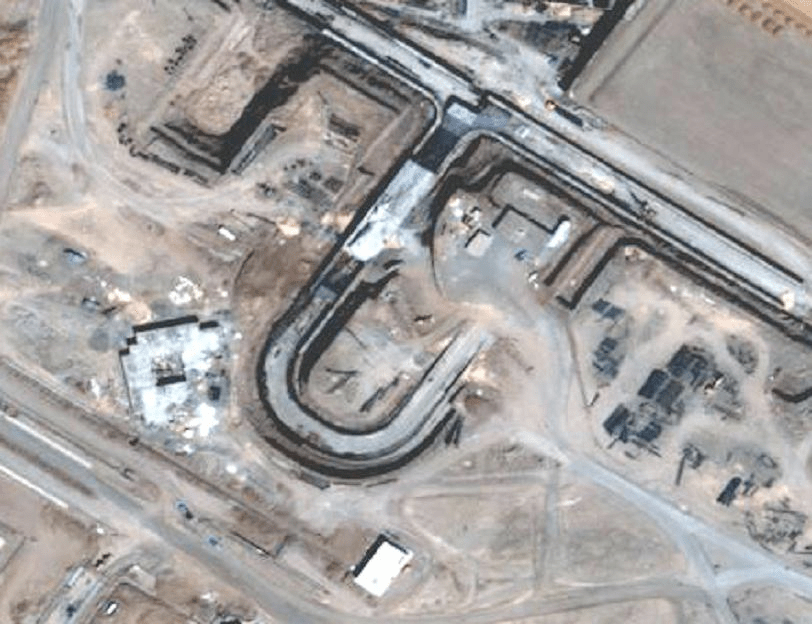
The impression gained from the US bombing of Iran was that Donald Trump had hoped that Israel would get the job done and wouldn’t need the B-2s with their Massive Ordnance Penetrator bombs. He possibly also hoped that he would garner more international support; however, his legal and political advisors were unable to put together a compelling justification that would pass muster in an international court. Since the Iranian regime would not contemplate “surrender” and was gaining traction through their diplomacy, it was inevitable that Trump would press the button.

This feels similar to when US Special Forces killed Usama Bin Laden. It demonstrates the global reach and power of the US military, but does little to bring peace to the region. Trump probably hopes that his action will be the end of something, but the World has now become more, not less dangerous, with British non-combatant evacuation operations being planned in the Middle East and the Foreign Office issuing travel warnings for British passport holders.

Part two is just around the corner…

Iran War – A Hybrid Template

The ideas around Hybrid Warfare developed from the Israeli war with Hezbollah in 2006, when 120 IDF soldiers were killed in action over a 34 day period. The form this threat took was like a chameleon because the belligerents adapted their tactics, exploiting all modes of warfare simultaneously; including: conventional weapons, irregular tactics, criminality and advanced technology to destabilise an existing order.

The current war between Israel and Iran has quickly moved from a limited operation to a hybrid war of survival. It may be that Israel’s aims are achieved in the same way that Colonel Qaddafi was overthrown in 2011 (although this took much longer than NATO anticipated). However, Iran is nothing like Libya (the population comprises 90 million Shia compared with only 7 million Sunni in Libya) and there is no UN Security Council Resolution, or NATO agreement for Israel’s attacks.

The consequences of this war are difficult to predict, but from my experience of living on the other side of the Tigris to Sadr City for six months and clearing the mess after the frequent rocket and missile attacks, the Shia assassinated leaders will be hailed as martyrs and their replacements will look for asymmetric ways to attack their enemies, using the principle of “an eye for an eye”. I would expect revenge attacks to occur using some of the many hand-held, surface to air missiles that are unaccounted for around the world.

The two-week pause that Trump has announced will no doubt be filled with behind-the-scenes meetings, counting of friends and allies, modelling of options and evidence-building to justify US involvement. The big worry for Washington remains how to protect the oil and gas fields in the Gulf and the big concern for Britain is whether to support the USA, or not.

Is this their Suez moment?

A Coalition on the Tigris

Iran War – Breaking The Rules

There have always been rules of war, but the modern codification of how States treat their enemy’s casualties and prisoners dates to the Hague and Geneva conventions convened around the turn of the 20th century. In America, there was also the Lieber Code, which addressed ethical issues such as summary executions during the Civil War.

After 9/11, there was a re-think about how the laws of war applied in a conflict involving non-state actors, who did not play by the rules. The British Army was deeply involved in this ethical debate about morality in asymmetric war and military interventions. Three of the key issues were: the use of torture, assassination and nuclear weapons.

Part of the argument to abide by the rules is based on the premise that if you break the rules, your enemy will do the same; a good example of this is the bombing of civilian targets in World War II, which was a policy started by Hitler, but ultimately used by all the main belligerents. In the current Middle East conflicts, one can think of the targeting of medical facilities, which is against international law, but is being perpetrated by the current protagonists. Interestingly, in world war II the assassination of state leaders was never used by the Allies or Axis Powers.

There are three legal justifications for going to war: self-defence; a treaty obligation (e.g. NATO article 5), and a United Nations Security Council Resolution (e.g. to prevent genocide). The dilemma for the United States in the next two weeks is somehow to justify entering the war with Iran legally and deciding whether it will abide by the rules of war (there is a difference between jus ad bello and jus in bello). What is at stake is America’s acknowledged position as the leader of the Free World and the Rules Based International Order.

Tomorrow, I will discuss the consequences of hybrid war.

Iran War – Time To Build The Coalition

In the aftermath of 9/11, Washington was intent on striking Al Qaida in Afghanistan immediately. At the time the Pentagon was in chaos due to the strike of American Airlines 77; however, there was a very strong relationship between the British Army officer in charge of commitments in the Ministry of Defence and his US counterpart. As a result we were invited to submit a paper that travelled over with the Prime Minister, who joined the US President a week after what is still the worst terrorist atrocity ever committed against British people.

The one big idea that came from London in the immediate aftermath was to build a coalition, rather than going alone as some Washington Hawks were suggesting. You can see this important contribution reading between the lines of the White House Press Secretary’s announcement in the George Bush archives https://georgewbush-whitehouse.archives.gov/news/releases/2001/09/20010917-9.html

At the time, we estimated that it would take at least twenty years to reintegrate Afghanistan into the international community, but that was before the Bush administration decided to use 9/11 as an excuse to invade Iraq.

The same dilemma that faced George Bush after 9/11 (and Barack Obama ten years later over Libya) is now facing President Trump. To succeed in the war with Iran, the USA needs a strong international coalition, but the reality now is very different to September 2001, when the whole world sympathised with America. The past three months has been characterised as a time when the USA has treated its allies with total disrespect, so it will probably take more than two weeks to build a new alliance from those who live by the Rules.

The one thing I have always admired American planners for is their attention to mathematics. I am sure there are people right now working out the casualty rates and percentages for various options, including assassination. Tomorrow, I will discuss the challenges of this approach and how it was viewed after 9/11.

A Successful Coalition of the Willing

Iran War – Listening To The Wrong People

It is interesting to hear that Trump’s advisors are split about US involvement in Israel’s war with Iran.

Important people are weighing the consequences as their predecessors did when the Bush Administration was thinking about invading the 17th largest country in the world in 2006. At that time, the idea was to launch a simultaneous pincer movement from Iraq and Afghanistan, but the US Forces never established firm launch pads for their ground forces, so it didn’t happen.

The idea now is to use Air Power and rely on the population to overthrow the regime. It is not just the Israelis who are trying to persuade the US to become involved in this war. There is a large Iranian diaspora based in Washington suggesting that the conditions are right for revolution, just as there were respected Iraqi and Libyan voices in 2001 and 2011, who claimed that regime change was easy and told the Americans that they would be welcomed if they overthrew Saddam Hussein and the Brotherly Leader.

These people are wrong. There may well be members of the intelligentsia in Teheran who hope for democracy and freedom, but the vast majority of the 92 Million Shias are not ready to welcome the USA and would defend their country as they did during the Iran-Iraq war, which cost over 1 million lives in the 1980s. The Iranian army’s strategy would no doubt be similar to the tactics that resulted in the ignominious US withdrawal from Iraq and Afghanistan. And their maritime tactics would be similar – using small craft and willing martyrs to sabotage the Gulf Oil Wells and disrupt the unwieldy western tankers transiting the 6-mile-wide traffic lane around Hormuz.

There is another very big consideration for Washington to ponder, which I will discuss in my next blog tomorrow.

The Vulnerable Point

Tipping The Balance

I retain several presentations given to me by the US Center for Strategic and International Studies when I was a member of the Middle East Peace Process Working Group on Arms Control and Security Co-operation at the time of the Arab Spring. Two pictures from these lengthy assessments are of particular interest when considering the current conflict between Israel and Iran. The first is a comment about the consequences of a war between Iran and Israel and the USA. The second is a pictorial layout of the gas and oil fields in the Gulf, which would be vulnerable to attack.

We all understand what has tipped the balance and why Israel has begun a new war in the Middle East. However, these pictures demonstrate that the knowledge about the Iranian nuclear capability was widely understood twenty years ago. They also show what is at stake and why America kept a lid on the potential conflict for the past two decades. By starting this new war, the unpopular Israeli government is gambling on President Trump coming to their assistance and the Sunni Gulf States siding against their Shia neighbour, but this plays straight into the scenario for the start of World War III.

In the meantime, I attended a British Army event this week, when they confirmed that Britain could no longer deploy a meaningful land component to the front. To protect our troops, we must rebuild the structures that ensure individuals are not treated like gun fodder and used to the best of their capabilities because these may be needed sooner rather than later.

Drone War Reality

In many ways, modern war has reverted to old war. The Tsars’ Russian Empire was built by leaning on their neighbours’ walls until they collapsed and then slowly assimilating the populations into the Mother country.

The Ukraine battlefield today is no longer dominated by tanks, but by all-seeing drones loaded with precision munitions and controlled from safe areas behind the front line. The effect has been to shift the balance from manoeuvre to attrition, (as happened in France in 1914). This has had the effect of Russia returning to her old, tried and trusted way of fighting with an extended trench line stretching for hundreds of miles.

In the First World War, it took four years to develop the tank to the level that it could alter the equilibrium in Flanders and allow visionaries to find a way to shorten the war and so reduce casualties. What we need today is a similar breakthrough in technology with a new type of protection, which harnesses the electromagnetic spectrum to repel the drones and allow ground vehicles the freedom to manoeuvre. Could this be a useful task for Elon Musk, now he is no longer welcome in the White House?

A British Mark V Tank Used By White Russians In Archangel

Front Line Country We Need To Support

Following in the footsteps of HRH The Prince of Wales, I visited Estonia, which has been part of NATO’s front line with Russia for 21 years. The country formed a deep partnership with the British Army in Afghanistan and I was fortunate to have an outstanding Estonian Colonel as my deputy in Baghdad. He cut his teeth as a young officer in the Red Army, so I learned a lot from him about the way the Russian army works.

Eleven years ago, the threat of invasion from Russia was high, but the deployment of British troops near to Tartu has helped to prevent the same thing that happened to Ukraine. During my visit, the Royal Engineers contingent had their roulement and it was good to see them wearing their uniforms proudly in public.

Inevitably tourist numbers are down, but as a result the capital, Tallinn, with its champagne air and fantastic UNESCO listed Old Town, is not too busy. Very sensibly, the country has played down the eras when it was ruled by Russia, Poland, Sweden and Germany and prefers to celebrate its medieval, Hanseatic heritage, when it was a highly successful, independent Baltic trading port.

There is still a strong Russian influence here (not as much as Lithuania), but there is also plenty of evidence to show where the country’s sympathies now lie. We must not lose sight of the fact that Putin still has plans to invade this country, so we need to keep supporting it.

Stop The War Protest In Tallinn