
Walt Disney Was Only Half Right

Film production inevitably changed during the Second World War with governments taking a greater interest in what was portrayed to the public. A typical British example was “In which We Serve” directed by a young David Lean and starring that titan of entertainment, Noel Coward. In Hollywood, American films were lighter and more distracting than their British counterparts, with musicals such as “Anchors Aweigh”, starring Frank Sinatra and Gene Kelly being put forward for Academy Awards.

In the animation world, Walt Disney’s films struggled to make money because he lost the European market. Even Bambi, which premiered in London on 8 August 1942, did not perform as well as hoped and so Walt decided to make propaganda films. His first foray was “Victory Through Air Power”, which was released on 17 July 1943. Many officials were seduced by the theories portrayed in this film, which led to some pretty drastic attacks on places such as Dresden and Hiroshima. However, although Air Power shortened World War II and is still being used today in places such as Ukraine and Gaza, it cannot solve a conflict because decisions are made by people on the ground, not those sitting in armchairs thousands of miles away.

The End of the War

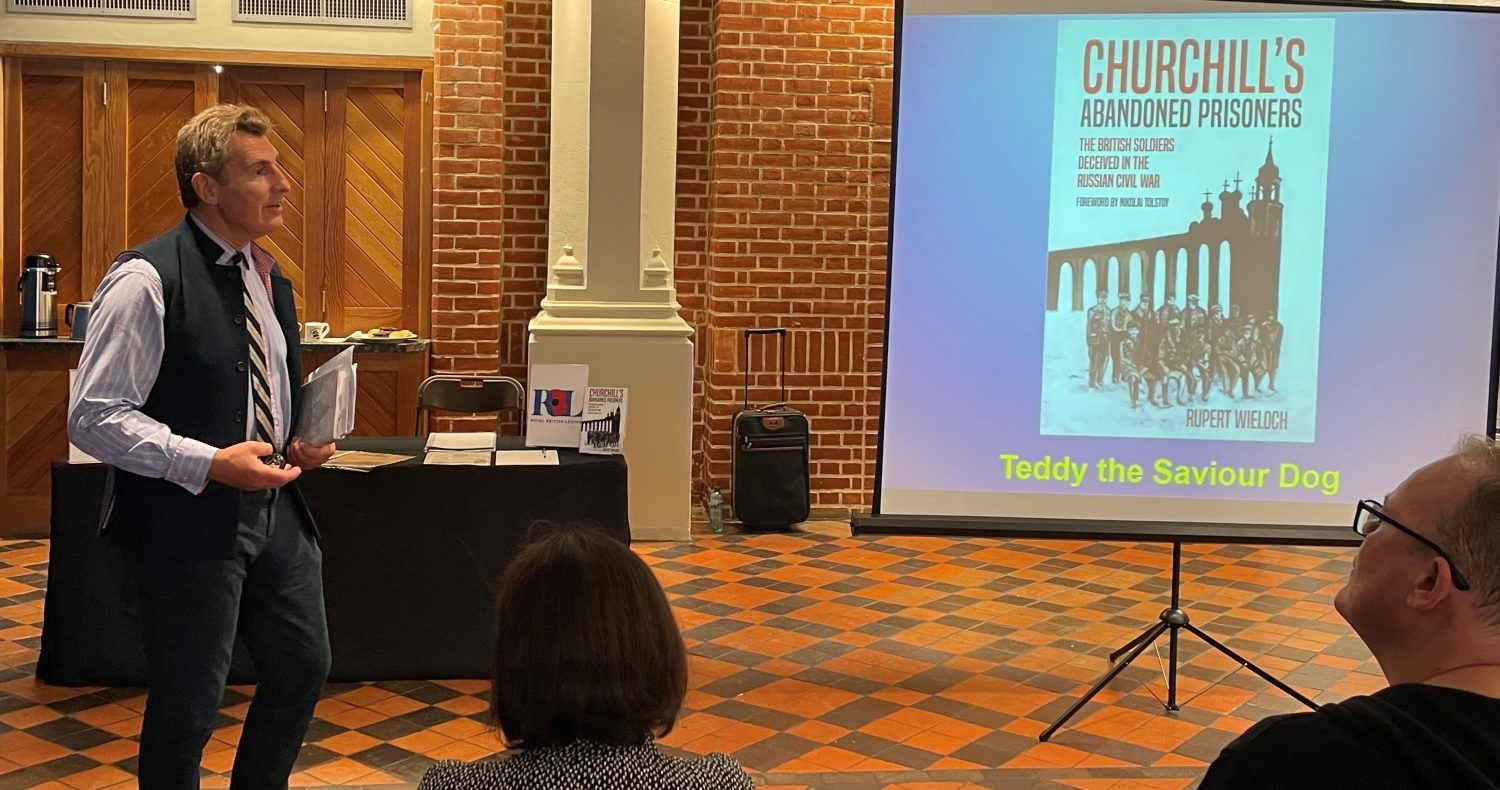
I am looking forward to giving my talk about the end of World War II in Sussex this week. There is so much material, it will be hard to keep focused, but I do wish to dedicate the time to those who paid the ultimate sacrifice, including the last men to be awarded the Victoria Cross and commemorate all those who contributed to the war effort.

There are many lessons from the immediate aftermath of Victory in Europe. The United States and Russia emerged from the war as the two most powerful nations of the globe. The big three (Churchill, Roosevelt and Stalin) had already met at Tehran and Yalta to carve out the new world order and set up the international monetary system and the United Nations. However, by the end of the third UK, USA, USSR conference, held at Potsdam between 17 July and 2 August 1945, neither Churchill nor Roosevelt were leading their countries.

Under Stalin’s dictatorship, there were many victims of Yalta (including the Cossacks) and this reneging of his commitments as much as anything caused the Alliance to break up and the Cold War to begin.

American and Russian Soldiers make friends on the banks of the Elbe at Torgau – 25 April 1945

Not The End Of The War

There was a marked difference this week between the inclusive commemorations marking VE Day in London and the military triumphalism of Putin’s Victory Parade in Moscow. The main focus in London was on the respectful Thanksgiving and Remembrance Service in Westminster Abbey, supported by processions, tea-parties and concerts, involving ordinary people around the country. This contrasted vividly with the Russian march-past of tanks, artillery, rockets and nuclear missiles. One was celebrating peace in Europe, the other was glorifying war.

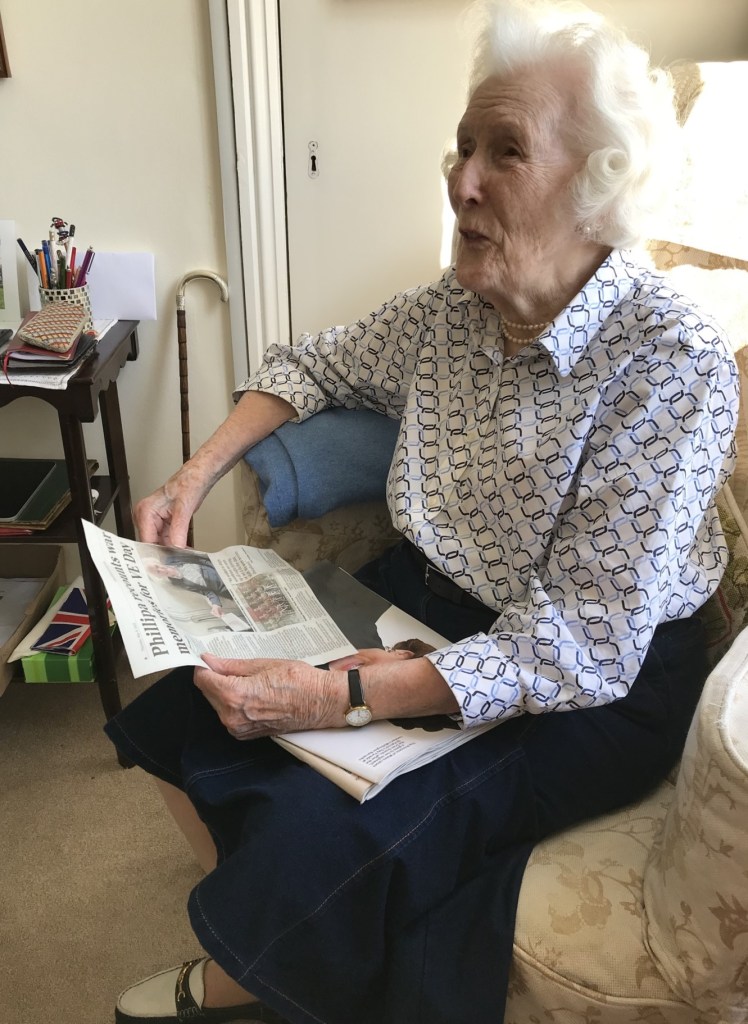
Having lost most of my friends and relations who served during the War, it was especially enjoyable to catch up with a lady who is 101 years old and served as a FANY (First Aid Nursing Yeomanry). She allowed me to use her husband’s papers for my book Liberating Libya because he served with the Long Range Desert Group and led his regiment into the Battle of El Alamein in 1942. She also had a fascinating time during the War, which is briefly summarised in this week’s Hampshire Chronicle. We had a chuckle about the article, which she said was all wrong (including the spelling of her name). And of course, she pointed out that it was incorrect to write that 8th May was the end of the War because the ferocious fighting in the Far East continued until Japan’s surrender on 14th August.

A Week of VE Day Commemorations

The first week of May is always time of eager anticipation for a Summer Season filled with friendship and entertainment. This year is different. Earlier in the year, there was a glimmer of hope in the wars in Ukraine, Gaza and Sudan, but as JD Vance said this week the war in Ukraine “is not going to end any time soon”. With Israel calling up its reserves for a new assault and the first attacks on Port Sudan occurring this week, it is no wonder that voters around the World are looking for “safe pairs of hands” to democratically govern their countries.

Global instability and worldwide insecurity confront us like Scylla and Charybdis facing Odysseus on his epic journey home from Troy. For many people in Britain, this is a difficult time and perhaps this is the reason that the Media is making such a fuss about the 80th anniversary of VE Day. However, we have to remember that this is a commemoration rather than a coronation and that although 8th May was a reason for the Allied countries to celebrate, it was not the end of combat. In fact, 208 Commonwealth personnel died on that day in places as far afield as the Balkans, Germany, Czech Republic, Italy, France, Netherlands, Belgium, Gaza, Malaysia, Indonesia, Papua New Guinea and Myanmar, where 14th Army’s intense fighting carried on until August.

The 80th anniversary extravaganza begins on 5 May with a procession to Buckingham Palace similar to the one in which my mother marched 80 years ago. Displays, tea parties, tributes and concerts carry on until Thursday, with the annual Cavalry Memorial Parade in Hyde Park rounding off the spectacle. It is all a bit strange for those of us who served in the Armed Forces and remember the words of Winston Churchill: In war: Resolution, in defeat: Defiance, in victory: Magnanimity, in peace: Good Will.

VE Day Procession 8 May 1945 – Approaching Buckingham Palace