Special Forces Data Blunder

The Sunday Times article about the inadvertent exposure of Special Forces names is a real embarrassment for the Armed Forces and highlights the continuing problem of poor security in the Ministry of Defence. In the past five years, there have been many breaches with over a thousand laptops, mobile phones or hard drives missing due to loss or theft. But allowing the names of SAS soldiers to be accessed by our adversaries on the internet is unforgiveable given our current involvement in the Middle East and the War in Ukraine.

The MoD used to have a much tighter grip on what is published about the Armed Forces. When I wrote my book about the changing face of military operations, it was vetted by several teams in Whitehall and I was asked to change a number of stories. However, when I pointed out that senior civil servants had already revealed the classified details to the Media they relented. In the end, I agreed to change one story about the deployment of Special Forces in Afghanistan after 9/11. Although the information had been published in an Obituary in South Africa, I did not want to interfere with a court case that was still running fifteen years later.

For those who wish to dig into Britain’s Special Forces, there are many open source academic and technical media articles that expose information that the MoD should really keep under its hat. These are not too difficult to find, so I am not surprised if the ST and other newspapers have full files of classified information, which the Government would rather the public did not see.

VE Day Anniversary

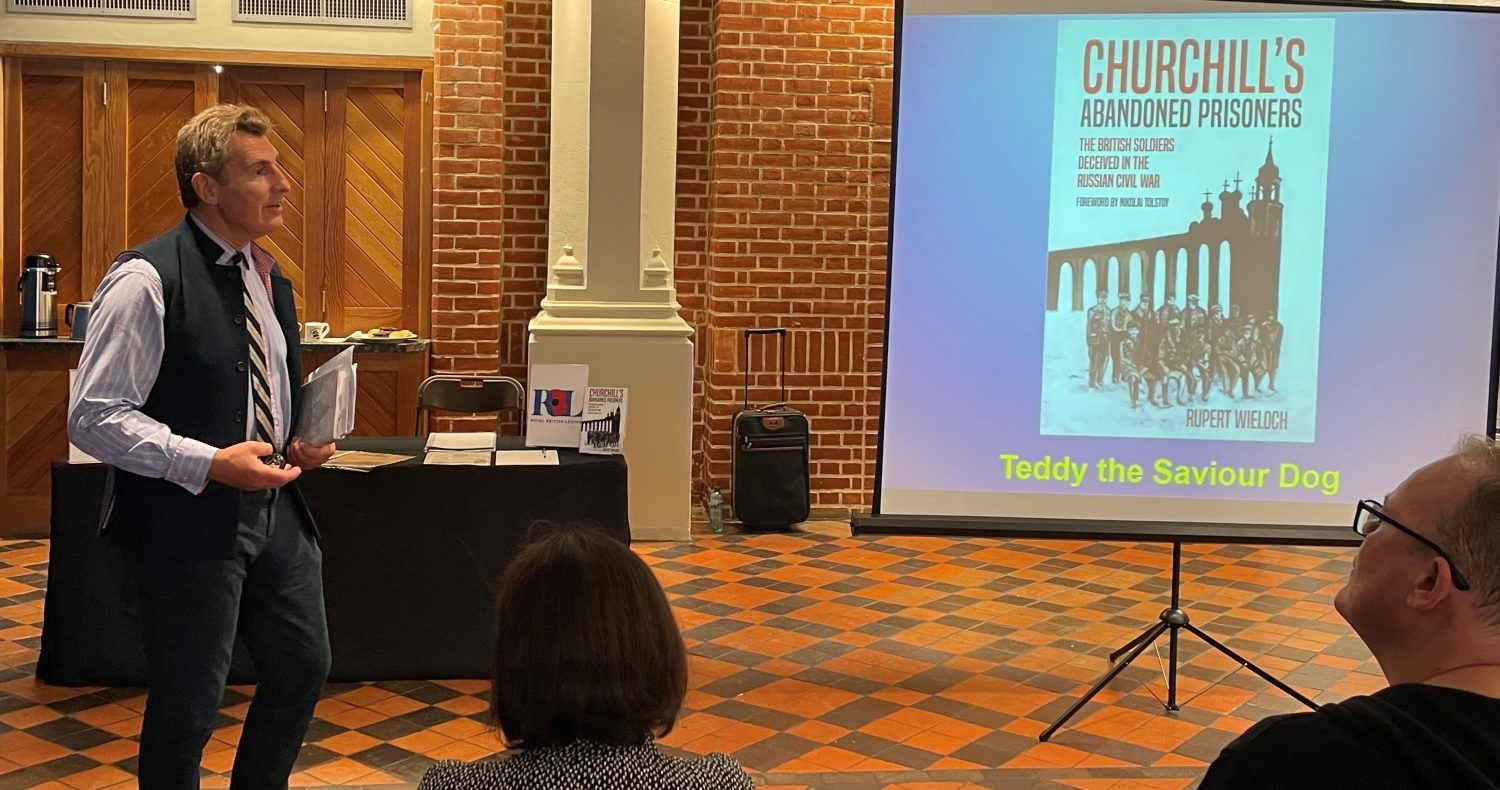
On the 80th anniversary of VE Day on 8 May, I will be raising funds for the Royal British Legion in London. It is a poignant day because my mother was in the Royal Navy contingent that marched past the King and Queen at Buckingham Palace. She would have been 101 this week and was very proud of her wartime service as a morse operator working on top secret Y work.

Although Easter 1945 was filled with hope for the end of the war, the fighting on the Eastern Front and the Ruhr Valley in Germany was still very grim, with many casualties falling withing site of the end. One of the most poignant was Major John Poston, Field Marshal Montgomery’s ADC who had been with him since before the Battle of El Alamein.

He was killed in a German ambush at Luneberg Heath (where I spent many weeks in the 1980s on reconnaissance manoeuvres) on 21 April 1945. A testament to what this 25 year old Cavalry Old Harrovian did for his country comes from the Field Marshal’s pen: “I trusted him absolutely and he never once failed me…I was completely devoted to him and I feel very sad; something has definitely gone out of my life.” Less than two weeks later, Monty accepted the German surrender from Admiral Doenitz at the palce Posten was killed.

No Cease Fire In Prospect

The latest devastating use of Iskander Ballistic Missiles against Ukraine on Palm Sunday is clear proof that President Putin is not changing the strategy that he laid out three years ago in his so-called “Special Operation”.

Since the free people of Ukraine are not giving up the gallant defence of their country and the British and European leaders are remaining steadfast in their “Support from the touch-line”, it remains to be seen what effects the US will have on the War. The US envoy’s clumsy words this week have exposed a worrying lack of understanding and resolve. No previous conflict can be used as an exact peace model for this war, so it is not helpful to compare the current situation to what happened in Germany after World War II.

The application of technology may not have changed the character of war, but it certainly has changed the way modern wars are fought. Cruise missiles, Satellites and Drones, and the use of Mobile Telephones and the Electro Magnetic Spectrum has made it easy for politicians in capital cities to play as armchair generals, but they have equally made it much tougher for the ordinary soldiers in the trenches.

Russian Cruise Missiles

A Corner Turned, Or Just A Bend In The Road?

I have read some drastic descriptions of what the past week means for the future, but is this really a moment like the end of the Cold War, when history, according to Francis Fukuyama, ended (the phrase was actually first used by a 19th Century French Philosopher)?

I look at this apparent “End of Globalisation” in three ways. The first is to compare it to other recent economic shocks (Dot-Com Bubble-Burst in 2000; Subprime Mortgage Scandal in 2007 and Covid 19 Lockdown Crash in 2020). After each of these the global market took about three years to rebound, which could be a good benchmark for the Trump Throttle.

The second is to consider whether the Tarriffs will lead to World War III. Although there is a clear connection between Germany’s economic woes in the 1920s and the rise of Hitler, I suspect the imposition of US duty on the rest of the World will not lead to a Global power re-alignment. There have been far worse years, such as 1979, when the World was introduced to Islamic Terrorism and the Soviet Union invaded Afghanistan, but nuclear Armageddon was avoided.

The third way to look at this is against the other five Mega-Trends that we defined 24 years ago at the Joint Concept Centre in Shrivenham (Climate Change; Shifting Demographics; Fragile States; Weapons of Mass Destruction and Uncertain Natural Resource Availability). And again, in this case, it seems to me that we are not at the end of the road, but merely travelling along a dang-hard, Rocky Mountain dirt track and therefore should adapt to the ride and make the most of the opportunities that will follow the chaos.