
The use of British Storm Shadow missile against targets in Russia may or may not be an escalation in the Ukraine War, but it is certainly a reminder that Gunboat Diplomacy is still alive in the 21st Century.
The Royal Navy and later the USA perfected this method of persuading less-technical states to follow a course of action that was beneficial to the larger nation. The original theory of lobbing a few cannon balls from a flotilla off the coast against a ruler’s palace, morphed into cruise missile strikes against military facilities, such as ammunition bunkers or training facilities. An important part of the theory was to avoid civilian casualties, which might lead to an escalation of the conflict – hence the need for precision and satellite imagery.
President Clinton tried to use it against Al Qa’ida in the 1990s with little effect. NATO used it against Colonel Gadhafi in 2011 with limited success. Afterwards, the UK MoD claimed that none of their Storm Shadows failed to detonate, but we found one in the Sahara, which was still intact. We removed the outer parts and flew them back to England while blowing up the explosive well-away from any population centre (see photo below).
This form of Air, or Maritime Power is attractive to politicians, who wish to avoid “boots on the ground”, but there are not many examples of Gun Boat diplomacy success in this day and age, because the important decisions are made by and among the people living on the ground.
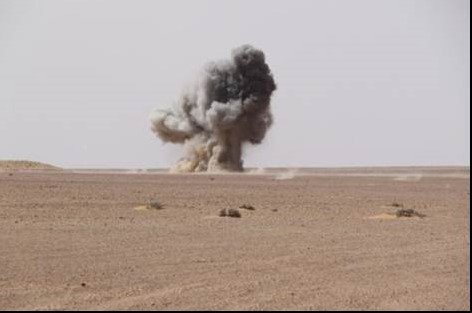
Storm Shadow in Libya


 Rupert Wieloch