Churchill’s Second Darkest Hour

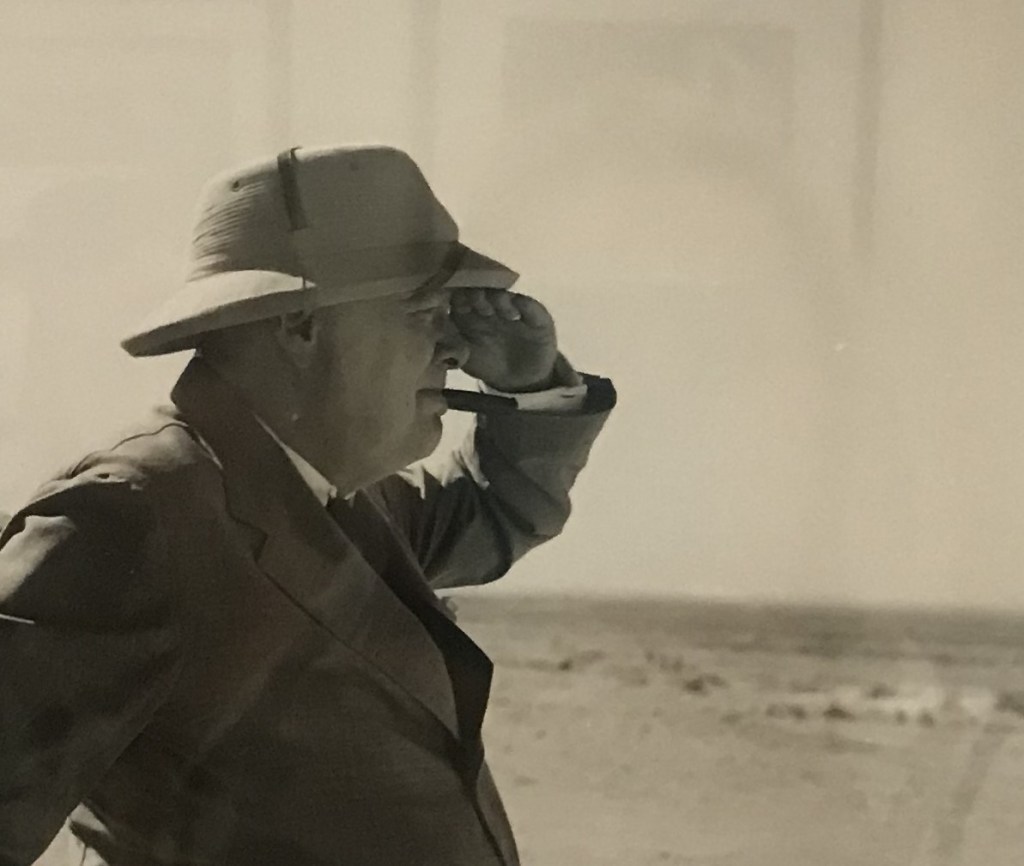
I wish to take you back 82 years when the outcome of the war was in doubt and Churchill’s rivals questioned his role as war leader after the heavy losses of Hong Kong, Burma and Singapore. His political opposition comprised an unholy alliance of appeasers, extremists and parliamentary enemies. He also had to contend with waning Commonwealth support especially from the Australian Government, which threatened to pull its troops out of North Africa. And there was huge international pressure on him from Stalin and Roosevelt, as well as the need to prop up the French and Greek governments in exile. Worse was to follow in the summer of 1942, leading him to say: “Defeat is one thing. Disgrace is another.”

At the Ardingly Military Show this Saturday and Sunday, I will explain why this was Churchill’s “second darkest hour” and how the Prime Minister faced down his enemies and responded to the calamities of 1942 (including the death of the King’s brother in an RAF aircraft). The author’s programme begins at 10 o’clock on 28 September and my half hour time-slot is 3 p.m.

Churchill in North Africa 1942

Airborne and Amphibious Anniversaries

The courageous Airborne Division and other Allied formations that fought at Arnhem 80 years has been widely commemmorated this week. The story, which was brilliantly told in one of the most iconic war films ever made A Bridge Too Far, has made Operation Market Garden into something akin to the Charge of the Light Brigade. However, to my mind, the media narrative for World War II focuses too much on this operation and not enough on the other fierce fighting elsewhere in Europe, such as in Finland, Italy and the Balkans.

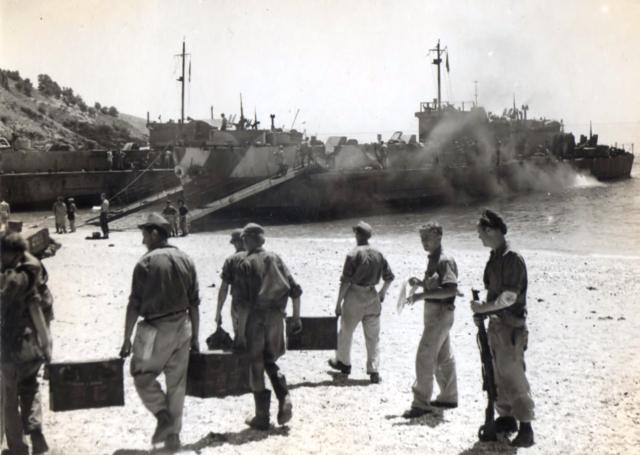
One of the greatest tensions in the British Armed Forces during the past fifty years has been the about the utility and efficacy of early entry forces between the Royal Marines and the Parachute Regiment. So on the eightieth anniversary, it is worth remembering a long forgotten amphibious landing on the same day that Arnhem was effectively lost, that led to the defeat of the German army in Greece and Albania – Operation Mercerised.

The beach chosen for Numbers 2 and 40 Commando was Kakome, six miles north of Sarande. The successful landing followed by a brutal two-week fight in monsoon conditions against 2,000 German soldiers led to the capture of the port and the surrender of the German garrison on Corfu. After the war, the Albanian leader whitewashed all British involvement from the records and it was only much later that a memorial was created in Tirana to commemorate the British soldiers and airmen (and Chaplain) who fell in this “side-show”.

With thanks to commandoveterans.co

Churchill’s Second Darkest Hour, 1942

After a wonderful weekend of talks on Russia and local Hampshire history, I am now looking forward to the Battles Through History Military Show.

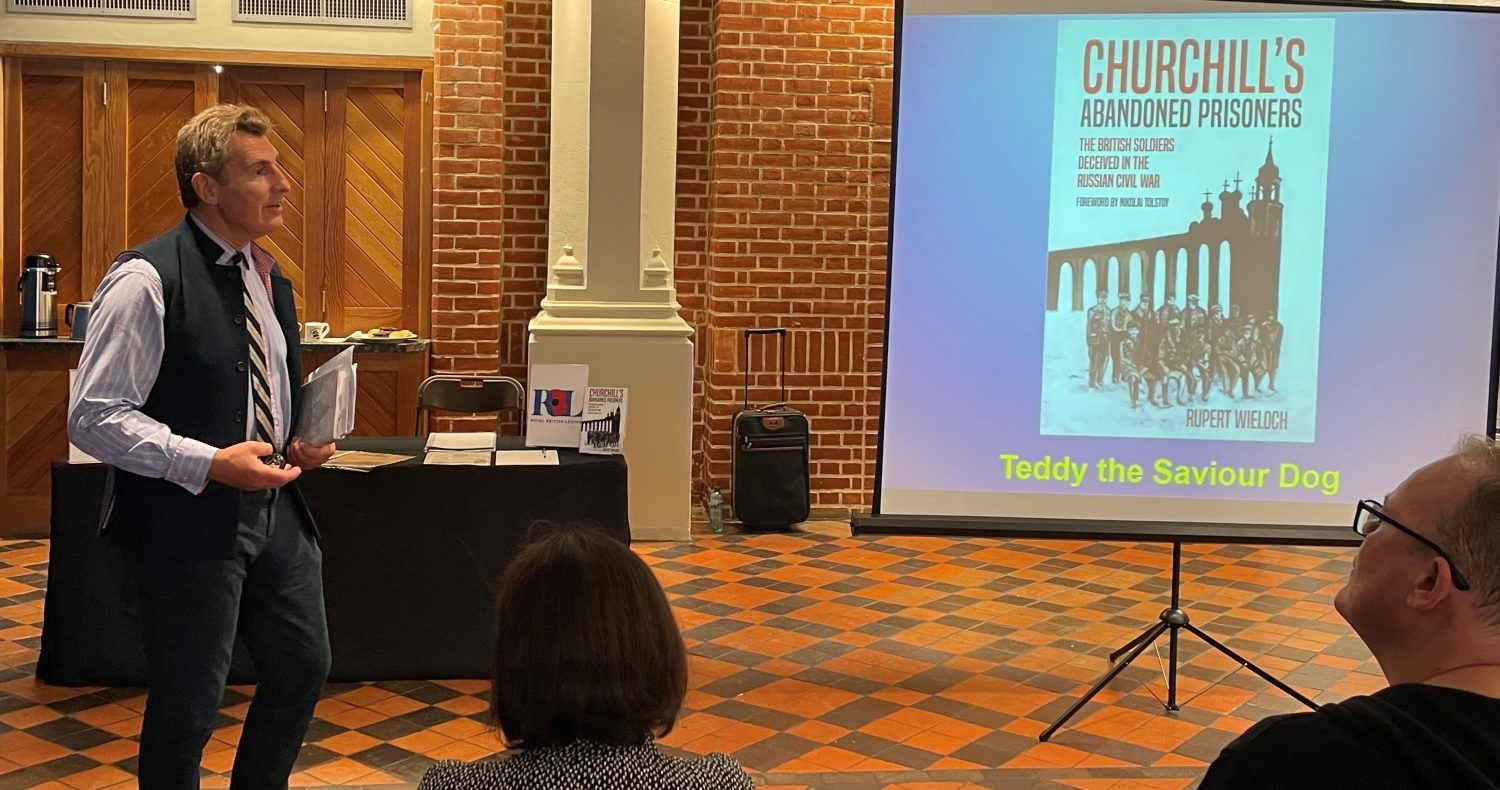
This multi-period, living history show takes place at the South of England Showground in Ardingly at the end of next week (28 and 29 September). I have been invited to join the other authors in the Norfolk Pavilion and will give my illustrated talk on Churchill’s Second Darkest Hour, 1942 between 3 and 3.30 p.m.

I will also have a selection of my books and information boards that focus on the 20th century British campaigns in Siberia and North Africa. The best thing about researching the past is what I describe as the Eureka moments. The feeling when you discover a letter, or a document, that has lain hidden for decades and puts a new perspective on a major historical event is magical. And it is extraordinary how many of these precious jewels I found, which demonstrate clearly how certain events and decisions were covered up to protect institutions and powerful people.

There is plenty more out there, if you are willing to look…

Czech Legion In The News

A recent article in the Hampshire Chronicle highlights the story of a battalion of the Czech Legion that was formed in Russia early in World War I and fought against the Austro-Hungarian Army as part of their claim for independence of their homelands. After the Bolshevik revolution in 1917, this battalion was separated from the remainder of the Legion and was evacuated by the Royal Navy from Archangel to Newcastle. From there, it travelled south and eventually found itself in Winchester via the Didcot, Newbury and Southampton Railway.

While this battalion prepared to fight for the Allies on the Western Front, its sister battalions attached themselves to Admiral Kolchak’s White Army under command of the talented General Gajida. The Czechs hated the Bolsheviks and supported the Social Revolutionaries. They were supported in this position by the US Commander, General Graves, but not by the British commander, Sir Alfred Knox, who was a committed monarchist. When the White Government in Omsk collapsed, they played a pivotal role in the execution of Admiral Kolchak. After handing over the Imperial Treasury to the Red Army in 1920, they sailed from Vladivostok to France and returned home, where many of them joined the army of newly created Czechoslovakia.

The role of the gallant Czech Legion in the Russian Civil War is revealed in Part One of Churchill’s Abandoned Prisoners. It is ironic that the Czech Republic, as part of NATO, is now involved in the war in Ukraine just over 100 years on. There will be more on this in my talk to the Wherwell History Group later this week.

Book Launch and Talks in September

This month, I am delivering talks on three subjects in Hampshire and Sussex. Two old favourites are A Christmas Card From Siberia and Churchill’s Second Darkest Hour. The former describes what life was like for the intrepid people, who served in the British Campaign in Russia towards the end of the First World War. The latter explains how the Former Naval Person (as the Prime Minister referred to himself when corresponding with President Roosevelt) turned around the war in 1942 after the humiliations of Hong Kong, Singapore and Tobruk, which led to a vote of censure in Parliament on 1 July.

The third talk is about a pivotal decade of English History (1830-1840). Much was happening at the beginning of this period, which is replicated today: climate change; a cost of living crisis; civil disturbances; the death of the monarch; violence in Europe; a disastrous harvest; and societal schisms over slavery, child labour and feudal taxes. However, by the end of the decade, England had turned a corner with a new sense of optimism and a growing economy based on innovation and production.

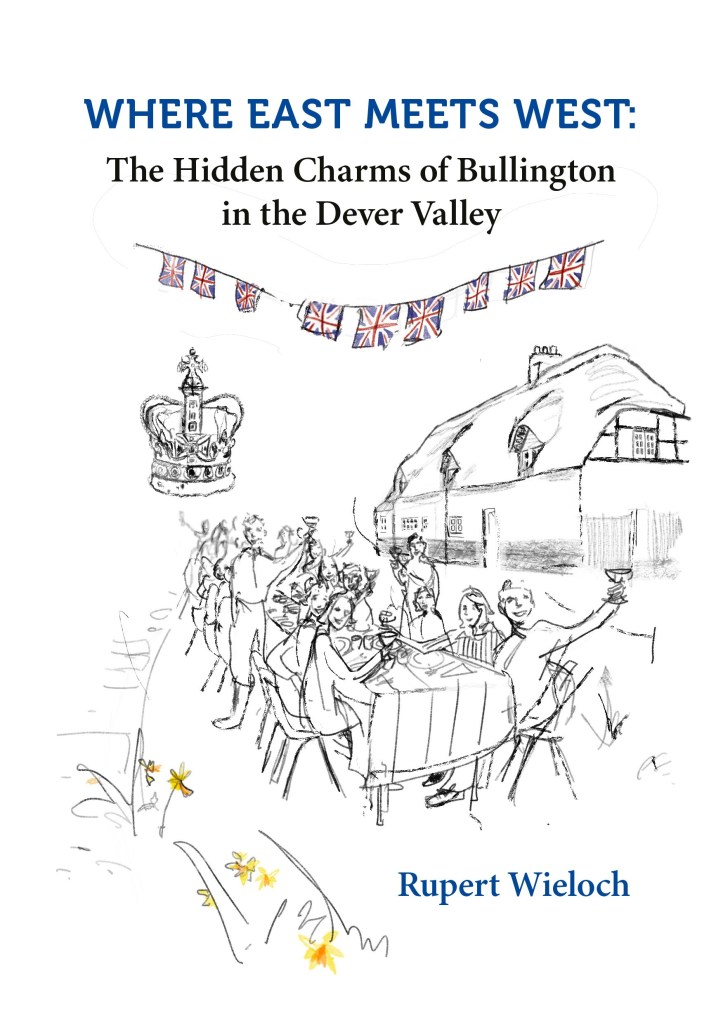
This talk is based on the research for my new publication, Where East Meets West, which will be launched on 8 September. It has Forewords by the Lord Lieutenant of Hampshire and the BBC Series Producer of Planet Earth and Blue Planet, as well as an Afterword by an award-winning Times journalist. The book will be available from P&G Wells in Winchester, or by messaging me on this website.