
At the beginning of June, I presciently posted about the possibility of riots and the similarities with the situation in England in 1830. Unfortunately, my warning was not heeded and this week, we have seen an ugly reminder of what lies under the surface in society.
The five reasons for the riots, which echo those of 1830, are: climate uncertainty; cost of living crisis; technology alienation; immigration; and an out of touch political elite. Sadly, any one of these can act as a trigger for public disturbances in the current environment.
The reaction by the new government is also similar to the Earl Grey’s government in 1830 – use the judiciary to deter further unrest. In the case of the Swing Riots, the government rapidly assembled a Grand Assize in Winchester, executed a couple of rioters and transported the leaders of the movement to Australia. Lord John Russell eventually pardoned these men in 1836 and some, like Joseph Mason, returned to their families in England, but the deterrence did not last too long because the Chartist movement took up the reins of the 1830 radicals and stirred up more trouble in the following decade.
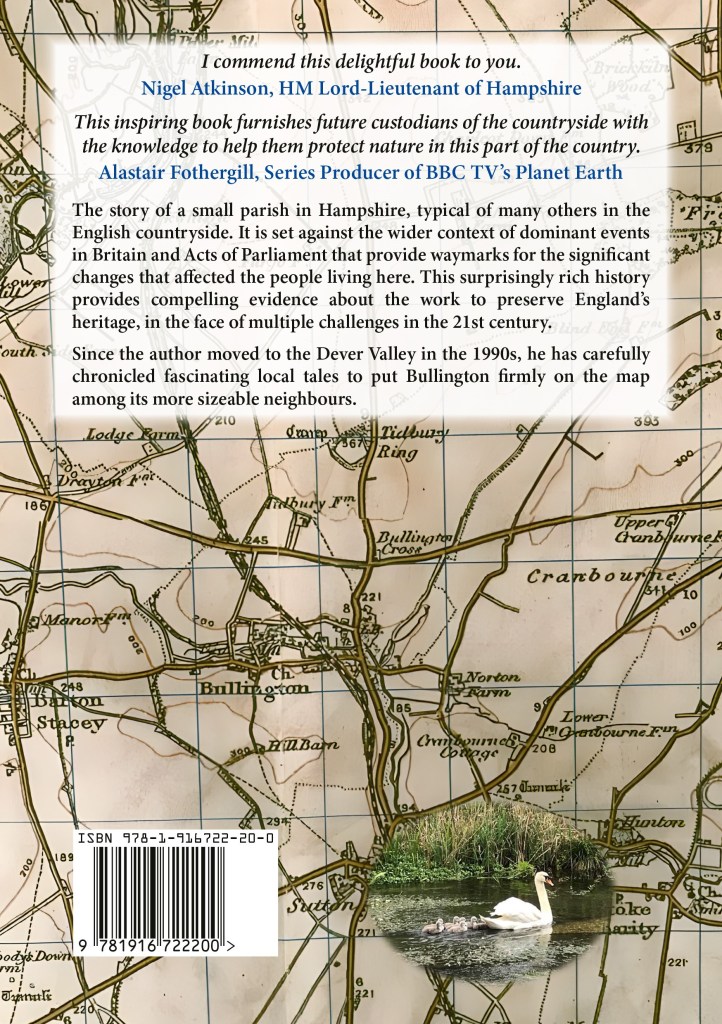
My new book, Where East Meets West, includes a section about the 1830 disturbances, which due to William Cobbett’s energetic correspondent, Enos Diddams, focused on the Dever Valley. It is a celebration of nature’s gifts in this part of Hampshire, set against the wider historic events in Britain and the World. With Forewords by HM Lord Lieutenant and the BBC series director of Blue Planet and an After word by a renowned Times journalist, it links to the University of Winchester’s English Project, which is building to the bicentenary commemoration of the Swing Riots and Grand Assize. The book will be available in September, from P&G Wells, or please DM for advance copies.
 Rupert Wieloch