
The Nevilles In China

After the Café Royal dinner, the prisoners-of-war who returned to London with Brian Horrocks dispersed around the world. Captain “Bim” Neville travelled home to Australia before moving to China with his family. This well-travelled officer had married “Alia” in Petrograd in 1914 and they had a daughter, Alice (6 years old) and son, Ronald (3 years old), when they settled in Shanghai.

During the Second World War, the Neville family was interned in Yangchow (or Yangtzepoo) Civil Assembly Centre Number 3 where Alice had to wear the armband in the photograph below. They left China in 1945, just as Eric Hayes was appointed Head of the British Military Mission, but it is not known whether the two former inmates of the Andronovsky prison had a reunion in Shanghai.

My next post will be about the Hampshire sergeant who married a Russian girl in Omsk before Trotsky captured the White capital.

With Grateful Thanks To The Australian War Memorial

Percy James’ Frostbite and Later Life

When the locomotive engine pulling the British carriages broke down, the British soldiers arranged for the 24 ladies and unfit men to be transferred to a Polish train, while they set off in sleighs along the track beside the Trans Siberian Railway Line. The Siberian winter of 1919-1920 was particularly cold and the temperature that evening dropped rapidly to below minus 20 degrees Celsius.

Some of the soldiers had purchased felt boots, but unfortunately, Percy James still wore the British issue boots which were about as useful “as a sick headache”, according to the group’s leader, Leonard Vining. When they stopped for the night, Percy had lost the feeling in a foot that had enormous blisters on the toes and heel. Vining, who knew enough about medicine not to be dangerous, applied goose fat to the frost-bitten areas and bought a pair of pymwy (felt boots) for Percy and these probably saved him from succumbing to gangrene.

Percy had transferred from the Somerset and Cornwall Light Infantry to the 1st/9th Cyclist Battalion of the Hampshire Regiment and in Omsk, he volunteered to help save the British civilians fleeing from the Red Terror. After the war, he was demobilised and returned to his family in Bath, but then married and settled in Bournemouth. I was delighted to be contacted by his family in Canada, who informed me that he helped put out fires during the Blitz in the Second World War and lived to a grand old age surrounded by his grandchildren.

Percy in India in 1918, before deploying to Siberia

Typhus Torment

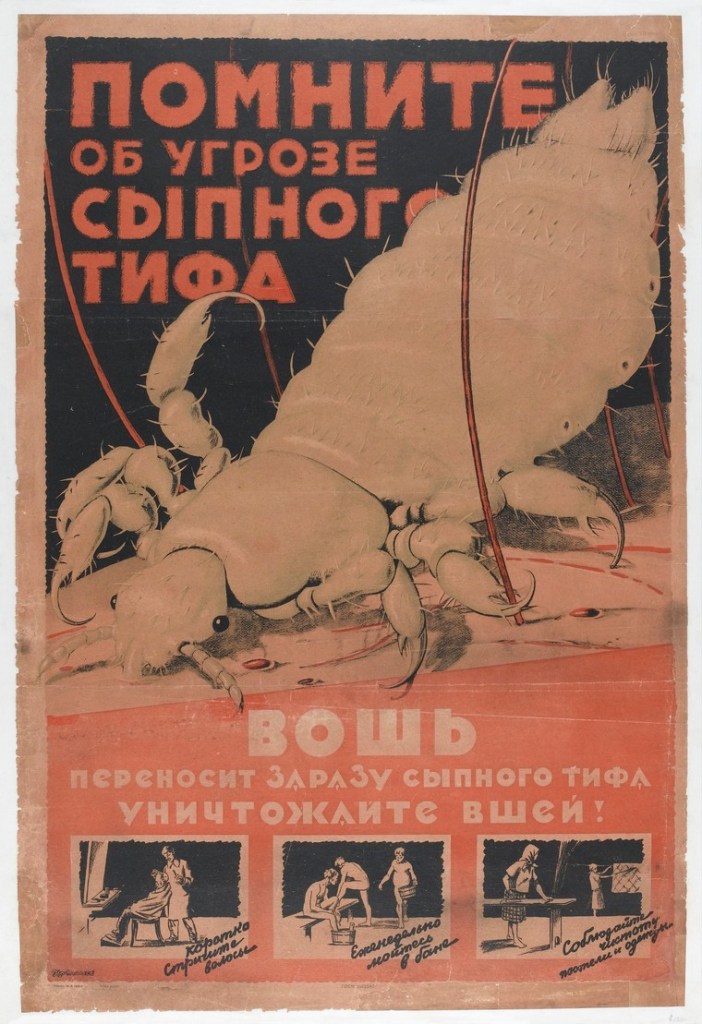
Captain Dwyer Augustus Neville was not originally in Brian Horrocks’ group of prisoners. He contracted epidemic typhus during the great retreat from Omsk and was abandoned in a hospital by the accompanying British soldiers. Eventually, he recovered and was sent to join the last British prisoners-of-war in the Andronovsky prison in Moscow. We know that he returned with Horrocks because he is listed in the commander’s diary and the newspaper articles published after they all returned safely to London, even though he was not in the photograph taken at Liverpool Street Station.

Neville was born in Australia on 18th April 1892 and joined the Royal Flying Corps in February 1917. In September 1918, he was on patrol in an SE5A with Number 41 Squadron RAF when he was forced down over the Comines Canal and captured by the German Army. After he was repatriated on 13th December 1918, he volunteered for Siberia and a year later was stuck in the long line of trains trying to reach the safe haven of Vladivostok. 

Dwyer attended the Café Royal dinner and then returned to Australia. Contracting typhus does not appear to have shortened his life as he lived until October 1979 and is buried with his wife at Buderim Cemetery, Queensland.

The other prisoner to succumb to typhus was Sergeant Frank Illingworth, who can be seen in the photograph below. He had transferred from the infantry to the Royal Engineers and joined the British Railway Mission in Omsk. His signature can be clearly seen next to Horrocks’ on the Café Royal card, but I haven’t been able to discover for certain what happened to him in later life.

Typhus wasn’t the only medical problem facing the prisoners and the next post will cover the equally fearsome threat of frostbite.

Hayes Archive in Leeds

When Captain Brian Horrocks was laid low with epidemic Typhus in Krasnoyarsk, the prospects looked bleak because the mortality rate was so high and the hospitals were so inadequate. However, Captain Eric “Georgik” Hayes, who had been with Horrocks in Siberia for almost a year was determined to help him survive. He escorted the semi-unconscious invalid to a private infirmary and visited him daily with extra food, often staying the night by his bed, wrapped in a raincoat. Without this aid, Horrocks would not have survived and the history of World War II would have been very different, but what about the man who played such an important part in Horrocks’ survival?

Trying to find out more about his character, a big breakthrough came when I discovered an archive donated by Jeremy Fairbank to the University of Leeds, which contained important material from his time before joining the Army. After attending grammar school in Lincolnshire, he was articled to solicitors before enlisting in the Sherwood Rangers Yeomanry at the beginning of the war and eventually commissioning from Sandhurst into the Norfolk Regiment. He was an ideal foil for Horrocks’ exuberance, being more cerebral and measured, but this did not stop him from making the most of his Russian experiences and reaching the rank of Major General. He commanded 3rd Infantry Division in World War II before a stint as the senior British military commander in Nigeria and his final appointment as Head of the British Military Mission to China, where he was involved in the surrender of Japan. Sadly he died following a short illness not long after the end of the war.

Horrocks wasn’t the only prisoner to suffer from epidemic typhus and tomorrow, I will reveal what happened to the other two soldiers who contracted this pernicious disease.

Epidemic Typhus Killed More People in Siberia in 1920 Than Any Other Cause

Horrocks Legacy Undiminished

Attending the commemoration service for Lieutenant General Sir Brian Horrocks KCB KBE DSO MC, and speaking to his three grandchildren and friends who knew him, it is abundantly clear that he remains an iconic military figure and exemplar for aspiring leaders today.

There is much available to read about his stirring later life from his autobiography, public sources and the excellent life story by Philip Warner. Few can match his deeds as Olympic sportsman, war-time general, ceremonial diplomat, author and business director, but perhaps the achievement that makes him unique is his role as a successful television presenter.

He never kept a diary and was known to have thrown away most of his official papers, but during my research, I discovered fascinating correspondence between him and the Royal Marine captain who commanded the Royal Navy’s boats on the River Kama at the time that Horrocks was training White Russians in Ekaterinburg. I also discovered that he would have perished in Russia if it wasn’t for his good friend, Eric Hayes, who nursed him through a life-threatening bout of Typhus in February 1920. Hayes, whose signature is above Horrocks’ in the Café Royal photograph, also became a General in World War II and is my subject tomorrow.

With Edward Fox at Sir Brian Horrocks’ Commemoration