
Herbert Edward Prickett was born in Tottenham, Middlesex on 11 June 1888. His parents were Laura and Harry, who was a Solicitor’s Clerk in London. By the time of the First World War, Bertie had emigrated to New York where he was a telegraph operator, but after the USA entered the war, he joined the Canadian Army and was part of the Expeditionary Brigade that was sent to Vladivostok. When the Canadian Government pulled their troops out, Bertie transferred to the British Army as a Railway Traffic Officer and found himself in Omsk in November 1919, ordered to remain behind to save the British citizens fleeing from the Red Terror.
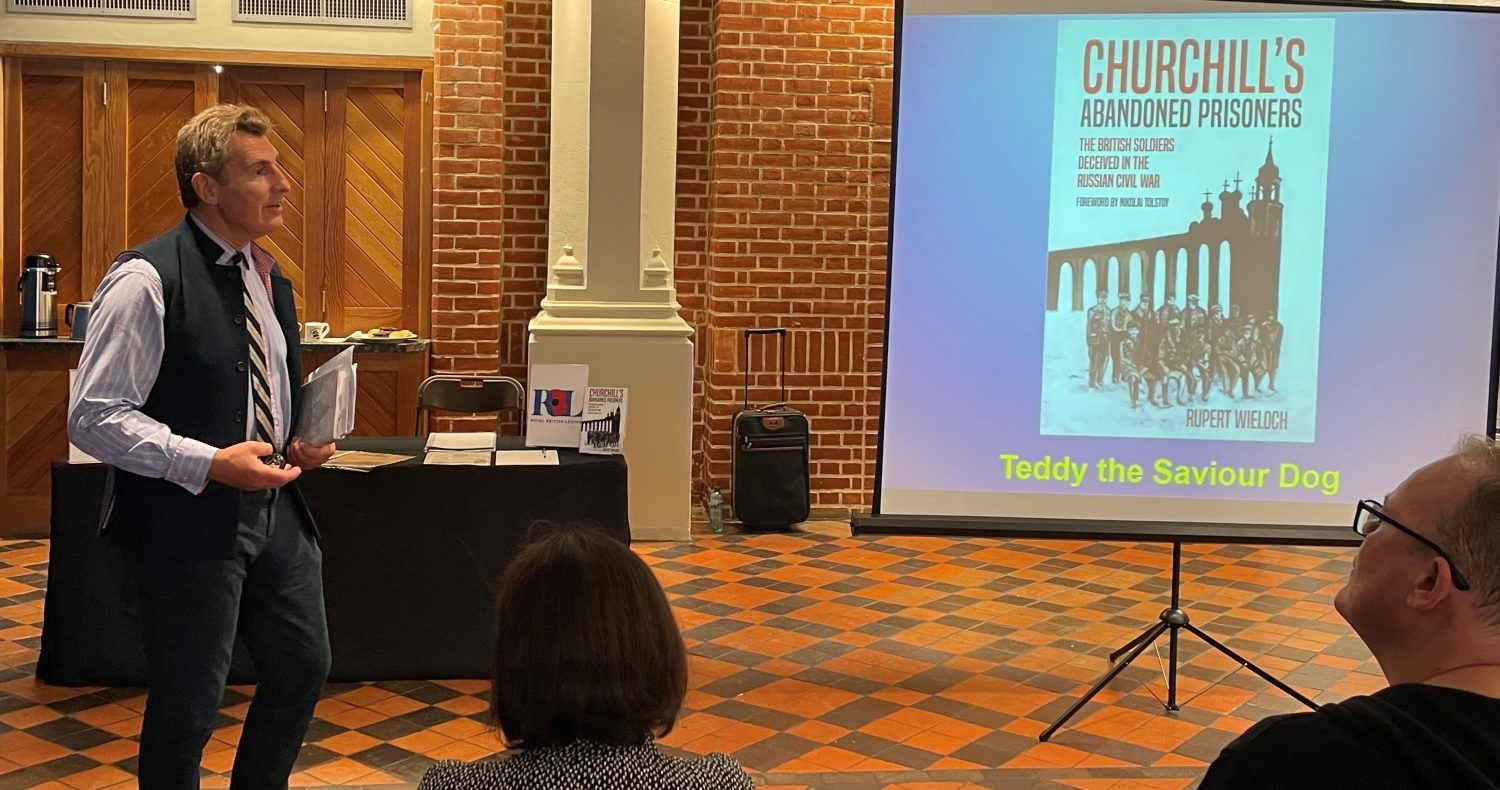
Bertie was held in high respect by everyone in the group. He was appointed adjutant and as a talented banjo player, helped to maintain morale during the 12 month ordeal. However, his biggest claim to fame was when he saved the life of Teddy the Siberian Puppy, who became the group’s mascot.
After the prisoners returned by ship to England, Bertie had to put Teddy into quarantine in Harwich, so he did not catch the same train to London as the others. However, he did attend the reunion dinner at the Café Royal and signed the back of the HMS Delhi photograph. He spent some time with his family, who had moved to Croyden and then in 1924, he was appointed Engineer Operator In Charge of the new Government Wireless Telegraph Station at King Edward Point, South Georgia. This remote island, which was part of the Falkland Island Dependencies, earned international fame for its association with the Antarctic explorer Ernest Shackleton, who was buried there in March 1922.

Bertie Prickett is seated on the right and Teddy is sitting on Leonard Vining’s lap
 Rupert Wieloch